During the First World War, the African front comprised a series of conflicts full of schemes and maneuvers and heroics and disasters, as the Allies sought to conquer four German colonies in the region while contending as well with other problems caused by the inhospitable climate and geography and by the presence of winged pests. History buffs, especially military, will savor every episode on every page
Farwell graduated from Ohio State University and the University of Chicago (M.A., 1968). He served in World War II as a captain of engineers attached to the Mediterranean Allied Air Force in the British Eighth Army area and later also saw combat in the Korean War. He separated from the military after seven years of active duty.
As a civilian, he became director of public relations and director of administration for Chrysler International from 1959 to 1971. He also served three terms as mayor of Hillsboro, Virginia (1977-81).
He published articles in the New York Times, Washington Post, American Heritage, Harper's, Horizon, Smithsonian Magazine as well as serving as a contributing editor to Military History, World War II, and Collier's Encyclopedia. Farwell also published biographies of Stonewall Jackson, Henry M. Stanley, and Sir Richard Francis Burton.
He was a fellow of the MacDowell Colony and a member of both the Royal Geographical Society and the Royal Society of Literature.
Farwell gave his papers to the University of Iowa.
When we think of WWI, we usually only visualize the grinding trench warfare of the European theater and forget that there was fighting taking place on other continents. This book, by the great historian of the British military experience, Byron Farwell, takes us to the colonial empires in Africa where a different kind of war was fought.
Germany had four colonies in Africa, the largest being German East Africa which was bordered on all sides by colonies of the Allied countries. The British led the charge, with Portugal and Belgium providing more harm than help. With small rag-tag divisions made up of various nationalities and races and less than adept leadership, they bungled their way into a war like no other.......bush fighting, spears, bee attacks, unbelievable heat, pestilence, and a German commander, Paul von Lettow-Vorbeck, who outsmarted them at every turn. The fighting was done in skirmishes as opposed to large battles and more men died of tropical disease than were killed by the enemy. This was not one of the British army's finest hours. It was basically a stalemate but the Armistice put an end to all that and the German colonies were divided among the Allied countries.
This is a book that reads like exciting fiction and is highly recommended.
This account of military campaigns of the British and German imperial forces in Sub-Saharan Africa during World War 1 made for a satisfying read that helped diminish my vast ignorance. The book also provided some guilty emotional relief from the more depressing story of giant armies deadlocked in ineffectual slaughter in Europe and Gallipoli. Instead of millions bludgeoning each other for so long with no territorial gains, here we get conflicts of up to a few thousand at a time marked by extensive movements over vast and varied geographies and colorful personalities who creatively improvised many fascinating and bold strategies.
The first hundred pages cover the relatively small and quick campaigns over the fate of Togoland and the Cameroons in West Africa and the more moderate struggles of the Allies to subdue German Southwest Africa (the future Namibia). The rest of the book covers the long, complex warfare to defeat German East Africa, which included the huge inland areas that became Rwanda and Burundi and a coastal region now part of Mozambique. At the start of the war in Europe, Germany pressed hard for the colonies to remain conflict free, as already specified by an accord applied to the Congo River basin. But France and England didn’t see that to be in their best interests. Major factors in that outlook included the support for the war that the German colonies could supply through resources, wireless communications facilities useful for naval coordination, and harbors for her warships. Belgium was drawn to action after the Germans started sinking commercial vessels on Lake Tanganyika, the 400 mile long lake on the eastern border of the Belgian Congo.
The fight for East Africa stretched out over four years and involved fascinating tales of guerilla operations in many remote places, a major campaign to destroy a German cruiser hiding out in a vast river delta, and naval conflicts on Lake Tanganyika and Lake Victoria. Fighting sometimes was disrupted by rhino charges, swarms of killer bees, or crocodile attacks. Key sites of action included the border zone between British and German colonies around Mount Kilimanjaro (in present day Kenya) and towns along railway lines that ran east-west. The Germans has some advantages of better support from their colonial subjects due to a more benign administration and better training of their militia, the Schutztruppe. But at the outset of the war, their colony of 8 million Africans had only 5,300 European residents (Germans and Boers) and the militia only fielded 2,500 African soldiers (termed askaris) led by 260 German officers. The Brits assembled three battalions totaling over 27,000 soldiers from three different continents, including a South African, Indian, and English contingents. They were handicapped by conflicts in control from the War Office, the central Colonial Office, and the local militia, compounded by perpetual inabilities of the army and navy to work well together or of the Brits to coordinate well with the French and Belgian commands. The Brits seemed to have more than its share of idiots for generals.
Because both the Brits and the Germans were hungry for military successes to mitigate the political fallout of disasters in the war in Europe and elsewhere, the campaigns in Africa got a lot of attention from the home front. The Germans has quite a hero in the form of the brilliant General Paul von Lettow-Vorbeck. He had been a former colonial governor known for his dedication to education, starting over 1,000 schools in his time. Though he saw his black colonial subjects as ignorant and savage, he was enlightened for his time in his view that “they have the right to demand that they should be regarded as an end and not as a means. … We must remember that the black man is a human being.” Over and over, he demonstrated his ability to lead his men and use of effective strategies of surprise attacks and defensive strikes, followed by disappearance into the bush, thus disrupting the enemy forces and avoiding pitched battles that would put his smaller army at a disadvantage. His goal was not to conquer but mainly to tie up Allied forces and resources to the benefit of more important German campaigns elsewhere.
The threat of the cruiser Konigsburg led England to invest a lot of effort sending over special flat bottom steel gunboats to pursue it in its hiding place. Airplanes were critical to provide spotting for this exciting artillery battle. The colorful commander, Spicer-Simpson, famous for wearing a skirt, was lucky to succeed despite his incompetence. Unfortunately, the large artillery pieces from the wreck was salvaged by the Germans and used by Lettow-Vorbeck for years afterward. Another delayed success at great effort came when gunboats from England were hauled through hundreds of miles of jungle and put into action against the German naval flotilla that dominated Lake Tanganyika. But is really wasn’t until Jan Smuts took over the British forces that the Allies began to make progress in taking over the German colony. It is ironic that this native Afrikaner started out with fighting the Brits in the Boer War at the turn of the century. He already had proven effective in leading the taking of German South West Africa under Botha, Prime Minister of the Union of South Africa, which was formed in 1910. The British battalion, composed mostly of the 25th Fusilliers, was quite an odd mix for him to harness, including big game hunters, American cowboys, ex-French Foreign Legionnaires, and other global volunteers motivated by adventure. The relatively green troops in the Indian battalion eventually came into their own. Unfortunately, bravery did very little to mitigate huge losses due to diseases like malaria and infections after injury. In the long campaign of cat and mouse with Lettow-Vorbeck the two adversaries came to respect each other immensely and became lifelong friends after the war.
This was a fun read and pleasurable portrait of a cast of heroes and buffoons. Yet, because each side knew the outcome of the war in Europe would determine how the colonies would be divided in the spoils of war, the purpose of the fighting was undermined to a large extent. In his epilogue, Farwell does well to defuse any message about the glories of war the reader might be tempted to derive from his lively account: Paul von Lettow-Vorbeck was indeed a brilliant soldier who evoked universal admiration, for men admire bravery, endurance, persistence, courtesy in adversity and dignity in defeat. And these were the qualities which he exemplified. He succeeded in what he set out to do, and yet what he did was in the end less than useless, for he could not prevent the victory of his country’s enemies; he cost the lives of thousands and the health of tens of thousands more. He tore the social fabric of hundreds of communities and wrecked the economies of three counties. His splendid military virtues were devoted to an unworthy cause and his loyalty given to a bad monarch.
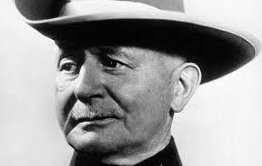
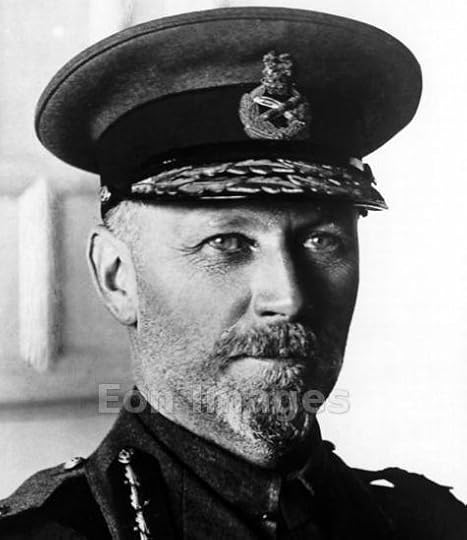
General Paul von Lettow-Vorbek and General Jan Smuts, leader of the German and British imperial forces in the fight over East Africa
One of the better books on World War I that I've read. The writing was pretty good but most importantly all of the material was new to me. Good job of battle oriented research on an otherwise neglected piece of history.
Byron Farwell offers the reader a well researched and well presented account of this often forgotten campaign of WW1. In just over 380 pages (hardback version) he covers all aspects of this little known campaign covering such incidents as L-59, the German Zeppelin which made the world's longest sustained flight, from Bulgaria to Central Africa and back! Hunting a German Cruiser on the Rufiji River by an elephant hunter (The African Queen?).
Accounts of some of the terrible battles on land, one where both armies were routed by killer bees! Men fighting with spears, knobberries, machine-guns, planes and armoured cars. The author also offers an interesting account of that famous German commander who had the allied forces chasing themselves for so long; Paul Emil von Lettow-Vorbeck. This is a great story which I recommend to anybody who enjoys a well written history book.
Good, but dated, telling of a sidebar to World War One. When the war started, Germany had three colonies in Africa. There was little or no preparation for hostilities in these outposts, so most of the German fighting was a make-do affair. The colonies on the Atlantic (Togo and Southwest Africa (Namibia) fell quickly. It was a another story in Southeast Africa (Tanzania). The senior officer in the German military, General Lettow-Vorbeck, was an able leader and strangely enough he had a loyal following among the native Africans. This mystifies me, as I know that the Germans practiced genocide against the inhabitants of Namibia when they rebelled prior to the start of this history.
This book was written in the 1960's by a competent British military historian, but his lack of interest in the sociological aspects and questions relevant to this campaign are a little jarring to my 21st C sensibilities. This is a history full of a absurdly heroic efforts, tragically inept medical care, and man vs. nature taken to an extreme.
This very well written book covers WWI in Africa, events almost entirely unknown to most readers, with the exception of those who seen "the African Queen," Most of the German colonies fell very quickly to the Allies. But the German forces in German East Africa, the bulk of them African, fought throughout the entire war and were the final German forces to surrender in the field. Although cut off from the homeland almost from the beginning of the war, the German forces not only held out, but carried the war into the surrounding colonies. Includes coverage of one of the more eccentric incidents in the war in any theatre,an effort fo supply German East Africa by zeppelin from Bulgaria.
Interesting history of the little known WW1 campaigns in Africa. Personally, I am a bit conflicted regarding this book. In terms of an old school European biased history, it's pretty solid... and illuminated much about these conflicts that I had previously not known.
On the other hand, this is pretty straight up just an old white man's history book. It is the story of several colonial empires exploiting their own "n****rs" to gain hegemony each other's colonial empires. Knowing what we know now about Belgium's history in Africa, it is hard to feel anything but contempt for the people who ran their African possessions. Portugal, South Africa and Britain were not much better and the German's hands were certainly not free of African blood either.
It is hard to see this conflict as anything other than a giant disaster for the peoples of Africa, regardless of which "master" they were fighting for. But you would not really know that from reading this book. The voices of the vast majority of the combatants, and civilian victims of these dirty little wars is largely silent. And that is the major shortcoming of this history and all histories like it. The reader gets the illusion that they are getting the comprehensive story when, in fact, what they are getting is a literal whitewashing of the facts.
Maybe it is too late to get a true oral history of the War in Africa... or maybe it isn't. One thing for sure, the author made no attempt to look for one.
I read this book almost 30 years ago and regard it as one of the best about the First World War in Africa ever written. I doubt that many know that the first shots of the War came out of West Africa and that the conflict's last battle was fought in East Africa between German and British Empire forces.
A solid and well-researched account of a little-known campaign of WWI: the conquest of Germany's vast African colonial empire. Although a sideshow to the main event in Europe, the fighting contested a much greater geographical area, poorly-mapped, in conditions which always rivalled and were frequently worse than those on the main fronts. As the author notes in his introduction, records were scanty and poorly-kept as most military units were irregulars, most of the soldiers were illiterate, and the few diaries which have survived give a very partial account. So Mr Farwell has done a pretty good job, and is honest about the limited and fragmentary information he relies on for parts of this book. The "World Crisis" of course had nothing to do with Africa, and colonial administrations on both sides of the argument were almost unanimously in favour of avoiding hostilities, feeling that the influence and prestige of "the white man" in Africa would be universally undermined by the spectacle of armies of colonial overlords fighting one another. For the Germans there was some pragmatism in this position, as all the German territories were surrounded by the longer-established colonies of their enemies, who also enjoyed near-complete naval supremacy. Anyway, that's not how things work in wartime, and hostilities were quickly under way. Indeed the first British bullet of the Great War was in fact fired in Togoland (modern Togo), not on the Western Front. The campaigns in Togoland, Cameroon, and German SW Africa (now Namibia) were relatively brief and are briefly dealt with. The majority of this book concerns the epic struggle in German East Africa (modern Tanzania, Rwanda and Burundi), about which there is most contemporary evidence. Here a German colonel (later general), Paul von Lettow-Vorbeck, fought a determined guerrilla campaign against vastly-superior forces and actually surrendered only after the main armistice was agreed in faraway Europe. This part of the conflict is the subject of the only other history I've read of WWI in Africa, "Tanganyikan Guerrilla" in the Pan Military History monograph series. Based heavily on Lettow-Vorbeck's memoirs, that one is essentially a hagiography of L-V as a military genius. This book is more balanced, acknowledging his considerable feat of keeping his small force in being and making a thorough nuisance of himself for 5 years, but pointing out that his campaign achieved nothing of importance, and mainly consisted of a long retreat punctuated by small tactical successes against the larger forces pursuing him. Once Smuts took command in 1915, German East Africa was cleared of Germans in about a year. By the standards of WWI, that's a blitzkrieg. This book is suitably critical of Allied bungling, confused command arrangements, poor inter-service cooperation and inefficiency, but does balance this by pointing out that Lettow-Vorbeck achieved his rapid and elusive movements by abandoning his wounded, German civilians and German subjects to the mercy of the enemy, and that the majority of Allied casualties were caused by disease and climate and strained logistics - again a much simpler problem to solve for a commander of a small force taking no consideration of the civilian population. And Lettow-Vorbeck's account mainly lauds his own success in tying down superior forces and remaining undefeated. Er.......well done, but that's a little beside the point. The German high command, instead of receiving reinforcements and supplies from its overseas possessions, as did the Allies throughout the war, ended up sending supplies TO Africa. German naval strategy was also deserving of censure: having gratuitously attacked Belgian ports and shipping on Lake Tanganyika, the Germans inexplicably lost this huge inland waterway to a madcap adventure involving two British gunboats being transported overland to the lake. Even after the initial surprise and success of this experiment, the remaining German warship on the lake still outgunned and outranged the Allied shipping - until the Germans bizarrely scuttled it and thus surrendered control of the Western border of German East Africa. The writing is generally good, clear, concise and free of jargon and military-historical nerdery. Historical analysis is forthright and well-argued. The maps are inadequate, but this is I think deliberate, emphasising that the campaigns, too, were fought with inadequate knowledge of the conditions and the topography. The main fault of the book is (as is depressingly common with military history) the total absence of proofreading, resulting in a text littered with spelling mistakes, meandering unedited paragraphs and grammatical errors. But, in an admittedly-small field, if you want a history of WWI in Africa, this is a very good read.
The impact of World War I in Europe is well known. Its impact in Africa pretty much ignored. This book remedies some of that ignorance. Byron Farwell has written an informative book about how the major powers, Britain, France, Belgium and Germany ignored the neutrality convention signed at the Berlin Conference on African Affairs in 1885 that agreed that in the event of war among the signed powers Africa would remain neutral and mobilized and entered the conflict. Of course the desire to acquire the colonies of Germany motivated the British, French and Belgians and defense of its colonies motivated the Germans. The allies had some success both on land and at sea along the coast and on Lake Tanganyika but met their match when they invaded German East Africa and came up against a capable German commander, Paul von Lettow-Vorbeck. Lettow-Vorbeck kept large numbers of allied forces chasing him across Africa. His forces lived primarily off the land and on captured supplies from hit and run raids he made on allied towns and defeated allied forces. British, Indian, Belgian, French, Portuguese, African, Dutch, indigenous forces of white residents of Africa and Germans all fought in Africa. The bulk of the forces were Native Africans. Ships, boats, trains, trucks, automobiles, horses, wagons, oxen, mules, airplanes and native bearers were employed by the forces involved. There were two key problems for all involved, logistics and medical care. Resupplying the forces was difficult and mostly native bearers were used to carry supplies to and with the forces. Medical care was limited and most casualties were from diseases like malaria, dengue fever, dysentery, carried by the insects and in the water in the territory fought over. Chapter 22 titled The True Enemy describes in detail the hardships of medical care and the impact of disease on the forces. The allies fared better in logistics but many still suffered from limited rations and water. As for the Germans, some of the soldiers simply starved to death because of the difficulties of resupplying the ever moving force. Lettow-Verbeck after a skirmish or battle left his wounded and sick for the allies to treat adding o their logistical and medical burden. In the end although Lettow-Verbeck was never trapped and defeated, Germany lost the war and its colonies were divided among the victorious allies. The author points out that in a sense, Africa has never recovered from the impact of WWI. One fault with the printing of this book is that Chapters 6 and 7 are repeated. The maps are adequate and the pictures interesting. If you want to understand that the Great War was a World War, you should read this book.
Byron Farwell's The Great War in Africa is a marvelous history of that part of World War One (at the time know as The Great War) that took place across the continent of Africa. Numerous European powers had extensively colonized much of Africa, including the Kaiser's Germany. At the start of the war in 1914, the status of these colonies was very much a question. Tensions in the pre-war decades that could have led to actual fighting had been partially addressed with a treaty that suggested the colonies would not fight each other even if a general war began in Europe. Once that general war did start, the treaty was quickly dismissed in much of Africa, although some colonial administrators from both sides cited it in attempts to prevent hostilities. The colonies of the Allied Powers quickly conquered German holdings on the west coast of Africa, but a much deadlier war soon sprung up in the east.
This is where the bulk of Farwell's book resides. It's a fascinating story, filled with remarkable characters and countless examples of ingenuity and creativity. To combat German cruisers operating on Lake Tanganyika, the British transported three armed motor launches across oceans, mountains, and jungles. Assembled on the shores of the lake, the launches fought the German naval vessels in scenes reminiscent of the movie The African Queen. In East Africa, an outnumbered German force led by the adaptive and tough Paul von Lettow-Vorbeck did so much damage to the British railway connecting Mombasa to Lake Victoria that an international force had to be assembled to stop him. That conflict continued until the end of the war, as Lettow-Vorbeck retreated through German-claimed territory, then Portuguese-claimed territory, and finally into northern Rhodesia. His force was intact and still in operation when the war ended.
Although formal records of much of the fighting don't exist, Farwell does a fine job with what's available. His descriptions of the forceful (sometimes eccentric) characters in this conflict are highly entertaining. He easily keeps the reader informed of where the action is taking place and why this is significant. He also provides a great deal of information about the common soldiery, the vast majority of whom were African, and the conditions under which they marched and fought. This is a great read, and I highly recommend it.
A good history of World War One in Africa. I've read other books by the author and continue to enjoy his writing style and his dry, sarcastic humor that occasionally pokes through the narrative. My only complaint about this book is it is divided geographically and not chronologically. While this is fine for a majority of the book, since many of Germany's colonies fell quickly, in East Africa it is a different story. Farwell goes on occasional chapter long rabbit trails, and only provides dates in day-month format. This lead to my confusion when chapters after going through the entire odyssey of the Koningsberg, he off-handedly notes it was still occurring during this new narrative. Adding full dates, or even a chronology somewhere would be useful.
An interesting and thorough history of World War I fought on the continent of Africa by the various European powers; most standard histories of the First World War omit any mention of Africa, and indeed, the battles fought on the continent were extremely small compared to the carnage in Europe, but many were notable and several were bizarre, including incidents like the Battle of Tanga in German East Africa that ended when both the British and Germans were attacked by a swarm of hostile bees! In 1885 at the Congress of Berlin, European powers divided up Africa into different colonies and the COB agreed that in event of war the colonies would be neutral, however, Britain and France later renounced this policy. Germany did little to defend its colonies with the exception of Tanganyika and South-West Africa and even then the colonial force was extremely small. The German colonial authorities in East Africa ruled over territory that was larger than Germany and France combined with over 7.7 million Africans and only 3,000 Europeans, with about 1,800 soldiers, only 260 of which were actually Germans! Battles were fought in jungles, mangrove swamps and hostile deserts like the Namib and the Kalahari, where temperatures soared past 100 degrees, F. Mostly these battles were forgotten and the African soldiers fighting for the Europeans were given a little short-shrift by Byron Farwell, but it's a fascinating book overall.
This book was read as a reinforcement of Thomas Pakenham’s The Scramble for Africa: White Man’s Conquest of the Dark Continent from 1876 to 1912. The book is brilliant. It is most informative as well as being well written. His discussion of the military events in Togo, Cameroon, German West Africa (Namibia), and German East Africa (part of current Tanzania), and the results of those military events definitely fill in certain gaps found in Pakenham’s The Scramble for Africa. His profiles of such figures as Louis Botha & Jan Smuts, Boers, who fought against the British during the Boer War, but who become a part of the government of the Union of South Africa and agreed to serve with the British rather than rebel again and join the Germans, and Paul von Lettow-Vorbeck, an amazing German general who led an absolutely astounding guerilla resistance to British occupation of German East Africa.
the mimi and the tutu and a guy named spicer-simpson(his last name) just a few of the strange names you will find in this book. this details the war in africa in which a small army of germans lead the british french and belgian forces on a wild goose chase across africa(well ok east africa) this is one of the side shows of ww1 and really far more interesting than say the palestine and gallipoli campaigns.
the germans show an uncommon trait, and prove that a colony can be run with just a few white men, and in harmony with the natives(i know its the germans, but its true) it also shows how a few dedicated soldiers can keep an entire army in the field wasting its time.
This book is a good account of a lot of information that not many people know. The writing is fluid and captivating. The author does a good job of not getting the reader bogged down in details and has some interesting characters/ figures that help lead his story along and provide entertainment to it.
The first British shots of the First World War were fired in west Africa and the war's final battle took place in Northern Rhodesia the day after the armistice. In between is some of the most fascinating and obscure military history. Often written off as an inconsequential sideshow, The Great War in Africa it is a riveting story brilliantly told by Byron Farwell.
A fast moving account of the "White Man's War". It balanced the "adventure" of battle along with the human toll that the Great War took on the continent.