Jump to ratings and reviews
Rate this book

The History of My Shoes and the Evolution of Darwin's Theory

Rate this book
A searing, imaginative memoir that pairs two stories, the author's budding self-realization and the race to formulate the theory of evolution.

224 pages, Paperback

First published April 26, 2007

4 people are currently reading
97 people want to read

About the author

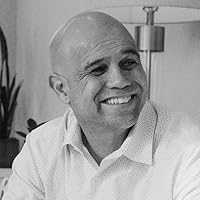
Kenny Fries

15 books16 followers
Kenny Fries received the prestigious Creative Capital literature grant for In the Province of the Gods. He is the author of Body, Remember: A Memoir and The History of My Shoes and the Evolution of Darwin’s Theory, winner of the Outstanding Book Award from the Gustavus Myers Center for the Study of Bigotry and Human Rights. He is the editor of Staring Back: The Disability Experience from the Inside Out and the author of the libretto for The Memory Stone, an opera commissioned by the Houston Grand Opera. His books of poems include Anesthesia, Desert Walking, and In the Gardens of Japan.

Kenny received the Creative Arts Fellowship from the Japan-U.S. Friendship Commission and the National Endowment for the Arts, has twice been a Fulbright Scholar (Japan and Germany), and has received grants from the DAAD (German Academic Exchange), Canada Council for the Arts, Ontario Arts Council, and Toronto Arts Council.

He teaches in the MFA in Creative Writing Program at Goddard College.

Ratings & Reviews

What do you think?
Rate this book

Friends & Following

Create a free account to discover what your friends think of this book!

Community Reviews

5 stars
24 (40%)
4 stars
15 (25%)
3 stars
13 (22%)
2 stars
6 (10%)
1 star
1 (1%)
Displaying 1 - 13 of 13 reviews
Profile Image for Colin.
710 reviews21 followers
March 16, 2008
There were parts of this book that I could really relate to, particularly the parts related to Kenny Fries' special shoes, which are his mobility aid. I can totally relate to that as a person for whom shoes are a central issue. I go through like a pair a month because of the way I walk. And, Kenny Fries is a good writer, especially about his personal experience. I liked that.

I also liked the way Fries uses scientific arguments, based in Darwin's theory of variation of species, to talk about disability. It was an interesting way to complicate the relationship between science/the medical model and the cultural model of disability.

The thing that really, really, weakens the book is that Fries, in discussing Darwin's theory of evolution, and even when specifically talking about eugenics, only talks about race for a few paragraphs, and he has no analysis of colonialism at all. That, to me, is kind of mind boggling. I don't understand how you could not discuss that.

In the personal narratives, he actually goes to the Galapagos Islands, Bali and Thailand, and he threads portions of this together with the journeys of Darwin and one of his contemporaries, Wallace. Nowhere in this whole thing is there any exploration of what it meant for Darwin and Wallace to traipse across the globe to colonized lands arbitrarily naming, collecting and removing the various animals and plants they found, or any real exploration of concepts of "savage" vs. "civilized" that Darwin et al relied on, and Fries certainly does not extend this line of thought to think about how that history might relate to his own touristic travels.

It was seriously disappointing. I was thinking, maybe he's going on the "single-focus theory" where he's "just trying to talk about disability." Which is of course problematic in itself. But then he an incorporated analysis of sexuality. So I'm left to conclude that he didn't include an incisive and comparable analysis of race because as a disabled gay man, he must identify as "white" (even though he's Jewish) and not feel that he "experiences" race, so he didn't find the thread to connect that analysis with his personal story. I don't know. It was just very very disappointing. Meh.
Profile Image for Ivan.
802 reviews15 followers
December 5, 2009
I have to admit to feeling not a little ashamed of myself while reading these life-affirming vignettes. I have been taught not to judge my insides by someone else's outsides; people can "look" pretty damn good, but be all messed up inside. Well, the reverse is true in this gem quality book by poet Kenny Fries. Gay, Jewish and physically handicapped (but by no means disabled), the author simply looks upon himself as normal, no different from anyone else. He views his physical handicap as an obstacle to overcome, not unlike anti-Semitism and homophobia, and certainly not a limitation. he climbs mountains, rafts down the Colorado, publishes acclaimed poetry and travels the world on exotic nature expeditions. So, why am I ashamed? Because, I'm able bodied and "choose" to sit on my pity-pot and bellyache about all the things I don't have and can't do, while Kenny Fries is out there persuing life's grand adventure.

Mr. Fries is a Darwin scholar; the entire premise of this uniquely rendered work is that each of us as individuals are presented with challenges in life (not "just" physical), and that the key to our success or happiness lies within our willingness and ability to adapt. Thus even the theory of "survival of the fittest" must be adapted in its application to the human race, as it is our ability to reason that elevates us and not our brute strength or physical prowess; the obvious and fatal flaw in Hitler's final solution theory. Might never makes right, and our ability to wage war doesn't solve our problems of global warming, poverty and prejudice. We must adapt to our ever changing environment because the alternative is too grim to accept. Kenny Fries has personalized this theory to stunning affect; his resiliency and steadfast courage to face life as a challenge and an opportunity are an inspiration to us all.
Profile Image for Sarah Rigg.
1,673 reviews23 followers
November 26, 2018
I loved this. It is one of my favorite books on disability of all time. Fries was born without several of the bones in his lower legs and, while he can walk, he needs the aid of a cane and special orthopedic shoes. The story interweaves the saga of Kenny trying to find someone who can make new shoes to fit his special feet with the tale of the development of the idea of evolution and natural selection. When Fries first hears about the idea of "survival of the fittest," it is very threatening to an 8-year-old disabled boy. But the more he learns about evolution, including visiting the Galapagos Islands where Darwin first expanded and developed his ideas, he begins to realize that the "fittest" is something that constantly changes and that everybody has to adapt. Beautifully written, occasionally funny, with suprising and unexpected insights. Highly, highly recommended.
27 reviews3 followers
March 12, 2008
Any one who has read Fries' work before knows that he is one of the main forces in the disability studies literary movement, have written poetry, autobiography, and important anthology of dis lit. In this book, Fries parallels his own person attempts at adaptation to his environment with Darwin and Wallace's formation of a theory of evolution. It is light, easy to read, but makes some interesting points as well. If you are still stuck back in the charity or medical models of disability, you should check it out.
Profile Image for Tom Schulte.
3,440 reviews77 followers
January 22, 2026
Disabled from birth due to missing legbones, Fries still has an active, participatory life including adventure travel. This memoir interleaves his life journey with an overview of the history of the evolution of Evolution: That is the development of the theory largely by Wallace and Darwin and their interactions. It feels as id the evolution history part is a dodge, like changing the subject from an uncomfortable topic. It is when reflecting upon and articulating his experience as a differently abled person that he makes observations more than any of the historical review:

Throughout my life, friends and strangers have asked me "What happened to your legs?" There was a time earlier in my life when I, too, could not stop asking why at birth I was missing bones in my legs. Chance, the fuel of natural selection, was not at that time a satisfactory explanation.

Disability studies theorist Lennard J. Davis echoes Bagemihl, showing how, when we speak of disability, we associate it with a story, place it in a narrative. A person became deaf, became blind, was born blind, became quadriplegic. The impairment becomes part of a sequential narrative.

By doing this we think of disability as linked to individualism and the individual story. What is actually a physical fact becomes a story with a hero or a victim. Disability becomes divorced from the cultural context, and becomes the problem of the individual, not a category defined by the society. The dialectic of normalcy-for someone to be normal, someone has to be not normal is kept intact.


Evolution as interpreted in the Gilded Age leading to US/Europe-spawned organized killing and harming that we can see some relevance.
The global economic recession of the 1870s encouraged the view of societies in competition in a hostile world. In the United States, business leaders such as Andrew Carnegie believed that unrestrained competition was natural selection at work. Human intervention could not mitigate the struggle for existence.

In the United States toward the end of the nineteenth century, Social Darwinism transformed into eugenics. Whereas Spencer and the Social Darwinists advocated a laissez-faire policy, sup-porting the status quo of the economic and social hierarchy, eugenicists advocated an active governmental and institutional role in "purifying" society of perceived "weakness."

In 1881, Alexander Graham Bell, inventor of the telephone, researched deafness in Martha's Vineyard, Massachusetts. He concluded that deafness was hereditary. In "Memoir Upon the Formation of a Deaf Variety of the Human Race" he recommended a marriage prohibition for the deaf. He warned that boarding schools for the deaf could become breeding grounds for a deaf human race. In 1896, Connecticut became the first state to prohibit the marriage between anyone who was "epileptic, imbecile or feeble-minded."

By the 1880s, European studies stressing the heredity of criminality had become the basis for "criminal anthropology" in the United States. In 1887, the superintendent of the Cincinnati Sanitarium issued the first published recommendation of sterilization for criminal activity.

Race increasingly became a focus for eugenics. Darwin rejected the idea that different races were different species.

....

After the stock market collapse of 1929, it became difficult to believe the correlation between economic status and intelligence. During the Great Depression of the 1930s, social scientists shifted their emphasis to the social causes of human difference.

...

After the war, when asked why eugenics declined so quickly in the United States, Popenoe admitted "the major factor ... was undeniably Hitlerism." But as early as the 1880s, reformers such as Powell and Boas spread Darwin's message that no one stayed on top, because change and adjustment were the order of nature. Boas, invoking the Darwinian notion of constant change, asked: Was it possible that traits thought to be desirable today, would be viewed otherwise in the future?
85 reviews
July 18, 2022
I loved this book - it happens to be at the intersection of things I love to read about - the history of science and persons adapting to disabilities. Great writing and an original and thoughtful play on it.
4 reviews
November 2, 2025
Breathtaking

I’ve been to the Galapagos—vicariously—something I won’t be able to do in this body. What a joy, and what a joy to be let in on another’s clever, determined adaptations. Thank you, Kenny!
10 reviews1 follower
March 11, 2009
A beautiful, lyrical, deeply insightful book. It's prose, but written with a poet's sensibility. A fast read, that I didn't want to end.

Fries, who has a congenital disability, meditates on evolution, adaptive technology and dis/ability. It's been several years since I first read it, and it continues to shape my thinking about disability.
Profile Image for Kathryn.
Author 4 books30 followers
April 8, 2009
I wish all high school students could read this book. It's such a beautiful and poetic argument for diversity and awareness of others and the natural world.

Read my full review in Flutter
Profile Image for Erica.
486 reviews8 followers
July 27, 2007
Wow, disability culture, gay coming of age, nature travels, and Darwin developing his theory of evolution. Not in that order. Interesting stuff.
1 review3 followers
January 8, 2008
One of the best books I've read in a long time. Profound story of disability intertwined with Darwin's theory. Beautifully written, and, in the words of one reviewer, "quietly revolutionary"
Profile Image for Donnelle.
Author 9 books28 followers
July 6, 2008
Touching - Strong - a poetic history of Evolution and a beautiful story of a man's journey to adapt/live.

Very strong book.
Profile Image for Karen.
13 reviews6 followers
September 2, 2008
"A gene or an individual cannot be called 'fit' in isolation but only in the context of a particular environment." Really good read.
Displaying 1 - 13 of 13 reviews

Can't find what you're looking for?

Get help and learn more about the design.