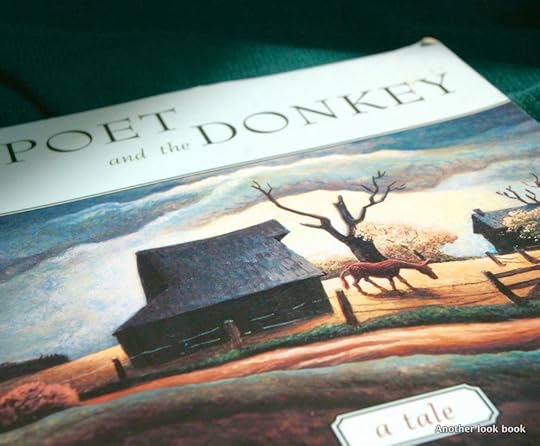
May Sarton conducts us on a small, sophisticated, elegantly sentimental journey through a New Hampshire village summer. Our companions are an aging poet, who is sad because he can no longer write--he has lost the joy he used to have in simply being alive--and a young, mischievous female donkey, who is sad because she can't run and play--she has a touch of arthritis...
May Sarton was born on May 3, 1912, in Wondelgem, Belgium, and grew up in Cambridge, Massachusetts. Her first volume of poetry, Encounters in April, was published in 1937 and her first novel, The Single Hound, in 1938. An accomplished memoirist, Sarton boldly came out as a lesbian in her 1965 book Mrs. Stevens Hears the Mermaids Singing. Her later memoir, Journal of a Solitude, was an account of her experiences as a female artist. Sarton died in York, Maine, on July 16, 1995.
A charming, whimsical sort of story, perfect for a fall day. I'm so thankful to anyone and everyone who recommended I read more of May Sarton's fiction. Like A Shower of Summer Days, this was like some sort of rural, episodic foray, delightfully filled with a sense of place and timelessness. My favorite aspect was how Andy, our poet protagonist, longed for isolation on his New Hampshire homestead, and yet he clearly needed to be around people (or a donkey) in order to feel like he was connected to something greater than himself. I can definitely relate to that.
This is a simple, sweet novel that tells of a poet, his struggles with the muse, and a donkey named Whiffenpoof. Adding to the story are lovely little snapshot illustrations by Stefan Martin which help to bring Sarton's words to life.
It's an easy, lovely story, gorgeously written, and as calm and refreshing as a Sunday morning drive through the country, as if from another time.
A sweet, low-stakes cozy country tale that’s about exactly what it says, but also, of course, more. Head pats all around, and a gold star for the adorable first edition lent by the library.
A dear little book. And nice to read a book about older people and creatures that does not (spoiler alert) end in the death or even the imminent prospect of death of either party. I think I'd like to read more May Sarton.
This is a charming tale about love, loss, grief and recovery. Its characters are in many respects analogous to those of May Sarton’s earlier novella, Joanna and Ulysses, which is also centered on the same themes. These themes are developed and explored in greater depth in this tale.
In this novella a poet is getting old. He needs to be inspired by a lover, be she involved in a relationship with him, or be his love unrequited, in order to write. His latest muse rejected his affections in no uncertain terms throwing him into a deep depression, and leaving him unable to work or write poems. Seeking a way out of his depression, he decides to care for another creature. Therefore, he borrows the arthritic elderly donkey of a neighboring family for the summer, and looks after her. As he does so, he learns about himself, and experiences joy again while the donkey regains her ability to run and play. Two broken and hurt creatures heal one another in this sweet story.
Over the years, I've read all of May Sarton's journals, my favorite being The House by the Sea. I love how her insightful, meandering thoughts about aging, creative life, muses, solitude, rural life, and animals. This short novel--the first fiction by her I've read--incorporates all of that, from the point of view of a male poet protagonist who I couldn't help but read as her. This dear, simple novel is a delight.
Read this in search of inspiration for a book club discussion on "Running With Sherman". This is a sweet tale about an aging poet and his search for his muse who he thought he had lost. He borrows a donkey to care for to learn something new to take his mind off his writer's block. His relationship with Whiffinpoof is just what he needed for more than just poetic inspiration.
Another May Sarton to love. Another quote: "This, in some mysterious way, was it. If we have selves, he thought - and many people do not seeem to - it is becuase each of us carries a secret image, a kind of mythical being buried somewhere under his ordinary appearance, a hero, perhaps, or a saint, or something quite different." (p. 124)
Quirky, interesting book. Was given to me as a present years ago and I finally read it. Some useful wisdom about life here. Occasionally a bit maudlin, but mostly on point. Help for getting yourself on track, inspired, and able to create.
- For silence was the language, a silence teeming with signs and symbols. And Andy himself was tuned very high, listening for the inaudible and trying to see the invisible reality behind every bush and stone and tree...-
- You see, Hetty dear, this is a matter of poetry, not of dignity. -
- It had been a long time since words had come to him fresh, not worn-out counters to be manipulated. Wonderful it was to feel his blood flow faster as he set down an adjective, and a faint sweat gathered on his upper lip. The Japanese have a word for this disengagement that accompanies expertise at the highest level. Muga they call it, when dance and dancer become on and all is fused. -
A charming and quick little book about a poet who has lost his muse and is no longer able to write, and the donkey he borrows from his neighbors, who, in time, becomes his missing muse. There isn't much to this story, which is refreshing; the book really does just follow the poet as he borrows the donkey and learns to navigate the language between the two until they both become just what the other needed. There's a moral, of course, but overall this is the perfect book if you need something to just make your afternoon that much better.
I have mixed feelings about this quaint title. It was appealing and yet just a touch out of reach. I like the idea very much, of a solitary writer seeking a muse and deciding, quite inexplicably, that borrowing his neighbor's pet donkey for the summer, will give his writing the kick it needs (haha). Sarton's a good writer, a poet and animal lover and gardener, all of which comes across. Her description of a poppy flower is quite remarkable and her affectionate descriptions of the donkey were all enjoyable. If you like quaint, gentle reads of this type, you might enjoy this book.
At this point, I was ready for an easy, slightly sentimental read. This was a perfect whimsical tale. It touched on some universal themes and discussed the bit of unique madness that lies within us all. The old poet who cannot finds his words surprisingly reached out and put words to some of the thoughts of a college student. It was a delightful read.
A light read about a sad and quirky poet. I read it in August, and it is fitting to do so: the descriptions of the hot and pastoral setting of New England were quite appreciated. And I never knew donkeys were so much fun.
Maybe I should give it a higher rating. I thoroughly enjoyed it but since I'm working through all her books, this one, read after so many others, seems almost too repetitive, over-using themes she's brought out over and over again in her journals and novels. I still enjoyed it.
It's a delightful little story about love, friendship, and creativity. I found it to be a little slow of a read, and it was awfully redundant in places and this made it a little of a chore to work through, but the story contained within is quite worthwhile.
Ok, I'm gonna need a donkey and a meadow of clover and a barn scarred by the teeth of long ago horses. This is a surprising story about magic animals, lonely people and the flame that can be rekindled in even the most calloused of souls. I will name my donkey Gloria.
I read this book in one sitting. As a poet, I can completely relate to the poet in the story. Parts of chapter one were like reading about my life as a poet. A great read, a must read for any writer.