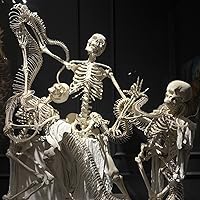
Two-legged goats, conjoined twins, 'Cyclops' infants with a single eye in the middle of their forehead, double-headed snakes, and Laloo, a man with a partially formed twin attached to his chest... In iFreaks of Nature/i, Mark S. Blumberg turns a scientist's eye on these unusual examples of humans and other animals, showing how a subject once relegated to the sideshow can help explain some of the deepest complexities of biology.
These examples of extreme bodily anomalies are in fact the natural products of development, and it is through such developmental mechanisms that evolution works. And Blumberg shows how 'freak' deformities can provide valuable windows on the intimate connections between genetics, development, the environment, and evolution. In taking seriously a subject that has often been shunned as discomfiting and embarrassing, Freaks of Nature takes the perspective of evolutionary developmental biology to shed new light on how individuals--and entire species--develop, survive, and evolve.
I'm being generous here because the subject matter was interesting and maybe if youre not someone who looks up weird shit on the internet you'll learn something new but most of the things he talks about I was familiar with and the thesis felt a little convoluted and unsubstantiated. I understand what he was getting at and it's a valid idea but he himself didn't convince me of it through his writing. It just felt like he was trying to find a way to make this weird information all come together and be relevant but it didn't really work.
The title put me off this right away, the opening chapter helped somewhat because it promised to be more than a parade of curiosities, showing some sympathy and understanding, but ultimately I didn’t feel it did really manage to rise above that. There was a lot of reiteration about ‘circus freaks’, etc, and I don’t think it got past the novelty factor of such cases. There were some rather odd assertions — that the figure of Atlas could’ve been inspired by people with a developmental issue who ended up with a globe of brain matter sticking out from their shoulders, for example; it seems a rather ridiculous idea to me, and I couldn’t find anyone else saying the same thing. And saying Janus could’ve been inspired by cases where faces appear on both sides of the skull — maybe, but I think it more likely it’s a metaphorical depiction arising from what the god was said to do.
The science wasn’t particularly in depth or surprising. I don’t think anyone denies that developmental factors can be as important as genetics during gestation.
I don't think I've ever read anything that managed to be quite as pretentious and condescending while simultaneously offensive and wrong, so A+ Mark Blumberg, well done. The first two thirds of the book are a poorly organized jumble of trivia (though not particularly diverse or in depth trivia) about both developmental biology and circus freaks. Then there's a chapter on sex ambiguities.
Is the author unclear about the difference between gender, sex, sexual identity, transgender issues, intersex issues, and what an asshole he is for calling intersexed people "intersexes"? Yes. Yes, he is. There was no part of the chapter that wasn't offensive; it was frankly impressive in how terrible it was. Worse, the science (and "science" in the form of the "expert" on transgender issues who doesn't think anyone is transgender ever and we're all a bunch of big fakers looking to justify our fetishes and/or gay self hate?) is really poor and unimpressive.
This book examines how abnormalities in development affect evolution largely and development on an individual level. His discussion about the ambiguities of sex and anatomical variations is very enlightening. P pp p Clearly this book would be targeted by those who want to ban books...
interesting quotes:
"The world is messy, and nature is unwieldy, unpredictable, and vastly more imaginative than we can ever truly capture - or ward off - with our blemish-free archetypes. Left to its own devices, nature always takes exception to the rule, undermines the archetype, and reminds us that our ideas about what is natural and what we should do to correct nature's 'imperfections' are as sound as a sandcastle battered by a rising tide." (p. 4)
"Some people feel that our current obsession with plastic surgery for cosmetic purposes - itself emblematic of the human tendency to tinker with what nature provides, in pursuit of beauty or perfection or simply to fill in nature's gaps - produces similarly grotesque results." (pp. 46-47)
"Ambiguity unsettles us. Consequently, we turn to dichotomies to help us divide the world into neat, unambiguous categories: good versus evil, genes versus environment, liberal versus conservative, even genocentric versus nongenocentric. But of all dichotomies, perhaps none is more entrenched, more personal, and more vigorously defended then that of male versus female. With each new challenge to the sanctity of this dichotomy -- typically coming from infividuals or groups seeking to fit into a culture that seems unable or unwilling to accept them -- a wave of reactionary responses ensues to 'save' our social and legal institutions from ruin." (p. 192)
"Intersex children do not immediately experience the distress that their parents feel. It takes time to learn that you do not fit in. None of us knows instinctively how we are supposed to look or act. We learn about ourselves through self-exploration and through comparison and interaction with others. If and when we feel distress about some aspect of our selves, it is because others make us feel that way. They point out differences. They ridicule and reject." (p. 193)
"...only an ecumenical approach to sex can accommodate the human condition as well as the full range of sexual diversity in the animal kingdom. If God had anything to do with this diversity, then He clearly has a taste for deviance." (p. 199)
"...what we observe throughout the rest of the animal world is a diverse and overwhelming collection of unisexuals, intersexuals, and myltisexuals that should sap any remaining strength we might have to sustain an impregnable wall of separation between the sexes." (pp. 236-237)
This is a strange book. That doesn't mean it isn't profound. Having spent most of my life in the humanities, I delve into science frequently to see what I've been missing. I'd never heard of developmental evolution ("devo evo") before. It's a fascinating idea. We were taught that genes are the basis for evolution, and that we are "programmed" to function accordingly. Blumberg shows that the evidence suggests this isn't the whole story.
Beginning with monsters (which is why I picked the book up in the first place), Blumberg describes how organisms that fall outside the average ("freaks") are actually part of a continuum. Such individuals, if they survive, adapt non-standard ways of interacting with the world. He discusses, for example, quadrupeds born with only hind legs whose bodies change to adapt bipedalism. These abilities can be passed on although they aren't genetic. This is mind-blowing stuff.
This isn't an easy book to read for the squeamish. It is, however, an important book. We tend to think the world is one-size-fits-all when it comes to passing on traits. With the scientific knowledge to back him up, Blumberg shows that the world is much more complex and subtle than that. There's much to digest here and much that will challenge convention. It is a book, I believe, that will reward re-reading when scientific orthodoxy becomes too oppressive.
Had to read and present on chapters in this book for school so I think you already know how I feel about it.
It’s a really interesting topic and there’s a bunch of really cool facts in here as well, but jesus christ someone did not make an outline before they wrote this book. While each topic is sectioned by chapter, within those chapters the information is all over the place. Also, I have some problems with the last chapter but I’m not even going to go into that because I’m ready to be done with this.
This is very educationally enlightening as it enables readers to understand the nature of life on earth through the lens of Evo Devo (evolutionary developmental biology) that focuses on development process of embryos.
This reminds me of when I read books on brain science which point out that brain scientists learn a lot about our brains by focusing on people with brain diseases. Likewise. the author posits that studying freaks of nature (organism that exhibits physical anomaly of various kinds) reveals the incompleteness of Darwinism and Genes-centric biology that cannot convincingly explain freaks or lay out inaccurate/incorrect theories in trying to explain freaks. To better understand the true nature of life on earth, one would do better to incorporate Evo Devo into existing bodies of biological knowledge to form a unified framework of biology science.
It gives me a pleasant surprises when the author starts this book by relating to the mythical Greek figures such as Cyclop (one-eyed giant) and Janus (a god with 2 faces on one head) and saying that they are based on real phenomena in nature. He revels that, in a long history of nature, there have been rare cases of living beings (man and animals) with 1 eye or 2 faces on one head, even 2 heads in one body! (The Hensel twins.) The author explains that dichotomy is very rare in nature which actually exhibits more a continuum in between dichotomy and he uses embryo development process to discuss this matter. He says that one-eyed being is a result of underdeveloped process while two-faced being is the result of overdevelopment and then he prows on into the essence of Evo Devo.
The author also discussed in details the controversial issue of human sexuality that most people who forget or do not know science always expect that sex means either male or female (dichotomy) while the real nature of sex is a continuum. Fished can change their sex at will !?! He also explains that some of behaviors that were explained by past biologists as being hard-wired in the brain are actually results of development process that influences the formation of those behaviors.
I have already read a few books and watch documentary films on Evo Devo and find that this book adds some more on what I have learned so far.
Next time we see freaks of nature, we would do better to appreciate that they are the result of the same natural development process that produces what we think of as the "normal" which is just the center of the "normal distribution curve" (as statisticians are familiar) but all curves also have leading and trailing tails as well. The tails are rare but they are part of the same process that builds the normal.
The essential knowledge from this book also reminds me that knowing history of any matters is crucial to inducing a true understanding and appreciation of any matters of our interest, not just science but also society, culture, politics, etc. After all, biological development is the history of a life! The entire current USA federal cabinet should take this at heart! (I know they won't.)
In summary, this book is essential for those who are interested in biological science and have already been well acquainted with Darwinism and Genetics to be able to obtain a more accurate view of biological system.
This book was interesting to read to be sure and there was lots I discovered that I didn't know about previously which got me imagining about weird and wonderful creatures that I hope I may be able to see one day.
Blumberg talks about epigenetics and gives you a visual representation of it's nature and process which aligns with his central idea throughout the book which is 'evolution alone can't account for all the variation and development in the natural world'. I felt he pushed this notion too hard at the reader at times though and instead of the individual cases being novel and intriguing you could see they were only brought up to back up his hypothesis which in turn made for taxing reading.
There is some seriously enjoyable stories and facts laden in this book though. Such as the importance of limb buds, the bipotential nature of the stages of human embryo development, the oddness of snakes & turtles, function of the separate vertebrae of the spine, gastrulation period of pregancy, the difference between TDS & GDS and others beside.
Objectively interesting information but this book was very poorly organized and generally pretty boring. It felt like this book was the same chapter over and over again, but with a few different interesting facts sprinkled in there. Bonus points for being surprisingly understanding and sympathetic towards intersex/transgender people in the last chapter, but I wish that chapter was more cohesive. Like the rest of the book, this chapter could have been interesting, but the information was presented in such a boring way.
Had this book been called "Freaks of Nature: What Anomalies Tell Us About Genes, Development, and Behavior" I would have easily given the book three stars. I wasn't crazy about the writing or the organization, but the concept and the stories were interesting. I bought the book expecting (based on the title) there to be ample discussion on what anomalies might tell us about speciation. For example, could a mutation that leads to a pair of four-winged parents producing a two-winged offspring lead to an eventual new species (the so-called hopeful monsters or freak of nature)? Even though the book seems on the surface to be a crusade against Neo-Darwinian ideas, and the title suggests an evolutionary bend, there is very little substantive discussion about speciation (despite several references to Goldschmidt's work) and evolution in general.
In spite of the adverse reviews, I think this book is a very good read, it is entertaining and very informative. Overall the claim is very appropriate and it has profound consequences on the more general philosophical thought underpinning but also deriving from scientific studies: we are all freaks, what we call freak is just another path in evolution/development. I found of central importance the section on sex and gender, which has a direct connection with Butler's ideas: we grow up with the idea that sexes are a genetic and physical given, a difference etched in our most intimate conformation, whereas it is indeed subject to do many differences, and there are in the animal world so many different, non binary examples of sex and reproduction, that must stop thinking about gender and all the more so about sex in outdated binary and deterministic terms.
I like the information provided by this book but not the style in which it is presented. While reading I got the impression that the author had trouble structuring the narrative and had problems prioritizing the information he is trying to convey. It shambles between trying to be funny and being too dry and academical without being able to hit the golden middle ground between the two. I'm glad I read it since it does provide a summary of the information I needed but I doubt I will try books by this author again unless there aren't any alternatives available.
I thoroughly enjoyed this book, which concentrates on the importance of the "Devo" in EvoDevo. By looking at the development of "freaks and monsters", both abnormally developed individuals (like a two-headed snake, a goat without forelegs or a human born without legs), and normally developed animals with strange properties (like regenerating limbs, multiple sexes, strange senses, weird mating systems), the author emphasises how much development shapes life, without help from the genes.
So far, interesting, but the author seems desperate to be seen as controversial, putting forward a view that is largely within the mainstream (i.e. that genes and the environment interact, and that much of evolution is controlled at a developmental level) and making artificial contrasts between the gene centric view
definitely a must read for those interested in development!! most of the book is at a layman's level, explaining development and genes. i almost wish i hadn't known the information in it, as it was so fascinating to read all together (instead of piece-mealing it together as i had through my job). if you're an expert, don't expect to find anything new; this is development at its most basic.
This is a fantastic, interesting read. Dr. Blumberg is a professor at the U of I and he is a great storyteller of science. This book made me realize how uncomfortable I am with anomalies and how comfortable I should be. How often does a science book make you question yourself like that? Highly recommend.
This book is more about the debates between scientists about the implications of these "freaks" than about the freaks themselves. If you want a history of research of evolution, evo devo, and embryonic development, you'll like this; otherwise, look elsewhere.
Interesting information and some valuable science on developmental biology and evolution. I enjoyed the argument for epigenetics, however, later on it becomes repetitive.