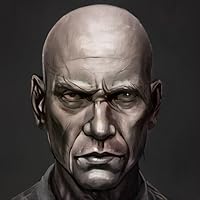
They were humanity's hope - the first young people selected to leave Earth for study in the Galactic Federation. But something went wrong in deep space. Terribly wrong. Suddenly Jim Rawlins, Ellen Bouvier, Curt Harrington, and the squirrel-like Alien philosopher Peep were castaways, stranded on the Quarantined World of Quebahr - with no training, and little hope of rescue. Between them and the Federation's emergency beacon were primitive Mauregs, aggressive Walats, lizard-like Noifs - plus danger, conspiracy, and the mystery of an impending high-tech war on a backward, peaceful planet. Without warning, the future of two worlds - Earth and Quebahr - depended on three young humans' ability to adopt and survive.
Gordon Rupert Dickson was an American science fiction author. He was born in Canada, then moved to Minneapolis, Minnesota as a teenager. He is probably most famous for his Childe Cycle and the Dragon Knight series. He won three Hugo awards and one Nebula award.
Written in 1965 it is what would probably now be called a young adult novel, and tells the tale of mankind being on the edge of an invitation to join a galactic federation (all before Star Trek). The aliens have arrived and made themselves known, but before humanity can join the celestial species they have to prove they can reach the stars first. Interstellar drive is the order of the day.
While all of this is happening a number of Earth teenagers are selected to travel out into space to meet the people of the federation and to prepare the way for mankind’s arrival.
Things do not go according to plan and three of the teenagers find themselves trapped on a planet where the society is on the cusp of a technological revolution. The story follows their attempt to make their way to a hidden communication centre and to try and keep their presence on the planet a secret.
There is nothing special in the story. The characters have personalities, but I have seen better by the same author. The SF elements are of their time, although Dickson manages to circumvent a lot of the future technology issues by only mentioning one or two hi-tech devices, and just telling us what the alien technology can do without explaining it. The planet is interesting, and the technology there works well being at a slightly lower level than ours, with a few deviations.
Dickson presents some good ideas that at least show his potential, making the reader consider that not all civilisations are going to be versions of our own; even if they look similar to us, they are alien.
In all a fun, easy read but otherwise uneventful.
I did see the twist at the end coming, but then I am a bit older than the age group the book is targeted at.
I like to read some older science fiction form time to time and Gorden R. Dickson is one of my turn to authors. That being said this was not one of his best works. It is a juvenile in the same vein as Heinlein's earlier works. I knew this going in but I like juvenile's sometimes as they remind me of and earlier time in my life. This one just didn't do much for me. That is unusual with Gordon R. Dickson because I usually enjoy his books tremendously. If you are a fan of Gordon R. Dickson you might want to read it but otherwise I would steer clear of this one.
There’s a major theme made clear near the end that will be familiar to fans of Star Trek. Wouldn’t be surprised if this idea appeared in earlier SF, but this was published shortly before Star Trek first aired.
This novel, written for teens way back in the 1960s, had an interesting premise. Aliens have landed on Earth and announced that mankind could join the vast community of civilizations...as soon as we qualified, technologically. This, of course, disrupted human civilization and culture quite a bit, as mankind rushed to do the needed research, but it also spawned fringe groups which didn't like the aliens. The story itself is about three teens, chosen to be educated by the aliens. An odd trio...the central character reminded me of Tom Swift...a high-tech gadget freak. The others seemed ill-chosen...an anti-alien goofball and a girl whose skills seem obsolete, at best. Together, they get put in a stressful situation, and have to think their way out. An astute reader will figure out that some of what they are going through may be a deliberate test, but the rest? Like many of Dickson's books, this one is really about culture and civilization...in this case, the dangers of interactions between cultures of vastly different levels of sophistication. Not perfect, but very good.
An interesting story that starts of powerfully but boils down to a quick resolution that betrays the build up laid out in the opening sequences. Clean and very straight forward, the mystery of the book is highly transparent, but interesting nonetheless. The book almost banks into the realm of fantasy for the majority of the story, and as such becomes very unbelievable and begins to lose a touch of the immersion that captures a reader's attention in the earlier more science oriented pages.
Overall a short little piece worth a read to anyone not wanting a challenge. The largest disappointments were found in the underdevelopment of the more interesting races of Aliens shown.