

What do you think?

Russian Criminal Tattoo Encyclopaedia Volume I
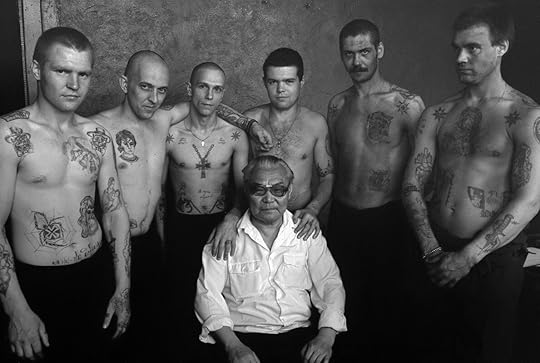
Occasionally a book is published that reveals a subculture you never dreamt existed. More rarely, that book goes on to become a phenomenon of its own. The 2004 publication of the "Russian Criminal Tattoo Encyclopaedia" was such a phenomenon, spawning two further volumes and alerting a fascinated readership worldwide to the extraordinary and hermetic world of Russian criminal tattoos (David Cronenberg, for example, made regular use of the "Encyclopaedia" during the making of his 2007 movie "Eastern Promises"). Now, Fuel has reprinted volume one of this bestselling series, whose first edition already fetches considerable sums online. The photographs, drawings and texts published in this book are part of a collection of more than 3,000 tattoos accumulated over a lifetime by a prison attendant named Danzig Baldaev. Tattoos were his gateway into a secret world in which he acted as ethnographer, recording the rituals of a closed society. The icons and tribal languages he documented are artful, distasteful, sexually explicit and sometimes just strange, reflecting as they do the lives and traditions of Russian convicts. Skulls, swastikas, harems of naked women, a smiling Al Capone, medieval knights in armor, daggers sheathed in blood, benign images of Christ, sweet-faced mothers and their babies, armies of tanks and a horned Lenin: these are the signs by which the people of this hidden world mark and identify themselves. With a foreword by Danzig Baldaev, and an introduction by Alexei Plutser-Sarno, exploring the symbolism of the Russian criminal tattoo.
400 pages, Hardcover
First published January 1, 2009
Ratings & Reviews
Friends & Following
Create a free account to discover what your friends think of this book!
Community Reviews
Displaying 1 - 30 of 35 reviews

March 24, 2019
Don’t ask me why.
But I’m OBSESSED with this.
#ShadowMaterieal
But I’m OBSESSED with this.
#ShadowMaterieal

May 29, 2016
Not as good of an introduction to the topic as Bronnikov's book, but it serves as a great compendium of the wide variety of these tattoos and includes some fairly quirky, amusing (and also some extremely explicit) ones. I would suggest reading Bronnikov's book first and then further exploring the topic with Baldaev's multivolume work.

February 8, 2022
Pretty sick. Extremely nihilistic and depressing, which uh duh I guess. Put me in a very grim mood, especially the drawings of male tattoos.
Should be 10/10 for inspiring Viggo's tatts in Eastern Promises
Should be 10/10 for inspiring Viggo's tatts in Eastern Promises

January 24, 2020
What an interesting look at criminals and their way of communicating via tattoos as a “living letter.” The book covers background of some of the most common Russian criminal tattoos, their possible code, and stories of some of the people. What for some regular people just seems as a collection of random pictures, for them it displays a secret meaning.
“Tattoos act as symbols of public identity, social self-awareness and collective memory.”
Sometimes provocative, often vulgar, the selection of pictures are splendid. Tattoo drawings and descriptions hold criminal mentality, resistance against the system, and character of the person.
“Tattoos act as symbols of public identity, social self-awareness and collective memory.”
Sometimes provocative, often vulgar, the selection of pictures are splendid. Tattoo drawings and descriptions hold criminal mentality, resistance against the system, and character of the person.

December 22, 2021
tattoos were interesting to look at and examine, but as a project dubiously framed. shoots itself in the foot by displaying the very obvious link between anti-communism and nazism while also... being presented as a whole (by what little prose it includes) with an anti-communist bent. hmm...

March 22, 2023
The Foreword and Introduction are extremely well-written. Some of the images are pornographic.
Initially, I had looked over this book in 2011 when my interest in tattoos was new and I gave the volume a one-star rating. I suppose at that time I mainly looking for tattoo ideas rather than learning about tattoo history, and I certainly wasn't prepared for the images I encountered. I revisited in 2023, read the introduction in entirety with a new perspective. The book is mainly informative in regards to historical depiction. Although I'm not interested in the political implications, I found a couple of images interesting. One was the year of birth tattooed on the fingers and another the amusing bear playing an accordion.
Favorite Passages:
Foreword by Danzig Baldaev
"My son, collect the tattoos, the convicts' customs, their ani-social drawings, or it will all go to the grave with them." He taught me the methodology for documenting prison folklore and how to encode material, which was essential to this dangerous undertaking.
________
As in a mirror, everything the country has gone through has been reflected in prison and camp life. Is it a distorted mirror? I don't think so, despite all the naivety, superstition and perversity that is typical of the convict's way of thinking. Ideological lies, skillfully devised international conflicts, the humiliation of people, the denial of the right to a dignified life - or to life itself.
________
I have managed to "scoop-up" some of the filth form our slavish past that is now disappearing and record it, "in all its glory," for future generations.
Introduction
The Language of the Body and Politics:
The Symbolism of Thieves' Tattoos
by Alexei Plutser-Sarno
Tattoos are a unique language of symbols and the rules for "reading" them are transmitted via oral tradition. Esoteric in nature, this language resembles thieves' argot and it performs a similar function by encoding secret information to protect itself against uninitiated outsiders.
________
The tattoo text is not linear, but volumetric and multidimensional.
________
We live in a virtual age, where written language has become electronic and books, libraries, presidents, prisons and humans have all become just one item in a list of possible realities. The value of high literary culture has been relativised. We have been made aware once again of the conditional nature of any world that exists, we have sensed that all the sacred written texts exist in only one of a multitude of imaginable realities. And of course, tattoos also exist in three realities: on the human body, on the Internet and on paper, more specifically in this publication.
Initially, I had looked over this book in 2011 when my interest in tattoos was new and I gave the volume a one-star rating. I suppose at that time I mainly looking for tattoo ideas rather than learning about tattoo history, and I certainly wasn't prepared for the images I encountered. I revisited in 2023, read the introduction in entirety with a new perspective. The book is mainly informative in regards to historical depiction. Although I'm not interested in the political implications, I found a couple of images interesting. One was the year of birth tattooed on the fingers and another the amusing bear playing an accordion.
Favorite Passages:
Foreword by Danzig Baldaev
"My son, collect the tattoos, the convicts' customs, their ani-social drawings, or it will all go to the grave with them." He taught me the methodology for documenting prison folklore and how to encode material, which was essential to this dangerous undertaking.
________
As in a mirror, everything the country has gone through has been reflected in prison and camp life. Is it a distorted mirror? I don't think so, despite all the naivety, superstition and perversity that is typical of the convict's way of thinking. Ideological lies, skillfully devised international conflicts, the humiliation of people, the denial of the right to a dignified life - or to life itself.
________
I have managed to "scoop-up" some of the filth form our slavish past that is now disappearing and record it, "in all its glory," for future generations.
Introduction
The Language of the Body and Politics:
The Symbolism of Thieves' Tattoos
by Alexei Plutser-Sarno
Tattoos are a unique language of symbols and the rules for "reading" them are transmitted via oral tradition. Esoteric in nature, this language resembles thieves' argot and it performs a similar function by encoding secret information to protect itself against uninitiated outsiders.
________
The tattoo text is not linear, but volumetric and multidimensional.
________
We live in a virtual age, where written language has become electronic and books, libraries, presidents, prisons and humans have all become just one item in a list of possible realities. The value of high literary culture has been relativised. We have been made aware once again of the conditional nature of any world that exists, we have sensed that all the sacred written texts exist in only one of a multitude of imaginable realities. And of course, tattoos also exist in three realities: on the human body, on the Internet and on paper, more specifically in this publication.
April 22, 2024
In an attempt to try to explore contemporary subcultures, I picked up this book. Interest stemmed from the past few books I’d read in which a culture was familiar, yet different by virtue of existing hundreds of years ago.
I started thinking about how we all live in slightly different realities and see the rules of a correct life differently. It’s why we follow different paths. Yet, we judge and are judged by those that live within the bound of our reality as well as by those that live outside those bounds.
This book discusses the codes/symbols that align with the lifestyle of a thief in the Soviet regime. A thief’s jargon/symbolism is a foreign language to an individual outside the bounds of this particular reality.
It is not just time or language that separates cultures, but really a conceptualization of reality.
I appreciated that this book kept the criminals within their own realm by not proposing ideas of “noble criminals” or “villain criminals.” The most accurate value judgement that can be placed on an individual is one that is given by someone within their sphere, because it’s the one that the psychology of the individual will accept as the real truth. We (as outsiders) have no ability to judge, having no tool to understand or grasp their truth.
I started thinking about how we all live in slightly different realities and see the rules of a correct life differently. It’s why we follow different paths. Yet, we judge and are judged by those that live within the bound of our reality as well as by those that live outside those bounds.
This book discusses the codes/symbols that align with the lifestyle of a thief in the Soviet regime. A thief’s jargon/symbolism is a foreign language to an individual outside the bounds of this particular reality.
It is not just time or language that separates cultures, but really a conceptualization of reality.
I appreciated that this book kept the criminals within their own realm by not proposing ideas of “noble criminals” or “villain criminals.” The most accurate value judgement that can be placed on an individual is one that is given by someone within their sphere, because it’s the one that the psychology of the individual will accept as the real truth. We (as outsiders) have no ability to judge, having no tool to understand or grasp their truth.

March 18, 2022
coolest shit ever

April 5, 2024
"My father used to tell me that in Sanskrit the word Rossiya (Russia) means 'experimental country of field of Satan'. A soothsayer told my father: 'At present the fiends and devils have nothing to be afraid of. They used to fear priests, shamans, churches, monasteries, mosques and remples, but now in human form they have become communists, NKVD men, informers (the petty devils) and member of 'Poor Peasant Committees".
Man ir nedaudz iebildumi pret nosaukumu Encyclopaedia, jo šis tomēr ir vairāk antropoloģisks lauka pētījums, nevis enciklopēdija. Autors rūpīgi piefiksējis konkrētu cilvēku tetovējumus, konkrētā zonā, konkrētā laikā. Kādā veidā padomju laika kriminālās aprindas rakstīja savas biogrāfijas sev uz ādas, vienlaikus paužot nepakļaušanos sistēmai un varas orgāniem. Interesanti, ka šeit komentāros ārzemnieki pilnīgi nevar iebraukt, kāpēc tetovējumos ir tik daudz žīdu tēmas un nacisma simbolikas. Galvenais -viņiem ir grūti saprast 'otricala' konceptu.
Zīmējumus un fotofiksācijas papildina biogrāfiski stāsti un simboliskais skaidrojums. Ļoti laba ievadeseja no paša autora un otra - no profesionāļa.
Tātad, par enciklopēdiju to nevar saukt, tomēr pēc tam, kad esi izgājis cauri šīs grāmatas lappusēm, šo to no krievu zeku tatuhu simbolu bāzes sapratīsi gan. Man gan tētis bērnībā rādīja kriminālistu rokasgrāmatu, kur tiešām bija simboli sastrukturēti un atšifrēti.
Drusku gan žēl, ka citās valstīs šī tēma tiek romanticizēta. Kronenberga filmas vēl nekas, bet, piemēram, Argentīnas prezidenta padomniekam uz rokas ir tetovējums no šīs grāmatas "Хата, дача и сберкнижка, катер, тачка и гараж успокоит мою блаж" (tas patiesībā ir iemesls, kā es uzzināju par šo grāmatu).
Man ir nedaudz iebildumi pret nosaukumu Encyclopaedia, jo šis tomēr ir vairāk antropoloģisks lauka pētījums, nevis enciklopēdija. Autors rūpīgi piefiksējis konkrētu cilvēku tetovējumus, konkrētā zonā, konkrētā laikā. Kādā veidā padomju laika kriminālās aprindas rakstīja savas biogrāfijas sev uz ādas, vienlaikus paužot nepakļaušanos sistēmai un varas orgāniem. Interesanti, ka šeit komentāros ārzemnieki pilnīgi nevar iebraukt, kāpēc tetovējumos ir tik daudz žīdu tēmas un nacisma simbolikas. Galvenais -viņiem ir grūti saprast 'otricala' konceptu.
Zīmējumus un fotofiksācijas papildina biogrāfiski stāsti un simboliskais skaidrojums. Ļoti laba ievadeseja no paša autora un otra - no profesionāļa.
Tātad, par enciklopēdiju to nevar saukt, tomēr pēc tam, kad esi izgājis cauri šīs grāmatas lappusēm, šo to no krievu zeku tatuhu simbolu bāzes sapratīsi gan. Man gan tētis bērnībā rādīja kriminālistu rokasgrāmatu, kur tiešām bija simboli sastrukturēti un atšifrēti.
Drusku gan žēl, ka citās valstīs šī tēma tiek romanticizēta. Kronenberga filmas vēl nekas, bet, piemēram, Argentīnas prezidenta padomniekam uz rokas ir tetovējums no šīs grāmatas "Хата, дача и сберкнижка, катер, тачка и гараж успокоит мою блаж" (tas patiesībā ir iemesls, kā es uzzināju par šo grāmatu).

May 31, 2014
Compared with the body art in these pages, the average American criminal or gang tattoo might as well be a little sketch of Snow White and Bambi lovingly produced by Disney animators. The combination of bitter political commentary and extraordinarily pornographic and violent imagery is an unsettling one. Some of these tatts are most elaborate and beautifully executed, which makes their content all the more queasy-making. We're not talking "Mother" or "Mi familia" here. One fact I think we can confidently infer from these inked tableaux: the average Russian prisoner has an extremely optimistic idea of the size and versatility of a penis.
March 28, 2013
This volume provides fascinating and unique insight into Russian prison tattoos, however, I feel the work lacks a coherent and cohesive organization and analysis of the tattoos pictured and sketched.

February 26, 2014
Remember kids: It's a historical archive, not a mood board..

January 23, 2023
A fascinating and frequently upsetting collection and historical document, which I admire for its anthropological value, although I am a bit uncomfortable with the presentation. As another review here points out, the intro essay by Alexei Plutser-Sarno seems to downplay the rampant anti-Semitism of these images, suggesting the anti-communist stance portrayed by most of the tattoos here is merely a result of imprisonment and oppression at the hands of the state. Sure, I can see why the prisoners are going to be mad at the USSR and the Communist Party -- what doesn't get interrogated is how these ideologies blend together and inform one another.
I didn't count, but it seems a clear majority of these tattoos are in some way anti-Semitic or otherwise racist and fascist, whether through subtly implied imagery or, more often, full blown swastikas and hook-nosed devil imagery. Sometimes in the text the swastikas are said to signify an "anarchist," roughly someone who refuses to obey the prison authorities. While I can believe in Russian prison "thief" culture the symbol might have layered meanings, it's hard to believe it isn't connected with fascism and Nazism and it seems bizarre to me to not comment on that or go deeper in the text into just how the symbol is deployed in this culture. It's blatantly a hate symbol and the book fails to explain at all why or how it came to represent "anarchist." Certainly it carries multiple meanings? Same with the various "Devil" imagery across these tattoos, incredibly hideous anti-Semitic caricatures with horns and big noses, which are sometimes specified in the descriptions as being explicitly anti-Semitic and other times not. There's a lot of tattoos of these devils raping Russian women and a deep associated being created between communist authorities and Jews.
I'm not angry at the subject matter here, it's a dark world and it deserves to be understood. Hell, a few of these are tattoos from German POWs during WW2, I understand what I'm looking at and I can engage with that. I just think the framing is way off and more political context was necessary, and I frankly don't buy Plutser-Sarno's handwaving in the intro essay. I'd have given this a much higher rating if the book did more to explain the culture here. As it stands I see that anti-communism, fascism and anti-Semitism have been entwined and ingrained in Russian criminal circles for decades, but I don't have a sense for the why or how of it. And again, when a huge chunk of these images reflect that, I think it demands answers.
Still, it's an interesting volume with some good insight into the hierarchy of Russian prisoner culture and Baldaev's work in collecting and preserving these tattoos is valuable, ugly as they are. But it's not a very fun read.
I didn't count, but it seems a clear majority of these tattoos are in some way anti-Semitic or otherwise racist and fascist, whether through subtly implied imagery or, more often, full blown swastikas and hook-nosed devil imagery. Sometimes in the text the swastikas are said to signify an "anarchist," roughly someone who refuses to obey the prison authorities. While I can believe in Russian prison "thief" culture the symbol might have layered meanings, it's hard to believe it isn't connected with fascism and Nazism and it seems bizarre to me to not comment on that or go deeper in the text into just how the symbol is deployed in this culture. It's blatantly a hate symbol and the book fails to explain at all why or how it came to represent "anarchist." Certainly it carries multiple meanings? Same with the various "Devil" imagery across these tattoos, incredibly hideous anti-Semitic caricatures with horns and big noses, which are sometimes specified in the descriptions as being explicitly anti-Semitic and other times not. There's a lot of tattoos of these devils raping Russian women and a deep associated being created between communist authorities and Jews.
I'm not angry at the subject matter here, it's a dark world and it deserves to be understood. Hell, a few of these are tattoos from German POWs during WW2, I understand what I'm looking at and I can engage with that. I just think the framing is way off and more political context was necessary, and I frankly don't buy Plutser-Sarno's handwaving in the intro essay. I'd have given this a much higher rating if the book did more to explain the culture here. As it stands I see that anti-communism, fascism and anti-Semitism have been entwined and ingrained in Russian criminal circles for decades, but I don't have a sense for the why or how of it. And again, when a huge chunk of these images reflect that, I think it demands answers.
Still, it's an interesting volume with some good insight into the hierarchy of Russian prisoner culture and Baldaev's work in collecting and preserving these tattoos is valuable, ugly as they are. But it's not a very fun read.
April 17, 2026
I enjoyed the book, but I felt like I needed a bit more of an introduction or perhaps a dictionary / glossary of terms commonly used in it. I thought the introduction of Danzig Baldaev's plan to document the tattoos of those prisoners he met and get a knowledge of the meaning, symbolism and language of the tattoos was amazing. Such an interesting premise especially as on face value some of the designs do not align with what they represent. I liked the sketches and the meanings behind the designs.
I felt like I was missing information on the levels of crimes those were convicted of. Yes, I am aware countries like Russia create their own rules based on what suits the political landscape of the time, but the terminology seemed very generic. They commonly used the term 'Thieves' which almost read like it was interchangeable with prisoner or criminal. A 'Legitimate Theif' seemed to be more like a gang leader or career criminal as opposed to someone who was caught stealing. A definition of some of the common crimes would have also been useful, as a lot of people were convicted of 'hooliganism' which depending on your generation can be considered quite a trivial matter in some parts of the world not warranting a long jail harsh jail sentence, but clearly in Russia it was a significant offense or a catchall term for anyone they wanted off the street. I felt like I needed a bit more information on why these particular people's tattoos were of such documenting importance along with what the symbolism represented.
I felt like I was missing information on the levels of crimes those were convicted of. Yes, I am aware countries like Russia create their own rules based on what suits the political landscape of the time, but the terminology seemed very generic. They commonly used the term 'Thieves' which almost read like it was interchangeable with prisoner or criminal. A 'Legitimate Theif' seemed to be more like a gang leader or career criminal as opposed to someone who was caught stealing. A definition of some of the common crimes would have also been useful, as a lot of people were convicted of 'hooliganism' which depending on your generation can be considered quite a trivial matter in some parts of the world not warranting a long jail harsh jail sentence, but clearly in Russia it was a significant offense or a catchall term for anyone they wanted off the street. I felt like I needed a bit more information on why these particular people's tattoos were of such documenting importance along with what the symbolism represented.

October 2, 2023
This book, though incredibly well-done and mostly images, is difficult to read for more than small chunks at a time due to the nature of many tattoos and the context they appear in. Baldaev's drawing style in which he creates duplicates of the tattoos is pretty incredible, and his foreword is a necessary read in order to understand the context of the culture he illustrates. Overall this book leaves me overwhelmingly sad; the historical context and society many of these inmates experienced as well as how the Russian criminal world developed afterwards is a painful cycle of the worst that humanity has to offer.

August 26, 2018
I have never read the text before an incredible story of the author and a fascinating well documented anthropological study - can't believe I had this gem of written work sitting on the shelves for years thou if you saw the catalogue of pictures you'd understand why
December 5, 2021
Really good information right from the source about vor v zakone. There are some essays at the beginning and most of the book is photos and illustrations of the tattoos. The book itself is a really nicely designed object.

July 11, 2026
Terrifying yet enthralling.
A comprehensive introduction to Russian prison culture and structure and the tattoos that intertwine them.
Recommended if you are interested in semiotics and prison tattoos.
A comprehensive introduction to Russian prison culture and structure and the tattoos that intertwine them.
Recommended if you are interested in semiotics and prison tattoos.

October 13, 2019
This is a sometimes confronting, always interesting, visual anthropological journey into Russion prison culture. Fascinating.

December 4, 2019
Teeny tiny book. Pictures and stories are so interesting and terrible

February 26, 2020
A great little collection of visual communication, very entertaining

August 11, 2023
Incredible logging of a subculture’s history through images and textual anecdotes.
Also, FUEL’s presentation and quality of book is truly worth every penny.
Also, FUEL’s presentation and quality of book is truly worth every penny.

January 28, 2025
My interest in a Gulag and 90x era Russian prisons. This book covers the meaning of tattoos of in-mates from Russia and Soviet Union.
Very good edition.
Very good edition.

June 22, 2025
Un tratado sobre imaginería de la historia del
tatuaje tradicional en el contexto de los gulags y colonias de trabajo soviéticas. Fantasía.
Le doy: muchos gatos 🐈⬛ y algunos arcoíris 🌈
tatuaje tradicional en el contexto de los gulags y colonias de trabajo soviéticas. Fantasía.
Le doy: muchos gatos 🐈⬛ y algunos arcoíris 🌈

July 8, 2025
An encapsulation of many of my loves.

September 8, 2026
I love this shit dude.

November 28, 2014
Drawing on first hand interaction with imprisoned criminals, this fascinating work documents, details, and explains the ink of Russian professional criminal and underworld denizens. Stretching back to the 40s, this includes insignia marking "legitimate thieves" (think Thieve's guild members), criminal elite ruling class, POWs, and more including tattoos forcibly placed on prisoners to mark them for insubordination, stealing from other thieves (the rat-fink tat), or losing at cards (winner picks art and loser pays). Tattoos to mark sexual enslavement and redemption are here. Most fascinating to me was the recurrent theme ones (Misha, the bear with the squeeze box, etc.) and German POW tattoos (very Heil Hitler), anti-Communist/anti-Marxist ones, and the rich taxonomy of indica for a criminal's area of expertise or placement in the underworld hierarchy.
There is mostly art here, which unfortunately is all B&W. About a third or less is photographs, generally of torsor or whole individuals. The rest is pen renditions. Only the pen drawings have detailed, explanatory text.
There is mostly art here, which unfortunately is all B&W. About a third or less is photographs, generally of torsor or whole individuals. The rest is pen renditions. Only the pen drawings have detailed, explanatory text.

September 2, 2014
I dare you to read this book in a crowded public place! If you wish to remain unnoticed, don't do it. This encyclopaedia includes a few photos of tattooed convicts, sometimes completely naked, and many illustrations of pornographic tattoos. I enjoyed this book, very instructive. I just wished there were more photos, which are much more fun to look at than the illustrations. But the illustrations had interesting commentary, as opposed to the photographs that weren't explained at all.

May 20, 2015
Not for polite company, but such a carefully considered, comprehensive, fascinating compendium! The foreword and essay at the beginning are insightful, but it's the tattoos themselves - as photographed on prisoners or in drawing form - that tell the story. Lots of acidic political commentary, violence, and salty nudes, because when you get sent to prison 5 years for stealing that loaf of bread, f* everyone.
Displaying 1 - 30 of 35 reviews