

What do you think?
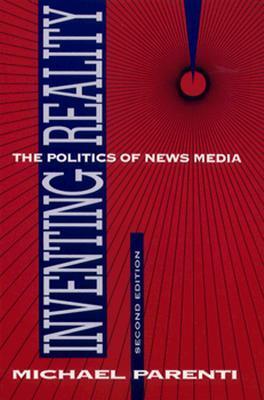
Inventing Reality: The Politics of News Media
Taking a critical perspective on the economics and politics of "presenting" the news, this topical supplement argues that the media systematically distorts news coverage.
274 pages, Paperback
First published January 1, 1986
About the author
Michael Parenti
56 books1,794 followersMichael John Parenti, Ph.D. (Yale University) was an American political scientist, academic historian and cultural critic who wrote on scholarly and popular subjects. He taught at universities and also ran for political office. Parenti was well known for his Marxist writings and lectures. He was a notable intellectual of the American Left and he was best known for his criticism of capitalism and American foreign policy.
Ratings & Reviews
Friends & Following
Create a free account to discover what your friends think of this book!
Community Reviews
Displaying 1 - 30 of 129 reviews

August 12, 2018
If you‘re thinking about reading Chomsky‘s ‚Manufacturing Consent‘, read this instead - it‘s written on the same subject, 2 years earlier, and by someone far more knowledgeable.
Honestly, Parentis writing style ist phenomenal. He argues really concisely, anticipating every counterargument, and exposing the reader to a radical new world view, but he never loses himself in technical jargon. He engages the reader with his wit and humour and I‘ve honestly never read a non-fiction book as quickly as I do Parenti‘s.
Honestly, Parentis writing style ist phenomenal. He argues really concisely, anticipating every counterargument, and exposing the reader to a radical new world view, but he never loses himself in technical jargon. He engages the reader with his wit and humour and I‘ve honestly never read a non-fiction book as quickly as I do Parenti‘s.

July 29, 2011
I'm only half way through this book and already it's one of the most concise and penetrating critiques of the Mass Media in America that I've ever read. As someone who works in the business, Parenti's analysis of distortions, ideology, omissions and power of the Media in our lives is an essential read. Be prepared to cancel your cable...

May 26, 2022
A comprehensive breakdown of how and why American media organizations submit to the ~general~ aims of the American state (particularly concerning foreign policy), how overt censorship is rarely necessary because journalists have grown accustomed to self-censorship, and how a superwealthy class of media owners have used information as a tool to increase their personal wealth.
Early on I was a bit annoyed by Parenti's much-repeated claim that American media companies are controlled by a deeply conservative class of people who use their positions of power to give news media a markedly conservative slant. It took me a while to realize that he is completely correct, even in our era of blatant corporate progressive shilling (#BLM Nike shirts, #TRANSISBEAUTIFUL Adidas coder socks, #LOVEISLOVE gay mug at shartmart). These corporations "championing" progressivism are the same corporations whipping Bangladeshi children in sweatshops, polluting the crick, and spending billions on lobbying schemes. Their "progressive" slant is all misdirection. It doesn't hurt shareholders when millions of Yass Kweens buy gay rainbow headbands at $45 a pop. The same is true for media organizations. Major news giants are happy to wax lyrical about the benefits of [insert widely-held progressive opinion] so long as it doesn't hurt profits. It doesn't hurt media moguls when, by beating their chests and crusading for progressive causes, they develop a fanatically loyal viewer base numbering in the hundreds of millions spread out across the globe.
Parenti basically aruges that OF COURSE privately owned media companies controlled by disgustingly wealthy people (with names and addresses) will ultimately choose profits over fair and measured reporting. He put it well at the end of the book: "Can it really be argued that elites have no power over the news organizations they own or finance? Or that if they do have power, they never use it"? I think not.
Early on I was a bit annoyed by Parenti's much-repeated claim that American media companies are controlled by a deeply conservative class of people who use their positions of power to give news media a markedly conservative slant. It took me a while to realize that he is completely correct, even in our era of blatant corporate progressive shilling (#BLM Nike shirts, #TRANSISBEAUTIFUL Adidas coder socks, #LOVEISLOVE gay mug at shartmart). These corporations "championing" progressivism are the same corporations whipping Bangladeshi children in sweatshops, polluting the crick, and spending billions on lobbying schemes. Their "progressive" slant is all misdirection. It doesn't hurt shareholders when millions of Yass Kweens buy gay rainbow headbands at $45 a pop. The same is true for media organizations. Major news giants are happy to wax lyrical about the benefits of [insert widely-held progressive opinion] so long as it doesn't hurt profits. It doesn't hurt media moguls when, by beating their chests and crusading for progressive causes, they develop a fanatically loyal viewer base numbering in the hundreds of millions spread out across the globe.
Parenti basically aruges that OF COURSE privately owned media companies controlled by disgustingly wealthy people (with names and addresses) will ultimately choose profits over fair and measured reporting. He put it well at the end of the book: "Can it really be argued that elites have no power over the news organizations they own or finance? Or that if they do have power, they never use it"? I think not.

February 7, 2025
The job of the US right wing is to channel all your attention away from financial concerns and towards intentionally non-economic issues like school prayers, busing, pornography and most important abortion – get you riled enough to vote against your interest and get fleeced even more by business deregulation and wage slashes. Two mainstream media favorites are underreporting and undercounting. We won’t cover your story, or we’ll say fewer people attended your progressive event – “When the police reported that organized labor’s September 1981 protest march on DC numbered 400,000, the Washington Post reported 260,000 and the New York Times put it at 240,000.” Who doesn’t like paying monthly to subscribe to famous news sources that aren’t committed to accuracy? An SF peace march in 1991 which was “easily 150,000 people – was reported by KRON-TV and CNN as 25,000.” You’ll hear all sorts of great things about MLK, but none of those people will tell you anything about his criticism of “the American economic system, US foreign policy, and US militarism.” Note: “Not long after King and Malcom began to link racial issues to class and economic conditions, they were assassinated.” Another tired and true technique to discredit anything peaceful is to find the most violent act an unstable outlier at the event did and position it as the norm. To seal the deal, have a badly coifed Karen clutching her purse say to the reporter, “I felt unsafe”.
“Most reporters are probably not right-wingers but they do not have to be. Their owners are.” Henry Luce showed that conservative publications could freely hire “liberal editors and reporters” – ah, the power of self-editing. These hired liberals found “in so trying to neutralize themselves, they often succeed only in neutralizing their subject matter.” Say you are doing a piece on John D. Rockefeller and Henry Ford, your editor won’t say “Hey, we also need the socialist side.” But if you do a piece on Eugene Debs, you’d better believe editors will want you to also include a plug for capitalism.
Pop Quiz: “Why are US leaders hostile to any nation that charts an independent course?” Why does “objectivity” mean never discussing corporate influence over Congress and the White House? Why is it fine for editors and owners to be wildly political when socializing, while reporters can’t be so? Why is it ok for editors to be subjective on which stories get placed and where, while reporters MUST be objective? Why do the most financially successful reporters get to socialize “with people they’re supposed to be scrutinizing”? If you are supposed to be objective as a reporter, why was Barabara Walters spending “off-duty time with (war criminal) Henry Kissinger when he was in the Nixon administration”? The Pentagon “employs a public relations staff of over three thousand people.” [Given that the Pentagon lost track of $2.5 trillion in assets as of 11/24, it just might need MORE than just PR to make those who read look the other way.]
“When asked when he would allow antisocialist views in the Cuban press, Fidel replied: when the capitalists allow anti-capitalist views and information in the US press.” “Two days before MLK was assassinated, the Globe Democrat ran an editorial supplied by the FBI calling King ‘one of the most menacing men in America’.” In 1975, the Senate found out that the CIA outright owned “more than 200 wire services, newspapers, magazines, and book publishing complexes” and subsidized even more. The NYT wrote that the CIA has commissioned 1,200 books, of which 250 were in English. CIA agents have been turned into journalists (p.78). Ex-CIA Ralph McGehee said “the American people are the primary target audience of [CIA] lies.” And that there are 400 to 600 journalists actually paid by the CIA. “Stories about Cuban soldiers killing babies and raping women in Angola, concocted by the CIA, were planted abroad, then picked up by AP and UPI stringers for ‘blowback’ runs in the US.” Has any top news source run with CIA planted stories? Why, I’m glad you asked – the following news sources have shamelessly “served the CIA”: ABC, NBC, CBS, Time, Newsweek, AP, NYTimes, WaPo, UPI, WSJ and US News & World Report. So, maybe stop trusting EVERYthing you read in mainstream media.
Still think the big names don’t lie, you say? Check it out: during the 1920’s the NYT, WSJ, Fortune, Saturday Evening Post, and Chicago Tribune all called Mussolini “Italy’s savior.” In 1933, the NYT told readers to expect Hitler to soften or abandon violent rhetoric (p.132). Even Time got in on the action writing in 1939 that Hitler’s regime “was no ordinary dictatorship, but rather one of great energy and magnificent planning.” Would YOU ever use the words “Hitler” and “magnificent” in the same sentence? Tom Brokaw on NBC TV talked about the crimes of Stalin while visually was displayed a Soviet woman crying after her son was killed by Germans, and another newsreel of five Soviets hanged by Nazis (p.237). Why not show an actual crime of Stalin?
Fun Facts: “60 to 80% of newspaper space and 22% of television space is devoted to advertising.” Media’s content has to act as the lure, “the end is the advertising.” Did you know that the famous “Keep America Beautiful” campaign of 1983 was coordinated with the PR director for well-known polluter Union Carbide. The idea was [and still is] to place the focus on littering on the American people and not on corporate pollution. “Some of the biggest polluters are military-industrial contractors who are also among the biggest TV advertisers. The National Football League did a joint venture with the Department of Defense p.93) where the NFL president said football and the military share the following “discipline, devotion, commitment to a cause, unselfishness, leadership – is also the spirit needed for a successful military endeavor.” “Indeed, military personnel made the Gulf war sound more like a football game than a one-sided slaughter.” Thanks to US media, Bush Jr. “came across as opposing new taxes for the average Americans rather than as defending the tax privileges of the wealthy – which in fact he was doing.” When Reagan ragged on labor, people of color, and workers, to the press he called them “special interests”; contrast to that he called whatever corporate and military elites wanted, the “national interest.” Control the framing of what crap you’re shoving down people’s throats, so both the Rachel Maddow crowd and the Fox News audience will eat it up. Check out this framing: the mainstream media will you about “labor problems” or “labor disputes”, but never “management disputes.” Nor will it tell you what’s going on in the minds of the workers. Nor will it tell you how the job of capital is to “extract as much profit from labor as possible.”
During the Cold War no paranoid fantasy was too far-fetched: Reagan said the Soviet Union was trying to impose “a one-world Socialist or Communist state” over the entire globe. He doubled down saying, “They commit any crime, to lie, to cheat, in order to obtain that.” Mainstream media dutifully painted ordinary Soviet concerns as Soviet designs. What do those Ruskies have up their sleeve? The goal of US policy is to “prevent alternate social orders [in other countries] from arising” [or as Noam says, the “Threat of a Good Example” from arising.] The US takes out the threat of a good example in Iran (’53), Guatemala (’54) , Brazil (’64), Indonesia (’65), Chile (’73). Americans didn’t learn about the My Lai massacre until over a year after it happened, after the story had been turned down in Look and Life. US soldiers brutally killing one hundred civilians isn’t newsworthy …until your competition is suddenly covering it. The Vietnam War was the US financing and arming a dictatorship against civilians once again to prevent an alternate social order.
Chile – the Threat of a Good Example: US Mainstream Media saw Allende in Chile as a threat to democracy: his “crimes” included “including freedom for all political organizations, even rightist ones.” And most of Chile’s TV stations and newspapers were then owned by the opposition. Still Kissinger and the US wanted him gone to replace him with the dictator Pinochet. Other Allende threats of a Good Example: agricultural production was dramatically up, inflation down by half, construction up by 9%, unemployment to lowest in a decade, every Chilean child got a free half liter of milk daily. But he threatened the rich and the US, so apparently he had to go. Pinochet was fascist yet note mainstream media never said he was. The day after Allende was murdered, the NYT rushed to insult him as “a man of the privileged class turned radical politician” and a “dandy” while called fascist Pinochet “powerfully built” “energetic” with “a sense of humor” and he “brought order”. Economic failure to US elites is when there are empty shops in “posh neighborhoods.” US media must never discuss reforms but must show sympathy for the “haves”.
Grenada: The US invades it in 1983, killing scores and the US press goes along with it. Even Bill Moyers of CBS shamelessly saw it as necessary “mission” to restore democracy. All to protect medical students who said they didn’t need saving, and everything found in Grenada was benign. The threat of Grenada was that under the New Jewel movement, the Gairy dictatorship was overthrown, grade school and secondary education was free, as were health clinics, and employment went from 49% to 14% in just three years. The needy were being given free milk, foodstuff’s and building materials, and – horror of horrors – agriculture was turning away from cash-crop exports and towards growing for the needs of locals. In response, the US “suspended aid and credits and discouraged tourism to the island.” US media never covered any of this, nor that the US then financed the Grenada 1984 election to counter the commie-pinko philosophy of mutual aid instead of helping US business first. Research yourself the true stories of Cuba, Zaire, Guatemala, Dominican Republic, El Salvador, Indonesia, East Timor, South Africa, Cambodia, Laos, Vietnam, Turkey, Chile, and the dozens of other countries injured by wrongful portrayal by the US media.
Nicaragua: For example, did you know “The United States invaded Nicaragua seven times” in the 20th century? In 1984, after five years of the Sandinistas ruling Nicaragua, “infant mortality dropped to the lowest in Central America, unemployment declined from 60 to 16%, while inflation was reduced from 84 to 27%. The portion of the national budget spent on health increased 600%.” There was a “dramatic decline in children’s diseases. Land was distributed to more than 40,000 families and to farm cooperatives. Over 85% of the population was now able to read and write at third-grade level or better.” I know what you’re thinking – the US should invade and bomb them back to reading at a second-grade level! First, Reagan imposed a crippling embargo on it because it dared to help its own people first. Then he “mined Nicaragua’s harbors, blew up its oil depots, and openly armed, trained, and financed a mercenary army of ‘contras’ who engaged in a premeditated war of bloody attrition to terrorize civilian noncombatants.” It’s interesting that war criminal Reagan also said, “I'm convinced, more than ever, that man finds liberation only when he binds himself to God and commits himself to his fellow man”. Anyway, after a delicious US meal of destroying Nicaragua, for mouth-watering desert, Panama was next.
Panama: You’ll remember, Noriega? Like Saddam, the US happily supported Noriega through his worst crimes and then turned on him. Noriega was paid $200,000 a year as a CIA agent (p.821), and in a heartbeat he went from a Washington Butt Buddy to being a dictator with the US press condemning – Ted Koppel (the Alfred E. Neumann doppelganger) on ABC reported that Noriega was a “drug-dealing bully” who had declared war on the United States days before the US invasion while Noriega was actually making peace overtures. ABC’s Peter Jennings disagreed saying instead that Noriega was “odious”, and then not to be outdone, CBS anchor Dan Rather (later fired in a scandal) said Noriega was “swamp rat” and “scum”. Fact Check: First the Pentagon said, that US troops entering Noriega’s headquarters found porn, a “portrait of Hitler”, voodoo paraphernalia, and 100 lbs. of coke. Fact checkers found the actual story was they found Spanish Playboy copies, A photo of Hitler within a Time-Life WWII photo essay, San Bias Indian carvings became “voodoo”, and the huge stash of coke, turned out to be “an emergency stockpile of tortilla flour.” What was the result of the US invasion of Panama? Unemployment rose to 35%. The US shut down 12 media outlets, jailing “a number of newspaper editors and reporters critical of the invasion.” That will teach you to help your country first. Union heads were arrested, and 150 union leaders were removed from office. The UN voted 75 to 20 condemning Bush’s invasion of Panama.
Iraq: The US loved Saddam Hussein, supporting him through his worst crimes (google photo Rumsfeld shaking hands with Saddam) and then -bingo- he quickly became known to the US press as “worse than Hitler”, a madman, and the “Butcher of Baghdad”. It’s hard to believe now but NBC’s Tom Brokaw asked on TV: “Can the U.S. allow Saddam Hussein to live?” Funny how Tom never asked that about Kissinger. US Air force pilots enjoyed the destruction of the historied city of Baghdad”: one pilot interviewed on NBC summed it up, “This was tremendous. Baghdad was lit up like a Christmas tree.” A CNN worker said, “we have been hearing nothing but good comments from the pilots.” The US dumped 85,000 tons of explosives on Iraqi society killing 200,000 for the crime of having no connection to 9/11. Winning hearts and minds one corpse at a time. Michael says the real reason for the Iraq war was oil profits; “beating another Third World nation into submission” while bolstering the fantasy that Bush was “bold & courageous”.
When was the last time you heard anyone on US media ask “What would the US have to lose by having friendlier relations with Cuba?” Note how US media might possibly discuss wealth & poverty but never will discuss the role of US corporate imperialism and neoliberalism in creating that poverty. Or that conservative leaders never institute reforms because their whole schtick is living well off the backs of impoverished others – and in Latin America that means “death squads, police terror, and slash-and-burn counterinsurgency.” To US media “class warfare” is when the poor fight back, NOT when the rich take too much. With Aristide in Haiti, his call for minimum wage, land reform, and taxes on the rich led to his forced removal from office.
Two-Face Media: The US-financed Shah of Iran was portrayed as “a benevolent ruler and modernizer of his nation”. Meanwhile in one of thousands of Shah/SAVAK era torture stories ignored by US media, was “one youngster displayed before the cameras, who had his arms chopped off in the presence of his father.” Reports of “parents and children tortured in front of each other” …And this was back when the US LOVED Iran. Funny how such horrific stories aren’t coming from present-day Iran. And remember when Marcos of the Philippines went from giving US presidents erections to suddenly being a “tyrant” and a “Japanese collaborator.” False Diversity according to Michael: “In the major media, ‘both sides’ of an issue sometimes are nothing more than two variations of what is essentially one side.” Note that US media will refer to Soviet or Russian made weapons in war coverage but not mention US made weapons.
Fun Fact: If you are a Left-Wing guerilla with a popular base, to US media you are a “terrorist”, if you are a Right-Wing mercenary financed by the CIA, to US media you are instead a “rebel”. Viva La Difference! Pop Quiz: Name one time where the CIA financed a reformer with a popular base? When Allende was murdered, the NYT said he was killed, the violent coup to install Pinochet was called by the NYT “the armed forces took power” and that “chaos” had brought in the military. Mainstream Media as stenographers for and courtiers of power.
“The press’s general class function is to help make the world safe for those who own and control most of the world.” The false story of 300 babies ripped from Kuwaiti incubators was exposed as a hoax; the Washington Post hid the retraction on page A25 on a very long story. When 250,000 were tortured in Turkey, it got minor mention, but if Sandinistas in Nicaragua tortured 250,000 it would have been front page news. There’s a long history in US media of US allies getting away with murder.
In conclusion, Michael writes that even though we are told to make fun of all who discuss conspiracies, “there are (proven) conspiracies among ruling groups” but US media will never call them that. What was Watergate, the Pentagon Papers, Iran/Contra, or COINTELPRO’s campaign against the Left, but clear conspiracies? Anyway, this was a great book and as you can see, I learned a lot, and you can too. People don’t mention these days how important it is to read Michael’s work and that’s a shame. Kudos, Michael…
“Most reporters are probably not right-wingers but they do not have to be. Their owners are.” Henry Luce showed that conservative publications could freely hire “liberal editors and reporters” – ah, the power of self-editing. These hired liberals found “in so trying to neutralize themselves, they often succeed only in neutralizing their subject matter.” Say you are doing a piece on John D. Rockefeller and Henry Ford, your editor won’t say “Hey, we also need the socialist side.” But if you do a piece on Eugene Debs, you’d better believe editors will want you to also include a plug for capitalism.
Pop Quiz: “Why are US leaders hostile to any nation that charts an independent course?” Why does “objectivity” mean never discussing corporate influence over Congress and the White House? Why is it fine for editors and owners to be wildly political when socializing, while reporters can’t be so? Why is it ok for editors to be subjective on which stories get placed and where, while reporters MUST be objective? Why do the most financially successful reporters get to socialize “with people they’re supposed to be scrutinizing”? If you are supposed to be objective as a reporter, why was Barabara Walters spending “off-duty time with (war criminal) Henry Kissinger when he was in the Nixon administration”? The Pentagon “employs a public relations staff of over three thousand people.” [Given that the Pentagon lost track of $2.5 trillion in assets as of 11/24, it just might need MORE than just PR to make those who read look the other way.]
“When asked when he would allow antisocialist views in the Cuban press, Fidel replied: when the capitalists allow anti-capitalist views and information in the US press.” “Two days before MLK was assassinated, the Globe Democrat ran an editorial supplied by the FBI calling King ‘one of the most menacing men in America’.” In 1975, the Senate found out that the CIA outright owned “more than 200 wire services, newspapers, magazines, and book publishing complexes” and subsidized even more. The NYT wrote that the CIA has commissioned 1,200 books, of which 250 were in English. CIA agents have been turned into journalists (p.78). Ex-CIA Ralph McGehee said “the American people are the primary target audience of [CIA] lies.” And that there are 400 to 600 journalists actually paid by the CIA. “Stories about Cuban soldiers killing babies and raping women in Angola, concocted by the CIA, were planted abroad, then picked up by AP and UPI stringers for ‘blowback’ runs in the US.” Has any top news source run with CIA planted stories? Why, I’m glad you asked – the following news sources have shamelessly “served the CIA”: ABC, NBC, CBS, Time, Newsweek, AP, NYTimes, WaPo, UPI, WSJ and US News & World Report. So, maybe stop trusting EVERYthing you read in mainstream media.
Still think the big names don’t lie, you say? Check it out: during the 1920’s the NYT, WSJ, Fortune, Saturday Evening Post, and Chicago Tribune all called Mussolini “Italy’s savior.” In 1933, the NYT told readers to expect Hitler to soften or abandon violent rhetoric (p.132). Even Time got in on the action writing in 1939 that Hitler’s regime “was no ordinary dictatorship, but rather one of great energy and magnificent planning.” Would YOU ever use the words “Hitler” and “magnificent” in the same sentence? Tom Brokaw on NBC TV talked about the crimes of Stalin while visually was displayed a Soviet woman crying after her son was killed by Germans, and another newsreel of five Soviets hanged by Nazis (p.237). Why not show an actual crime of Stalin?
Fun Facts: “60 to 80% of newspaper space and 22% of television space is devoted to advertising.” Media’s content has to act as the lure, “the end is the advertising.” Did you know that the famous “Keep America Beautiful” campaign of 1983 was coordinated with the PR director for well-known polluter Union Carbide. The idea was [and still is] to place the focus on littering on the American people and not on corporate pollution. “Some of the biggest polluters are military-industrial contractors who are also among the biggest TV advertisers. The National Football League did a joint venture with the Department of Defense p.93) where the NFL president said football and the military share the following “discipline, devotion, commitment to a cause, unselfishness, leadership – is also the spirit needed for a successful military endeavor.” “Indeed, military personnel made the Gulf war sound more like a football game than a one-sided slaughter.” Thanks to US media, Bush Jr. “came across as opposing new taxes for the average Americans rather than as defending the tax privileges of the wealthy – which in fact he was doing.” When Reagan ragged on labor, people of color, and workers, to the press he called them “special interests”; contrast to that he called whatever corporate and military elites wanted, the “national interest.” Control the framing of what crap you’re shoving down people’s throats, so both the Rachel Maddow crowd and the Fox News audience will eat it up. Check out this framing: the mainstream media will you about “labor problems” or “labor disputes”, but never “management disputes.” Nor will it tell you what’s going on in the minds of the workers. Nor will it tell you how the job of capital is to “extract as much profit from labor as possible.”
During the Cold War no paranoid fantasy was too far-fetched: Reagan said the Soviet Union was trying to impose “a one-world Socialist or Communist state” over the entire globe. He doubled down saying, “They commit any crime, to lie, to cheat, in order to obtain that.” Mainstream media dutifully painted ordinary Soviet concerns as Soviet designs. What do those Ruskies have up their sleeve? The goal of US policy is to “prevent alternate social orders [in other countries] from arising” [or as Noam says, the “Threat of a Good Example” from arising.] The US takes out the threat of a good example in Iran (’53), Guatemala (’54) , Brazil (’64), Indonesia (’65), Chile (’73). Americans didn’t learn about the My Lai massacre until over a year after it happened, after the story had been turned down in Look and Life. US soldiers brutally killing one hundred civilians isn’t newsworthy …until your competition is suddenly covering it. The Vietnam War was the US financing and arming a dictatorship against civilians once again to prevent an alternate social order.
Chile – the Threat of a Good Example: US Mainstream Media saw Allende in Chile as a threat to democracy: his “crimes” included “including freedom for all political organizations, even rightist ones.” And most of Chile’s TV stations and newspapers were then owned by the opposition. Still Kissinger and the US wanted him gone to replace him with the dictator Pinochet. Other Allende threats of a Good Example: agricultural production was dramatically up, inflation down by half, construction up by 9%, unemployment to lowest in a decade, every Chilean child got a free half liter of milk daily. But he threatened the rich and the US, so apparently he had to go. Pinochet was fascist yet note mainstream media never said he was. The day after Allende was murdered, the NYT rushed to insult him as “a man of the privileged class turned radical politician” and a “dandy” while called fascist Pinochet “powerfully built” “energetic” with “a sense of humor” and he “brought order”. Economic failure to US elites is when there are empty shops in “posh neighborhoods.” US media must never discuss reforms but must show sympathy for the “haves”.
Grenada: The US invades it in 1983, killing scores and the US press goes along with it. Even Bill Moyers of CBS shamelessly saw it as necessary “mission” to restore democracy. All to protect medical students who said they didn’t need saving, and everything found in Grenada was benign. The threat of Grenada was that under the New Jewel movement, the Gairy dictatorship was overthrown, grade school and secondary education was free, as were health clinics, and employment went from 49% to 14% in just three years. The needy were being given free milk, foodstuff’s and building materials, and – horror of horrors – agriculture was turning away from cash-crop exports and towards growing for the needs of locals. In response, the US “suspended aid and credits and discouraged tourism to the island.” US media never covered any of this, nor that the US then financed the Grenada 1984 election to counter the commie-pinko philosophy of mutual aid instead of helping US business first. Research yourself the true stories of Cuba, Zaire, Guatemala, Dominican Republic, El Salvador, Indonesia, East Timor, South Africa, Cambodia, Laos, Vietnam, Turkey, Chile, and the dozens of other countries injured by wrongful portrayal by the US media.
Nicaragua: For example, did you know “The United States invaded Nicaragua seven times” in the 20th century? In 1984, after five years of the Sandinistas ruling Nicaragua, “infant mortality dropped to the lowest in Central America, unemployment declined from 60 to 16%, while inflation was reduced from 84 to 27%. The portion of the national budget spent on health increased 600%.” There was a “dramatic decline in children’s diseases. Land was distributed to more than 40,000 families and to farm cooperatives. Over 85% of the population was now able to read and write at third-grade level or better.” I know what you’re thinking – the US should invade and bomb them back to reading at a second-grade level! First, Reagan imposed a crippling embargo on it because it dared to help its own people first. Then he “mined Nicaragua’s harbors, blew up its oil depots, and openly armed, trained, and financed a mercenary army of ‘contras’ who engaged in a premeditated war of bloody attrition to terrorize civilian noncombatants.” It’s interesting that war criminal Reagan also said, “I'm convinced, more than ever, that man finds liberation only when he binds himself to God and commits himself to his fellow man”. Anyway, after a delicious US meal of destroying Nicaragua, for mouth-watering desert, Panama was next.
Panama: You’ll remember, Noriega? Like Saddam, the US happily supported Noriega through his worst crimes and then turned on him. Noriega was paid $200,000 a year as a CIA agent (p.821), and in a heartbeat he went from a Washington Butt Buddy to being a dictator with the US press condemning – Ted Koppel (the Alfred E. Neumann doppelganger) on ABC reported that Noriega was a “drug-dealing bully” who had declared war on the United States days before the US invasion while Noriega was actually making peace overtures. ABC’s Peter Jennings disagreed saying instead that Noriega was “odious”, and then not to be outdone, CBS anchor Dan Rather (later fired in a scandal) said Noriega was “swamp rat” and “scum”. Fact Check: First the Pentagon said, that US troops entering Noriega’s headquarters found porn, a “portrait of Hitler”, voodoo paraphernalia, and 100 lbs. of coke. Fact checkers found the actual story was they found Spanish Playboy copies, A photo of Hitler within a Time-Life WWII photo essay, San Bias Indian carvings became “voodoo”, and the huge stash of coke, turned out to be “an emergency stockpile of tortilla flour.” What was the result of the US invasion of Panama? Unemployment rose to 35%. The US shut down 12 media outlets, jailing “a number of newspaper editors and reporters critical of the invasion.” That will teach you to help your country first. Union heads were arrested, and 150 union leaders were removed from office. The UN voted 75 to 20 condemning Bush’s invasion of Panama.
Iraq: The US loved Saddam Hussein, supporting him through his worst crimes (google photo Rumsfeld shaking hands with Saddam) and then -bingo- he quickly became known to the US press as “worse than Hitler”, a madman, and the “Butcher of Baghdad”. It’s hard to believe now but NBC’s Tom Brokaw asked on TV: “Can the U.S. allow Saddam Hussein to live?” Funny how Tom never asked that about Kissinger. US Air force pilots enjoyed the destruction of the historied city of Baghdad”: one pilot interviewed on NBC summed it up, “This was tremendous. Baghdad was lit up like a Christmas tree.” A CNN worker said, “we have been hearing nothing but good comments from the pilots.” The US dumped 85,000 tons of explosives on Iraqi society killing 200,000 for the crime of having no connection to 9/11. Winning hearts and minds one corpse at a time. Michael says the real reason for the Iraq war was oil profits; “beating another Third World nation into submission” while bolstering the fantasy that Bush was “bold & courageous”.
When was the last time you heard anyone on US media ask “What would the US have to lose by having friendlier relations with Cuba?” Note how US media might possibly discuss wealth & poverty but never will discuss the role of US corporate imperialism and neoliberalism in creating that poverty. Or that conservative leaders never institute reforms because their whole schtick is living well off the backs of impoverished others – and in Latin America that means “death squads, police terror, and slash-and-burn counterinsurgency.” To US media “class warfare” is when the poor fight back, NOT when the rich take too much. With Aristide in Haiti, his call for minimum wage, land reform, and taxes on the rich led to his forced removal from office.
Two-Face Media: The US-financed Shah of Iran was portrayed as “a benevolent ruler and modernizer of his nation”. Meanwhile in one of thousands of Shah/SAVAK era torture stories ignored by US media, was “one youngster displayed before the cameras, who had his arms chopped off in the presence of his father.” Reports of “parents and children tortured in front of each other” …And this was back when the US LOVED Iran. Funny how such horrific stories aren’t coming from present-day Iran. And remember when Marcos of the Philippines went from giving US presidents erections to suddenly being a “tyrant” and a “Japanese collaborator.” False Diversity according to Michael: “In the major media, ‘both sides’ of an issue sometimes are nothing more than two variations of what is essentially one side.” Note that US media will refer to Soviet or Russian made weapons in war coverage but not mention US made weapons.
Fun Fact: If you are a Left-Wing guerilla with a popular base, to US media you are a “terrorist”, if you are a Right-Wing mercenary financed by the CIA, to US media you are instead a “rebel”. Viva La Difference! Pop Quiz: Name one time where the CIA financed a reformer with a popular base? When Allende was murdered, the NYT said he was killed, the violent coup to install Pinochet was called by the NYT “the armed forces took power” and that “chaos” had brought in the military. Mainstream Media as stenographers for and courtiers of power.
“The press’s general class function is to help make the world safe for those who own and control most of the world.” The false story of 300 babies ripped from Kuwaiti incubators was exposed as a hoax; the Washington Post hid the retraction on page A25 on a very long story. When 250,000 were tortured in Turkey, it got minor mention, but if Sandinistas in Nicaragua tortured 250,000 it would have been front page news. There’s a long history in US media of US allies getting away with murder.
In conclusion, Michael writes that even though we are told to make fun of all who discuss conspiracies, “there are (proven) conspiracies among ruling groups” but US media will never call them that. What was Watergate, the Pentagon Papers, Iran/Contra, or COINTELPRO’s campaign against the Left, but clear conspiracies? Anyway, this was a great book and as you can see, I learned a lot, and you can too. People don’t mention these days how important it is to read Michael’s work and that’s a shame. Kudos, Michael…

September 24, 2021
Chomsky could never

July 30, 2019
Excellent discussion of how the media function as institutions that push the interests of their stakeholders -- their owners, their advertisers, the political and business elites that their employees look up to, and the government, on which they rely for access to much of the information they need to be seen as Serious Outlets. Last in this line comes the public.
Parenti's writing style is a lot livelier than Chomsky's, which makes it a far quicker and more enjoyable read. And note that although the book predates Manufacturing Consent by two years, and the themes overlap a lot, Chomsky and Herman never reference the book.
Parenti's writing style is a lot livelier than Chomsky's, which makes it a far quicker and more enjoyable read. And note that although the book predates Manufacturing Consent by two years, and the themes overlap a lot, Chomsky and Herman never reference the book.

August 1, 2017
Parenti is a fantastic writer. The conclusion of the book was powerful. I just wish there were a 30 year anniversary edition that was updated with developments in the media since then. Things are very similar but have also changed a lot.
November 14, 2025
Michael “Receipts” Parenti

May 16, 2022
3,5*
In general I agree with Parenti's analysis of the media. Free media doesn't really exist in the West, self-censorship, cultural orthodoxy and mouthing of official positions is prevalent/systemic, there are strong ideological/class interests active in the background which shape media coverage, and news are distorted and over/under/mis-represented depending on the official acceptability of the angle. Completely baseless but very emotive stories are given huge coverage and then dropped silently as they get refuted. High-intensity coverage is repeated in cycles to foam the waters and influence public perceptions over time. I have paid enough attention to the media to know all of this is true, to have seen it in practice and to have internalized it.
I never experienced any "wow-factor" from reading this, more of a muted "yes- of course, and your point being?". To be honest I found it a struggle from the halfway-point when he came to presenting his case studies. His polemic style is irksome, and from what I remember Chomsky's treatment of US actions and media coverage of Central America and South East Asia is far more detailed and better documented.
My issues:
-Parenti spends a lot of time commenting on how "communist", "marxist" and "leftists" gets used by the media as buzzwords to deprive a movement/nation/story of nuanced treatment, but he does the exact same with his frequent references to (the implied inherent evil of) "fascists" and "rightists".
-Your impression after reading is that there have only ever existed benign leftist movements, being hounded by the US. There is for instance no mention of Pol-Pot or the media coverage he received.
-Parenti writes about media serving us unverified news and expecting them to be accepted at face value, but he makes many factual statements himself without backing them up with proper sources. Most of his references point to editorials and newspaper articles, which you would expect, according to Parenti himself, to have systemic and ideological biases.
-While many things are still current, much has also changed. The book is starting to get quite dated. >listening to radio, reading newspapers, watching television
ok boomer
All in all a perfectly worthwhile read, especially if this is your first time touching upon the subject.
In general I agree with Parenti's analysis of the media. Free media doesn't really exist in the West, self-censorship, cultural orthodoxy and mouthing of official positions is prevalent/systemic, there are strong ideological/class interests active in the background which shape media coverage, and news are distorted and over/under/mis-represented depending on the official acceptability of the angle. Completely baseless but very emotive stories are given huge coverage and then dropped silently as they get refuted. High-intensity coverage is repeated in cycles to foam the waters and influence public perceptions over time. I have paid enough attention to the media to know all of this is true, to have seen it in practice and to have internalized it.
I never experienced any "wow-factor" from reading this, more of a muted "yes- of course, and your point being?". To be honest I found it a struggle from the halfway-point when he came to presenting his case studies. His polemic style is irksome, and from what I remember Chomsky's treatment of US actions and media coverage of Central America and South East Asia is far more detailed and better documented.
My issues:
-Parenti spends a lot of time commenting on how "communist", "marxist" and "leftists" gets used by the media as buzzwords to deprive a movement/nation/story of nuanced treatment, but he does the exact same with his frequent references to (the implied inherent evil of) "fascists" and "rightists".
-Your impression after reading is that there have only ever existed benign leftist movements, being hounded by the US. There is for instance no mention of Pol-Pot or the media coverage he received.
-Parenti writes about media serving us unverified news and expecting them to be accepted at face value, but he makes many factual statements himself without backing them up with proper sources. Most of his references point to editorials and newspaper articles, which you would expect, according to Parenti himself, to have systemic and ideological biases.
-While many things are still current, much has also changed. The book is starting to get quite dated. >listening to radio, reading newspapers, watching television
ok boomer
All in all a perfectly worthwhile read, especially if this is your first time touching upon the subject.

April 16, 2021
A great book that goes beyond a structural analysis of the news media's faults but gets directly into their political and societal function as both a public information service and "its irreducible responsibility... to continually recreate a view of reality supportive of existing social and economic class power."
It explores how the mass media is an essential part of the ideological structure that socialises the population into an ideological framework to accept things like the two-party system as the pinnacle of democracy.
It is an obvious parallel to Chomsky and Herman's 'Manufactuing Consent' and despite being its senior, this is much better. It doesn't stop short of political analysis as MC does, and more notably its written in a much more fluid and snappy style.
Some favourite quotes:
- "Freedom of the Press belongs to the man who owns one"
- "Even if the press does not mold our every opinion, it does mold opinion visibility; it can frame the perceptual limits around which our opinions take shape."
- Power is always more secure when co-optive, covert, and manipulative than when nakedly brutish. The support elicited through the control of minds is more durable than the support extracted at the point of a bayonet."
- "The media are not merely close to corporate America, they are an integral part of it."
- "Daily censorship is made unnecessary by anticipatory self-censorship." because "An editor who has to be reined in every day by the publisher will not last long as editor."
- "Subjective judgements and biases are introduced even before the writing begins--at the moment one defines what is to be considered a story."
- "...the news is not what reporters report but what editors, producers, and owners decide to print or broadcast."
- from Charles Clark, "Journalists are just people who write on the back of advertisements."
- "The message was the same as in so many other countries: If democracy picks a leftist leader, then democracy has to go."
- "It is said that cameras don't lie. But we must remember that liars use cameras."
It explores how the mass media is an essential part of the ideological structure that socialises the population into an ideological framework to accept things like the two-party system as the pinnacle of democracy.
It is an obvious parallel to Chomsky and Herman's 'Manufactuing Consent' and despite being its senior, this is much better. It doesn't stop short of political analysis as MC does, and more notably its written in a much more fluid and snappy style.
Some favourite quotes:
- "Freedom of the Press belongs to the man who owns one"
- "Even if the press does not mold our every opinion, it does mold opinion visibility; it can frame the perceptual limits around which our opinions take shape."
- Power is always more secure when co-optive, covert, and manipulative than when nakedly brutish. The support elicited through the control of minds is more durable than the support extracted at the point of a bayonet."
- "The media are not merely close to corporate America, they are an integral part of it."
- "Daily censorship is made unnecessary by anticipatory self-censorship." because "An editor who has to be reined in every day by the publisher will not last long as editor."
- "Subjective judgements and biases are introduced even before the writing begins--at the moment one defines what is to be considered a story."
- "...the news is not what reporters report but what editors, producers, and owners decide to print or broadcast."
- from Charles Clark, "Journalists are just people who write on the back of advertisements."
- "The message was the same as in so many other countries: If democracy picks a leftist leader, then democracy has to go."
- "It is said that cameras don't lie. But we must remember that liars use cameras."

April 22, 2026
This book was written long before the internet, yet its analysis feels even more urgent today. If mass media could manufacture consent so effectively in the analog era, one can only imagine the tools now available for propaganda in the digital age.
Capitalism functions as a Ponzi scheme designed primarily for the benefit of a tiny elite. Because capitalism must constantly expand to survive, imperialism is not an aberration but its logical next stage.
In this book we see how capitalism/imperialism has operated since World War II—through the systematic manufacturing of public consent by the media. The media doesn’t just tell us what to think about; it tells us how to think about it. What the media ignores effectively ceases to exist in public consciousness.
“Objective” journalism in the United States is simply journalism that stays safely within the narrow consensus shared by the White House, the CIA, and the largest corporations. Any politician or movement that prioritizes the interests of the working majority is instantly branded a “communist”—a word that still carries almost supernatural negativity in American political discourse. Most journalists who tried to be really objective were just ignored, silenced or removed.
The pattern the book lays out related to foreign policy is: if some country is functioning well, but its government refuses to align with American corporate interests, it will first be targeted by the full machinery of U.S. media. The country will be destabilized. Later comes direct or proxy military intervention, followed by the installation of a “democratically elected” government that serves as little more than a front for the American capital.
Highly recommended for anyone who wants to understand how power really works in the modern world—and why the news feels the way it does.
Capitalism functions as a Ponzi scheme designed primarily for the benefit of a tiny elite. Because capitalism must constantly expand to survive, imperialism is not an aberration but its logical next stage.
In this book we see how capitalism/imperialism has operated since World War II—through the systematic manufacturing of public consent by the media. The media doesn’t just tell us what to think about; it tells us how to think about it. What the media ignores effectively ceases to exist in public consciousness.
“Objective” journalism in the United States is simply journalism that stays safely within the narrow consensus shared by the White House, the CIA, and the largest corporations. Any politician or movement that prioritizes the interests of the working majority is instantly branded a “communist”—a word that still carries almost supernatural negativity in American political discourse. Most journalists who tried to be really objective were just ignored, silenced or removed.
The pattern the book lays out related to foreign policy is: if some country is functioning well, but its government refuses to align with American corporate interests, it will first be targeted by the full machinery of U.S. media. The country will be destabilized. Later comes direct or proxy military intervention, followed by the installation of a “democratically elected” government that serves as little more than a front for the American capital.
Highly recommended for anyone who wants to understand how power really works in the modern world—and why the news feels the way it does.

October 4, 2019
Brilliant. No one does a better job using plain language to describe the larger forces at work that alter our perception of reality. Here Parenti turns his focus on the media.
Going far beyond the typical “liberal complaint” mode of media criticism, Parenti drives full force into a radical class analysis. Does it matter that the establishment press, the major media that get all the accolades and respect in our culture, also happen to be capitalist enterprises? You bet your ass. Does it matter that the media business, known colloquially as the “fourth estate” are made up of top-down tyrannical organizations? Indeed it does.
Parenti takes the time to explain, in plain, easy to understand language, how the establishment press skew their coverage in a way that is almost always favorable to the capitalist system. The examples are clear. The message is plain. I believe this work to be among some of Parenti’s finest. It was, as Parenti’s work so often is, revelatory.
Going far beyond the typical “liberal complaint” mode of media criticism, Parenti drives full force into a radical class analysis. Does it matter that the establishment press, the major media that get all the accolades and respect in our culture, also happen to be capitalist enterprises? You bet your ass. Does it matter that the media business, known colloquially as the “fourth estate” are made up of top-down tyrannical organizations? Indeed it does.
Parenti takes the time to explain, in plain, easy to understand language, how the establishment press skew their coverage in a way that is almost always favorable to the capitalist system. The examples are clear. The message is plain. I believe this work to be among some of Parenti’s finest. It was, as Parenti’s work so often is, revelatory.

December 4, 2023
Inventing Reality: The Politics of News Media, Michael Parenti (1933- ), 2nd edition 1993 (there is a rumored 2022 edition that seems not to be available), 274 pages, ISBN 0312020139
The major role of the press is to continually recreate a view of reality supportive of existing social and economic class power. p. 8.
This book predates the 1996 launch of Fox News. Rupert Murdoch and his News Corp are mentioned only as among the obscenely few, obscenely wealthy, dictators of newsworthiness. Reagan's Federal Communications Commission ended the Fairness Doctrine in 1987: Rush Limbaugh and others rushed to spew lies and hate--but Parenti does NOT hit that note in this book.
In this book, Parenti focuses on CBS, NBC, ABC, the New York Times, Washington Post, Time, Newsweek, the Wall Street Journal, and the Los Angeles Times. p. 2. These corporate media lie to us and manipulate us. p. 4; They cheer the enrichment of the rich, including their owners and advertisers, at everyone else's expense. p. 4.
Parenti cites dissenting publications: the Nation, the (New York) Guardian, CovertAction Information Bulletin, People's Weekly World, Z Magazine, the Progressive.
Media-monitoring publications: Lies of Our Times, Extra!, Propaganda Review. p. 4.
The World Wide Web began in 1991 at CERN. It was less than two years old when this book was published.
The poor are with us, we are told, but there is no explanation of the link between poverty and the increasing concentration of wealth, between poverty and regressive taxes, high rents, low wages, high profits, inflated prices, and underemployment. p. 9.
The failure of a market economy to respond to social need rather than private greed is seldom linked to anything in the nature of capitalism. p. 10.
Every year more than 14,000 workers in the United States are killed on the job; another 100,000 die prematurely, and 400,000 become seriously ill from work-related diseases. Many, if not most, of these deaths and injuries occur because greater consideration is given by management to profits and production than to occupational safety and environmental standards. Yet these crimes are rarely defined and reported as crimes in the news media. p. 10.
The press regularly ignores issues of desperate concern to working-class women and women of color. p. 13.
The press was uncritical of Reagan, while more than half of the public disapproved of the way he handled his presidency. p. 14. Daily newspapers endorse Republican presidential candidates over Democratic ones at about a six-to-one ratio. p. 14.
The media are strikingly successful in telling us what to think about. p. 23. There is nothing too essential and revealing that cannot be ignored by the American press, and nothing too trivial and superficial that cannot be accorded protracted play. The media set the limits on public discourse. p. 24.
Most newspeople lack contact with working-class people, have a low opinion of labor unions, and know very little about people outside their own social class. Right-wing think tanks flood journalists with propaganda. p. 44. Most reporters are probably not right-wingers but they do not have to be. Their owners are. p. 50. The ruling ideas are the ideas of the ruling class. The media are geared for ideological control. p. 60.
The Federal Communications Commission never applied its "fairness doctrine" to the political left. Leftist views never had a right to airtime. p. 66. Hundreds of newspeople are on the CIA payroll. pp. 67-69.
60%-80% of newspaper space and some 22% of TV time (more on radio) is advertising. Advertising is the goal. p. 70. One-third of corporate advertising is political and ideological. All advertising is tax-deductible. p. 74. TV weather people celebrate the effects of global warming. p. 81.
ALTERNATIVE MEDIA p. 229
MEDIA WATCH PUBLICATIONS p. 229
Alternative Press Center directory: https://www.altpress.org/directory
Fairness and Accuracy in Reporting: https://fair.org
10 Best Censored Stories (once a year): https://indyweek.com/news/project-cen...
ALTERNATIVE PERIODICALS
Monthly Review: https://monthlyreview.org
The Nation magazine: https://www.thenation.com/latest/
People's World: https://www.peoplesworld.org
The Progressive: https://progressive.org
PARENTI DOESN'T MENTION:
ALEC Exposed: https://www.alecexposed.org/wiki/ALEC...
The major role of the press is to continually recreate a view of reality supportive of existing social and economic class power. p. 8.
This book predates the 1996 launch of Fox News. Rupert Murdoch and his News Corp are mentioned only as among the obscenely few, obscenely wealthy, dictators of newsworthiness. Reagan's Federal Communications Commission ended the Fairness Doctrine in 1987: Rush Limbaugh and others rushed to spew lies and hate--but Parenti does NOT hit that note in this book.
In this book, Parenti focuses on CBS, NBC, ABC, the New York Times, Washington Post, Time, Newsweek, the Wall Street Journal, and the Los Angeles Times. p. 2. These corporate media lie to us and manipulate us. p. 4; They cheer the enrichment of the rich, including their owners and advertisers, at everyone else's expense. p. 4.
Parenti cites dissenting publications: the Nation, the (New York) Guardian, CovertAction Information Bulletin, People's Weekly World, Z Magazine, the Progressive.
Media-monitoring publications: Lies of Our Times, Extra!, Propaganda Review. p. 4.
The World Wide Web began in 1991 at CERN. It was less than two years old when this book was published.
The poor are with us, we are told, but there is no explanation of the link between poverty and the increasing concentration of wealth, between poverty and regressive taxes, high rents, low wages, high profits, inflated prices, and underemployment. p. 9.
The failure of a market economy to respond to social need rather than private greed is seldom linked to anything in the nature of capitalism. p. 10.
Every year more than 14,000 workers in the United States are killed on the job; another 100,000 die prematurely, and 400,000 become seriously ill from work-related diseases. Many, if not most, of these deaths and injuries occur because greater consideration is given by management to profits and production than to occupational safety and environmental standards. Yet these crimes are rarely defined and reported as crimes in the news media. p. 10.
The press regularly ignores issues of desperate concern to working-class women and women of color. p. 13.
The press was uncritical of Reagan, while more than half of the public disapproved of the way he handled his presidency. p. 14. Daily newspapers endorse Republican presidential candidates over Democratic ones at about a six-to-one ratio. p. 14.
The media are strikingly successful in telling us what to think about. p. 23. There is nothing too essential and revealing that cannot be ignored by the American press, and nothing too trivial and superficial that cannot be accorded protracted play. The media set the limits on public discourse. p. 24.
Most newspeople lack contact with working-class people, have a low opinion of labor unions, and know very little about people outside their own social class. Right-wing think tanks flood journalists with propaganda. p. 44. Most reporters are probably not right-wingers but they do not have to be. Their owners are. p. 50. The ruling ideas are the ideas of the ruling class. The media are geared for ideological control. p. 60.
The Federal Communications Commission never applied its "fairness doctrine" to the political left. Leftist views never had a right to airtime. p. 66. Hundreds of newspeople are on the CIA payroll. pp. 67-69.
60%-80% of newspaper space and some 22% of TV time (more on radio) is advertising. Advertising is the goal. p. 70. One-third of corporate advertising is political and ideological. All advertising is tax-deductible. p. 74. TV weather people celebrate the effects of global warming. p. 81.
ALTERNATIVE MEDIA p. 229
MEDIA WATCH PUBLICATIONS p. 229
Alternative Press Center directory: https://www.altpress.org/directory
Fairness and Accuracy in Reporting: https://fair.org
10 Best Censored Stories (once a year): https://indyweek.com/news/project-cen...
ALTERNATIVE PERIODICALS
Monthly Review: https://monthlyreview.org
The Nation magazine: https://www.thenation.com/latest/
People's World: https://www.peoplesworld.org
The Progressive: https://progressive.org
PARENTI DOESN'T MENTION:
ALEC Exposed: https://www.alecexposed.org/wiki/ALEC...

August 23, 2024
Parenti is such a lucid and incisive writer!! He's very good at presenting the practical consequences of hegemony and policy... giving lots of examples and drawing conclusions about the systematic repetition of so called media blunders...
it might seema little dated but theres a lot here that can be further applied to the screeching pitch of media manipulation that continued post9/11 and even today, but in that respect the reader will have to draw their own conclusions about the evolution(or stagnation) of the systematic nature of Big Media as it continues to this day.... 10/10
it might seema little dated but theres a lot here that can be further applied to the screeching pitch of media manipulation that continued post9/11 and even today, but in that respect the reader will have to draw their own conclusions about the evolution(or stagnation) of the systematic nature of Big Media as it continues to this day.... 10/10

April 12, 2021
The issue with the Australian media isn't media monopolists it's with the system that ensures a capitalist class monopoly on media ownership . Kev please read this book and take note.

October 26, 2021
Don’t trust the lying fake news media kids.

April 28, 2023
Inventing Reality is a criticism of the American corporate media that came out two years before Manufacturing Consent. Reading this book you get a very myopic picture of the press, that throughout all of American history benign leftist movements were harassed by the media. I think a case study on how Colonel Gaddafi was portrayed would have been a far better use of paper and would benefit his argument. Parenti writes about 'rightists' as if they are the devil and do nothing but harm, ironically it reminds me of how he claims the press uses 'leftist' and 'communist' to delegitimize movements and people. The book isn't very well sourced, I noticed a few examples where he makes a claim and won't cite anything or use a dubious source. I do agree with the book and think Parenti is by and large correct but I'm not letting this bias get in the way of the fact this book isn't particularly a good work and becomes quite dull about halfway through. If you want criticism of the press you should just read Manufacturing Consent, it has better case studies, is better researched and is easier to apply to countries outside of the USA.

December 17, 2022
Great book.
One point I think Parenti didn't address was the idea of laziness or incompetence. Media can easily churn a story when money is used to put easy sources and info (e.g. think tanks, press releases, etc) in front of the media. It makes it just a step removed with the same result.
One point I think Parenti didn't address was the idea of laziness or incompetence. Media can easily churn a story when money is used to put easy sources and info (e.g. think tanks, press releases, etc) in front of the media. It makes it just a step removed with the same result.

May 25, 2011
Exposes media bias, how economic power leads to cultural hegemony and ideological monopoly. Michael Parenti is one of the best antidotes to media misinformation.

November 24, 2020
Most nonfiction books about a singular topic lose momentum as they go on; this book got stronger & more impactful as we got closer to the end.
Read
January 8, 2025Already wasn't exactly the most trustworthy person when it comes to mainstream establishment media but wow. Would love some kind of modern rewrite of it talking within a modern media context and social media ect, also makes wants for a tiktok ban make much more sense and trends w IG/facebook/twitter and its consolidation look scarier. Also lastly, so much of the propaganda and rewrites of news from back then spills into sentiment and ideas of the past. and lastly for real this time, as someone going into studying history, just thinking of how were suppose to go and read & analyze sources in the past, its scary thinking how skewed the sources can be for the interests that be, through change and omission. Great book

August 11, 2026
Though its written in a particular period of media, pre cable TV and internet, the method in which Parenti constructs his argument is absolutely precise. Its also necessary history of a particular stage of mass media, and its relation to threats towards the imperialist project. So while the containers of media have changed, the overall qualitative nature of it has not. The anti-communist history is also truly important, and frankly we have to consider that mass media as we have it was built to assist the anti-communist effort.

June 28, 2023
This is a fucking towering work. Not only for the work on interpreting news, but also the complexity of inquiry into consumer culture and how it intersects with the news we take in, this book is a very needed guide for properly understanding news of any era.
Like many leftist writers, there was defintiely some hyping up of alternative movements that felt a lil bloviated and meager, but the sheer SOURCES in this book are worth awards. Parenti has happily joined the ranks among some of the best writers I’ve ever read, and I can’t wait to explore his writing more. I will defintiely be coming back to this in coming years for continued inspiration and ideas aboht how news medo controls us.
They create reality! They are selling us a life style. They guide our interests into categories that make us easily marketable and consumed! We consume and are consumed.
Like many leftist writers, there was defintiely some hyping up of alternative movements that felt a lil bloviated and meager, but the sheer SOURCES in this book are worth awards. Parenti has happily joined the ranks among some of the best writers I’ve ever read, and I can’t wait to explore his writing more. I will defintiely be coming back to this in coming years for continued inspiration and ideas aboht how news medo controls us.
They create reality! They are selling us a life style. They guide our interests into categories that make us easily marketable and consumed! We consume and are consumed.

June 6, 2026
Weet je er staan heel veel wijze dingen in dit boek over hoe o.a. #mensenmetgeld en het patriarchaat de media beïnvloeden en dat gaf me een verfrissende blik op hoe ik media en nieuws bekijk. Maar ik wist het op een gegeven moment wel. Denk gewoon ff na dat journalisten ook maar weer beïnvloed worden door van alles, ofzo, enzo.
Audioboek staat gratis op youtube als je t wilt checken
Audioboek staat gratis op youtube als je t wilt checken

June 8, 2026
Probably the best book on media and news literacy. It did change a lot of how I perceive the news and offered so many past examples of how news were reported as they happened vs redacted and as we know today. It felt very actual.
Yeah probably need to read everything Parenti wrote
Yeah probably need to read everything Parenti wrote

February 4, 2024
Class 💯💯
Parenti at his best on how the establishment media distort our reality. 40 years old but still as relevant as ever
Parenti at his best on how the establishment media distort our reality. 40 years old but still as relevant as ever

April 3, 2026
REMEMBER ALL OF US MEDIA IS CLASSIST AND IMPERIALISM IS BAD. I really need to stop reading books that make me feel and. Also, this book is not readily available for purchase hmu if you want the pdf

February 18, 2026
this was such a banger, rip michael parenti you’re the goat. i wish i’d read this a long time ago, got me rethinking… things

October 4, 2021
Michael Parenti continues to be one of my favourite literary discoveries of recent years. Such clear-eyed political analysis, engaging and readable prose, and healthy dashes of humour that are often missing from political works.
This book has so much to say about how muzzled and manipulated the 'free press' in capitalist countries really is; his focus is on the USA but his insights have global relevanc. Even with the rise of social media, his insights hold up today - even moreso as we see increasing clamping down on dissident views online in the name of fighting 'fake news' and 'fact-checking'.
This book has so much to say about how muzzled and manipulated the 'free press' in capitalist countries really is; his focus is on the USA but his insights have global relevanc. Even with the rise of social media, his insights hold up today - even moreso as we see increasing clamping down on dissident views online in the name of fighting 'fake news' and 'fact-checking'.

March 23, 2026
mogs chomsky’s manufacturing consent
Displaying 1 - 30 of 129 reviews