Daughters Of Destiny, has been considered important throughout the human history, and so that this work is never forgotten we have made efforts in its preservation by republishing this book in a modern format for present and future generations. This whole book has been reformatted, retyped and designed. These books are not made of scanned copies of their original work and hence the text is clear and readable.
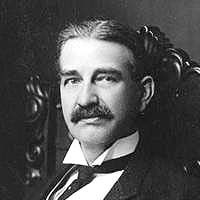
Lyman Frank Baum was an American author best known for his children's fantasy books, particularly The Wonderful Wizard of Oz, part of a series. In addition to the 14 Oz books, Baum penned 41 other novels (not including four lost, unpublished novels), 83 short stories, over 200 poems, and at least 42 scripts. He made numerous attempts to bring his works to the stage and screen; the 1939 adaptation of the first Oz book became a landmark of 20th-century cinema. Born and raised in Chittenango, New York, Baum moved west after an unsuccessful stint as a theater producer and playwright. He and his wife opened a store in South Dakota and he edited and published a newspaper. They then moved to Chicago, where he worked as a newspaper reporter and published children's literature, coming out with the first Oz book in 1900. While continuing his writing, among his final projects he sought to establish a film studio focused on children's films in Los Angeles, California. His works anticipated such later commonplaces as television, augmented reality, laptop computers (The Master Key), wireless telephones (Tik-Tok of Oz), women in high-risk and action-heavy occupations (Mary Louise in the Country), and the ubiquity of advertising on clothing (Aunt Jane's Nieces at Work).
Having enjoyed some of L. Frank Baum's children's books, I was intrigued to read one of his adult novels (which he wrote under various noms de plume - in this case Schuyler Staunton). The first time I read this however, I was not really sure what I thought of it so I decided to read it again. That second read was a mistake. This story is not at all interesting enough to go through twice.
I had heard that this was a more positive portrayal of Eastern culture than you were likely to find at the time (this was published in 1906), but despite this I still had some uncomfortable 'is this racist' feelings about the book, and the same about sexism really, which is odd because Baum was always keen to write about strong women.
The biggest issue with the book is that there simply isn't a main character and it keeps focusing on different people who all oppose each other and work against each other, often switching sides, to the point where I had no idea who I was supposed to root for. It is also based on an awful lot of coincidence and because various twists are being hidden for the reveal at the end, you never get below the surface layers of the characters. I think that this SHOULD be the story of Janet, but I know nothing more about her character than her name. I particularly didn't like how Baum/Staunton treated the more villainous characters, bearing in mind that everyone in this book is constantly lying, cheating and fighting. It felt very 'moral high horse' about killing off the no-good-uns who frankly seem no worse than anyone else to me.
I guess if you like a fairly empty-headed tale of foreign climes with action and intrigue around power-struggles and the shallowest concept of romance, then it could be enjoyable, but I mostly found it rather dull.
This 1906 story of succession and conspiracy was originally written under the pseudonym Schuyler Staunton. It takes place in Baluchistan, a region made up of parts of Pakistan, Iran, and Afghanistan. Within Baum's fictional portrayal, it's a separate nation, albeit made up of many different tribes. When the old Khan dies, two princes vie for the throne, one of whom turns out to have lived a secret life and have a connection to one of the daughters of Colonel Moore, who is in the country in hopes of building a railroad there. It's not too surprising that the tale includes a fair number of stereotypes, but Baum does give a pretty respectful portrayal of Islam. On the other hand, the one Jewish character, referred to as "David the Jew," is sleazy and money-grubbing. Eric Shanower did the illustrations for the version I read, which is in Oz-Story Magazine.
At the time I read this, in a photocopy of the first edition obtained through Interlibrary loan, I thought it was the worst Baum novel I had read. It seemed very creaky an imperialist, like a silent adventure film.