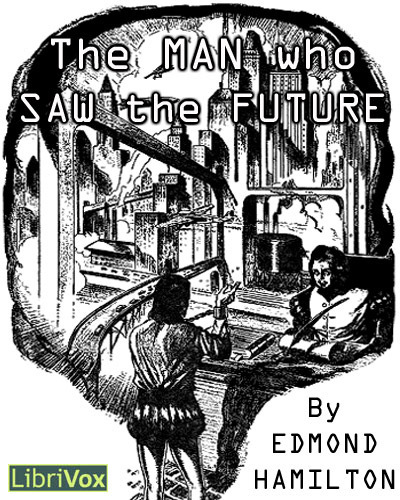
He was a straight figure, and was dressed in drab tunic and hose. His dark hair was long and straight, and his face held a dreaming strength, altogether different from the battered visages of the soldiers or the changeless mask of the Inquisitor. The latter regarded the prisoner for a moment, and then lifted one of the parchments from before him and read from it in a smooth, clear voice. "Henri Lothiere, apothecary's assistant of Paris," he read, "is charged in this year of our lord one thousand four hundred and forty-four with offending against God and the king by committing the crime of sorcery." The prisoner spoke for the first time, his voice low but steady. "I am no sorcerer, sire." Jean de Marselait read calmly on from the parchment. "It is stated by many witnesses that for long that part of Paris, called Nanley by some, has been troubled by works of the devil. Ever and anon great claps of thunder have been heard issuing from an open field there without visible cause. They were evidently caused by a sorcerer of power since even exorcists could not halt them. "It is attested by many that the accused, Henri Lothiere, did in spite of the known diabolical nature of the thing, spend much time at the field in question. It is also attested that the said Henri Lothiere did state that in his opinion the thunderclaps were not of diabolical origin, and that if they were studied, their cause might be discovered.
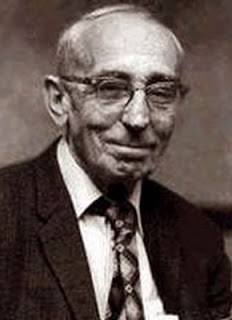
Edmond Moore Hamilton was a popular author of science fiction stories and novels throughout the mid-twentieth century. Born in Youngstown, Ohio, he was raised there and in nearby New Castle, Pennsylvania. Something of a child prodigy, he graduated high school and started college (Westminster College, New Wilmington, Pennsylvania) at the age of 14--but washed out at 17. He was the Golden Age writer who worked on Batman, the Legion of Super-Heroes, and many sci-fi books.
Who wouldn’t like to see the future? Take a peep at a screen, or enchanted crystal-ball, to have a glimpse of the shape of things yet to come?
This was a story (Hamilton's) I read and heard about while at the same time I was getting to read other future & past-concerned stories.
One (an essay* in a Portuguese literary magazine) about the poetry of one of our major contemporary poets: M. Alegre.The main “ thesis” of the essay was that in 10 years the poet anticipated/dreamt about a new Portugal; 10 years before the 25th April of 1974, M. Alegre was already speaking about a “nation of April… and roses and “carnations”.
Another story was a mix of pleasing feelings and concern about the future of our own language: the Portuguese. Scholar Carlos Reis, despite acknowledging the diversity (even "drifts") in the language (commemorating 800 years of existence; see the Portuguese-speaking nations, a universe of 250 million speakers) , wrote:”…which motivates a doubt: within one hundred years will we understand each other in Portuguese?”**. Was he hinting at a transformed-language, yet to come? ….
Well, the story of Hamilton is about future and past. Maybe, it will make you feel well-identified with the 15th century character, who, when transported into the future, will experience the wonder of 20th century France, and beyond, from his past viewpoint. Future as progress, vis-a-vis the obscurantism of his time.
Once an apothecary-assistant named Henry L. was charged by the Inquisitor extraordinary of the king of France, of sorcery. Basically, Henry had been seen, by several people, in a field where thunderclaps had occurred,performing suspicious activities...had been seen disappearing and …,upon returning,in his own defense, said he had “gone 400 years into the future”.
By that time that "ability" was only allowed by the recourse to the “devils”. So, Henry was facing a penalty of “death by fire”.
The apothecary, nonetheless, in his own defense, asked for the opportunity to disclose on what he had seen. So he did it.
When he disappeared in the field...:"I was buffeted as though by awful winds and seemed falling downward through terrific depths". Henry had closed his eyes and was transported to a room where two men would show him wonders, unimagined.
The two men spoke a different sort of French, but Henry could understand them; he could conclude, later on, he himself was the subject of an experiment of time-travel performed by the 20th century French scientists Thicourt and Rastin.
So, after the introduction talk (who are you? what’s your century?... ) the scientists take Henry into a series of experiences with enough contrast future/past to allow the sense of wonder to be more evident:”I could not believe”:communication by telephone,... TV: what a fascination!…winged-cars…,…cures!
"'You will want to see Paris--the Paris of our time, Henri?' asked Rastin. "'But it is different--terrible--' I said.
Henry will be taken to the streets of Paris populated by many riding “vehicles” at “unthinkable speed”;… telescope, …and the idea that earth is “round!”…and moves “around the sun”...“What magic!”.
Paris, a “mighty city”…because he had seen it from a top view, while on the airplane.
Oh, New York! The Liberty statue;…millions of people…no horses,…so much light and vehicles…he’s past a “huge vessel full of hundreds” (airplane). No more “lords”…but “each, his own master”.
Henry returned to the room and was sent back to the past.
And what do you think it happened? In spite of: “I wanted to tell them how they must work ever toward that future of wonder” …they didn’t listen. Henry was called a blasphemer and a sorcerer, still.
The inquisitor had yet some vague thoughts like: any truth in Henry’s? …but the logic of obscurantism was implacable: better not to think about the future, otherwise he, too, would be a sorcerer.
A quite common premise but an enjoyable read. A French man from 1444 gets unwittingly taken to the future by two Parisian men in 1944 (story was written in 1930). Hamilton is quite optimistic in how he thinks technology will be in only 14 years time, with flying cars, etc. And of course, the actual state of Paris and world affairs really was going to be unimaginably different, but other than that was quite fun. The story definitely could have been a full length novel if written a bit later in time, especially as back then the historical consensus on the medieval era was still very Victorian which did show through. For example, it was believed back then than in the medieval era people didn’t think the earth is round, which we now know isn’t actually true of them. Hamilton also didn’t go into much detail either about how the Time Machine worked, but this was easily overlooked by making the observer from 1444 and not able to understand what he was looking at and also the modern French words the scientists were using.
“But tush--enough of these crazy fancies. They will have me for a sorcerer if I yield to these wild fancies and visions of the future." -- Well.. That's the story in a nutshell.. The oft-used plot,with a simple presentation,it's a good read for few minutes. You get the whole wonder of 'the time machine' in a few minutes,what more can you ask.?!
Looking through my unheard audiobooks I ran across one of my old favorite writers, Edmond Hamilton. I had a Librovox recording of "The Man Who Saw the Future". I went online and found a Project Gutenberg edition of the book published on February 13, 2009, illustrated by Leo Morey — so I could read along with the narration by Gregg Margarite, one of my favorite ebook narrators.
"The Man Who Saw the Future" by Edmond Hamilton was first made into an ebook from Amazing Stories of February 1961, but the story was first published in Amazing Stories of October 1930.
In Edmond's story Henri Lothiere, an apothecary's assistant of Paris in 1444 is a curious soul at a time when being curious could get a person killed. It starts with the Jean De Marselait, Inquisitor Extraordinary of the King of France reading the charges against Henri, an alleged sorcerer.
The charges were many. The Inquisitor had plenty who witnessed and attested to Henri Lothiere's sorcery. At the conclusion of the reading of charges Henri was offered the opportunity to dispute the allegations -- which the inquisitor believed burning was the appropriate punishment.
Henri admitted that he could not refute any of the testimony but wanted to respond to the charges if allowed to tell it all from beginning to end.
This is one of the favorite ways early Science Fiction writers liked to tell their story: To have a character narrate something fantastic that they witnessed. This is what happens in this story.
Henri is given the permission of the court to tell his story. Henri explains he has always been curious - wanting to know things like how the birds fly, and other such marvels. Then came the loud thunderclaps in a near-by field that had no explanation. No clouds in the sky, nothing anyone could see caused the noise. Henri was exceedingly curious. So he investigated.
As witnesses testified he went to the park and watched everything for hours, including the sky, on several days. Henri could not explain the thunderclaps. Trying to learn more, he gathered some instruments and went to the middle of the field to see if he could make any measurements when he heard the thunderclaps. What happened next was unbelievable, explained Henri. Yes, he admitted, he did vanish.
At the conclusion of his story it explained all that the witnesses had testified about. Then Henri awaited his judgment.
Considering the title of the book you may guess what Henri had to testify about but I'll leave that for your enjoyment.
When you decide to enjoy this short 1930s book, keep in mind the events take place in 1444 and 1944. The author, Edmond, was projecting his speculation only 14 years into the future. He published the story in 1930, and the events his character, Henri, described took place in 1944. I find the events imagined extremely optimistic of the author.
I enjoy thinking about the authors of these stories written in the 20s and 30s as much as I enjoy the stories. I grew up reading reprints of the old Doc Savage adventures from the 30s and 40s. In the 60s and 70s, when I read 130 Doc Savage novels. Many of the scientific advancements in those books were either new inventions in the 70s, or were still fiction.
My older brother, Elvin, was always reading, always excited about Doc Savage. He would tell me some of what he read. Naturally, being the younger brother I wanted to read the books too. My love of adventure books is, in part, me trying to be like my big brother Elvin, may he rest in peace. Maybe that's why I routinely venture back to writers like Edmond Hamilton and Lester Dent.
Another will written fantasy Sci-Fi futuristic adventure thriller short story by Edmond Hamilton about a French man 🚹 who is brought forward 500 years into the future and not believed when he returns. I would recommend this novella to readers of futuristic fantasy. Enjoy the adventure of novels 🔰 and books 📚. 🏡😤🐺 2022
Time travel as described is not possible unless multiple parallel universes exist; I think they don't. The sorcerer could have saved himself just as the time travelers did, by bringing some proof back. Objectify man.🤙
A short read. Consideting that this book is written in 1930s, I would say this is a masterpiece. A man who travelled into the future was called a sorceror & a lunatic. It is when he starts explaining what he saw after 5 centuries from now, that people got mesmerized & he wasn't punished.
It's a shame how closed-minded people are. If a man has seen things others haven't and actually says, I am telling the truth. Why would you execute this person from another form of evil? When they exclaim, I did no evil, only observed.
No real story here. Just a medieval person describing the far future of 1944. It provides an amusingly quaint glimpse of an imagined retro future and is a very quick read.
Perhaps the book has just aged poorly but it didn't impress me at all. It didn't provide any insight, food for thought, or entertainment. It is a waste of words.
Haha... Made me laugh at the innocent narration of Henri Lothiere..... It could be interesting if the writer of 20th century had written about any next century.
In Librivox SSF Collection Vol 019. Supernatural forces seem to have conspired to educate a suspected alchemist back 700 years ago in the medieval era into the wonders of the “modern” 1940s world. Ironically it is a knowledge that may cost him his life, but upon his return he recounts his adventures to a credulous King. Styled as an HG Wellsian short IMO it was well worth listening to or reading for its account of 1940s Paris or the characters alone.
Jean de Marselait, Inquisitor Extraordinary of the King of France listens to the charges against Henri Luthier, an apothecary’s assistant in Paris. There are witnesses who testify how Henri, in this year of our Lord one thousand four hundred and forty-four, offended god and king by committing the crime of sorcery.
The story of a mans conviction and strength in an impossible situation. Audio Book MP3 downloaded from http://librivox.org/short-science-fic... I listen to these short stories while walking to work.
I found this to be a very enjoyable story about time travel from 1444 to 1944 although the story was written in 1930. the story holds up well after 87 years even if Hamilton's 1944 was 100% accurate.
Why didn't they torture him? Torture was the technology of the time. Now they use more subtle means i.e. schools, television, social media; but just as effective as the thumb screw.