

What do you think?

Marengo and Hohenlinden : Napoleon's Rise to Power
“My house began on the field of Marengo.”
So spoke Napoleon Bonaparte when reflecting upon his victory over the Austrians in 1800. He recalled a desperate afternoon when his future hung in the balance. Marengo and Hohenlinden: Napoleon’s Rise to Power relates the momentous events that began in the late autumn of 1799. Within a thirty-three day span starting with his return from Egypt, Bonaparte escaped punishment for deserting his army and ascended to ruler of the nation. Yet his position was precarious. At home, political and military rivals abounded. On France’s frontier, the forces of the Second Coalition prepared an offensive to crush the Corsican upstart. Bonaparte knew that France would accept his rule only if he gained military victories that brought peace.
These events provide the story line, beginning with Bonaparte’s rise to power via the coup of Brumaire. Applying his organizational genius to the challenge of overthrowing the government, Bonaparte brilliantly plots a coup. At the last minute his political naivete almost derails him. Only intervention from a most unlikely source saves him.
To consolidate Brumaire, First Consul Bonaparte needs a military victory. To redeem his pledge to France, he needs a favorable peace. To obtain these objectives he must enlist support from his greatest rival, General Jean Moreau. Moreau is a popular, gifted soldier and one who seldom cooperates with anyone. Moreover, he holds deep suspicions about Bonaparte's motives. Their relationship and their actions dominate events during the decisive year of 1800. We follow Bonaparte’s army over the Alps to its fateful collision with the Austrian army at Marengo. Then we turn to Moreau’s campaign culminating in the epic Battle of Hohenlinden. The twin campaigns prove decisive, since the Battles of Marengo and Hohenlinden secure Bonaparte's rule. In turn, the failure of the Second Coalition condemns Europe to a fifteen-year struggle to overthrow him.
So spoke Napoleon Bonaparte when reflecting upon his victory over the Austrians in 1800. He recalled a desperate afternoon when his future hung in the balance. Marengo and Hohenlinden: Napoleon’s Rise to Power relates the momentous events that began in the late autumn of 1799. Within a thirty-three day span starting with his return from Egypt, Bonaparte escaped punishment for deserting his army and ascended to ruler of the nation. Yet his position was precarious. At home, political and military rivals abounded. On France’s frontier, the forces of the Second Coalition prepared an offensive to crush the Corsican upstart. Bonaparte knew that France would accept his rule only if he gained military victories that brought peace.
These events provide the story line, beginning with Bonaparte’s rise to power via the coup of Brumaire. Applying his organizational genius to the challenge of overthrowing the government, Bonaparte brilliantly plots a coup. At the last minute his political naivete almost derails him. Only intervention from a most unlikely source saves him.
To consolidate Brumaire, First Consul Bonaparte needs a military victory. To redeem his pledge to France, he needs a favorable peace. To obtain these objectives he must enlist support from his greatest rival, General Jean Moreau. Moreau is a popular, gifted soldier and one who seldom cooperates with anyone. Moreover, he holds deep suspicions about Bonaparte's motives. Their relationship and their actions dominate events during the decisive year of 1800. We follow Bonaparte’s army over the Alps to its fateful collision with the Austrian army at Marengo. Then we turn to Moreau’s campaign culminating in the epic Battle of Hohenlinden. The twin campaigns prove decisive, since the Battles of Marengo and Hohenlinden secure Bonaparte's rule. In turn, the failure of the Second Coalition condemns Europe to a fifteen-year struggle to overthrow him.
301 pages, Hardcover
First published January 1, 1990
Ratings & Reviews
Friends & Following
Create a free account to discover what your friends think of this book!
Community Reviews
Displaying 1 - 5 of 5 reviews
December 5, 2009
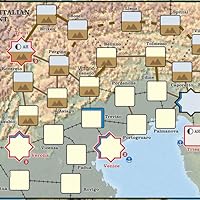
Fantastic book. This is a great template for writing about military history. It has the right amount of background on the participants (both national, soldiers and leaders) and the situation/politics. The campaign and battle narratives are superb, as are the maps and pictures. Did I mention pictures? They give the reader a great idea of why Fort Bard was such an obstacle as well as the feel of the land at Hohenlinden.
Finally, the narratives for both battles are the best and most detailed I have read, especially for Hohenlinden. Add to all of this great OOB, and you have a fine book.
Finally, the narratives for both battles are the best and most detailed I have read, especially for Hohenlinden. Add to all of this great OOB, and you have a fine book.
February 14, 2026
Superb in about every about category that can be imagined for a work of military history. The narrative provides an excellent pre-background on why these campaigns were undertaken and their geopolitical aftermath. He describes the strategic and tactical options for both sides surroudning these hugely important battles in sufficient detail to provide a fairly clear understanding of just what happened and it's geopolitical consequences. I say 'fairly' because battles are inherently confusing and the horror, chaos, confusion and general mayhem far surpass what words can often convey. Perhaps that is the only weakness in Arnold's account, a lack of deeper insight into what these battles were like. Units--companies, battalions, regiments, divisions, corps maneuver around like pieces on the chessboard of northern Italy (Marengo) and southwestern Germany (Hohenlinden) and while he does describe the difficulties of terrain, weather, command indecision--the 'friction' of war, it can seem a little detached from the reality. Of course every military history book faces the challenge of balancing what seems to have occurred, how and why without getting bogged down in the horrific details of battlefield mayhem and horror. Though I have to say, the transit of the Alps via the Saint Bernard Pass by the Army of Reserve in April, 1800 was pretty epic! The famous painting by Jacques-Louis David of Napoleon astride a mighty white charger horse is from that event (he was actually on a mule!). Along with the defense of Fort Bard, which is still there. The Pass and Fort are now on one of my many bucket lists! The logistical feats involved in moving these armies around was simply stupendous and he does not omit much of that lesser drama. At some point though you just have to keep the complex story going and he does, otherwise it would end up a much longer book. He does an outstanding job in presenting the strengths and weaknesses of the French and Austrian armies of 1800 and exactly why the former were so successful in the early (actually most) of the Napoleonic Wars. The maps are first-rate, along with complete Orders of Battle, a selection of modern day photos, footnotes and references included and a nice end section on 'what happened to them after'. Frankly, there is nothing missing other than some more 'grit' and perhaps some commentary about weapons capabilities. I will definitely be seeking out other books my James Arnold and as it turns out I already own one ('Grant Wins the War: Decision at Vicksburg'). I can't quite get to 5-stars, but 4.5 rounded down.

November 12, 2021
Review forthcoming.

January 16, 2020
I got exactly what I wanted out of this book, but I have to say the author has a more of a knack for describing the interplay of politics (he does it quite well and concise) than for battle scenes. During the titular bang-ups I found myself getting lost in the constant interchange of musket fire. Perhaps that's the point, to be confused as one of the infantrymen?
I suggest that when you read the chapters focused on the actual battles get your own map and follow along.
Recommended.
I suggest that when you read the chapters focused on the actual battles get your own map and follow along.
Recommended.

February 14, 2023
Very neat, very tidy, very clear. Written with flair & a good pace. Good treatment of neglected campaigns with good map linkage.
Displaying 1 - 5 of 5 reviews