After being raped and impregnated by an African American man, Tamar, a recently-married, Orthodox Jewish woman, hides her shame and brings up the child as her husband's son, but the past returns to haunt her later in life.
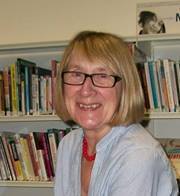
Naomi Ragen is an American-born novelist and playwright who has lived in Jerusalem since 1971. She has published seven internationally best-selling novels, and is the author of a hit play. Naomi also publishes a regular column that deals with Jewish subjects, especially Israel.
Tamar Finegold has a secure and predictable life , as wife of one of Brooklyn's leading ultra-orthodox rabbis , but when she is violently raped by an intruder , all of this is thrown into turmoil. She turns to two childhood friends , but keeps the secret from her family , until years later , a strange turn of events forces her to confront her past.
Naomi Ragen's books deal with the struggle of Jewish communities and the various threats and dilemmas that face them. I had previously read The Covenant and The Ghost of Hannah Mendes.
This book shows both the tranquility and beauty of religious life and the dilemmas faced. It is beautifully written and shows how Tamar deals with he trauma of her rape by an intruder and how her life and that of her family develops, as well as that of her two friends, one who has wisely embraced all that is good in Judaism , and one that has divorced herself from her roots. A very compelling and easy read , that gives us a rare insight into ultra-orthodox communities and their ways of being and thinking.
3.5 stars. It looks like reviewers either hated this or really liked this novel. The blurb on Goodreads says its about racial prejudice and religious faith. Racial prejudice was definitely a piece of it and surrounds the event that is the crux of Tamar's dilemma, but this community was divorced from any community of people other than their own, not just the African-American community. Within their own community, it has a class structure that can be elevating or demoralizing.
Written in 1994, it follows Tamar, her family and friends from the 1970's-mid 1990's. When I first started reading, I thought "gee, this might be a little dated", but then saw the interview with Prince Harry and Meghan Markle and I thought OMG, this has such parallels to the storyline in this novel.
The good: a wonderful peek into the Orthodox Jewish life and dilemmas one may face growing up or joining such a rigid insular community. It highlights the beauty and traditions of their faith.
The 3 childhood friends: Hadassah, Tamar & Jenny are the faces of divergent paths in life. One rebels against the rigidity of the life & the role of females in this culture, one becomes the most obedient of wives and one moves from a family of non-observant Jews to embracing the joy of life that is found in following the scripture of the Hebrew bible.
The dilemma: Tamar is raped by a black man, she fears judgement, the loss of her husband's love and status within the community. She decides to keep her secret, and then finds that she is pregnant; is it her husband's or the rapist's child. Now her secret and what to do about it eats away at her. This trauma in her life will haunt her for decades.
The bad: Stereotypes, an unrealistic rape scene among some other "forced" scenarios.
But overall, I was fascinated by the life in this community and I wanted to see what unfolded in Tamar's life and would she really come into her own and how.
This excellent novel offers a rare and detailed glimpse into the lives of Orthodox Jewish women and couples and the struggles they face to maintain their faith in the modern world. The questions raised in the book strike to the heart of the religion it explores. How do we interpret ancient writings? To what extent do the interpretations depend upon the interpreter? And how do we stop walking the religious tightrope that is orthodoxy to find our own understanding of God? The plot is gripping and the message has many layers. This was a satisfying read.
Truly the worst book I ever read. An orthodox woman is raped by a black man, who of course just randomly climbs in the window of her sister's apartment while she is babysitting and rapes her. She is terrified to keep the child given her community's extreme racism, but does anyway. Ultimately the child she has looks white enough, but when his child is born with a dark complexion he blames his wife of being disloyal. She ultimately takes the child, sacrificing herself and her own social standing by becoming an outcast for the sins of her past - which are not even her fault. What truly angered me was a, the assumption that black people would just come in and rape people obviously, and b, that societies exist where women feel they cannot share the fact they were raped with anyone, even or especially their spouses. Absolutely despicable on every count imaginable.
A book that keeps me an extra five minutes on the treadmill? Now that's what I call a good book. The Sacrifice of Tamar is about a young Hassidic woman who deeply believes all that her religion and community have taught her. She is married to a young man who is also deeply religious and she longs to give him a child (as is her duty). When Tamar is raped she tells no one at first. Defiled and horrified at her defilement, she reasons that if she keeps the secret to herself, only she will suffer. But when she realizes she is pregnant, she knows that her secret might become common knowledge. This is the third book of a trilogy in which Naomi Ragen explores some of the issues of fundamental Judiasm. About this third and possibly final book, she says that in it she has expressed her own opinions more clearly than in the other two books. She clearly has a great love of this closed community, but equally she thinks the kind of pressure cooker atmosphere is damaging to many women. The book is not without flaws, but I found it fascinating.
The characters and scenario feel slightly staged, especially in the first part of the book, but nonetheless a good story dealing with interesting philosophical, moral and religious questions. And the ending is good but not too sweet.
I have read some of the other reviews of this book and I think I read the book differently. I saw the 'plot' (rape of an ultra-orthodox jew by a black man) as a vehicle to explore an extreme 'what if?' situation. In particular, following the written 'rules' that have to be obeyed by orthodox jews. The rules are detailed and complicated and Tamar doesn't really understand them but she can't ask anyone (particlarly her husband) as she fears she will become cast out by her family and friends. It is the dilemma of her situation and the choices she has to make, faced with the constrictions of her faith, that drive this book. The rest is just detail. I felt that 'the rules' are like the tail wagging the dog - that people are so caught up in following the rules and working out the right thing to do they lose sight of instint, human feeling, love and trust. So I found it very interesting. Outside of the story, what I feel about ultra-orthodox jews and their relationship to gentiles is neither here nor there.
The only highlights in this book was the opening chapters. It was heartbreaking to learn about Tamar sexual violation and how she tried to keep it hidden from her husband. Trapped in a marriage of guilt and shame, she tries to hold her values dear to her but is afraid of being exposed as a frail victim. Other than that, the lack of consistency was appalling. Not to mention how poorly these characters were written, none of their virtues shined. Also there were too many things going on at once,way, it had more unanswered questions then solutions.
I have read Naomi Ragen other novels and enjoyed them. I love her writing style and how she turns fictional characters to memorable ones, but this one fell short on many areas. The plot quickly lost it's direction and starting shifting from unknown to relevant characters. Needless to say, I was gravely disappointed in how it turned out.
Naomi Ragen is a talented writer but this one was not her best work.
Though I truly sympathized with Tamar, I found her as a character to be endlessly weak. She was basically a doormat her whole life! She let her sister walk all over her. She let Hadassah Mandlebright walk all over her. She let Josh walk all over her.Oh, don't get me wrong, I hated Hadassah too. They were both being smothered and brainwashed by ritual, which should have been a safety net, a refuge. But the difference between her and her archnemesis/friend was that Hadas had the guts to break free of her shackles. Tamar was a sniveling little witch who cared more about her own reputation than anything, and what did it lead to? Her innocent, blameless, pious daughter in law being ostracized and willed dead by the community two seconds after giving birth! What the hell kind of person allows this? Overall, Tamar was in the words of Heather, "a stupid, closed-minded woman who takes forty years to grow the fuck up."
I loved this book. I felt it was beautifully written and took me to a community of people whom I've alsways longed to learn more about. I enjoyed reading about the traditons, rituals and daily lives of this devout group of Orthodox Jews. As I became entwined in Tamar's life, I could almost feel how frightened and alone she must have felt, keeping the trauma of the rape to herself. Life is about choices and Naomi Ragen beautifully depicts the struggles one woman undergoes that impact her life and the lives of her entire family. Thoroughly enjoyed this book.
What a great read. I must say that I had real trouble with this book. I started reading it two or three times over the past year.
This past time, I made myself get past the first 75 pages and then really did not want to put the book down. Although the plot revolves around a woman's rape, the story is about faith, love and what heppens when one makes particular choices based on a limited amount of factual information.
In the end, I was very happy that I read this book!
I really enjoyed reading about Tamar's life journey from young girlhood to middle age and how a tragic incident early in her marriage shaped much of her life. It was considerably better than the other book I read by this author, Jephyte's Daughter. The main character in this story was multi-layered, flawed and much more relatable. I will definitely try more of her work.
In most of the Naomi Ragen books I've read, the story pretty much grabs me from the beginning. This book did not disappoint. I also find that I really like it when she moves the story from the U.S. to Israel and other parts of the globe. Her writing is very fluid, easy to become engrossed and turn pages. Very moving and heart wrenching story.
L’amore violato (titolo originale The Sacrifice of Tamar) è l’ultimo libro di una trilogia sulla vita delle donne ebree osservanti o ortodosse. L’autrice Naomi Ragen è nata a New York nel 1949, ma nel 1971 si è trasferita in Israele. L’amore violato è stato pubblicato per la prima volta nel 1995.
La protagonista Tamar Finegold, capelli biondi e riccioluti e occhi grigi, è la moglie di un rabbino di Brooklyn di nome Josh. Nel 1970 Tamar ha 21 anni, è sposata da due, ma ancora non è rimasta incinta. Ha consultato diversi ginecologi e non hanno riscontrato alcun impedimento. All’interno della sua comunità, la sterilità è una maledizione perché significa che Dio non è soddisfatto dell’unione fra quel particolare uomo e quella particolare donna.
Le donne ebree ortodosse devono obbedire a numerose leggi religiose, ma quella che più fa soffrire Tamar è il doversi coprire i capelli con una parrucca, una sciarpa per la testa (tichel) o un cappello. Sua madre aveva sempre usato dei cappelli, ma Josh è più rigido e ammette solo parrucche, così Tamar ha dovuto nascondere ogni ciocca naturale da quando si è sposata, anche se così facendo i suoi capelli si stanno opacizzando e inaridendo.
Un giorno Tamar viene stuprata da un uomo di colore intrufolatosi in casa della sorella. Tamar doveva accudire il nipote. La sorella vive in una zona solo recentemente colonizzata da ebrei ortodossi. Lo stupratore non usa il preservativo e Tamar è a metà ciclo (ovulazione). Tamar decide di non chiamare la polizia per evitare che tutta la comunità venga a sapere dello stupro. Decide di non farlo sapere a nessuno. Quella sera stessa, dopo il mikveh (il bagno rituale mensile per purificare le donne in seguito ad ogni mestruazione), si concede al marito dopo le due settimane di astensione previste dalla tradizione ebraica.
Josh trascorre tutto il giorno alla yeshiva studiando la Legge. Solo gli uomini possono farlo. Tamar non sa se la halacha prevede il divorzio in caso di stupro. La tradizione orale è stata messa per iscritto nel Talmud dove si trovano la halacha e le spiegazioni alle parti criptiche della Bibbia. Le donne non possono studiare il Talmud, devono pensare alla casa e ai figli.
Tamar resta incinta, ma sceglie di non abortire, sperando che il figlio sia di Josh. Ma lo stupro, anche se nello stesso giorno, è avvenuto diverse ore prima del rapporto con il marito dopo due settimane di astinenza a partire dalle ultime mestruazioni… È logico che il primo spermatozoo ad arrivare al suo ovulo sia stato uno di quelli dello stupratore nero!!! Inoltre in due anni il marito non era mai riuscito a darle un figlio!!!
Incredibilmente Tamar partorisce un figlio bianco, anche se con i ricci neri. Sia lei che il marito hanno i capelli biondi, ma il padre di Tamar aveva i capelli neri e gli occhi scuri.
Trascorrono vent’anni e il figlio Aaron vuole sposarsi. Tamar nel frattempo ha avuto due femmine dal marito Josh. Entrambe hanno occhi e capelli chiari come i genitori. La futura moglie di Aaron è israeliana, con occhi e capelli scuri. Aaron ammira la sua ortodossia e accetta di vivere a Gerusalemme insieme a lei. Il nipote di Tamar però nasce nero ed Aaron crede che la moglie l’abbia tradito. Aaron vuole il divorzio. Tamar dice finalmente la verità, ma adesso è la nuora a volere il divorzio. Josh dice a Tamar che in assenza di testimoni si crede alla versione della donna violentata, ma si sente tradito da tanti anni di menzogne.
Josh e Aaron vanno a Detroit. Tamar resta in Israele con le figlie e il nipote color cioccolato. Tamar si trasferisce a Beit El, un insediamento rurale di ebrei ortodossi non interessati al lusso e dove vive anche la sua amica d’infanzia Jenny.
Un anno dopo, Josh e Aaron pensano di tornare in Israele. Vogliono cercare lavoro lì. Josh sente la mancanza di Tamar e Aaron desidera vedere il figlio. Finale aperto con possibile lieto fine. Speranza.
Le vicende narrate nel libro si estendono dal 1955 al 1993 con alcuni flashback della Seconda Guerra Mondiale.
L’amore violato è un libro coinvolgente che ci permette di conoscere meglio le tradizioni e i pregiudizi di alcune comunità di ebrei ortodossi. Peccato però che l’edizione italiana, pubblicata dalla Newton Compton, si sia allontanata dal titolo originale The sacrifice of Tamar omettendo il nome della protagonista e abbia scelto una copertina scialba che, evitando qualsiasi riferimento agli ebrei ortodossi, non è in grado di trasmettere visivamente il contenuto del libro.
Va inoltre segnalato l’indice tutto attaccato e con i numeri di pagina della versione cartacea anche nell’ebook, oltre ad alcuni errori di traduzione.
I am surprised by the aversion the Hasidic community, as described in this book (fiction), held towards people of dark or black skin. I understand the contempt for the rapist, but the racial disgust, even for a helpless infant, was hard to read or accept. At times, the references were so brutal that one would think black skin were freakish, like a third arm or leg, an ugly stain, a defect, a challenge that takes lessons learned to overcome; really, not unlike how Jews were perceived in Nazi Germany, and by many in Poland and the Ukraine during that tragic time. Skin colour, to me, appeared to be a greater problem for Tamar than the actual rape. Rather sad... As well, I was surprised by the preferred standard of beauty--- blond hair and blue eyes. Interestingly, this appears to be a feature in Ragen's writings. In Sotah, the alluring protagonist was also blond, with green or blue-green eyes; her daughter, too. I do not contest this preference, as attributed to Tamar and her community. I am sure there are Jews who have very Nordic or Germanic features, just as there are Jews who are black, like the Ethiopian Jews. However, because Jewish people are ethnically diverse, I never imagined that a religious community, many of whom were holocaust survivors, would think and spew the very racial ideology that once tormented them. I was quite startled by this possibility, and, the more I read, increasingly annoyed. To conclude, I did not like reading this book at all. I did not even like the ending, which seemed more like resigned love than love, itself. However, it is very well-written overall and bravely attempts to address some important issues within the Hasidic community, especially for women. I respect that. In addition, the book may also be seen as a provocative reminder to all people of faith to apply their tenets, rather than merely observe them, in sincere and meaningful ways.
It was sweet, so sweet, she (Jenny) thought, to be part of something bigger than yourself, to be joined together with a whole that accepted you and let you mingle your voice with theirs, your clapping hands with theirs. All her pent-up sorry and isolation welled up inside her small chest and flew out of her heart in the songs, like a great shout of joyous pain, it flew from her, rising and hovering and disappearing like polluting smoke dashed against the sky by the clean wind. (p. 97)
For all the trappings of impermeability, all the careful constructed dams and intricate stone breakwaters put up by parents to reserve the cherished values of the past, the streets of Orchard Park were flooded by the immense power of the American dream,which swept away effortlessly the minds and hearts of the American-born children who lived there. Their parent never even suspected. (p. 107)
Tamar is thinking for herself, a change of character:
Girls were supposed to go from their father's house to their husband's house. They were always under some man's protection and control. I always used to think it was strange that even though our school was all girls, and almost all women teachers, that we always had a male principal. I guess that's one of the reasons I don't want to go to a rabbi now. I don't want another man telling me what to do. None of them were there to protect me when I needed them. I want to make this decision myself. (p. 218)
Sometimes she wondered if people had really be ome frumer--sincerely more religiously observant--or simply farchnyokt, outlandishly obsessed with making up new strictures that helped them showily display their superior piety, similar to the way people had once bought cars with bigger and bigger tail fins. Would the Jews of Orchard Park ever decide that less was more, the way people had concerning their cars? She somehow doubted it. (p. 268)
What is it like to be Tamar Finegold, a young bride, married to an academician Rabbi and Talmlud intellectual? How does the environment of the Ultra-Orthodox community in which she is part of receive a woman who has been “stained”? Is there security for a woman within the community when she decides to hide the truth?
Is there security within herself, or does the horrifying act that Tamar initially chooses to hide have repercussions psychologically and morally? So her actions and choices cross religious boundaries? Do the consequences extend beyond Tamar to her children, other family members and friends? These are just the basic questions I found myself asking while reading The Sacrifice of Tamar.
No matter the horrendous act, I found the book to be strongly written, not only regarding the violent act of rape, but also regarding the consequences of hiding the truth, and how it can devastate a family, decades later.
Delving into the ultra-orthodox jewish customs was a journey for me; it involved both New York and Isreal, real journeys I have taken. My trips had dealt with surface views, but not delved into nuances of an enclave jewish culture that exisited similiarly in two places. Tamar behaves as expected in her deeply religious community for years after being married to a Rabbi. However, she has a secret which wears her down as her life passes. Because she never told her husband that she was raped by a black man, she worries about what her first baby will look like. But her 3 children turn out to appear as her husband expects, and he loves them. When the next generation comes along, there is a throwback surprise with which the family must deal. What I liked best about this story was the everday thoughts and habits of the characters as affected by their faith. Her friends round out the fullness of the book.
This was such a gut-wrencher. Even though someone told me the ending before I even picked up "The Sacrifice of Tamar," I couldn't put it down. I was totally and completely taken in by "The Sacrifice of Tamar." I felt hurt and anguish when Tamar did, and sympathized with Hadassah and her plight then ultimately hated her for turning her back on Tamar. I loved Jenny, and felt like she was a real source of light in the story.
Ultimately, though I loved the ending, I felt like it was disingenuous. To Ragen, the haredi world is wrong and not accepting--contrasting Beit El and the dati leumi world that Tamar and her family ultimately join. "The Sacrifice.." tells us that the dati leumi world is accepting, loving, and non-judgmental (which is not always true) and that the haredi world and cold and rejecting (also, not always true.)
The "Sacrifice of Tamar, takes place in an insular ultra-othrdox community. "Sacrifice of Tamar" centers mainly in Brooklyn and later moves to Isreal. In the opening chapters Tamar is raped by a blackman and later, the same night, has sex with her own husband. She becomes pregnant and is very concerend that the child may be the rapist's. (She keeps the attack a secret from all but her two closest freinds.) Later she is relieved when the baby born to her, a boy, is white. There's is suffuicient foreshadowing to predict some of what that might occur in years to come when her own son marries and his wife is pregnant with his child. Her characters in this book, Hadassah, Jenny and the Klovitzer Rebbie are believeable and likeable characters. Ragen writes with such authority it's almost as though she has witnessed much of what occurs in her books as good writers write from experience.
I really wanted to like this book - knowing Ragen to be a well-respected author and amateur sociologist when it comes to the Orthodox Jewish community - but I didn't. It is about a woman named Tamar who is married to a well-respected scholar in her isolated ultra-Orthodox community. Tamar is raped early in the book, and the results of that incident follow her through her life and that of her family.
What I did like about the book was that her two best friends represented two alternative approaches to Judaism within the Orthodox community. Still, I found the character development weak, the plot predictable, and the community in many ways reduced to the archetypes and stereotypes already familiar to me. The writing was easy to follow, but not good enough to make up for the other shortcomings.
I read this book to settle and argument with my mother. I felt that when she read the book she misinterpreted something and I wanted clarification on the jewish law/tradition she was quoting. I was not sure I would get through it as this was not my type of book to begin with. I was so surprised by the emotional attachment I felt to the characters right off the bat. I read the book while walking around the house doing what needed to be done, I could not put it down. The writing was wonderful and it left me with a desire to learn more about the world of Judaism from which my ancestors came. Powerful and riveting I found myself standing up and screaming for the characters to do the right thing!
Knowing nothing about various orthodox Jewish cultures, traditions and communities, I found this book fascinating to read. The central storylines of Tamar and her two friends was also involving, and one scene in the book even made me cry. FYI, in case you misinterpret my review, I read this book purely from a storytelling perspective so you dont have to have any interest in religion to read it. But the religious nuances and facts were brought to life in rich detail and it heightened my enjoyment of the story.
The book was amazing though predictable. The only thing I didn't like about it was how they used a lot of Jewish words, that I didn't even understand and I'm Jewish. I would imagine someone not Jewish struggeling to understand some of the phrases. I really enjoyed how we really got to see the female characters' entire lives, from girlhood to grandmother age. Also, it showed how keeping women ignorant of the law hurts everyone in the end.
Enjoyed this thoroughly. I rated it 5 stars because I couldn't put it down and it gave me a lot to think about, and I'm still thinking about it. It had a sad and rather disappointing ending, but I can see if she had tied everything up neatly with a happy ending it would have been a stupid ending. So it all fit. Many years ago I enjoyed two other of Naomi Ragen's books years ago, "Sotah" and "Jephte's Daughter."
A wonderful tale of faith, compassion and love. Ragen gives an accurate and insightful portrayal of the Hasidic community and in doing so, she manages to handle the complex and controversial topics masterfully. It has been a while since I enjoyed a book this much. I have read some other works from Ragen's corpus but this is absolutely my favorite so far. Ragen is a unique voice and a skilled story weaver.
This book is a wonderful reminder that we should practice what we preach. The whole premise of the story, the shame and the horror of what happens to Tamar, just goes to show what happens when we hide behind the pretense of compassion and use our religious standards to judge instead of support our neighbors. This book is a wonderful reminder to love your neighbor as yourself. And to love yourself as your neighbor. Know their names. Choose to love them instead of condemn them.