Synopsis ‘Sublimity is the echo of a noble mind’ The works collected in this volume have profoundly shaped the history of criticism in the Western world: they created much of the terminology still in use today and formulated enduring questions about the nature and function of literature. In Ion, Plato examines the god-like power of poets to evoke feelings such as pleasure or fear, yet he went on to attack this manipulation of emotions and banished poets from his ideal Republic. Aristotle defends the value of art in his Poetics, and his analysis of tragedy has influenced generations of critics from the Renaissance onwards. In the Art of Poetry, Horace promotes a style of poetic craftsmanship rooted in wisdom, ethical insight and decorum, while Longinus’ On the Sublime explores the nature of inspiration in poetry and prose. This edition of these landmarks texts includes an introduction by Penelope Murray, which discusses the literary background since Homer and sets the work of each critic in context. It also includes suggestions for further reading, a chronology and explanatory notes. Table Of Contents: Table of contents Introduction 1. Homer and the Early Greek Poets 2. Aristophanes 3. Gorgias and the Sophists 4. Plato 5. Aristotle 6. The Alexandrians 7. Horace 8. Longinus 9. Epilogue Further Reading Literary Chronology Plato Ion Republic 2 Republic 3 Republic 10 Aristotle Poetics Horace The Art of Poetry Longinus On the Sublime Notes
Penelope Murray read Classics at Newnham College, Cambridge, where she also took her Ph.D. She held Research Fellowships at King's College London and St. Anne's College, Oxford, before becoming a founder member of the Department of Classics at the University of Warwick. She was promoted to a Senior Lectureship in 1998, but has recently taken early retirement to have more time to write. She works on early Greek poetry and poetics, on philosophical responses to Athenian song-culture, especially the views of Plato, and on ancient literary criticism. She is also interested in the ways in which approaches to literature in the Westen tradition have been shaped by the classical inheritance. She has written extensively on these subjects, including articles on the Muses and on ancient conceptions of imagination and inspiration. Her books include Genius: the History of an Idea (Blackwell 1989); Plato on Poetry (Cambridge 1996); Classical Literary Criticism (Penguin 2000); Music and the Muses: the Culture of Mousike in the Classical Athenian City, co-edited with Peter Wilson (Oxford 2004).Current projects include A Companion to Ancient Aestheticsfor Wiley Blackwell, co-edited with Pierre Destree, and a book on the Muses for the Routledge Gods and Heroes of the Ancient World series.
Western literary criticism follows from its most obvious beginnings in the first recorded instances of divine, sublime, transcendental language; songs and sagas of the Gods; grandeur in both folly and madness; utmost virtue; in the desire to align one's creation with the same creative strike that births it with both justice and honour. Mythology, first touched by the Mesopotamians and thereafter, is immortalized in the deathless works of Homer, to which the alignment of perfection for many of our subjects here found boundless inspiration and curiosity. It is great that we should want to better our work continuously, even better when we open our ears to the faults in our creations, now aware of where we overstepped, where we lapsed in judgement, in taste and refinery. Our greatest works come back and bite us painfully. Thankfully this collection exists, a bountiful resource that remains a great deposit of essential and timeless knowledge for writers, poets, dramatists, anybody interesting in the art of exceptional composition.
Ion and the Republic
The Ion offers a nice view: the one who does not know what he speaks of is not worth listening to. Essentially, Ion is considered the best Rhapsode in Greece, able to bard just like Homer, knowing each line of his verse. Socrates questions his ability to recount Homer perfectly yet fall asleep when singing of other poets. They come to the conclusion that Ion must be possessed by a divine spirit when speaking Homer, which is questionable, yet the dialogue contains good passages that tie back to the greater message I began the paragraph with.
The dialogue warns poets who believe they are authorities of what they speak of as nothing more than a real Proteus, 'twisting this way and that, until you finally escape', escaping the fact that they know not of their subjects yet embellish their ignorance with feigned understanding. This is a crucial and necessary warning for beginners. It is a good thing to be humble; to cross the line and create outrageous, bold, grandiose claims makes one difficult to be taken seriously. Socrates, catching Ion in his lie, grants him the benefit of the doubt by telling him that the Muses must be taking over when he orates Homer; nowadays no Muse can save you from being a hack.
The sections of the Republic depicted here are curious. The writing advice is practically backwards, with the dialogue featuring two seemingly opposing yet collaborative perspectives that would appear not to get along at all, that the faults in their judgement would be recognized at any moment by the likes of Socrates, but no; the advice here is more like that of the parent who indirectly teaches the child how not to behave or believe with their silly, offensive, preposterous dispositions. I say this because apparently the people of the Republic believe it is a bad thing to allow imitative art in the perfect Platonic Republic, since it apparently stirs the children and young men into gross women with thoughts, feelings, emotions, and the desire to explore the human condition.
Karl Popper knew the thoughts contained in the Republic were the foundations of totalitarianism (to be literal, the first instances can be found in Plato's biggest influence next to Socrates: Heraclitus, who famously claimed change is evil, a central dogma of Platonism) earlier appearing in the work and influence of Heraclitus, and it is clear why he said this: the realm where poetry and drama and lyric containing elements of the cruelty and evil of the world, when those whose brains are still malleable are unaware of how to handle complex, difficult, uncomfortable situations and emotions because they have been barred from ever confronting them in text or on stage. The creators of the Republic believed never knowing of fear, sorrow, rage, sin, or defilement would produce a mechanical, unfeeling creature perfect for war and maintaining absolute strength. That is simply the recipe for a monster,
Moral of the story: write about the doom and gloom. Write of evil people, of death and destruction, of technical, intricate, unexplainable emotions. That is how you actually produce a great, virtuous, realistic, sane, creative individual. Terrifying writing is what holds us together.
Poetics
Poetics remains the best book for anybody getting into writing or starting out literary critique. It is a beautiful little text that establishes many things a writer should know before they exit the gate, from forms to rules to techniques. It being roughly 30 pages should warrant any serious writer to read as soon as possible. It remains invaluable and universal, the foundational text to which millenniums of creative minds adhered to when searching for how to write properly, with life, craftsmanship, rhythm, and many other foundational skills necessary to successful writing, especially in the likes of tragedy, drama, and epic. This book has been a great companion for me whenever I thought my writing was flat, unrealistic, too dependent on chance and mystical occurrences. It is a guide on how to create a plot, with twists, turns, ups, downs, around and arounds, to keep the audience in a constant suspense and enjoyment, to actually be useful as a writer and use your composition talents to their fullest extents.
Ars poetica
The Art of Poetry was written by Horace, an instructional yet very flavourful text regarding the objective of the poet and how to clean the path towards successful, wonderful imagery. It is packed with its own vivid imagery and wisdom, vivid and colourful with experience and intellect.
"...you will make an excellent impression if you use care and subtlety in placing your words and, by the skillful choice of setting, give fresh meaning to a familiar word."
"We are all destined to die, we and all our words."
"Either follow tradition, or create something that is consistent in itself."
"It is not enough for a poem to have beauty; if they were to carry the audience with them they must have charm as well."
"The foundation and fountain-head of good composition is wisdom."
"...yet the man who knows nothing about poetry has the audacity to write it."
"If you chose to defend a weakness rather than correct it, he would not say another word, nor waste any effort in trying to prevent you from regarding yourself and your work as unique and unravelled."
This is truly priceless advice.
On the Sublime
This is Longinus' guide on the sublime and how to be a worthy producer of the matter. Exceptional connoisseurs of the sublime master these elements: the ability to form grand conceptions, stimulate powerful and inspired emotion, create figures of thought and speech, noble diction, dignified word-arrangement.
"...for a piece is truly great only if it can stand up to repeated examination, and if it is difficult, or rather impossible to resist its appeal, and it remains firmly and ineffaceably in the memory. As a generalization, you may take it that sublimity in all its truth and beauty exists in such works as please all men at all times."
It is essential to unite these elements in the most innovative, creative, original, and unforeseeable ways able to be imagined. It is even more important to have these elements sound natural and without force. The audience is greatest satisfied when the point is not playing in their face; when the writer does not make their themes, messages, motives, and beliefs blatantly obvious to the audience, even worse when the elements are poorly or hastily disguised. A writer's diction and syntax is also their most trusty tools, which can elevate emotion like no other form of figurative device can. Just read Sappho and my point will be clear. Did I mention figurative language? Metaphors, hyperboles, asyndeton, polysyndeton; anything that amplifies the effect of a text is absolutely worth studying if one wants to perfect their composition. Refining these elements are the keys to success, and using them in proper context elevates one from professional to master.
End
Writing is a hard business. As of 2026, it is almost a dream to say one wants to be a writer. Thankfully, many of us dreamers do exist, and we make a rather large portion of the populous. Even better: everyone is a writer. From corporate lackeys to the most studious of scholars we are all writers on the large or small scale. It is suitable for all rational beings to be literate and to use that literacy, a true gift and skill so often overlooked and under appreciated, to its most absolute potential. This is exactly the collection for that.
Good collection but not a big fan of the introduction. It was sort of condescending and longer than it needed to be, although some parts were pretty interesting. I think the Plato parts were the most interesting since he had such a negative perception of art despite being obsessed with it. Amusing hypocrisy.
Not much else to say about it. I mean, it is what it says it is. I like the classics, and I have an interest in literary criticism. So I got what I wanted, and I’m glad I could find such a short and concise publication of what I was looking for.
Is it bad that I rated Aristotle, Plato, Horace and Longinus as three-star writers?
The collection of their writing in this edition is apt. Great survey of what art and humanism are and how they started to develop. We get all the necessary bits.
However, I'm far more interested in the literary criticism of Shelley, Wilde, and Philip Sidney.
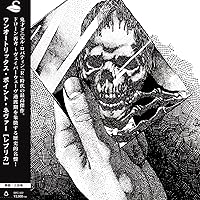
A portable version which contains the major works should be read when you want to know the classic foundations of literary criticism. Plato, Aristotle, Horace, and Longinus are the four great ancient literary critics which their ideas always discussed even in text-interpretation today. The long introduction in the beginning of the book tells the background of their writings is also very useful just like the notes inserted in the end of the book. Well, since it is a portable version so it is a kind of book which you could bring when you want to read in a caffe for example and trust me its cover is beautiful enough to be displayed along with a glass of afternoon Espresso.
For those who would like to begin reading on classical literary criticism, this work could be place to start. It focuses on some of the essential texts and lays out a general idea. The introduction serves well to fill in the context. There is also a good further readings list. It's not enough to understand the whole obviously, but it can be a guide towards further research.
This collection contains work from Plato, Aristotle, Horace, and Longinus as well as an introduction giving historical context. It's interesting to read discussion of issues that are still around today: character vs. plot, talent vs. craft, high vs. low-brow, art as moral instruction, and the fact that a story should have a beginning, middle, and an end. Some arguments are tedious without historical context so the intro is useful. Overall, it's a great intro to its subject.
I really liked reading Plato's part, but jeez, Aristotle is really - really boring, so I didn't finish that :( I just really feel like I'm never going to read this any further - ever. Not voluntarily at least :D
A brief but wonderful view into classical literary theory. I found myself involuntarily annotating this volume; I was intellectually stimulated to a great extent. The whole experience was much more illuminating than my whole literary theory course.
Great collection of "essays" by classical authors on the nature and characteristics of good and bad literature. This collection includes writings from Plato, Aristotle, Horace, and Longinus.
Trans. T.S. Dorsch, Penelope Murray, Ed. Penelope Murray
I thought that this was really good. The selection of Plato's ion -- and bits of republic 2 and 3 -- were great coming one after another. The central fear that Pluto had was of literary affect -- the power of poets to move people. I felt that the notion of the poets as divinely inspired -- *mad* -- actually had some merit. Penelope Murray feels that this is an 'ironic resonance' in Pluto as the mad people lack reason, and thus have no moral right to affect people so much. So here divinity, according to Murray, is not necessarily a good thing. But this holds only if you assume that madness is a BAD thing. She says that in Plato it is, but one wonders really. Plato is a lot more poetic in terms of style than anyone else in this book (including Horace!) -- and he did write in the form of dialogues. I wouldn't call the ambivalence towards poetry (for I think that's what it is -- ambivalence) an 'ironic resonance'; it has less to do with awareness than a wariness of the power of language. Poetry -- and the critics -- go *beyond reason* -- convince one despite one's self... this actually attributes more power to poetry than Aristotle's notion of catharsis, which is vaguely medicinal in nature.
Now re the Aristotle, which is (as Murray says) a formalist critique. It is commonly held as a response to Plato, and I suppose in some sense it is, but it attributes the cause of poetry (somewhat vaguely?) to nature. It is in man's nature to imitate, and he does so by means of painting and poetry. Thus seeing an imitation gives man pleasure, and specifically *aesthetics* (the means whereby this imitation is achieved, the artistry that goes into it) does too. From this, man learns and learning is a source of pleasure. The second virtue of poetry I think is the cathartic value. Aristotle responds to Plato's assertion that pleasure given by poetry is bad (Aristotle suggests that it's cathartic) BUT he does not respond, or deal with, WHY poetry has this power over us. Aristotle is simply giving an account of HOW poetry generates its effects -- that's what he's mainly doing.
The Horace, in my view, is sadly the most boring in terms of ideas. The main valuable thing which we get from here is the view (and this has been repeated time again) that literature should please as well as instruct. This keeps getting repeated -- I suppose Samuel Johnson is the most famous repeater of this notion. The other valuable notion is that of the relation of literature to 'the canon' -- dealt with (also famously) by TS Eliot.
The Longinus is very enlightening. I daresay he is a great critic. Sensitive and clever, he is very 'modern' in his approach in that he (like Aristotle) is very sensitive to HOW language generates its effects. He realises (like Plato) that language is a matter of AS IF -- it deceives us into feeling, AS IF we were in someone else's place. He posits that 'sublimity is an echo of a noble mind' -- and yet calls the poet's gifts 'heaven-sent' thus striking a balance between the Platonic and the Aristotliean/Horacean view. That it is a matter of inspiration as well as of skill. The relation, as I always say, is one between cognition and affect, where I think the former is often attributed to skill and understanding and the latter to 'inspiration'. Of course the 2 go together. Just, the exact relation, hmm. I'll be working on it for some time..
but overall the collection of texts here is very helpful. of course you need other things....
It's about time that I actually read some classical literature and criticism, but it was really not as fun as I'd hoped. Plato's dialogic method is fine, but Aristotle is a real bore. Granted, the Poetics is based upon his lecture notes. The problem is that pretty much everything he says is standard in English studies, so it isn't as if we're learning anything particularly new. Horace and Longinus weren't bad, but I would have preferred to read something else. After reading The Idea of the Vernacular, I'm finding any other book of literary criticism and theory difficult.
I thought this book was done very well, notably as an introduction to these well-regarded men of history. I've read a lot of Aristotle's work (or the work he is credited with writing), as well as Longinus' work on the sublime (you can't study the 19th century, as I do, without coming across the idea of sublime). Despite knowing much of this information already, picking up this book and leafing through the introduction and the individual poetry/treatises proved entertaining and enlightening. Well done -- kudos!
Plato: "Everyone who writes has misguided opinions, but you should just take what I believe as a fact." Aristotle: "Let me point out some obvious things that make writing good." Longinus: "Does anyone else find it ironic that I wrote a treatise on how writers can truly move readers, and it's boring as hell?"
There. You've read the whole book. Except the excerpt from Horace.
Literary criticism has always fascinted me and should for all those who read a lot and here are the masters: Aristotle, Horace and Longinus. They are very astute commentaries. Longinus' account On the Sublime is excellent.