Gian Franco Corsi Zeffirelli KBE, Grande Ufficiale OMRI, best known as Franco Zeffirelli, was an Italian director and producer of operas, films and television. He was also a senator for the Italian centre-right Forza Italia party. Some of his operatic designs and productions have become worldwide classics. Wikipedia
I have been a fan of Franco Zeffirelli's movies ever since seeing his Romeo and Juliet. The movie does one of my favorite Shakespearean plays exceedingly well; it is the touch stone by which I measure all other R&J productions, cinema and theater. Zeffirelli captures not only the story, but the poetry of the story and the language. Thus it was with great joy
I had not realized how much he had done in opera. Being tone deaf has meant that I enjoy a good story, rather a good song. After this book I look forward to seeing some of his filmed operas, particularly Otello. I enjoyed hearing about what went on back stage, and also to see each production fit within his evolving life story. In the course, we meet familiar personages e.g."Lenny" Bernstein, Maria Callas, Tennessee Williams and Truman Capote.
I very much recommend this autobiography. Not only is it informative, but it is also exceptionally readable -- and with pictures and a good index.
I read the first few chapters, covering his life until the end of World War II, the period reflected in his film Tea with Mussolini. Portions of the film clearly dramatize events from his life and other scenes do not correspond to, or go beyond, anything mentioned in this account. An interesting and insightful read in conjunction with the film.
This is one of the most impressive memoirs I've ever read, and an inspiring example of a life fully lived. I was sad to finish it. The book provides an abundance of fascinating detail for those interested in opera, film, theater, and, of course, Italy. I enjoyed reading about the friendships Zeffirelli maintained with Visconti, Callas, Magnani, Bernstein, Olivier, and others, which the author shared with characteristic loyalty and discretion. The book was written ca. 1987, so it covers only part of his life. I'm hoping for a sequel.
It's better to read this memoire without looking up too much other commentary on Zeffirelli (e.g., Forza Italia, sex abuse scandals, which happen in the years after this book was written). If you just concentrate on the people he describes, his love for and contributions to opera, theater, and cinema, there are fascinating stories to enjoy.
Art pursues its own path through the world. Once a work of art is released, it can travel to strange places, and affect lives that will never intersect with the life of its creator. Franco Zeffirelli’s movies traveled to the strange planet of Texas, USA in the early 1970s.
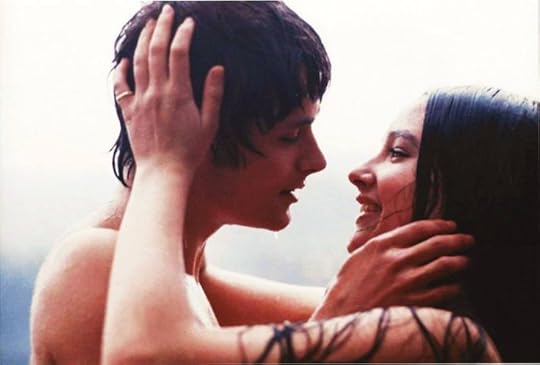
A skinny 12-year-old asked his parents to drive 47 miles from our nowhere town in the Texas Panhandle to Pampa, to watch Franco’s Romeo and Juliet. These people were so Christian, so fundamentalist, so conservative, they barely belonged in the 20th century. Even so, they indulged their misfit son. Neither flinched when Franco blessed us with the sight of a naked Olivia Hussey, the most erotic experience of my life, to that point.
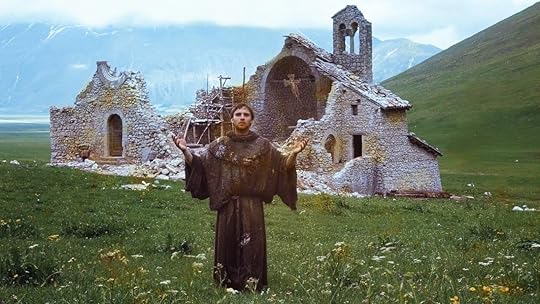
When Franco’s next movie, Brother Sun, Sister Moon arrived on the high plains, I sat through it three times. I wanted to convert to Catholicism on the spot, there in the theater. His was my first exposure to the Italian sensibility, an almost violent attachment to nature, a reverence for plain living, for young bodies, for friendship I would later encounter in the paintings of Titian and Canaletto, the writing of Giorgio Vasari and Niccolo Machiavelli.
Naturally I wanted to learn more about this man. He lived an interesting life. During World War II, he helped the resistance forces in Italy, and had many close calls. He was still a teenager, and demonstrated substantial courage. After the war, he skillfully placed himself to be noticed by the right people. Franco was a handsome young man, and he worked this to his advantage, as well he should. His movies were my main interest, so I’ll concentrate this review on what I learned about them. About Brother Sun he wrote:
As the film unfolded, I knew that I had made something out of my own Italian Catholicism, superstitious and childlike, if you like, and not at all the sort of thing with which a Protestant world can identify. It was something born out of the Tuscan countryside of my childhood, the village where Ersilia took care of me, rather than an adult, intellectual view of Christian belief that masks sentiment in ritual.
Franco’s comfort with his faith on one hand, and his homosexuality on the other, was a complete mystery to me. He addressed people like me:
Sometimes when I tell English friends about my religious feelings, they comment ironically on my life-style and make it clear that they think I must be at best a hypocrite and must somehow adjust the teachings of the Church to my liking. But this is not the case. My private life is what it is, but my religious convictions are unwavering. I believe totally in the teachings of the Church and this means admitting that my way of life is sinful. The Protestant with his conviction that there is nothing between himself and God would find such a situation intolerable and would therefore be forced either to renounce his worldly needs or his Creator. But Catholics believe they have the Church to intercede for them and that the Church, being both Divine and Human, will be forgiving. We Latins have always been able to accommodate the rigors of belief with the needs of the body, without forgoing one or the other, and I see no reason for the Church to bend to the easy solution of changing its age-old morality to suit the promiscuity of our day.
My only disappointment with the book was the long page-count devoted to Franco’s opera productions, which lie beyond my interest or understanding. I close with a thought on love, which I relate to directly, having endured many romantic endings.
‘You never stop loving the people you've loved,’ [Coco Chanel] once sadly remarked. ‘Even if they betray you, it's not true that love turns into hatred, it turns into resentment, and into anger. But the love you had lingers for ever, not because of the person – no, it's because of yourself, because of that moment in your life. Whoever the person was doesn't really matter, that moment is always there.’
„...Никой не казва никога цялата истина за себе си. Дори да влагаме много усилия, за да я скрием, като си спомняме само онова, което ни е приятно, и може би покриваме останалото с дебел пласт боя. Всеки от нас е „малко измислено чудо“ и слага на собственото си минало опаковка, която се определя от настоящето му...“
С помощта на Издателство „Колибри“ в ръцете на българския читател попада поредният бисер от поредицата Библиотека „Амаркорд“, а именно емоционалната „Автобиография“ на живата легенда Франко Дзефирели - завладяващ разказ за неговия богат и разнолик живот.
Франко Дзефирели е една от най-ярките звезди на XX век. Режисьорските и сценографските му изяви в операта, театъра и киното са цяла една епоха в световното изкуство. Прочути драматурзи, режисьори, актьори, певци, диригенти, превърнали се в икони на редица поколения, политици, държавници и общественици пресичат жизнения и творческия му път, пъстър калейдоскоп на един динамичен и противоречив век.
Плеяда от бляскави имена присъстват на страниците на автобиографията - със своите дарби, съдби, с чудатите си характери – Лукино Висконти, Ана Маняни, Мария Калас, Джоан Съдърланд, Ленард Бърнстейн, Ричард Бъртън, Елизабет Тейлър, Коко Шанел, английското кралско семейство, Онасис, Берлускони и десетки други. Емоционално и непосредствено, с чувство за хумор и самоирония, сякаш поканил читателя да си побъбрят в мансардата на бохемите флорентинци от площад „Испания“, Дзефирели развързва торбата с мечтите, надеждите, разочарованията, съкровените тайни и пристрастия. И повежда госта си на невероятно пътешествие през Флоренция, Рим, Милано, Верона, Венеция, Лондон, Париж, Лос Анджелис, Ню Йорк, през сцени, гримьорни и снимачни площадки, през един живот, отдаден на красотата.
Франко Дзефирели е роден през 1923 г. в предградията на Флоренция, Италия. Виртуозен режисьор, сценарист, продуцент и актьор; има номинации за Оскар, печели няколко пъти наградата „Давид ди Донатело“, членува в италианския Сенат от 1994 година.
Прочут е с пищната сценография на своите оперни и театрални спектакли, с визуално обсебващите си филми, с опитите си да популяризира шедьоври на изкуството, да ги доближи до сетивността на масовия зрител. „Ромео и Жулиета“, „Укротяване на опърничавата“, „Джейн Еър“, „Исус от Назарет“ – това са само някои от заглавията, изкушавали публиката през годините, предизвиквали бурни, разнолики реакции, както подобава на артист от ранга на Дзефирели.
Не всяка биография или автобиография би грабнала вниманието на читателя така, както тази на Франко Дзефирели. Той представя своя живот чрез живота на изключителни личности, успехите, мечтите им. Сякаш авторът е орисан от съдбата да се срещне и работи с най-големите певци, актьори, художници. Странно е, но не е случайно, че той 22-23 годишен младеж започва съзнателния си живот като участник във Втората световна война, момче, което отдавна е загубило майка си. Войната го ожесточава, но и научава да се бори, да оцелява. Особено красивото в книгата и в живота на автора е, че е италианец, че от момък живее с операта, с прекрасните архитектурни перли, с картините, скулптурите, дошли сякаш от вековете, но запазени великолепно.
I'm not 100% sure how this book got on my to-read list. The best I can figure is that I watched the movie Tea with Mussolini and thought, "I wonder if this was based on a book". I liked the movie better.
If a ghost writer was involved, they remained well hidden. I think I was hoping for more of a story of "Luca's" early life because the part of the book that discusses those similarities in the film, were fascinating to me.
I don't know a lot about opera and the bulk of the book really dealt with it on some level or another. I can't relate to the stories. I vaguely know some of the names thrown out so it was almost completely lost on me.
Even the way he told his story, while personal, I just didn't care for. Writing a memoir, there is a certain amount of arrogance required I suppose. It just came across stronger from him than some other memoir writers I've read.