Jump to ratings and reviews
Rate this book

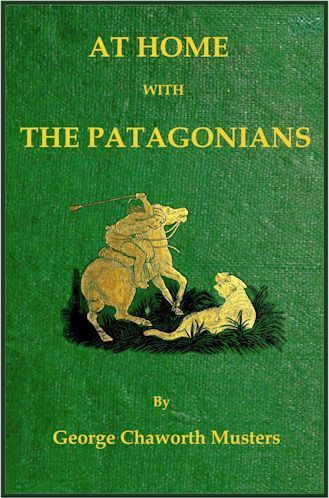
George Chaworth Musters - At Home with the Patagonians

Rate this book
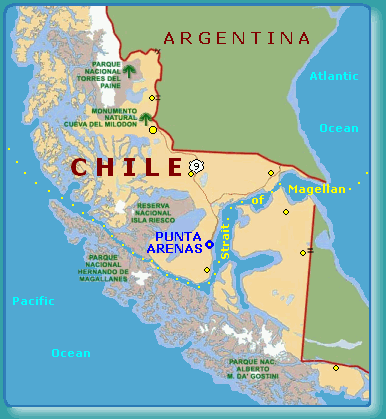
On our precious globe, oceans spill their majestic waters across 70% of the Earth’s surface. Over the continents, land untainted by the presence of man is becoming ever more elusive and scarce. One area that almost retains its pristine, unspoiled look is Patagonia in South America. This sparsely populated region is located at the southern end of South America and displays itself across the vast lands of Argentina and Chile. As a whole it comprises of the southern section of the Andes mountains as well as the deserts, pampas and grasslands east of this. Patagonia has two to the west it faces the Pacific Ocean and to the east the Atlantic Ocean. The Colorado and Barrancas rivers, which run from the Andes to the Atlantic, are commonly considered the northern limit of Argentine Patagonia. For Chilean Patagonia it is at Reloncaví Estuary. The archipelago of Tierra del Fuego marks its abrupt southern frontier and the famed end of the world. The name Patagonia comes from the word patagón, which was used by the Spanish explorer Magellan in 1520 to describe the native people that his expedition thought to be giants. He called them Patagons and, we think now, they were from the Tehuelche people, who tended to be taller than Europeans of the time. Patagonia encompasses some one million square kilometers and is home to a rich and diverse landscape of plants, fauna and wildlife. It is a spectacular wilderness full of life and full of history. Early explorers and travellers faced a sometimes difficult and uncomfortable journey to reach there. The words and pictures they brought back bear testament to a remarkable land and remarkable people. These are their stories.

176 pages, Paperback

First published January 1, 1871

11 people are currently reading
70 people want to read

About the author

Ratings & Reviews

What do you think?
Rate this book

Friends & Following

Create a free account to discover what your friends think of this book!

Community Reviews

5 stars
10 (40%)
4 stars
7 (28%)
3 stars
4 (16%)
2 stars
3 (12%)
1 star
1 (4%)
Displaying 1 - 3 of 3 reviews
Profile Image for Bettie.
9,976 reviews5 followers
March 6, 2014


Strap line: A YEAR’S WANDERINGS OVER UNTRODDEN GROUND FROM THE STRAITS OF MAGELLAN TO THE RIO NEGRO

Opening: In April 1869 chance took me to our remote colony of the Falkland Islands, with the purpose of taking thence a passage to Buenos Ayres to arrange some business matters. During my stay in the settlement, the coast of Patagonia, in the survey of which H.M.S. Nassau was then engaged, formed a frequent topic of conversation. I had formerly, when stationed on the south-east coast of America, read with delight Mr. Darwin’s work on South America, as well as Fitzroy’s admirable Narrative of the Voyage of the Beagle, and had ever since entertained a strong desire to penetrate if possible the little-known interior of the country.

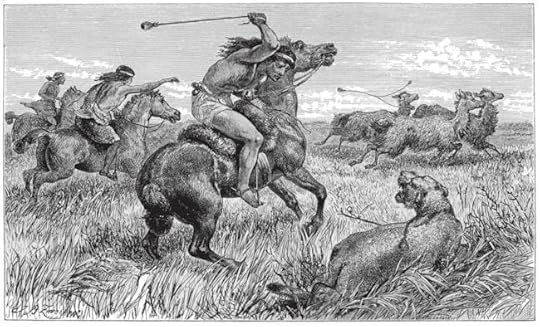
WÁKI KILLING A PUMA


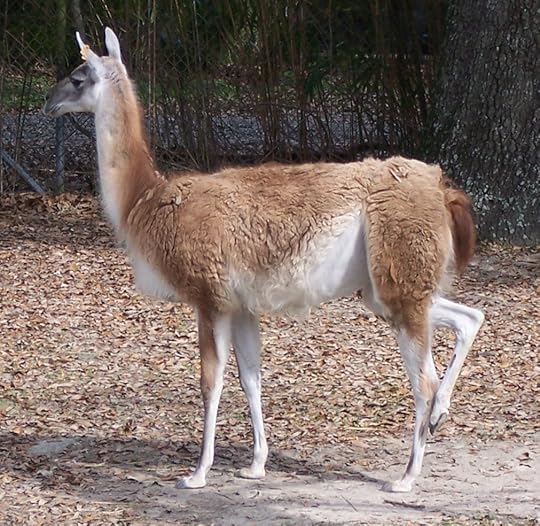
the torn carcase of a guanaco, we stopped to examine what was to most of us an unknown animal; and our speculations as to the curious hybrid form of the odd-looking ‘camel-sheep’
STATION ON PABON ISLAND, RIO SANTA CRUZ. Every Sunday all hands except one—the cook of the week—left on guard, went hunting, and, as occasion required, during the week, the gauchos would proceed to supply the larder with guanaco or ostrich, the latter being, however, rare. Idleness was unknown; when not hunting, wood-cutting, or salt-raising, manufactures were the order of the day.
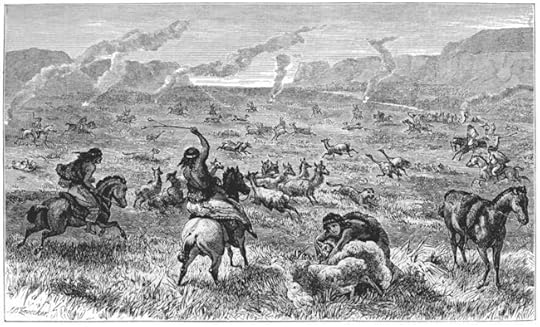
HUNTING GUANACO AND OSTRICH, VALLEY OF RIO CHICO.
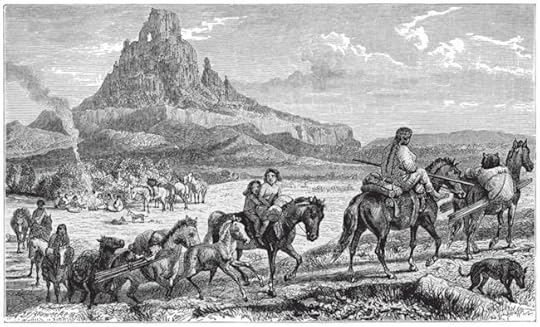
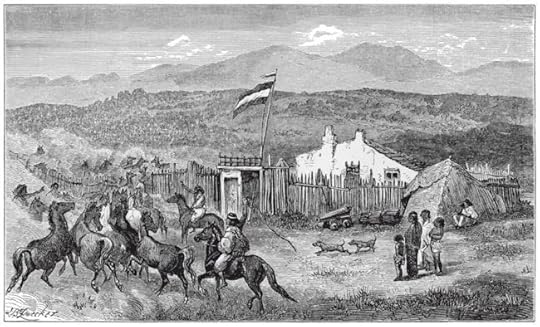
START FROM THE CAMP AT MÔWAISH OR WINDOW HILL.

A WILD BULL IN THE CORDILLERA.

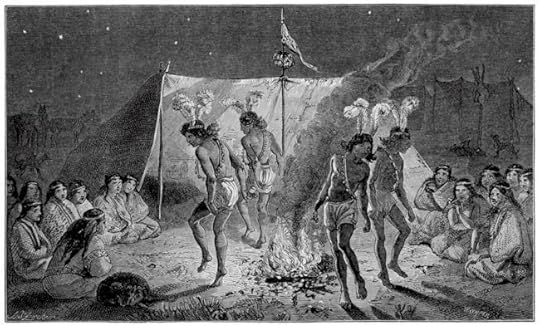
THE “PRETTY HOUSE” AND DANCE.

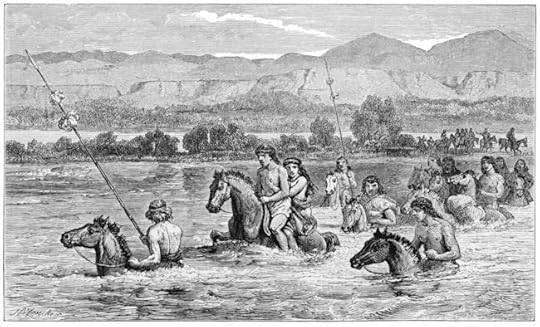
CROSSING THE RIVER LIMAY.

The only real bit of interest was a bit about the Welsh moving to Patagonia just six years before this essay was published:

The visionary scheme of a Welsh Utopia, in pursuit of which these unfortunate emigrants settled themselves, ought not to be encouraged, likely as it is to end in the starvation of the victims to it. Had it not been for the charity of the Argentine Government, this must have been their fate ere now. Jackechan described to me that he had seen the settlers ‘eating grass,’ and had taught some of them how to hunt and furnished them with bolas. The Blue Book just published confirms the truth of this statement, and perhaps renders it needless for me to go more into the subject; but I must add that, though at that time friendly and well-disposed, this chief considered the settlers as intruders on his territory, and avowed his intention of demanding payment at a future time—a refusal of rent being in such a case sure to be followed by a very summary process of cattle driving and eviction.

From wiki: The idea of a Welsh colony in South America was put forward by Professor Michael D. Jones, a Welsh nationalist non-conformist preacher based in Bala who had called for a new "little Wales beyond Wales". He spent some years in the United States, where he observed that Welsh immigrants assimilated very quickly compared with other peoples and often lost much of their Welsh identity. He proposed setting up a Welsh-speaking colony away from the influence of English. He recruited settlers and provided financing. Australia, New Zealand and even Palestine were considered, but Patagonia was chosen for its isolation and the Argentines' offer of 100 square miles (260 km²) of land along the Chubut River in exchange for settling the still-unconquered land of Patagonia for Argentina.

Towards the end of 1862 Captain Love Jones-Parry and Lewis Jones (after whom Trelew was named) left for Patagonia to decide whether it was a suitable area for Welsh emigrants. They first visited Buenos Aires where they held discussions with the Interior Minister Guillermo Rawson then, having come to an agreement, headed south. They reached Patagonia in a small ship named the Candelaria, and were driven by a storm into a bay which they named "Porth Madryn" after Jones-Parry's estate in Wales. The town which grew near the spot where they landed is now named Puerto Madryn. On their return to Wales they declared the area to be very suitable for colonisation.


Dense in pernickerty-precise prose so not an enjoyable read - a skim through instead. Bruce Chatwin is much to be preferred.

http://www.gutenberg.org/ebooks/42483
Profile Image for Federico Carballo.
30 reviews1 follower
April 25, 2020
Nice book to read. Very entertaining, and refreshing in this crowded world.
Displaying 1 - 3 of 3 reviews

Can't find what you're looking for?

Get help and learn more about the design.