Looking An Autobiographical Excursion is a memoir written by Norman Douglas, an English writer and traveler. The book takes readers on a journey through Douglas's life, from his childhood in Austria to his travels around the world as an adult. Douglas reflects on his experiences living in various countries, including Italy, India, and Egypt, and the people he met along the way. He also discusses his literary career, which included writing novels, essays, and travelogues. Throughout the book, Douglas offers his opinions on a variety of topics, including politics, religion, and art. He also shares personal anecdotes and humorous stories, giving readers a glimpse into his unique perspective on life. Looking An Autobiographical Excursion is a fascinating and engaging read for anyone interested in travel, literature, and the human experience. It provides a rich and detailed portrait of a life lived to the fullest, and offers insights into the mind of a gifted writer and thinker.This scarce antiquarian book is a facsimile reprint of the old original and may contain some imperfections such as library marks and notations. Because we believe this work is culturally important, we have made it available as part of our commitment for protecting, preserving, and promoting the world's literature in affordable, high quality, modern editions, that are true to their original work.
George Norman Douglas was a British writer, now best known for his 1917 novel South Wind. His travel books, such as Old Calabria (1915), were also appreciated for the quality of their writing.
Sangue misto (nato in Austria da padre scozzese e madre per metà tedesca), Norma Douglas è stato il prototipo dell’artista rapito dal sud d’Europa, il Mediterraneo, l’Italia sopra tutto, ovviamente.
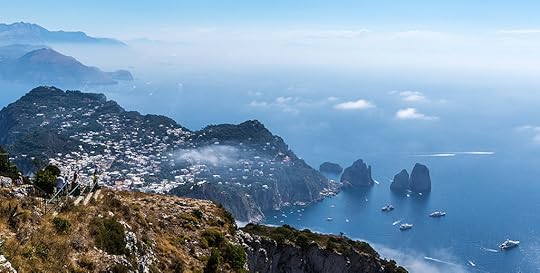
Scelse Capri come residenza privilegiata, e l’isola col tempo gli donò la cittadinanza onoraria, il primo tra gli stranieri a esserne insignito. Amava il Sud, amava l’arte, amava vivere e godersi la vita, amava le donne, ma ancora di più i ragazzini. Raccontò di lui Gore Vidal: Usava comprare dalle famiglie ragazzini sui dieci anni. Cosa gradita sia alla famiglia sia al bambino. Li educava fino ai sedici, diciassette anni, poi li avviava al commercio o agli affari e si comprava un bambino nuovo. Il che oggi appare brutale; ma nel brutale Ottocento del misero Sud, Douglas era considerato una specie di santo.
E proprio per via della sua passione pedofila, Douglas subì processi, fu bersagliato dalla stampa (anche dall’Avanti, lo storico quotidiano del P.S.I., che Douglas definisce un giornalaccio socialista), passò frontiere, se la dette a gambe, e si tenne lontano dalle aule di tribunale.
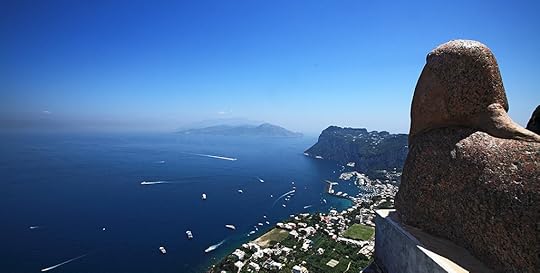
Capri, la vista da Villa San Michele.
Il risvolto dell’edizione Adelphi spiega e racconta come nasce questo libro: biglietti da visita accumulati per anni, e decenni, raccolto in un vaso di bronzo, un bruciaprofumi giapponese. Un giorno Douglas inizia a sfogliarli e vai con la madeleine: nomi, titoli volti, ricordi, date, frammenti di vite che la memoria trasforma in vite intere. Ma forse il bruciaprofumi giapponese non è mai esistito, forse questa è una leggenda. E chissà se anche i biglietti da visita sono stati reali. In ogni caso, quelli o altro, son pretesti per tessere un collage umano che prima di tutto ci trasmette l’anima, la personalità, e la vita dello stesso Norman Douglas.
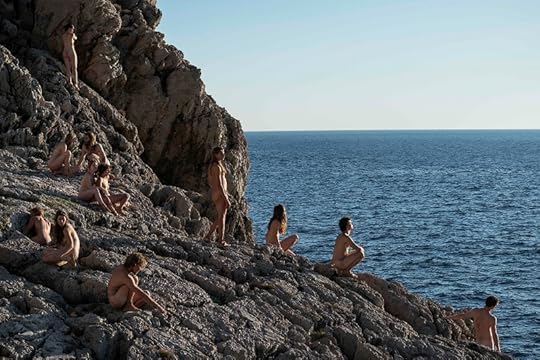
Un’immagine da “Capri Revolution” il nuovo film di Mario Martone che racconta una comune scandinava a Capri nel 1914.
Biglietti da visita è apparso per la prima volta nel 1933. Vento del sud è il titolo dell’opera più famosa di Norman Douglas.
Per me, la mia personale madeleine, questo libro risale agli anni in cui frequentavo molto, con assiduità e gran piacere, l’isola amatissima di Douglas, Capri.
Calling cards picked at random out of a Japanese bowl form the basis for this book of autobiographical remembrances, including (the first): "I have known some wine merchants in my day, but have no recollection of this one." May somebody bring LOOKING BACK back into print.
Those passages where D. speaks of his innumerable illustrious acquaintances are quite captivating since he doesn’t spare them in the least (most of them being or presumed dead plays into his hand). He only changes names while leaving the initials which surely can’t be half as discreet a treatment as those people might have wished to receive. Having been on occasion a hanger-on and having, it is worth noting, the guts or at least the nonchalance to admit it, he unfrettedly ridicules his benefactors at his leisure — a mark of a true poet and free thinker, I always thought.
Mi è sembrata interessante l'idea di costruire delle narrazioni a partire dai biglietti da visita raccolti da Douglas durante la sua vita, lunga e movimentata. Ma questo Norman Douglas è veramente uno snob aristocratico e vacuo che, mentre intorno a lui nel mondo succede di tutto (la Grande Guerra e la Rivoluzione d'ottobre, per dirne due), sembra preoccupato soltanto di acquistare una villa a Capri o di sorseggiare uno scotch di buona qualità a Malindi. Odioso.
Thinking of recent reviews made we want to (finally) read Douglas' memoirs and by good fortune my local antiquarian bookshop (by which I mean eight miles from the city centre) had a cheap copy so hurrah! Douglas kept a large decorative urn into which he deposited visitors calling cards and it appears (ie he says) that he plucks out a card at random and see what memories it evokes. Its a nice concept but, as he points out, not so many people had left calling cards in the last twenty years (ie 1914-34) so as a result his personalities/recollections are somewhat skewed to those of his earlier years (his dates are 1868 – 1952). Thus we have quite a number of his old school chums, tradespeople and a surprising number of geologists and herpetologists (scholars of reptile and amphibians). Who would have thought Douglas was such a serious student of both? Perhaps even more astonishing, who would have thought he had many dealings with the opposite sex; Douglas, like Scheffer, (see my previous review) became predominantly (and predatorially) homosexual in his later life. Thus a number of his subjects tend to be somewhat dull dogs but Douglas injects his memories with some enthusiasm and one senses that he still gets a thrill from remembering the finding a particular crystal or rare lizard. Sometimes he wanders off on tangents/reveries that are quite amusing and sometimes interesting, such as the few pages he devotes to de Maupassant, (who he never actually met himself) or his views on classical erotica and the demise of Richard Burton. Naturally I hoped that I would read of the Caprites that Compton McKenzie parodies in his own Capri novels but sadly they appear only fleetingly in the book. Douglas claims that he showed Adelsward-Fersen the site where he was to build Villa Lysis, shares some cocaine with him and gives a very different account of his death to the well known 'suicide', but one looks in vain for say, Romaine Brooks or indeed the McKenzies themselves let alone Luisa Casati who created quite a sir on the island with her exotic and eccentric habits. Even Axel Munthe (who Casati drove to distraction) gets a mere "we have known each other since 1897". nearly forty years and worthy of one line? Tsk! We do get six pages on D.H. Lawrence who he regards as a poet but poor writer and "one of the most envy-bitten mortals I have known" and quite a touching portrait of Rupert Brooke. The book is well written, even his geological excursions are quite readable, but I felt Douglas might have stretched himself (or his self imposed rule of using his visitors calling cards) as it feels a little like a lazy way to pay a few bills and a biography of Douglas would probably be more informative than this book.