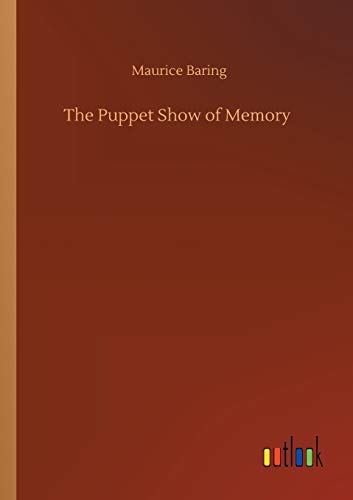
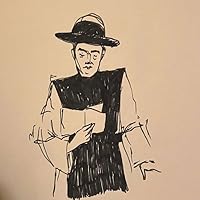
Maurice Baring OBE (27 April 1874 – 14 December 1945) was an English man of letters, known as a dramatist, poet, novelist, translator and essayist, and also as a travel writer and war correspondent, with particular knowledge of Russia. During World War I, Baring served in the Intelligence Corps and Royal Air Force.
This is a perfect book. But it is the exception to the rule ‘what is written without effort is read without pleasure’. It seems to have been written with very little effort. Some people find it an insufferable collection of clichés, but they are wrong. Maurice Baring is a truly lovable man, with an amazing capacity for seeing the beauty of things. What would be cliché in someone else is deeply felt in him. Also it is an indirect argument against the nihilism of the period following WWI...
Autobiografía de Maurice Baring, lo primero que he de decir es que, en el primer tomo de las obras completas del autor publicadas por Janés, el libro acaba bruscamente en el capítulo XII ("Roma"). He consultado la obra en inglés, y efectivamente faltan otros doce capítulos, pero no he encontrado las razones de esta ausencia. Por tanto, mi reseña adolece necesariamente de esta limitación. Dicho esto, los recuerdos de Baring están escritos con una ausencia de melancolía poco habitual en quien recuerda su infancia y juventud. Su mundo es muy diferente del nuestro, y en este sentido, me resulta posible pensar que este libro pueda resultar aburrido a alguien. No es, sin embargo, mi caso. Al contrario, he leído con agrado la descripción de la infancia, los estudios en Eton y en el Trinity, las estancias en Alemania y los primeros pasos del autor en la carrera diplomática. Los acontecimientos históricos y la política se hacen cada vez más relevantes tras la entrada del protagonista en el Foreign Office. El latín, la poesía, el teatro y la música desfilan por las páginas junto con siempre amables descripciones de los personajes y personalidades con las que el autor interactúa. Baring tiene la capacidad de mostrar el lado positivo del ser humano, y de reconocer con agradecimiento la ayuda que va recibiendo en su camino. Una pena que la edición de Janés se detenga antes de la Gran Guerra, en la que Baring fue corresponsal. No sé tampoco si en los capítulos que faltan se registra su conversión al catolicismo y su amistad con Chesterton y Belloc. Quizás en alguna edición por separado pueda encontrarse la mitad que falta.
Although written in 1922, this book takes the reader up to the start of WW1 and should, I think, be read prior to MB’s memoirs of that war (written in 1920). I’m almost tempted to re-read those memoirs now so as to better appreciate the sequence of events.
Be that as it may, and by way of background, I came to read Maurice Baring on account of his inclusion in a recent book on converts to Catholicism, in which he stands out as having, apparently, been one of the few non-pervert converts. Indeed, there is, thankfully, no mention whatsoever of the author’s “private life”; no romantic interests of any kind are ever discussed. MB never married, and his deep interest in the arts—particularly theater—may lead one to draw whatever conclusion one wishes about his inclinations, but the fact is that he never puts such matters on display, for which I am grateful.
As for his 1909 reception into the Catholic Church, I am a bit disappointed that he only consecrates two sentences to the matter. He states that it happened, and that it’s the only decision he ever made that he never regretted. Perhaps he has other writings in which he provides more context.
In any case, I was quite taken by his evocation of the long-gone world in which he lived. He praises Sarah Bernhardt and Eleanora Duse, among other long-forgotten actors and poets etc, almost to the point of extravagance. He spent a lot of time going to the theater and worrying, so to speak, about theater matters.
I don’t quite understand why he left the diplomatic corps—a career which afforded him endless opportunities in multiple cities and languages to indulge his theater obsession—in order to become a war correspondent. This is, in light of what he saw and experienced, incomprehensible. But I suppose it gave him material for some of his other writings. We shall see. I also have to say that I don’t share with him his respectful appreciation of the Turks nor his mystical fondness for the Russians, but I must grant that he knew them both better than I do so I’ll forgive him.
This is a fine document of significant historical value. Quite enjoyable.
A man born in the 1880's tells (eloquently) the story of his life. He grew up in relatively posh surroundings but struggled in the school system of Great Britain the late 1800's and onward. From there he flourished by demonstrating his hitherto unknown talent for writing among other talents and positive traits. I was particularly impressed with how neatly and tellingly the author was able to work in the idea of a puppet show's being associated with the memory. I noticed "puppet shows" came up several times in his memoirs. Another interesting footnote on Baring came about as I passed the middle of the book. Being a keen student of the behaviors of his fellow man, as well as a "man of letters" Baring had the honor of being chosen to be, perhaps one of the first of on-the-site- field reporters for war. In his case he covered the invasion of Russia by the Japanese. A key date was February 8, 1904. Baring's descriptions of the deprivations and sufferings of the Russian soldiers were almost too much to bear and so I was compelled to skip over many of the details. Nevertheless this book is highly recommended and a rare find, not having been lauded as it should have been.