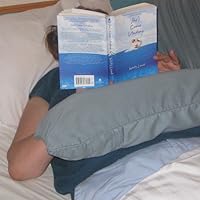
Neurofeedback is a scientifically proven form of brain-wave feedback that trains the child's brain to overcome slow brain-wave activity, and increase and maintain its speed permanently. Neurofeedback is quick, noninvasive, and cost effective. In fact, 80 percent of the time, neurofeedback is effective without any of the side effects associated with drugs commonly used for such childhood disorders as autism, ADHD, dyslexia, sleep disorders, and emotional problems. Healing Young Brains examines each disorder separately and explains in lay
* The manifestation of the disorder
* The diagnosis
* The rationale for treating the disorder with brain-wave training Healing Young Brains is parents' guide to all they need to know about treating their children with neurofeedback as an alternative to drugs.
I thought that Healing Young Brains was a very interesting book. I had never heard of Neurofeedback before, but it sounds like an interesting alternate therapy to drugs for almost any behavioral disorder in children.
This book provides a good descriptions of the disorders with clear and simple watchlists with possible symptoms to watch.
This book was not overly technical and clearly was meant only as an introduction to brainwave therapy. Thus proving accessible to the lay reader.
I enjoyed the sections that taught diaphragmatic breathing as a practical measure to limit stress. There is also a good section on diet and nutrition, which seemed to be a well-balanced section which was not just trying to force me to shop at a new expensive organic foods store. It advocates for some organic foods, but doesn't push the entire industry on you.
The book also has an interesting section on Toxicity, which seemed a little unclear to me. It advocated taking good vitamins and supplements as well as other detoxifying treatments, which I didn't understand.
I am not a strong believer in alternate medicine, but this was a well written, easily-accessible book, which provides useful information as well as a possible alternative to drugging our children.
I am a school counselor and I requested this book with the hope that it would be a resource for me and for parents of my students. My biggest problem with this book is the lack of rigorous, scientific research to support the claims of the authors. I have particular reservations about the author's discussion of autism and it's causes and treatments. Some of their recommendations (dietary changes, anti-fungal medications) are not necessarily supported by the research, but are probably harmless and may help some children. Others, like chelation, are even potentially harmful. That said, I do think that their claims that neurofeedback can help treat various types of brain dysfunction MAY have some credibility. Particularly for children with ADHD, ADD, and certain types of LD, this treatment could be beneficial. It is less invasive than drug treatment, some preliminary studies do show some effectiveness in the treatment of ADHD, (I did some independent research while reading), and if I had a child with severe ADHD, I would probably try neurofeedback. Bottom line, I will keep this book on my shelf, but I will be cautious in my recommendation to parents. This book should be read with a healthy dose of critical thinking, however it does present a treatment option that might not otherwise be considered by parents.
I have about 50 pages to go in this book. I can't put it down. I'm learning so much about an effective alternative to medication (without serious side effects) for treating ADHD, dyslexia, sleep disorders, depression, anxiety. A fascinating book...
I found this book very enlightening. The fact that neurofeedback can't be patented and drugs are able to be patented explains a lot about why there is so little research in this area. We know can train our muscles to improve their function, we can train our minds to improve our breathing, relaxation, reduce stress etc. It just makes sense that we can train our minds to alter our brain waves. Doctors retrain the brain all the time with respect to rehabilitating patients after a stroke. Why not ADHD, depression, anxiety etc?
Blerg. A bunch of hype about how neurofeedback (by doctors who provide neurofeedback as their business) will fix anything that ails you, but I still don't know really how or why it's supposed to work. Plus a lot of tripe about autism and vaccines, organic food, blah blah blah. Worst of all, it was INCREDIBLY repetitive - even sometimes within the same chapter (or the prologue!), just to stretch it out into enough info to make a book. Avoid.
Really, I put it down after the words 'cure autism.' As a speech-pathologist who works with autistic children, some of whom have done neurofeedback, I was hoping that this book would offer an explanation into how exactly this works. I didn't feel this book did that at all. I felt it was more of a pep rally for neurofeedback.
A wonderful Masterpiece and a rare gem. I found every answer about my troubled childhood in this book. Growing up with ADHD, I had a lot of questions about why I was the way I was as a teenager. now I know, and can move on putting my past behind me and go and go win win win, like I have always done. Good Book!
Neurofeedback is a form of biofeedback where you learn to regulate your brainwave patterns to promote mental and physical health. This book focuses on the benefits of neurofeedback for childhood emotional, cognitive, and behavioral problems including ADHD, autism, and learning problems. The authors are passionate about spreading the word about drug-free approaches to these common diagnoses, and the particular benefits of neurofeedback, which is noninvasive and relatively cost-effective. The theory is that ADHD and other common childhood problems have to do with the child having disregulated brainwave patterns--the brain gets stuck in a mode that is not conducive to paying attention, for example. Neurofeedback trains the brain to generate a different and healthier brainwave pattern. The book is full of amazing anecdotes of neurofeedback quickly and definitively helping with whole clusters of symptoms in childhood. Unfortunately, neurofeedback has not received the funding for rigorous, controlled studies. So we don't really know how well this works, but of course drugs are the most common treatment for ADHD and they have side effects and, where successful, only work while you're on them. This is a persuasive and hopeful book, and it includes information on how to find a neurofeedback practitioner. However I wish there was more information about nuts and bolts kinds of issues like: what to expect during a treatment sessions (parents want to know what they'd be subjecting their kids to), how soon one can expect to see results, how long one needs to remain in treatment, etc. I was also a bit disappointed that much of the book isn't about neurofeedback but about other drug-free interventions for childhood psychological issues.
There are two ways to look at this book. Either you're coming from the point of view of a scientist or as a concerned reader.
If you're the concerned reader, this book is fascinating. I had some idea of what went into diagnosing this neurological disorders, but appreciated the checklist system they use to determine the severity. This book includes many stories of neurofeedback's success and the ways in which it can help dysregulated brainwaves by making it into an interactive game. Other routes to helping curb these disorders are suggested as well, such as detoxification, getting better sleep, and having a careful diet.
If you're a bit more on the scientific minded side, this book reads like a medical version of chicken soup for the soul. The authors give many stories of the successes of neurofeedback without giving any hard data or evidence. Most of the stories end with, "and we saw lots of improvement", which to me is very subjective. I am interested in reading more of the references because I disagree with the claims that television leads to violent behavior. It may add to it in some children, but claiming that kids are wrestling around in the waiting room because of something they saw on television, is ridiculous. Boys have violent, hunter-like tendencies, and many will rough-house around whether they like violence on television or not.
All in all I enjoyed the book, it's just not something to write a report from. If your child or you are struggling with these disorders I can't see any reason not to try some of the methods outlined in this book. As more and more research comes out, hopefully we'll see that these two authors were right and that neurofeedback is the answer to brainwave dysregulation.
I did not know much about neurofeedback before, so this book was a good primer on the subject starting out with an overview of the process. Then it goes into some specific applications and maladies that could be treated. Though the title says "healing young brains", they also address the fact that neurofeedback is an effective treatment for adults as well.
I skimmed several chapters after realizing that many of them were recaps of cases. Not that they were bad, but I just was not interested in the topic on that kind of detail. I'd recommend this book to anyone that is struggling with a "disorder" as it has some helpful insight and resources.
This book is a great introduction to an alternative method of treatment for children with brain disorders. These types of problems are so much harder for parents and family members to deal with and to understand. t seems that they are even difficult for pediatricians to fully diagnose and treat.
The section on diet and nutrients is also great info to help balance the child's diet.
I would have liked to have seen references made to infants under 1 year of age with disorders such as epilepsy.
General guideline. I could use some of these in application. I was seeking some details on the waves interpretation themselves. Their QEEG write up seems different from what I'm looking at. Overall a good outline but for specifics you need to get another book.