Jump to ratings and reviews
Rate this book

Detective Kubu #2

The Second Death Of Goodluck Tinubu

Rate this book
The second book in the Inspector Kubu series—penned by a pair of Crime Writers’ Association Award-winning South African authors writing under the name Michael Stanley—The Second Death of Goodluck Tinubu treats readers to a gripping and atmospheric  story of money, murder, and hidden motives at a remote bush camp in northern Botswana. Set in a country immortalized by Alexander McCall Smith in his The #1 Ladies’ Detective Agency novels, The Second Death of Goodluck Tinubu again features an unforgettable lead character the New York Times Book Review calls, “Hugely appealing—big and solid and smart enough to grasp all angles of [a] mystery.”

480 pages, Hardcover

First published January 1, 2009

111 people are currently reading
652 people want to read

About the author

Michael Stanley

55 books174 followers
Michael Stanley is the writing partnership of Michael Sears and Stanley Trollip. Michael lives in Johannesburg, South Africa, and Stanley in Minneapolis.
We have travelled extensively in southern Africa and have a special love of Botswana, where our detective novels are set.
Detective Kubu investigates complex murders in his native land, justifying his nickname by his size and tenacity (Kubu is Setswana for hippopotamus).

Kubu's faces powerful people and an escalating chain of murders in his first adventure - A Carrion Death.

Next a confluence of events leads to murders whose roots lie hidden in the past, in The Second Death of Goodluck Tinubu (A Deadly Trade outside north America).

The third Detective Kubu mystery, Death of the Mantis, has the plight of the Khoi-San (Bushmen) of the Kalahari as its backstory. Death of the Mantis was a finalist for an Edgar and won the Barry Award.

Deadly Harvest, the fourth Detective Kubu mystery, has as its backstory the use of human body parts for magic potions (called muti). Based on a true story, Detective Kubu and the first female detective in Botswana's CID, the young Samantha Khama, try to resurrect a number of cold cases in which young girls have gone missing. Deadly Harvest was a finalist for an International Thriller Writers award.

A Death in the Family (Kubu #5) has as its backstory the ramifications of corruption as the Chinese try to take over some of Botswana's rich mineral deposits. However the story starts with Kubu's elderly father being murdered. Despite his pleas, Kubu is kept off the case because of his personal involvement. However he keeps trying to solve it on his own.

In Dying to Live (Kubu #6) a Bushman is found dead, with internal organs far younger than his chronological age and a bullet embedded in his abdominal muscles with no entry wound. Dying to Live is a story of greed and the lengths people will go to attain immortality and make their fortunes.

Facets of Death is a prequel set in the late 1990s when Kubu first joins the Botswana CID as a raw detective. While he’s trying to build a role for himself in the CID, a massive diamond heist takes place on the road from Jwaneng — home of the world’s richest diamond mine. The robbers systematically eliminate all the witnesses, and then they are killed by the South African police, leaving the detectives with nothing to go on.

Kubu and Mabaku are sure they can solve the case if only their contacts can stay alive long enough. However, when one of the mine’s senior managers becomes the next victim, they are forced to set a trap for the crime’s mastermind. If it fails, their careers are over – in Kubu’s case before it’s even begun.

The latest mystery, A Deadly Covenant, takes place shortly after Kubu joins the Botswana Police Service and just after the diamond heist of Facets of Death.

While building a pipeline near the Okavango Delta, a contractor unearths the skeleton of a long-dead Bushman. Kubu and Scottish pathologist, Ian MacGregor, are sent to investigate, and MacGregor discovers eight more skeletons.
Then an elder of the nearby village is murdered at his home. The local police believe it was a robbery, but Kubu thinks otherwise. So does a strange woman who claims it was an angry river spirit. The situation gets more confusing when the strange woman is found dead, apparently killed by a crocodile.

Assistant Superintendent Mabaku joins them as accusations of corruption are levelled and international outrage builds over the massacre of the Bushman families. But how do the recent murders link to the dead Bushmen, if at all? As Kubu and his colleagues investigate, they uncover a deadly covenant and begin to fear that their own lives may be in danger.

The young Kubu’s second big case mixes local mythology and tradition with smart police work to make for a satisfyingly immersive mystery that begs resolution until the last, unpredictable moment.

Shoot the Bastards (Dead of Ni

Ratings & Reviews

What do you think?
Rate this book

Friends & Following

Create a free account to discover what your friends think of this book!

Community Reviews

5 stars
306 (25%)
4 stars
554 (46%)
3 stars
270 (22%)
2 stars
43 (3%)
1 star
8 (<1%)
Displaying 1 - 30 of 169 reviews
Profile Image for Jon.
1,456 reviews
January 27, 2013
I've now read all three of the Detective Kubu books, and they are pretty much of a piece: if you like one, you'll like them all; if not, not. The characters are vivid and real, the murders usually fairly horrific, and the mysteries extremely complicated. The writing is very meat-and-potatoes, without much style calling attention to itself. For me, the real interest is the setting, a Botswana that seems like the older, more jaded sister of the one represented in the Mma Ramotswe books. The lore, from how to survive in the Kalahari, to how to talk your way past a hostile Zimbabwe checkpoint, is fascinating and seems absolutely authentic.
Profile Image for Thomas Stroemquist.
1,657 reviews148 followers
Read
February 20, 2023
DNF @ 20 %

It's not bad at all, only this is just exactly the same as part 1, which was ok, but not terribly interesting. Have way too much on my to read list than to trudge through anything that I feel like this about.
Profile Image for Book Concierge.
3,078 reviews387 followers
May 26, 2025
Book on CD narrated by Simon Prebble

Book two in the mystery series featuring Detective David “Kubu” Bengu of Botswana, in a story of murder, greed and hidden motives. It begins when a Zimbabwean teacher, Goodluck Tinubu, is found murdered at the wilderness resort camp where he was vacationing. Soon after the discovery of his body, a second body is discovered at the camp. The prime suspect, another guest at the resort, has disappeared. Things quickly get very complicated.

I really like this series. It’s a hard-hitting police procedural, but there is some room for enjoying life. Kubu definitely enjoys food and there are some delicious scenes involving this pleasure. I also really like the relationship Kubu has with his wife, Joy. She’s a strong woman, intelligent, courageous and resilient. They make a great couple.

I appreciated learning a little bit about the civil war in Rhodesia (now Zimbabwe) in this episode. The authors (Michael Stanley is a team of two) also address some of the political back-and-forth between Botswana and neighboring countries.

Simon Prebble does a marvelous job narrating the audiobook. He really brings Kubu and the rest of the cast alive.
Profile Image for Cybercrone.
2,104 reviews18 followers
March 16, 2023
Still enjoyed Kubu a lot, but the plot was far too convoluted to be completely enjoyable.

The other thing was that all the adult males "pouted". I swear I have never seen an adult male (except Donald Trump - and there the 'adult' part is in question) pout, and the whole concept is really gag-worthy.
Profile Image for Richard Kunzmann.
Author 6 books27 followers
May 14, 2009
Michael StanleyA week ago I reviewed A Carrion Death, written by Michael Stanley (the pen name of Michael Sears and Stanley Trollip). Not only was it a strong first attempt at a crime novel set in an exotic setting, it was also a sheer act of determination and personal marketing that eventually saw the book break through to the LA Times bestseller.
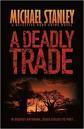
A Deadly TradeWith A Deadly Trade, they are back and with a vengeance, too. This second book is tighter, leaner and more focused than the first. Michael Stanley is well on his way to establishing himself on the international crime thriller scene.
A man is walking back to his tent one night, at a remote resort deep in the heart o the Okovango Delta, when he’s brutally killed and mutilated. When dawn comes a second body is discovered and a third man is missing. The Botswana police have to fly into the remote area, and our hero Detective Superintendent Kubu Bengu and his new sidekick, Detective Tatwa Mooka, quickly establish that the two murdered individuals, and the prime suspect who was unsuspectingly taken to the airport that same morning, have links to the political turmoil in Zimbabwe and a drug smuggling ring in South Africa.

What is not immediately established is that all the guests at Jackalberry Camp on the night of the murders are very much involved, in one way or another. Though this hints at an Agathie Christie style investigation, there’s plenty of action in store.

Kubu Bengu is his usual likeable self, drinking a steelworks whenever the moment arises, or daintily dipping a Marie biscuit into his tea. And I’m glad to see that Ian McGregor has shed the staccato Scottish accent from the first novel, which was jarring to read. Two new characters stand out as fine examples of well-developed characterisation: Goodluck Tinubu, the well-loved teacher with a dark past, and Moremi Suthani, the eccentric chef with a Kwe bird on his shoulder. Dupie, the camp manager and a former Sealous Scout from Zimbabwe’s civil war past, also rings with authenticity.

The second novel is an improvement on the first, but some of my concerns from the first novel have remained. Our police officers seem extraordinarily happy to discuss the finest particulars of a murder case with just about anyone willing to listen, which doesn’t jive with police procedure. Some chapters grind the story to a virtual halt because Kubu and his friends painstakingly recap events for us. I have to compare this with Peter James’s excellent Looking Good Dead, which I’ve just finished. Looking Good Dead Detective Roy Grace also frequently recaps, but this is either mentioned as a one liner, especially if he’s filling in others; or, if it’s for the reader’s benefit, sums the entire investigation up in no more than three lines. A bundle of pages is never a good idea. I’ve stepped on that mine myself, plenty of times. There are unnecessary tracks of exposition in two of my novels, Bloody Harvests and Salamander Cotton , of which readers have been far too forgiving.

I particularly enjoyed Kubu’s discovery of Goodluck Tinubu’s history, but I don’t want to give too much away. Suffice it to say, there is true tragedy in his demise as a fallen hero, and Tinubu's death seems a fitting waste of a human life – perhaps the perfect metaphor for the chaos in his home country, Zimbabwe.
533 reviews3 followers
June 29, 2025
I like reading mystery novels from time to time, and I liked *A Carrion Death* ("Stanley"'s debut) enough that I bought *Death of the Mantis* at a book sale shortly thereafter. The problem? *Death of the Mantis* is book three in the Detective Kubu series, not book two. So I had to find *The Second Death of Goodluck Tinubu* on eBay - okay, I suppose that's more of a personal tidbit than a problem. Nonetheless, I rolled up my sleeves and hit "Buy now," which served as the gateway to an enjoyable reading experience; this book has a pretty good mystery at its core and I enjoyed it the whole way through, even though I think that this book could've reasonably been slimmed down a bit...

This books starts with a shadowy turn of events at a Botswanan tourist lodge and soon sees Detective Tatwa report to the scene. Two of the lodge's visitors are dead (one called himself Goodluck Tinubu and was picked up while en route to the lodge by the other casualty, a man named Langa) and another one left shortly before the bodies were discovered to get picked up by a plane to attend to a "family emergency." Tatwa's a good investigator but he's a little out of his depth, so Kubu gets called in. His first step is to interview everyone there, including the staff (which includes the owner; Dupie the ex-military jack of all trades; another co-runner; Moremi the mentally impaired chef with a parrot; and two local villagers) and the guests. The primary suspect is Zondo, the mysterious man who the third co-runner helped leave the camp after the murders but before the discovery. After the initial investigations wrap up and people are sent on their own ways, a shock reaches the detectives: the Zimbabwean government has records of a man with Goodluck's fingerprints. The catch? He died decades ago during the skirmishes where Rhodesia became Zimbabwe... shortly thereafter we see a tantalizing scene where ...

Even though Kubu tries to play the game of ...

As with the first book in this series, one of my favorite things about this book was its setting; as an American, it's a lot more fun to read a mystery novel set on a different continent than one in New York. And while didn't seem as purely colorful to me as *A Carrion Death* did to me because this is my second time attending the Michael Stanley rodeo, its glimpsing into Zimbabwean history sent me down a Wikipedia rabbit hole or two that I hadn't been down before and expanded my view of the what back half of the 20th century looked like in Africa. That's part of the reason why I like reading mystery/thriller novels set in different places of the world; I can tell myself that I'm learning things from them. This book does have a bigger focus on the international and political than the domestic and the natural that's seen in its predecessor, but I don't think that's a bad thing at all. Now, I don't think Stanley's broader focus is 100% effective and focused, but... we'll come to that in a paragraph...

Stanley isn't a beautiful and thick prose writer - I mean, that's a knock against the writing duo, they write smooth mystery prose that doesn't get caught up in itself, so why would I complain? - but you're probably more interested in the character work anyways. Luckily for you, it's not bad; Kubu is as lovable and as hungry as ever while never dropping his sharp wit and the way he has of working through things, and his relationship with his wife maintains to be interesting; the gender roles of this rendition of Botswana are interesting to read from an American perspective. Kubu is the provider of the house, and he seems a bit perturbed by his wife taking self-defense lessons because he feels that means she thinks he's not good enough. That's not the case, but it's interesting to see how that relates to the flow of the story in contrast to his parents, who aren't that much older than him (I think twenty or twenty-five years?) but exist in a completely different paradigm, a sharper difference than any 20-25 year gap in American history produced, as far as I know. I read into this as a subtle reflection of how globalization has impacted family structures across the world, and not as a conscious thing that Stanley did, but just of a byproduct about writing about contemporary Botswana. And that's cool; that's the kind of things I want to see. The side cast of character left us less to dig our overthinking minds into, but they were well-drawn as far as I was concerned. I could picture everyone from beer-bellied Dupie to arrogant music-repping Boy Gomwe to the Boardmans () clearly and distinctly. Kubu's police colleagues were also fun to read, with the relationship between him and Makabu (and Makabu and his wife) being funny but never too quippy to feel realistic. After all, coworkers are coworkers everywhere. Overall, I thought Stanley drew a pretty nice cast.

The mystery at the core of this was also working at a high level, with only one big coincidence necessary (the fact ) to enable an unfortunate turn of events that involved . It could've gotten a lot more far-fetched, but Stanley was able to ground everything even if a couple odds were stacked against him. But, that being said, there was a plot thread or two that I don't think needed to happen, like when the investigations got a little to personal to Tinubu - the sequences that ensued were exciting and funny, but besides getting one confession that could've been achieved after or something, they felt meaningless. Just... they felt like bloat, and overall the book did feel like it went a little long; maybe because of that? There were also a few plot threads that kind of went nowhere, including the resolution; like, it was there and its effect on was fine and everything, but it felt slightly rushed, and there were some investigative threads like that just went nowhere and left me scratching my head. I was a little more irritated about these things while in the moment but in retrospect, I don't think it will take away from most people's enjoyment of the book, and while I feel these twinges of instability and uncertainty make this a lesser book than *A Carrion Death*... it's not by much.

*The Second Death of Goodluck Tinubu* is a good book with a tight mystery and good characters even if it occasionally tries to overstretch its competency; it still gets a 7.5/10, even if it's not quite as strong as book one's 7.5. I will be reading more Kubu (I mean, I have already bought *Death of the Mantis*), and I'll try to keep an eye out for other mystery novels set in interesting (to me) locations. Thanks for reading this review, and stay tuned for my progressive quest through the wonderful world of Science Fiction and my occasional asides into other corners of the literary realms like this one...
Profile Image for Suzy.
825 reviews376 followers
August 2, 2021
I enjoyed this second in the Detective Kubu series even more than the first, A Carrion Death. Murders pile up in a northern Botswana bush camp and spill over to neighboring ones. The why and how of them is elusive, even to Kubu who is called up from Gaborone to take charge of the investigation. Solving these murders takes Kubu and his colleagues back to the violence of the Zimbabwe war of independence, into the African artifact trade, drug running from South Africa, kidnapping and more. Envisioning the birds and wildlife in the backdrop made this all the more interesting. My only complaint is so many pages!

Why I'm reading this: A recent review by friend Tony reminded me that I intended to read this after liking the first in this series A Carrion Death. Just the nudge I needed!
422 reviews
April 6, 2021
This is the second in a series featuring Assistant Superintendent David “Kubu”Bengu, of the Gaborone Criminal Investigation Department in Botswana. Kubu, as he is called, is Setswana for hippopotamus because Kubu is a rather large man who enjoys his meals often and immensely.

The team of Michael Sears and Stanley Trollip, writing as “Michael Stanley”, has written a gripping story of murder, greed and hidden motives. Set in northern Botswana, at a bush camp called Jackalberry, Detective Kubu has to investigate the murder of two of the guests staying there and the disappearance of a third guest. Since everyone at the camp seems to have something to hide, Detective Kubu goes about setting a trap to discover who the murderer is and what the secrets are of everyone at the camp.

A wonderful thriller of a novel with references to the local scene of Botswana and the political relationships of its neighboring countries. I love Detective Kubu and this series!
Profile Image for Carolyn.
32 reviews
November 11, 2018
Loved this book. I am working my way through the series, in ebook form. I love Botswana, and it is fascinating to see it in a very different light, after reading Alexander McCall Smith's great series. This of course is darker, but the people are true and real. Kubu is delightful, with his deep intelligence, yet childlikeness, and his love of food!
Profile Image for Yvonne (It's All About Books).
2,694 reviews316 followers
June 4, 2023

Finished reading: June 4th 2023


“Just because something is incredibly stupid, it doesn't mean they wouldn't have done it.”


P.S. Find more of my reviews here.
Profile Image for Robert Maweni.
16 reviews1 follower
November 23, 2020
One of a few sequels which are better than the original

A good outing by the authors. The plot is interesting and weaves in a lot of pertinent history, though I must say the main character remains implausible, so too a couple of other characters and details of the plot. Despite this, the book manages to entertain and shows the progress and more extensive research the authors have made (e.g. actual Tswana and Ndebele names where appropriate - though there is still an over reliance on animal names for characters), justifying my instinct to stick with the series in the hope that they would improve with time.
Most impressive for me, however, is how well they capture the xenophobic attitudes intrinsic to many of Zimbabwe’s Southern African neighbours - as some one who has experienced and seen this first hand, I was impressed by the accuracy and honesty. They even tried to handle the bush war sensitively, though they end up giving a bit of a one sided view, and I’m not sure there’s much documented evidence of ZIPRA cadres engaging in civilian rape during the war. But overall, it is fiction and decent fiction at that.
Profile Image for Dawn.
1,075 reviews51 followers
July 23, 2025
The honeymoon at last. And while the have had a great time relaxing and having a good time, a quick hike to the local reserve finds Todd, Meg and Hawk in the middle of a bird theft ring and it's capture.

I received this ARC in exchange for an honest review .
Profile Image for Jen.
1,698 reviews62 followers
September 1, 2021
What I have enjoyed about these books, is not only getting to know more about Detective David 'Kubu' Bengu and all of his family and colleagues, but also in getting to know more about Botswana, it's history and its culture. The authors take us on a journey with each new book, exploring different areas and different aspects of Botswana life, in a respectful and yet adventure filled way. This time around we also face some of the history of Botswana's neighbour, Zimbabwe, a country which has suffered its own share of conflict and tension and whose history feeds perfectly into this new Kubu mystery.

The opening of the book really sets the scene, pulling me in as a reader and making me intrigued as to what has happened but, perhaps more importantly, why. There is a sense that what occurs feeds back into the past, but not really how, and the severity of the case, they very torturous way in which the first victim appears to have been dispatch, certainly seems to imply that it is something especially grave and heinous. But this is only one part of the mystery and the further we move into the case, the more twisted it becomes. There are so many different elements to this book, but the authors are very skilled at keeping them separate right up until the most appropriate time to pull them all together. We slowly build a clearer picture alongside Kubu and his colleagues, and the mystery remains just that a long way into the novel. It works perfectly and keeps pacing fast and interest high.

There is another reason the pacing of this book felt quite quick, despite the natural frustrations experienced by Kubu and his fellow Detective Tatwa. There is a real sense of threat throughout the books, and a few scenes in which the tension is really ramped up, driving the story onward and making me all the more intrigued by what I was reading. The case becomes very personal for Kubu as his family comes under threat, but it was nice to see that it wasn't solely down to Kubu to save the day. Nice touch by the author's which shows the strength of the female characters in the book in very difficult circumstances.

There are some hard scenes to read in the book too. Nothing is graphic or gratuitous, but this is a story which is informed by civil war, and it is inevitable to a degree that some of the atrocities that occurred in Zimbabwe should come to bear in the story. The authors have played it very carefully, not glorifying the violence, or trivialising it, but showing how the impacts of something that may have happened thirty years earlier can still play upon its victims today. I'll admit to not knowing a lot of the history of Zimbabwe before reading this book, but the story makes enough clear to understand the situation, to help to digest some of what is happening and why. That blend of the grim realities of history and the wider troubles that followed in its wake, make for a compelling and sadly believable story.

Characters and setting are two of the key aspects of these books which make them so fun to read and once again Michael Stanley have created a cast of characters that you can love, loathe and fear in equal measure. I loved getting to know Tatwa - Setswana for giraffe - the absolute opposite to Kubu - the hippo - in every way. They work well together, Tatwa learning from and deferring to Kubu's experience, but also slowly coming into his own as the book progresses. But from the camp, to the city, to the poverty stricken towns and villages of Zimbabwe, the authors create such a vivid image of the surroundings that you feel as though you are there in the heart of the story. It makes me all the more intrigued to learn about the countries.

Another fun, tense, mystery laden read from the masters of sunshine noir. I'm almost sad my journey is nearly over. I love catching up with Kubu, a series I'd heartily recommend you read.
Profile Image for Peggy.
1,432 reviews
January 20, 2020
This is the second in the series featuring Davis “ Kubu” Bengu, the assistant superintendent in the Gaborone police in Botswana. Kubu is the nickname given David. It means hippo and David is quite large and enjoys eating more than most. Kubu is soft spoken but tenacious in solving the cases given him. He is married and enjoys a close relationship with his parents and his wife’s sister. In this story Kubu is called to help investigate the murder of Goodluck Tinubu, found tortured with his throat cut at a camp near the border with Namibia. Goodluck was a former Zimbabwean living in Botswana. He was the headmaster at a school and was well loved by all who knew him. No one can fathom who would murder this man. Also found murdered was another man staying at the camp. When Kubu and Tatwa, another detective, begin questioning the camp staff and other guests they find almost all of them holding back, telling only part of the truth. When a 3rd, 4th, and 5th person from the camp are killed it becomes more imperative it figure out the connections. Goodluck was carrying a briefcase full of money. The money is gone. At first Kubu thinks the connection must be the drug trade, which is a big problem all along the border. But that doesn’t line up with the character of Goodluck. So what other reasons would he have for carrying that much money? A look into the bloody past of the Bush Wars in Rhodesia (now Zimbabwe) holds the answers. Goodluck was fighting in that uprising so long ago when atrocities were committed. Camp staff are also displaced Zimbabweans who believe Goodluck is guilty of those crimes so long ago. Revenge, greed, and misunderstanding fuels the crimes of today. But how can Kubu figure it out when no one will come clean about the past? Also muddying the waters is a shadowy character also looking for the money. Kubu tries to set a trap and ends up putting his wife and sister-in-law in danger in the process. Good characters and a complicated plot make for great reading. I had to look up information about Zimbabwe to help me understand the terrible history of this country.
Profile Image for Rob Kitchin.
Author 55 books107 followers
August 1, 2012
A Deadly Trade is a convoluted puzzle of a police procedural, at the heart of which is the affable and engaging character of Kubu. The writing team of Michael Sears and Stanley Trollip are particular good at creating a cast of complex and rounded characters, and the relations between them, and of evoking a strong sense of place as the investigation criss-crosses Botswana. They also do a fine job of portraying the police procedural elements without them detracting from the story. The plot for me is where the book has some niggles. There are effectively three main plots running through the story, along with a host of subplots, and at least one of the main plots could have been dropped, along with a couple of subplots. Red herrings are all well and good, but in terms of credibility for me there can’t be too many of them. Having finished the book a few days ago and now reflecting back on the story, I also find myself left with a handful of loose ends and questions, where things didn’t quite seem to add up. And in general terms the whole thing could do with a bit of tightening up. All relatively minor stuff, but I think created because there were too many threads being interwoven and some scenes were dwelt on rather than limiting the narrative to what was needed. Sometimes less is more. That said, A Deadly Trade is an enjoyable read and Kubu is a delightful character whose company I intend to share in the future.
Profile Image for Beverly.
3,862 reviews26 followers
November 19, 2019
A really enjoyable read and a great 2nd addition to the Detective Kubu series. My mystery book group read the first book in the series 2 or 3 years ago and even Skyped with the authors (who were up in the middle of the night to talk to us). Detective Kubu is a "bigger than life" character with his obvious love for his wife, the food he eats, his life in Africa and his work. I think he is a big teddy bear of a man who is able to be tough when he needs to be but prefers to approach things in a gentle manner. In this particular story a number of visitors to a safari camp end up being murdered and Kubu must sift through an incredible amount of information to finally make all the connections to solve the mystery. My only issue was the foreign names complicated by the aliases which were used...just difficult to keep up with. I would definitely recommend this series.
Profile Image for Melinda.
163 reviews
January 20, 2011
Solid 4.5. The writers have fine-tuned their texts and offer a sublime adventure into Botswana, Zambia, Rhodesia=Zimbabwe along with it's festering underbelly. The mystery is complex, riddled with heinous acts done in war times resulting in modern murders based on revenge, greed and power. Kubu and his layered sidekicks(including his wife, Joy)have developed since the first book offering another glimpse into Africa life. Thanks Michael Stanley!
Profile Image for David.
213 reviews16 followers
August 10, 2011
A wonderful follow up to "A CARRION DEATH". Detective Kubu and his protege Tatwa work to determine who killed a man supposedly killed thirty years earlier in the Rhodesian Civil War.

Stanley gives a good picture of Botswana and environs, the tenuous relationships with the bordering countries, and Kubu's family life and customs.
Profile Image for Lee Thompson.
Author 26 books186 followers
November 18, 2012
The Detective Kubu series are fun, fun mysteries. Some brutal moments, some touching, lots of character depth, all kinds of plot twists, and a unique setting make for exciting reading. Color me a fan.
Profile Image for Rach.
1,833 reviews102 followers
Want to read
October 8, 2009
It's possible I just want to read this because I think the cover is really cool. :)
Profile Image for Patricia.
453 reviews20 followers
May 24, 2009
Read for review for Armchair Interviews. Even better than A Carrion Death which was great.
754 reviews
August 29, 2016
Excellent African murder mystery, wonderfully written!
Profile Image for Димитър Тодоров.
Author 1 book39 followers
June 29, 2019

Ако Мма Рамоцве от Първа дамска детективска агенция е бостванският Шерлок Холмс, то инспектор Бенгу, по прякор – Кубу (Хипопотама), е ботсванският Еркюл Поаро. Особено в случай, когато трябва да разкрие убиеца сред затворен кръг хора, прекарали нощта на едно място. Поне двама, от които на сутринта са намерени мъртви, а трети – отсъства. Но не в английско георгианско имение, а в палатков лагер за сафари на идиличен остров сред течението на река Линянти на границата с Намибия. И двамата герои са чеда на автори, за които подозирам, че членуват във фейсгруп общността „Африка, ето заради това живея тук“. Това е реална общност от предимно бели южноафриканци, зимбабвийци, намибийци, кенийци и други, които си споделят весели и куриозни от тяхна точка ситуации от живота в заобикалящия ги континент. Разликата е, че докато на Мма Рамотцве, по-често и се налага да решава заплетени семейни ситуации, случаите на Рра Кубу са сериозни криминално престъпления, в които не е нечувано да са въвлечени политически и/или чуждестарнни и/или чуждестранни политически фактори. Но с директор Мабаку начело, Кубу на първата линия на разследването и шотлaндеца Иън МакГрегър в патологията, криминалната полицията работи не по-малко ефективно от в американски, европейски или южноафрикански криминален роман. И сътворяват идеалното четиво за занимавка на ума през свободното време на командировка в Ботсвана. Без да пускам спойлери, споменавам, че поне трима от намиралите се в лагера във фаталната нощ са зимбабвийци, двама бели и един черен, дос��атъчно възрастни, че да помнят или да са участвали по един или друг начин в партизанската война (The Bush War) в края на 1970-те. (Действието се развива в края на 00-те) А същевременно службите подозират, че някакъв канал за контрабанда на кокаин се оформя през Ботсвана. Междувременно на Кубу техните, неуки но достойни хора от народа, му дуднат за внуци, а на бълдъзата му – за женитба, точно когато тя се оказва в центъра на екшън събитията. Други поддържащи персонажи са детектива Татва (Жирафа) от Касане, който не може да плува и има фобия от крокодили, след като са изяли брат му. И любимката ми Мма Коцо, която продава дамски made in China модни аксесоари на базара African Mall в Габороне (където съм прочел поне една глава, чакайки да ми се доопече и доподправи пилето в Nando’s) , познава целия град и е наясно, че нищо конструктивно не може да се очаква от хора, работещи за правителството. И Ке, който е сиво лури (Corythaixoides concolor), прекарва времето си на рамото на готвача Мореми и крещи „Махай се! Махай се!“ на всеки, който му се строи подозрителен или недобронамерен. А дали птицотърсачите Боардман и музикалният продуцент Гомбе от Южна Африка и писателките Мънро от Англия крият нещо?
Profile Image for Viva.
1,358 reviews4 followers
May 3, 2020
This book, like the majority of crime series I've read, is big on the cast and setting and less so on the mystery. This is the second Assistant Superintendent Kubu book I've read. It is set in Botswana and is rich in depiction of the country, geography, politics and people. It's the second best thing to traveling there.

In two books I've also grown to like the cast of characters. Kubu, the main man is an easy going and nice big man who likes his food. I'm not sure of the hierarchy of the different ranks. Kubu seems to be the top ranker (Botswana CID) in the capital city of Gaborone as there seems to be other assistant superintendents in charge of other cities. His boss is Jacob Mabaku but he's not a superintendent, he's the director of Botswana CID and seems to be in charge of all the CID. There is a commissioner who seems to be the head of all police. But so far I have not seen other police chiefs (non-CID) appear. Apart from Kubu, there are various other detective sergeants and police.

The other big part of the recurring cast is Kubu's family. This includes his wife, parents and in-laws as well as his dog. And their personal stories are also part of the book.

Spoiler/synopsis: A couple of tourists in a bush camp are murdered and the killer seems to have vanished. A little investigation reveals that a lot of money is missing. This is either a drug deal gone bad or a revolutionary movement gone bad. The criminals are desperate enough to put Kubu's family in their sights in order to get their money back.

Overall, I liked the setting and the cast of characters. The action is a little bit slow and the authors don't seem to be able to ramp up the suspense so we are left with mechanical plodding as the detectives reveal the plot clue by clue in the most undramatic way possible. I think there is too much going on, too many clues and too many people. This book took me a long time to read. But it is an improvement on the first book and I hope the next one to be even better. But I like Kubu enough to continue.
Profile Image for Stephen Hayes.
Author 6 books135 followers
November 13, 2018
Having read one book featuring detective David "Kubu" Bengu and enjoyed it, when we found another we grabbed it, and found it just as enjoyable. It's set in Botswana, which, though I have only visited it a few times, is sufficiently close to home to feel "local" and familiar territory.

In this one two guests at a remote tourist camp in northern Botswana are murdered, while a third has disappeared, and naturally becomes the prime suspect. Then two others who were present in the camp on the fatal night are also murdered, but while staying at different camps in different parts of Botswana.

The characters, plots and settings feel authentic in the "this could have happened" sense, which is what one looks for in a whodunit. The only thing that seemed as though it didn't fit seemed to be the names of the characters. In a novel dealing with international crime and plots and murders of tourists, and ex-Zimbabweans living in Botswana one expects to have foreign names, but when characters said to belong to old Batswana families have Zulu names, some kind of explanation seems to be called for, but is not forthcoming.

The authors (for Michael Stanley is a composite) leave enough clues scattered around the text to challenge the reader to solve the mystery.
684 reviews
January 22, 2020
Although the plot was a little more complicated than it needed to be, the characters and setting were interesting enough to keep reading. The story prompted me to read more about the history of Rhodesia/Zimbabwe. I like Kubu and hope we also see more of Tatwe, another police officer who is a good complement to him.

One of the strongest draws to this series is the normal, loving relationship of all of Kubu's family. None of the characters are caricatures; the heroes have flaws and the villains have reasons. I also liked the fact that the police acknowledge that sometimes coincidences do exist. Not every crime is related to every other one and promising leads often lead in the wrong direction.

Since these books are so dependent on Detective Kubu, one's enjoyment is predicated on how much the character is valued. I like him so I like the stories about him.
Profile Image for Homerun2.
2,703 reviews18 followers
May 9, 2017
A complex but very readable mystery, set in Africa, with the dark history of Rhodesia/Zimbabwe's brutal civil war playing a major role.

Police detective Bengu, nicknamed Kubu (hippo) for his girth, is helping to investigate two odd murders at a tourist camp. Kubu is a great character, more complex and more intelligent than first appearances would suggest. The other principals -- Kubu's family, his boss and fellow police, and the inhabitants of the camp, are well fleshed out.

The eventual solution to the murders is found after many detours and false trails. It appears that no one is what they seem to be -- they are all playing a part. Well-written, complicated, nuanced and unusual, this was a great read.
Profile Image for Carla.
32 reviews1 follower
September 17, 2017
This book was a story to read while waiting for the next No. 1 Ladies Detective Agency novel. The character of Detective David "Kubu" Bengu is endearing and I looked forward to following him through this "case" after I finished the first book in this series. The readers learn about Kubu as a husband, son and a professional and "meet" his family and co-workers, all of whom are people I enjoyed getting to know. The two plots and involved characters was confusing and made the story longer than it needed to be but I'll continue to read more of Kubu's adventures.
Profile Image for Anastasia.
1,241 reviews24 followers
June 9, 2018
Kubu is not the typical detective. He is a large man who stays calm and does not use violence to find the perpetrator. It is a nice change from other novels in this genre.

It also exposes a different world in which several countries, who are very different, work together to locate the bad guy. The countries are small making it easy to cross into another. The police follow procedure by asking permission and for help from other countries. A refreshing change.

Family dynamics, history and politics are all part of the story giving it depth.

A good solid read.
Displaying 1 - 30 of 169 reviews

Can't find what you're looking for?

Get help and learn more about the design.