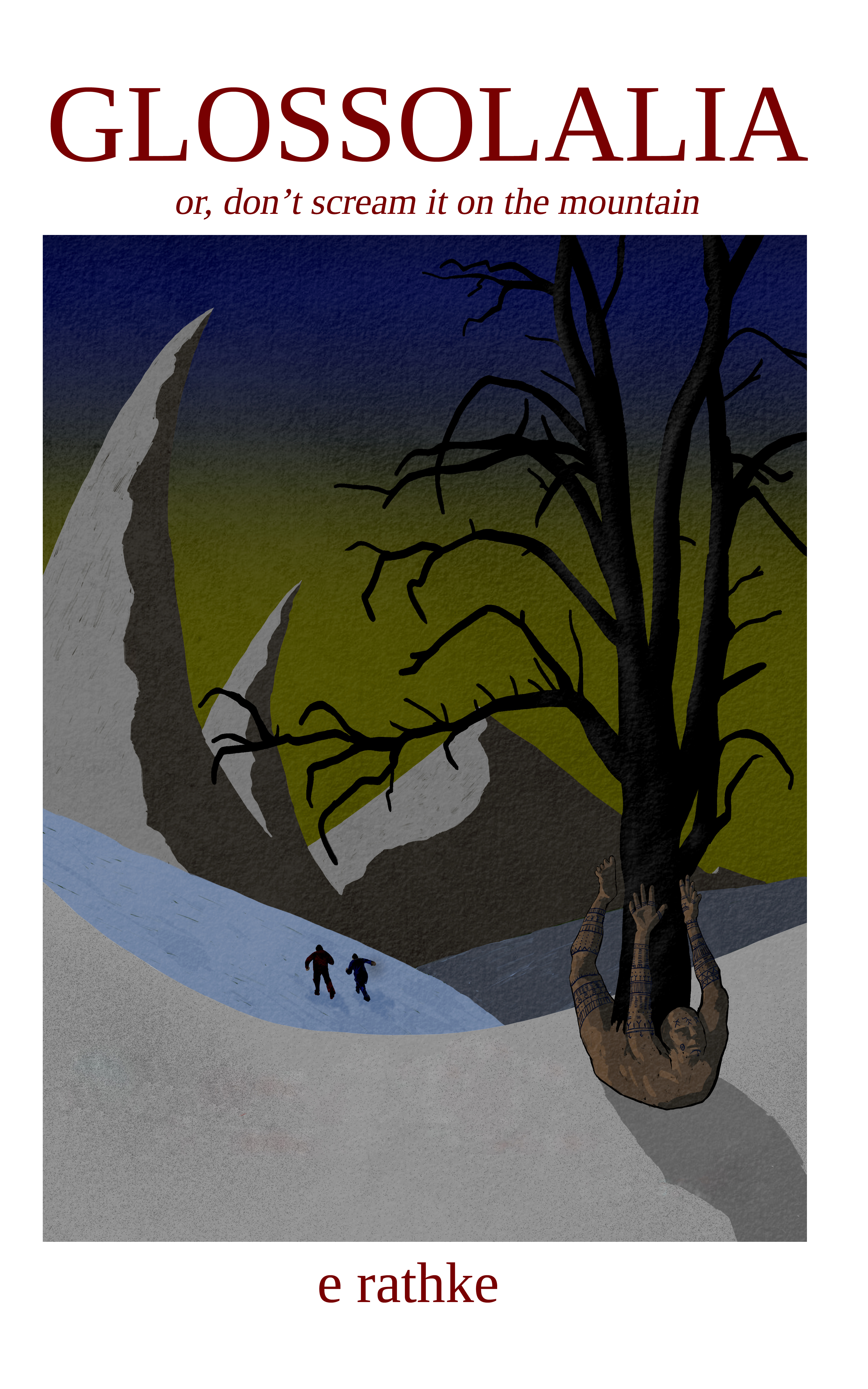
“My name is Ineluki. I come from past the mountains and ice. It took me many days to reach here. All I know are dead. Will you take me in?” And so begins a calamitous year at the edge of the world.
Chief for the year, Aukul's life has never been better. His people respect him, he spends his nights with the love of his life, and his skills as a butcher and chef improve every day. Then Ineluki, a young stranger, wanders into town with nothing but an empty book. He begins telling stories of the world beyond the one they know. His stories challenge their reality and lead to a summer of unprecedented disasters.
One by one, the villagers begin dancing. Dancing tirelessly, as if in a trance, until they die. Believing Ineluki is to blame, Aukul confronts him on the worst night of his life.
A vagabond child of mysterious origin - sort of a wolf cub, a character that feels dangerous by way of his own fear and unclear motives - wanders into a village in search of a home. He's the last of his kind. The village that takes him in sits at the edge of the frozen world, unaware there even was more to the world beyond the mountains. To everyone in this anarchic community of rotating chiefs and seal hunters, the things worth living for are food, family, humping, and surviving.
Glossolalia could easily be categorized as fantasy, but the world-building that is often expected in fantasy occurs in the minor details, such as the way a seal is carved up for a meal, or the way the characters dress, or the signs they make to their gods. The history and dogma goes unexplored, but we get the vibe and picture of this place through the actions of the myriad of slightly off characters. Everyone feels real enough to exist in any time or place, but the giant monsters on the periphery and the mountain girls with their strange song keep us locked in the world - sort of a claustrophobic snowglobe - that Rathke has created here.
The prose is lean and the pace is rapid, keeping you turning the pages until all of a sudden, it's over. And along the way there is a surprising amount of crass humor and dark turns; tonal shifts that resonate hard due to the way Rathke sinks you into this world and makes you comfortable, makes you part of it. But there's always something to be anxious about, and that juggling act of familiarity and anxiety is something Rathke seems to pull off effortlessly.
Glossolalia is one of the greatest books I've read all year.
This book is beautiful. Breathtaking. Anxiety-inducing. Violent. Romantic. There is just so much going on. I do not like to just write a synopsis for my reviews, I typically like to point out certain parts that stood out to me. Don't read ahead if you are worried about spoilers:
1. The world-building in this book is so well done. There isn't a whole chapter spent on telling you everything about everything. The world-building is more like a Dark Souls/Elden Ring/Bloodborne game where you have to build the world in your own imagination based on the little pieces the author gives you. For instance. when the characters are scared/nervous they "make a moonsign." This is never explicitly explained but the reader can infer that this is similar to Catholics making the sign of the cross, which lets us know that the moon is important to these people.
2. Moons. Not Moon. There are 2 moons wherever this place is. The author just casually throws that in there to let you feel the otherworldlyness of it all.
3. The names. It is like the author creating his own language and then used it to create names for people and places because the names seem to follow the same grammar rules. So it sounds like real names, a real tribe of people, a real culture that the writer created.
4. The pacing. The way this book is written is very different. It has the pacing and page-turning nature of a crime thriller or bizarro fiction novel, and yet, reading it feels like Watership Down or Redwall or The Last of the Really Great Whangdoodles, The Phantom Tollbooth. Now don't get me wrong...this is not a book for children. But it is told in a simplistic way, like a fable or fairtytale and something about that style just makes it flow.
AND NOW FOR THE SHIT I COULD NOT SAY ON AMAZON:
This books is graphic as fuck. I mean, the author describes the saliva drip that sticks from one persons lip to the others so vividly, I threw up in my mouth and also became aroused. I was high as fuck reading this book and had to keep going back to make sure I had read what I thought. Like, the book is a beautiful fable and would be perfect for all ages, with exception to all the anal sex. But you have to have all the buttholes and spit in there to make it so beautiful.
I very much appreciate the kind response to this novel. After disappearing from publishing for nearly a decade, I wasn't sure how it would feel to return.
Thanks to all those who have bought a copy and a special thanks to those who have reviewed the book here or at amazon.
I picked this up based on the strength of a short story the author had written for Old Moon Quarterly and I’m happy I took a chance on it because this was a fantastic read. Equal parts disturbing, weird, and beautiful. This is an atmospheric, sometimes almost dream like story about a guy named Aukul, who’s (sort of) the leader of a community living at the very northern edge of the known world, and who in the face of tragedy after tragedy befalling his tribe begins to spiral out about as far as it’s possible to go. It reads less like a conventional novel and more like a myth or a legend or some kind of oral tradition. The narrative POV isn’t based around a specific person, but instead seems to be the entire tribe speaking collectively, remembering the events of the story from years later. That uniqueness of voice was one of my favorite things about the book. The whole thing had this otherworldly feel to it, the weird collective narrator only added to that feeling. This book just has near perfect vibes.
Which is good, because a lot of it made little to no sense to me otherwise. Like if you ask me to explain the significance or meaning or whatever of the Mountain Girls or the Nameless Ones, especially in light of the book’s ending, or even just what their whole deal was, I’d be at a complete loss. But if instead you were like “I want a weird dreamy story about a creepy little magical shit boy who does his best to fuck up an entire town” I’d have just the book for you.
Odd one. I really liked parts of it, but the interesting points, the Mountain Girls, the unknown parts of the world mentioned in snippets, were outweighed by a multitude of sex scenes at the start (some of which are hard to believe, even in a fantasy book) which didn't really add anything and seemed a little redundant on such a short novella. I also found the language mix jarring, one page it was mysterious and world building and then it changed to "f**k yall" etc. Seemed out of place. The ending was great, and I would recommend it overall but it isn't without fault.
Back when I was a kid I loved fables, folklore, and mythology, but they don't quite hit the same now that I'm an adult. I tried giving adult fables a chance in anthologies, but they usually miss the mark. Enter Glossolalia by E. Rathke who successfully scratched this long-term itch of mine and damn does it feel good.
Glossolalia follows a tribe of people going through usual customs and traditions until a mysterious yet foreboding boy shows up and shakes things up. They take him in, but his presence comes with serious repercussions that reverberate throughout the entire village. What happens next is beautiful, awe-inspiring, anxiety, inducing, and strange in a good way.
Rathke does a great job in terms of world-building, and the prose is smooth as butter. I couldn't put the book down even when I wanted to. This slim novella carries the emotional magnitude of an epic like The Odyssey or Bewoulf, but is much more accessible for a modern-day audience. I finished reading it after smoking a nice blunt, and it had me thinking about love, life, my manhood, and more. If you dig rich characterization, myths, fables, or even fairytales, please pick this book up. You won't regret it.
This was a simple story reminiscent of a native legend or folk tale. The story takes place with a hunter-gatherer type of people living near the oceans. The story seemed similar in tone to the Terror. The story was somber and dark. Occasionally I was pulled out of the story by out-of-place phrases, and there was a lot of sex involved in the story (nothing pornographic but pervasive throughout the story).
Ultimately, the book wasn't really for me, but I received a complimentary copy in exchange for a review. The book kept my attention and it really is a short read. I would recommend it to people who like dark, modern, native legends-type stories.
Glossolalia: or don't scream it on the mountain is a novella written by E. Rathke, which is a little bit difficult to classify in a genre, oscillating between historical fiction (if a prehistoric novel can be called it) and fantasy. It's a really different book, using a really special narrator style, trying to tell us about what happened to a small village of artic dwellers when a stranger (Ineluki) walked into their place.
Glossolalia is such a strange story. In the best style of Soulsborne games, the worldbuilding is made in a really fragmented way, hiding small clues in each part of the storytelling, but never giving a straightforward explanation of what is happening, letting it to the imagination of the reader. The style of narrating, being something closer to an oral transcription than a written story, contributes to this style of worldbuilding.
The plot isn't the most important but features magic, descriptions of madness, and power plays. The characters are really mundane, being just vehicles to deliver the story, outside of Ineluki and Aukul's; but we get to know them on such short notice, especially as the extreme situations work as catalysts to show their instincts and their most human feelings.
I expect this book to be kinda divisive among readers. The way the plot is structured is weird, and sometimes it feels irregular, especially in the length of chapters, but it has a reason. Sometimes, it's closer to a dream experience than a story per sé, but I promise all will make sense in the end. I think E. Rathke has potential, so I can't wait to read some of his other works.