

What do you think?

Brown and Gay in LA: The Lives of Immigrant Sons
The stories of second-generation immigrant gay men coming of age in Los Angeles
Growing up in the shadow of Hollywood, the gay sons of immigrants featured in Brown and Gay in LA could not have felt further removed from a world where queerness was accepted and celebrated. Instead, the men profiled here maneuver through family and friendship circles where masculinity dominates, gay sexuality is unspoken, and heterosexuality is strictly enforced. For these men, the path to sexual freedom often involves chasing the dreams while resisting the expectations of their immigrant parents—and finding community in each other.
Ocampo also details his own story of reconciling his queer Filipino American identity and those of men like him. He shows what it was like for these young men to grow up gay in an immigrant family, to be the one gay person in their school and ethnic community, and to be a person of color in predominantly White gay spaces. Brown and Gay in LA is an homage to second-generation gay men and their radical redefinition of what it means to be gay, to be a man, to be a person of color, and, ultimately, what it means to be an American.
Growing up in the shadow of Hollywood, the gay sons of immigrants featured in Brown and Gay in LA could not have felt further removed from a world where queerness was accepted and celebrated. Instead, the men profiled here maneuver through family and friendship circles where masculinity dominates, gay sexuality is unspoken, and heterosexuality is strictly enforced. For these men, the path to sexual freedom often involves chasing the dreams while resisting the expectations of their immigrant parents—and finding community in each other.
Ocampo also details his own story of reconciling his queer Filipino American identity and those of men like him. He shows what it was like for these young men to grow up gay in an immigrant family, to be the one gay person in their school and ethnic community, and to be a person of color in predominantly White gay spaces. Brown and Gay in LA is an homage to second-generation gay men and their radical redefinition of what it means to be gay, to be a man, to be a person of color, and, ultimately, what it means to be an American.
240 pages, Hardcover
First published September 19, 2022
Ratings & Reviews
Friends & Following
Create a free account to discover what your friends think of this book!
Community Reviews
Displaying 1 - 30 of 46 reviews

September 9, 2022
More academics must pivot from boring to dynamic writing. Ocampo shows that the research is beautiful and worthy of public consumption and that it can be approachable for the non PhD’s among us. Really powerful ethnography.

September 23, 2022
"Coming out as gay is sometimes framed as a personal journey. But like the journey immigrants make, it's hardly an individual act."
Brown And Gay In L.A. was such an illuminating read for me. The focus of the book is on the experiences of Latino and Filipino men in L.A. navigating their sexuality within the frameworks of masculinity, education, religion, family dynamics & culture, immigration and American beauty standards to name a few. The writing was easily digestible and I wish more nonfiction was written this way. It was engaging and widened my perspective about queer studies.
What really resonated with me was how embedded intersectionality is in queer identity in brown communities, more specifically immigrant Latinx and Filipino cultures. The anxiety of being queer in opposition to immigrant dreams really repeats among many of the interviewees. Another theme that really stuck with me was how higher education can either be the freedom to come out or add more stigma due to how embedded the educational system is with racism, masculinity and heterosexuality. Latinx and Filipino immigrant families for many can be unsafe spaces due to cultural aspects, such as religion, forced assimilation and patriarchy. For many, places like Pulse Nightclub were safe havens because school organizations for queer people often exclude POC.
This book really made me take a deeper look at the ways that queer people often have to exchange parts of their identities to gain acceptance in certain social spaces and it explored their methods. It reinforces the idea that true activism includes queer liberation. I highly recommend this one if you're interested in LGBTQIA activism and want to educate yourself more about queer issues. Thanks to @nyupress for the gifted copy.
Here are some of my favorite quotes:
🏳️🌈 "This long-held worry-that being gay was inherently in congruent with the hopes of immigrant parents..."
🏳️🌈 "In normalizing heterosexuality, schools also breed an allegiance to masculinity."
🏳️🌈 "Racism can happen everywhere, including a place that was established precisely as a response to discrimination."
#BrownAndGayInLA #NYUPress #AnthonyChristianOcampo
Brown And Gay In L.A. was such an illuminating read for me. The focus of the book is on the experiences of Latino and Filipino men in L.A. navigating their sexuality within the frameworks of masculinity, education, religion, family dynamics & culture, immigration and American beauty standards to name a few. The writing was easily digestible and I wish more nonfiction was written this way. It was engaging and widened my perspective about queer studies.
What really resonated with me was how embedded intersectionality is in queer identity in brown communities, more specifically immigrant Latinx and Filipino cultures. The anxiety of being queer in opposition to immigrant dreams really repeats among many of the interviewees. Another theme that really stuck with me was how higher education can either be the freedom to come out or add more stigma due to how embedded the educational system is with racism, masculinity and heterosexuality. Latinx and Filipino immigrant families for many can be unsafe spaces due to cultural aspects, such as religion, forced assimilation and patriarchy. For many, places like Pulse Nightclub were safe havens because school organizations for queer people often exclude POC.
This book really made me take a deeper look at the ways that queer people often have to exchange parts of their identities to gain acceptance in certain social spaces and it explored their methods. It reinforces the idea that true activism includes queer liberation. I highly recommend this one if you're interested in LGBTQIA activism and want to educate yourself more about queer issues. Thanks to @nyupress for the gifted copy.
Here are some of my favorite quotes:
🏳️🌈 "This long-held worry-that being gay was inherently in congruent with the hopes of immigrant parents..."
🏳️🌈 "In normalizing heterosexuality, schools also breed an allegiance to masculinity."
🏳️🌈 "Racism can happen everywhere, including a place that was established precisely as a response to discrimination."
#BrownAndGayInLA #NYUPress #AnthonyChristianOcampo
April 24, 2023
I’m biased because the author is my cousin but I stand by my rating. A short read and worth every minute.
May 22, 2025
I reallly enjoyed this read, It’s one of those books that sparks real conversations—I was to
Finish it quickly and pass it on to talk about it with my friends, which made the honesty of the book even more powerful.
I would definitely recommend this for your next read
Finish it quickly and pass it on to talk about it with my friends, which made the honesty of the book even more powerful.
I would definitely recommend this for your next read
December 6, 2022
Reading this book felt like seeing my life in pages.
As someone who is in the intersection of what he is talking about in this book (1. brown, 2. gay, and 3. in LA), there are a lot of the things that Anthony Christian Ocampo discussed that has resonated with me a lot. I'm a Filipino migrant who has lived in the Los Angeles area ever since I settled in this country, and I found his investigation and analyses of the general behaviors of queer brown folks to be quite accurate. He zeroes in on the experiences of queer folks who identify as second-generation Filipino-American or Latinx immigrants. I share a similar experience (not the same — I'm a first-generation immigrant) as those belonging to the former group.
I have grown particularly frustrated about the assumptions that the general public has made regarding the queer Asian-American community as a whole, particularly their lack of understanding of the varied experiences that East Asians vs. South East Asians face in this country. While we are often lumped in the same group, our struggles differ. And it's this difference that has shaped my experience as a queer person in LA. People should be careful to not mistake my experience to be the same as someone who is East Asian, because while it may be similar, our socioeconomic and cultural differences have influenced how we have trekked and experienced our queerness. I appreciate him for contributing a nuanced perspective on what it's like to be a 'gaysian' in LA, especially when discussions about our experiences are usually centered on those who are East Asians.
Ocampo's commitment to nuance really shows when he pointed out how South East Asians still benefit from being lumped in the big "Asian-American" category despite its many disadvantages, especially in situations where they have to resort to "academic covering." "Academic covering," as Ocampo points out, is a coping mechanism that queer people usually resort to when confronted with the reality that their queerness may be viewed as a disadvantage. In an attempt to protect themselves from rejection, they turn to their academics to present themselves as someone more dignified, someone who is worthy of approval. They know that somehow, their queerness makes them "less" than their straight contemporaries. Brown Latinxs, especially those who reside in areas where they don't hold a significant majority, have found it difficult to partake in "academic covering" due to the preconceived notions educators have had of them relative to their Asian peers. One of the Latinx men Ocampo interviewed have reported that he initially got rejected from his high school's honors program despite having high test scores. In contrast, one of Ocampo's Filipino participants was able to acquire AP and honors classes when he was in high school despite having incompetent test scores. Their experiences, coupled by the research Ocampo cited in his book, suggests that racial bias has had a hand in these disparities, which made me reflect further on how my being "Asian American" has benefited me in my academic career.
I migrated in the United States at age 14. Starting anew in this country so late meant that I was effectively ripped of any identities that I latched on to in the homeland. No longer was I the funny, outgoing, and oddly athletic fat kid who had a knack for public speaking. I was just a fat kid whose English speaking skills were enough for him to "pass" as a native Californian. This privilege spared me from the vicious tongue of potential bullies (After attaining some level of social clout over the years, however, I've come to find out that boys in the locker room were actually whispering about . Nothing physical came of it. Guess I was one of the lucky ones). Nevertheless, it was still hard for me to "translate" my Filipino personality to my English one. Assimilation was a defense mechanism. I didn't want to draw any further attention to myself by being the real me, and I was afraid to explore all the things I was known to be good at in the homeland (ie: dance, volleyball) because they're not exactly "manly."
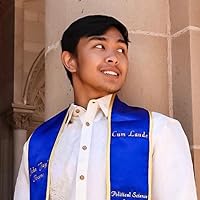
So I turned to my academics. I was a fairly average student in the Philippines, but in the States, I was practically an academic fiend. I realize now that the preconceived notions that people had of me made it easier for me to academically cover. My desire to overachieve academically followed me all throughout high school, and it even bled throughout my college years (I ended up graduating Cum Laude at UCLA). I realize that while my intellect and work ethic had a hand at my academic success, a lot of it also had to do with the faith that people lent me regarding my academic capabilities. As Ocampo suggests, this isn't a privilege that I share with my queer Latinx brothers, whose ability to academically cover may be derailed because of the prejudice that their educators and classmates hold. However, Ocampo was quick to point out that a handful of queer Latinx men have successfully managed to partake in academic covering as a defense mechanism, especially those residing in places that are predominantly Latinx. But while the academic experiences of Latinx and Filipinx men generally differ, one thing is for sure: a handful of them understand early on that their queerness is seen as a liability. Therefore, they detract from this fact by being excellent at something. This is something that I understand all too well and is something that Ocampo poignantly conveys in this book.
With that being said, I admire Ocampo for applying accessible language throughout this book. I was a little bit surprised to find out towards the end that this is an academic exploration of queer brown folks in LA. Reading this book didn't feel like reading an academic work. It felt like a memoir of some sorts, which is what this book is marketed as, and honestly, it works. Moving forward, I feel like experts who wish to publish their works for mass consumption should aspire to writing their works akin to Ocampo.
As someone who is in the intersection of what he is talking about in this book (1. brown, 2. gay, and 3. in LA), there are a lot of the things that Anthony Christian Ocampo discussed that has resonated with me a lot. I'm a Filipino migrant who has lived in the Los Angeles area ever since I settled in this country, and I found his investigation and analyses of the general behaviors of queer brown folks to be quite accurate. He zeroes in on the experiences of queer folks who identify as second-generation Filipino-American or Latinx immigrants. I share a similar experience (not the same — I'm a first-generation immigrant) as those belonging to the former group.
I have grown particularly frustrated about the assumptions that the general public has made regarding the queer Asian-American community as a whole, particularly their lack of understanding of the varied experiences that East Asians vs. South East Asians face in this country. While we are often lumped in the same group, our struggles differ. And it's this difference that has shaped my experience as a queer person in LA. People should be careful to not mistake my experience to be the same as someone who is East Asian, because while it may be similar, our socioeconomic and cultural differences have influenced how we have trekked and experienced our queerness. I appreciate him for contributing a nuanced perspective on what it's like to be a 'gaysian' in LA, especially when discussions about our experiences are usually centered on those who are East Asians.
Ocampo's commitment to nuance really shows when he pointed out how South East Asians still benefit from being lumped in the big "Asian-American" category despite its many disadvantages, especially in situations where they have to resort to "academic covering." "Academic covering," as Ocampo points out, is a coping mechanism that queer people usually resort to when confronted with the reality that their queerness may be viewed as a disadvantage. In an attempt to protect themselves from rejection, they turn to their academics to present themselves as someone more dignified, someone who is worthy of approval. They know that somehow, their queerness makes them "less" than their straight contemporaries. Brown Latinxs, especially those who reside in areas where they don't hold a significant majority, have found it difficult to partake in "academic covering" due to the preconceived notions educators have had of them relative to their Asian peers. One of the Latinx men Ocampo interviewed have reported that he initially got rejected from his high school's honors program despite having high test scores. In contrast, one of Ocampo's Filipino participants was able to acquire AP and honors classes when he was in high school despite having incompetent test scores. Their experiences, coupled by the research Ocampo cited in his book, suggests that racial bias has had a hand in these disparities, which made me reflect further on how my being "Asian American" has benefited me in my academic career.
I migrated in the United States at age 14. Starting anew in this country so late meant that I was effectively ripped of any identities that I latched on to in the homeland. No longer was I the funny, outgoing, and oddly athletic fat kid who had a knack for public speaking. I was just a fat kid whose English speaking skills were enough for him to "pass" as a native Californian. This privilege spared me from the vicious tongue of potential bullies (After attaining some level of social clout over the years, however, I've come to find out that boys in the locker room were actually whispering about . Nothing physical came of it. Guess I was one of the lucky ones). Nevertheless, it was still hard for me to "translate" my Filipino personality to my English one. Assimilation was a defense mechanism. I didn't want to draw any further attention to myself by being the real me, and I was afraid to explore all the things I was known to be good at in the homeland (ie: dance, volleyball) because they're not exactly "manly."
So I turned to my academics. I was a fairly average student in the Philippines, but in the States, I was practically an academic fiend. I realize now that the preconceived notions that people had of me made it easier for me to academically cover. My desire to overachieve academically followed me all throughout high school, and it even bled throughout my college years (I ended up graduating Cum Laude at UCLA). I realize that while my intellect and work ethic had a hand at my academic success, a lot of it also had to do with the faith that people lent me regarding my academic capabilities. As Ocampo suggests, this isn't a privilege that I share with my queer Latinx brothers, whose ability to academically cover may be derailed because of the prejudice that their educators and classmates hold. However, Ocampo was quick to point out that a handful of queer Latinx men have successfully managed to partake in academic covering as a defense mechanism, especially those residing in places that are predominantly Latinx. But while the academic experiences of Latinx and Filipinx men generally differ, one thing is for sure: a handful of them understand early on that their queerness is seen as a liability. Therefore, they detract from this fact by being excellent at something. This is something that I understand all too well and is something that Ocampo poignantly conveys in this book.
With that being said, I admire Ocampo for applying accessible language throughout this book. I was a little bit surprised to find out towards the end that this is an academic exploration of queer brown folks in LA. Reading this book didn't feel like reading an academic work. It felt like a memoir of some sorts, which is what this book is marketed as, and honestly, it works. Moving forward, I feel like experts who wish to publish their works for mass consumption should aspire to writing their works akin to Ocampo.
August 1, 2025
perfect, no notes
LA has this vibrant queer scene but most POC queer people growing up don't have access to it because it's expensive and time consuming to get there so even those who grew up near this mecca were alienated, first for access, then, when they got there, because of the inherent whiteness of WEHO
LA has this vibrant queer scene but most POC queer people growing up don't have access to it because it's expensive and time consuming to get there so even those who grew up near this mecca were alienated, first for access, then, when they got there, because of the inherent whiteness of WEHO
March 15, 2025
The interviews and stories were meaningful and beautiful but I didn't like how much the author inserted his own opinion and interpretation into the interviewees lives
June 4, 2024
Wow!! reading this I’ve never felt so validated in my experience. Made me feel good to know that I was not alone in my queer experience. A must read for those who seek to decenter whiteness from the queer experience.

October 11, 2024
First of all, I thought this book was very readable for an academic work. I think this author did a good job, not only of reporting peoples individual experiences, but showing how they fit a pattern. For instance, I appreciate the fact that the author showed how many men felt like they had to really lean into masculinity in order to potentially be more acceptable as a gay person, and in doing so you can see the author both having sympathy for these individuals, but also commenting on how it essentially throws any one that leans more towards the feminine under the bus
April 7, 2025
Fresh, balanced, and multifaceted. Reading through experiences that felt familiar to my own, Ocampo gave me new vocabulary. It’s not just about a deeper understanding of ourselves, but being equipped to tell that story to others.

June 28, 2023
Fantastic. An excellent piece of scholarly research that highlights some of the men and stories left out of the pivotal (yet problematic) book The Velvet Rage. Also, a great companion piece for the book Gay L.A. I’d recommend this to anyone, but especially those who have ever loved or befriended a queer Latino or Filipino man in Los Angeles.

June 16, 2024
Some interesting points and stories, but a lot of the examples aren’t all that different from a lot of others who are bullied, have things that are outside norms, use college to recreate themselves, move away from unaccepting family, etc. But I do appreciate this book and the ways it made me think and appreciate those interviewed and the importance of teaching everyone queer studies and stories.
October 9, 2024
"the very thing that was once weaponized to dismiss your humanity, constrain your agency, and obstruct your opportunities can - if embraced and harnessed - become the very thing that sets you free"
I loved the writing style, how the author addresses so many different aspects of race, gender, class, and sexuality that have never crossed my mind, and the analysis he provided. As I was reading, I was also able to think about certain people in my life whom many of this book's concepts could be applied to, including myself. Would def recommend if you're looking for a concise and easy-to-read academic reading that covers many bases about the topic!
I loved the writing style, how the author addresses so many different aspects of race, gender, class, and sexuality that have never crossed my mind, and the analysis he provided. As I was reading, I was also able to think about certain people in my life whom many of this book's concepts could be applied to, including myself. Would def recommend if you're looking for a concise and easy-to-read academic reading that covers many bases about the topic!
April 30, 2025
While I greatly respect what Ocampo was trying to do with this book, I think he fell short in the execution.
Firstly, I am disappointed that Ocampo only interviewed cisgender men. Given he interviewed over 60 men, the fact that not one of them was transgender feels like erasure at this point (this book was published in 2022! he has no excuse!). I think it is flawed to claim to study gay men while completely ignoring trans gay men. By doing this, he also missed out on a deeper, richer analysis of gender, sexuality, and masculinity. He doesn't even acknowledge this as a flaw in his study-- he kind of just takes it as a given. It's as if he sees trans people as a completely separate category from gay people. It sends the message that trans people don't belong in gay & lesbian studies.
He also never defines who he considers "gay." Does it include bisexuals? people who experience more fluidity with gender and sexuality? people who identify more with the label "queer"? He never clarifies. While we can assume what he means, since this is an academic sociological text, I feel he has the responsibility to be more precise. This along with the previous criticism makes me think Ocampo has a very simplistic view of queerness.
I appreciated Ocampo's criticism of homonormativity within the gay community, but I think he could've gone farther with it by examining his own cisnormative assumptions.
I also found this work to be under-theorized for a sociological text, but that may just be a personal preference of mine. I found a lot of the analysis to be surface level, and Ocampo misses many opportunities to go deeper. He often cites theoretical terms and concepts, but he doesn't engage with them in a way that enriches either his work or the theory.
To be fair, I do think this research is important work. Sociology needs more intersectional research that amplifies marginalized voices. Ocampo articulates this very well in his intro and conclusion, but the rest of the book just does not deliver.
Firstly, I am disappointed that Ocampo only interviewed cisgender men. Given he interviewed over 60 men, the fact that not one of them was transgender feels like erasure at this point (this book was published in 2022! he has no excuse!). I think it is flawed to claim to study gay men while completely ignoring trans gay men. By doing this, he also missed out on a deeper, richer analysis of gender, sexuality, and masculinity. He doesn't even acknowledge this as a flaw in his study-- he kind of just takes it as a given. It's as if he sees trans people as a completely separate category from gay people. It sends the message that trans people don't belong in gay & lesbian studies.
He also never defines who he considers "gay." Does it include bisexuals? people who experience more fluidity with gender and sexuality? people who identify more with the label "queer"? He never clarifies. While we can assume what he means, since this is an academic sociological text, I feel he has the responsibility to be more precise. This along with the previous criticism makes me think Ocampo has a very simplistic view of queerness.
I appreciated Ocampo's criticism of homonormativity within the gay community, but I think he could've gone farther with it by examining his own cisnormative assumptions.
I also found this work to be under-theorized for a sociological text, but that may just be a personal preference of mine. I found a lot of the analysis to be surface level, and Ocampo misses many opportunities to go deeper. He often cites theoretical terms and concepts, but he doesn't engage with them in a way that enriches either his work or the theory.
To be fair, I do think this research is important work. Sociology needs more intersectional research that amplifies marginalized voices. Ocampo articulates this very well in his intro and conclusion, but the rest of the book just does not deliver.
February 21, 2023
Wonderful read especially if you are brown and queer. Know your history!
November 13, 2022
I began reading this book with my morning coffee and realized I would need to reschedule everything else for the rest of my day. It derailed my Sunday in the most beautiful way.
Ocampo writes with care and precision about the lives of the gay sons of Latinx and Asian immigrants in LA. Though I'm not an Angeleno, I identified with so much that he captured in these pages. Methodologically, he uses interviews to develop narratives around growing up, education, kinship networks, socialization, and our own personal development. One of the things I most appreciated about his writing is that he was so careful not to develop stereotypes or even necessarily archetypes; rather, he draws on the narratives to notice the commonalities but leaves plenty of room for the digressions, exceptions, and more.
Over the years, I've read fewer and fewer books that rely on tropes of violence or suffering for people of color, queer people, or women. This book certainly avoids that pitfall. Perhaps my favorite thing about this book is that he and his interviewees acknowledge that there is violence and suffering, but are all deeply aware that we are not only the worst things that have happened to us. It was refreshing to read about how many other gay sons of immigrants went through some of the things I went through, how different some of their experiences were, and to see Ocampo's analysis and insights from these experiences.
Thankful for this book and for having read it. If you want to learn about these experiences, about what kind of complexities these groups are navigating, it's a great and highly readable choice. Weaves in culture, social media, and academic literature in just the right way (for me, at least) and made it a wonderful way to spend my Sunday.
Ocampo writes with care and precision about the lives of the gay sons of Latinx and Asian immigrants in LA. Though I'm not an Angeleno, I identified with so much that he captured in these pages. Methodologically, he uses interviews to develop narratives around growing up, education, kinship networks, socialization, and our own personal development. One of the things I most appreciated about his writing is that he was so careful not to develop stereotypes or even necessarily archetypes; rather, he draws on the narratives to notice the commonalities but leaves plenty of room for the digressions, exceptions, and more.
Over the years, I've read fewer and fewer books that rely on tropes of violence or suffering for people of color, queer people, or women. This book certainly avoids that pitfall. Perhaps my favorite thing about this book is that he and his interviewees acknowledge that there is violence and suffering, but are all deeply aware that we are not only the worst things that have happened to us. It was refreshing to read about how many other gay sons of immigrants went through some of the things I went through, how different some of their experiences were, and to see Ocampo's analysis and insights from these experiences.
Thankful for this book and for having read it. If you want to learn about these experiences, about what kind of complexities these groups are navigating, it's a great and highly readable choice. Weaves in culture, social media, and academic literature in just the right way (for me, at least) and made it a wonderful way to spend my Sunday.

December 18, 2022
An in-depth look at the experiences of gay men from immigrant families (most born between the late 70s and the late 90s) in Los Angeles.
As a topic, it sounds pretty niche; however, there's a lot to unpack from this book that can be applied across cultures, locations, and specific queer identities. It's worth knowing how these cultural groups (largely Filipino- and Mexican-American) dealt with social stigma/bullying, coming out, access to education, and within community dating preferences.
The author is a little salty and judgmental about the general masc4masc preference among the men interviewed for the book. I could have lived without that. I've never heard of anyone wanting (like actively seeking out) a feminine gay partner. I imagine that exists, but no need to be so harder on men who are attracted to masculine men.
All of the interviewees seem to have been cisgender gay men, which does make for less complex data and analysis, but definitely reflects a bias that's much more problematic than perceptions of masculinity/femininity among cisgender gay men.
That aside, though, the book reads very well. It's cohesive, doesn't get bogged down, and has an easy to follow narrative structure.
For high schools with an LGBTQ curriculum option, this would be readable/understandable for a high school junior/senior. My multicultural English class read The Hunger of Memory (Rodriguez); this would be a social studies option covering similar territory.
Overall, would definitely recommend.
As a topic, it sounds pretty niche; however, there's a lot to unpack from this book that can be applied across cultures, locations, and specific queer identities. It's worth knowing how these cultural groups (largely Filipino- and Mexican-American) dealt with social stigma/bullying, coming out, access to education, and within community dating preferences.
The author is a little salty and judgmental about the general masc4masc preference among the men interviewed for the book. I could have lived without that. I've never heard of anyone wanting (like actively seeking out) a feminine gay partner. I imagine that exists, but no need to be so harder on men who are attracted to masculine men.
All of the interviewees seem to have been cisgender gay men, which does make for less complex data and analysis, but definitely reflects a bias that's much more problematic than perceptions of masculinity/femininity among cisgender gay men.
That aside, though, the book reads very well. It's cohesive, doesn't get bogged down, and has an easy to follow narrative structure.
For high schools with an LGBTQ curriculum option, this would be readable/understandable for a high school junior/senior. My multicultural English class read The Hunger of Memory (Rodriguez); this would be a social studies option covering similar territory.
Overall, would definitely recommend.

October 16, 2024
I read some of the chapters for a sociology class before and I finally got around to reading the rest of the book. Ocampo does a great job of balancing sociological theory and telling stories. It reads so easily despite covering some tough topics, family relationships, and masculinity. Despite being neither brown nor gay, many sentiments about coming out and going to college resonated with me as a queer second-gen Asian-Am that grew up in socal (who would've thought /j). I love Ocampo's ability to empathize with their choices as means of survival within their families while still understanding how these actions may reflect and reify heteronormative and gender-normative beliefs. The influence of intersectionality is quite evident (and not just in the buzzword way). He clearly shows how queerness and race mutually construct each other and the institutions that maintain this.
Would recommend reading! While being "academic," the text doesn't feel exclusive or unapproachable.
Would recommend reading! While being "academic," the text doesn't feel exclusive or unapproachable.
March 31, 2024
A solid 3.5.
The writing did a great job of combining the personal stories alongside the research. What I also love about a great nonfiction piece is that it adds more books and people of note that I can bookmark for later.
“Brown & Gay” is a great reference point for younger brown men/queers to gain a sense of perspective of our history in SoCal while also validating the experiences that young GenX/older Millennial men shared. I would say i’m part of the generation just after the men interviewed here and there’s a sense of excitement around learning a bit more about these experiences.
I think about my older gay/queer friends and am curious if they share these experiences mentioned in the book. It’s exciting to have these pieces of knowledge because it makes me feel like I now see a new piece of them that I can learn more about.
The writing did a great job of combining the personal stories alongside the research. What I also love about a great nonfiction piece is that it adds more books and people of note that I can bookmark for later.
“Brown & Gay” is a great reference point for younger brown men/queers to gain a sense of perspective of our history in SoCal while also validating the experiences that young GenX/older Millennial men shared. I would say i’m part of the generation just after the men interviewed here and there’s a sense of excitement around learning a bit more about these experiences.
I think about my older gay/queer friends and am curious if they share these experiences mentioned in the book. It’s exciting to have these pieces of knowledge because it makes me feel like I now see a new piece of them that I can learn more about.

March 14, 2025
I will be forever fascinated when authors pull back the curtains and allow readers a peek into their private and personal lived experiences.
This book explores the religious and cultural taboos, challenges, and fears of gay men of various brown backgrounds, many of which being first generation Americans shouldering the weight of expectations to be the perfect son expected to take full advantage of the opportunities not given to their parents. Often times said expectations included marrying a good woman and having kids.
The author sheds light on the intersectionality of being both brown and gay. He examined how being gay wasn't enough to be accepted in the queer community. How like any social structures you have to search for and find a community that specifically suites your needs.
Are you a Will or Jack? Do you wear your Pride Flag Proud or are you more of a conservative gay who prefers to keep your private life private at all costs?? How did one cope with being in the closet and/or coming out?
There were so many different things that caught my attention and really opened up social conversation. It reminded me of a scene from the movie Bros. In it, the male lead Bobby works for an LGBTQ non-profit and the various representatives from each subgroup are arguing who has it harder and wanting to be represented. As a spectator and straight woman this scene was only comical, however upon reading more LGBTQ memoirs and essays such as this book, I am quickly coming to the realization that the scene holds more truth than comedy and as an ally it went over my head.
Overall, this was enlightening and educational and provided new prospectives.
This book explores the religious and cultural taboos, challenges, and fears of gay men of various brown backgrounds, many of which being first generation Americans shouldering the weight of expectations to be the perfect son expected to take full advantage of the opportunities not given to their parents. Often times said expectations included marrying a good woman and having kids.
The author sheds light on the intersectionality of being both brown and gay. He examined how being gay wasn't enough to be accepted in the queer community. How like any social structures you have to search for and find a community that specifically suites your needs.
Are you a Will or Jack? Do you wear your Pride Flag Proud or are you more of a conservative gay who prefers to keep your private life private at all costs?? How did one cope with being in the closet and/or coming out?
There were so many different things that caught my attention and really opened up social conversation. It reminded me of a scene from the movie Bros. In it, the male lead Bobby works for an LGBTQ non-profit and the various representatives from each subgroup are arguing who has it harder and wanting to be represented. As a spectator and straight woman this scene was only comical, however upon reading more LGBTQ memoirs and essays such as this book, I am quickly coming to the realization that the scene holds more truth than comedy and as an ally it went over my head.
Overall, this was enlightening and educational and provided new prospectives.
December 31, 2025
What a beautiful book, I absolutely love this book and encourage all my queer friends to read it. It follows many lives of queer immigrant poc men and their expierence through life. I think it’s important for us all to read about different experiences especially if we are in the same community so we can better understand our friends and peers . I feel books help ppl understand empathy and I appreciate the author Anthony Christian Ocampo sharing these vulnerable stories . Even stories in his own personal life . It was such an informative good read I loved every second of it . A fav quote in the book was :
“I learned that you come out to let people in. The reality is that the closet doesn’t only hide you from strangers, the closet also hides you from people you love”
Such a good read .
“I learned that you come out to let people in. The reality is that the closet doesn’t only hide you from strangers, the closet also hides you from people you love”
Such a good read .

May 5, 2026
A bit dry but a good overview of the dynamics and experiences of 2nd generation Filipino and Latino gay men in LA, including a diversity of experiences and topic such as: accepting and unaccepting blood families, a through-line of pressure to live up to the sacrifices of their parents, the currency of masculinity in family acceptance and attraction, Catholicism, the whiteness and exclusiveness of mainstream queer spaces, navigate the white privilege of white queer friends and partners, conflicts in identity as queer men and Latino or Filipino men, the role of social media in accessing queer men but also in potential exposure when you are not out yet, and navigating unaccepting larger enmeshed family/immigrant communities.
October 10, 2022
I knew when the preface included a Jaboukie tweet, this book would be good.
Ocampo writes this book as a “a bit of oxygen you need to keep on keepin on.” What’s beautiful about it is how fresh it feels—how humanizing and real it is. The storytelling weaves through the different intersections of sexuality, SES, racial, ethnic, identities, the themes, and places he and his interviewees explore together in such a dynamic way I couldn’t put this book down. It’s made me reflect and allowed me to breathe in a time that I feel like I’m constantly holding my breath. I’m eager for others to read it so we can discuss together.
Ocampo writes this book as a “a bit of oxygen you need to keep on keepin on.” What’s beautiful about it is how fresh it feels—how humanizing and real it is. The storytelling weaves through the different intersections of sexuality, SES, racial, ethnic, identities, the themes, and places he and his interviewees explore together in such a dynamic way I couldn’t put this book down. It’s made me reflect and allowed me to breathe in a time that I feel like I’m constantly holding my breath. I’m eager for others to read it so we can discuss together.
February 25, 2023
(02.25.2023) seeing my own experiences on the page like that felt so very validating and affirming. sometimes it's hard not feeling alone, and this book is a great reminder that we aren't -- that many of us have struggled and are still struggling with coming out and how it intersects with family and culture. i should probably re-read this book every year like the therapy it is. loved it.
December 7, 2023
This felt like the equivalent of watching the movie the Wedding Banquet by Ang Lee for the first time bc I wish I had seen/read this 10 years ago so all I had to reference as legitimate queerness was white, upper middle class queer stories.
I also have checked off every single terminology he introduces: respectability politics, up-and-down identities, masking, etc. lol
I also have checked off every single terminology he introduces: respectability politics, up-and-down identities, masking, etc. lol

June 28, 2025
Informative and approachable academic writing. I loved how the author wrote as if there were speaking to me and giving me so much information and viewpoints into poc gay men. It was an easy read and I highly recommend it to anyone that has questions regarding the gay poc experience in cities and other places.
February 24, 2026
Who said research couldn't be interesting?? Ocampo expertly told these narratives in ways that helped me feel connected and better understand the second-gen gay community. Amaze!! I actually had to read a couple of chapters in class and liked it enough to read the entire thing. Very impressive on Ocampo's part imo.

October 30, 2022
This is such an approachable academic text about the lives and experiences of gay second generation immigrant men in LA. I appreciated the way Ocampo structured the book and the care he took with the words of his interview subjects.

November 10, 2022
More beautiful stories by Ocampo. I saw so much of my friends and family in this book and I know that so many more people will relate to this book and I hope they realize they don’t have to hide, they don’t have to stand out they just have to be okay.
May 4, 2023
written with a great amount of clarity and accessibility! i really appreciate ocampo's work here and his resistance to problematic practices in sociological research on marginalized populations; he does a lot of justice to the stories of the men he interviews
Displaying 1 - 30 of 46 reviews