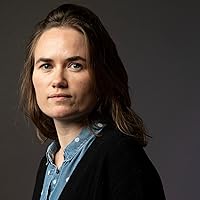
Val Plumwood, formerly Val Routley, was an Australian ecofeminist intellectual and activist, who was prominent in the development of radical ecosophy from the early 1970s through the remainder of the 20th century.
Plumwood was active in movements to preserve biodiversity and halt deforestation from the 1960s on, and helped establish the trans-discipline known as ecological humanities.
At the time of her death, Plumwood was Australian Research Council Fellow at the Australian National University, and in the past had held positions at North Carolina State University, the University of Montana, and the University of Sydney.
In her 2000 essay "Being Prey", Val described her near-death experience that occurred during a solo canoe trip she took in 1985 in Australia's rugged bush territory. She was alone on the river and saw what appeared to be a "floating stick" that she soon realized was a crocodile. Before she could get ashore the crocodile attacked her canoe and in her attempt to leap ashore to avoid being capsized, Val was seized by the crocodile. The essay describes the "death rolls" the croc put her through several times, though miraculously she escaped to crawl nearly two miles to a rescue point. From this experience, Val gained a perspective that humans are part of the food chain as well, and that our culture's human-centric view is disconnected from the reality that we also are food for animals.
This is an important eco-feminist work, one that changed the way I view a lot of things, not just nature or gender. Val starts with a simple proposition, that the logic of dualism is embedded in everything in everything in Western culture. We are used to viewing things as binaries, where one item of the binary is always elevated over the other. Thus the sexes have been divided into male and female, with male held to be superior to the female. Similarly, there is the binary of nature/culture and emotion/reason, with reason and culture held to be superior and more desirable. These desirable qualities have long been seen as the province of men, of course. Our task as eco-feminists is to break down this hierarchy and artificial binary and not only celebrate the hitherto marginalised sides of the binaries—nature/emotion/femininity—but also recognise that any strict separation between the two is artificial and historically constructed.
So far, her analysis is similar to that of Derrida's, but she goes further in talking about how this can be accomplished. First, one must recognise continuity between the self and the other. The sexes aren't as different as portrayed. There is as much variation within the sexes as there is between the sexes. Besides, intersex people exist. Gender isn't a binary but a continuum. Similarly, humans aren't at the apex of evolution, superior to all other animals by virtue of possessing the capacity to reason. We are skilled in one way, while other creatures possess other abilities that we do not.
However, this does not mean that there are no differences at all. An eco-feminist ethics would understand that there are differences among people, and between people and animals, and so on, and accept and celebrate these differences. One does not respect another because they are exactly the same as oneself; one accepts the other exactly for what they are, without expecting that they be a mirror of the self. Love and care for the other for their own sake is the core of this ethics.
Val criticises deep ecology and Vedanta philosophy for dragging the self into everything. Humans are assumed to love only the self, and so the only way to get us to love nature is to ask us to see the self in nature, presume these philosophies. A better way of relating to the world is in the spirit of friendship, when worth is not proved by how similar something is to you, but by what it can offer you by being itself. Thus, accepting b0th continuity and difference is the way to break down dualistic conceptions of the world, says Val.
Going further, one must accept one's embodiedness, one's emotion and intuition and so on, and not privilege reason and rationality over the body and its needs and limitations. Kantian ethics expects us to be moral because it is our duty to do so, but an eco-feminist ethics would prefer that morality come out of love and care and a spirit of friendship and goodwill. Similarly, the world based on rational economics would say that one must keep our personal and professional lives distinct, that we are all essentially selfish creatures, and so on, but an eco-feminist ethics would point out that the well-being of the self is bound with the well-being of our kin and friends and humanity at large, that we are not islands, and that self-interest does not preclude other-interest, and that helping others does not require self-sacrificing altruism and is really not uncommon.
All in all, this is a book worth reading. Val Plumwood recommends that in the place of artificial distinctions between people, between us and nature, and so on, we develop a spirit of friendship with the world. Not just people, but nature as well. Once we see animals and trees and nature in general as kin, in whose absence we'd be left extremely impoverished in spirit, we will stop seeing them as mere resources and work towards stopping their mindless destruction. Not because we need them to serve us in the future, but because we recognise that they are entities who have life and mind and spirit and deserve to live good lives on earth just as we do.
Öncelikle, "genel kültür" olsun diye okunacak bir kitap değil. Birçok (tarihsel) kuramsal çerçevede (platoncu, decartesçı, derin ekolojist vb.) kadınların, kartezyen ikiliğin bir tarafında nasıl yer aldığı incelenirken, kavram karmaşasına düşmemek elde değil. Bu noktada başarılı bir çeviri olduğuğunu düşündüğümü söyleyemeyeceğim, yarısından itibaren orjinalinden okumaya döndüm ve kavram karmaşası en azından bir miktar azaldı. Temelde getirdiği eleştiri, Batı düşüncesinde her şeyin ikilikler üzerine kurulduğu, bunun da ikiden birini kaçınılmaz olarak ötekileştirdiği ya da tahakküm konumuna düşürdüğü. İkilikteki bir tarafın "üstün" hale geliş sürecini beş adımlı bir mekanizmayla tanımlıyor. Benzer eleştiri çağdaş bir çok araştırmacı tarafından, bir çok konuda yapılıyor ama özellikle bunu nasıl aşacağımız hakkında önerilerle geliyor. Özellikle Shiva ekofeminizmine ve derin ekolojinin temeline getirdiği eleştiriler, okumayı aradığım şeylerdi.
read with a student for an independent study on transnational feminist climate activism. really excellent philosophical introduction to the problems surrounding 'nature' and its domination by science and man. these days, i think the critique of dualisms is a bit too easy, but as an foundation, Plumwood's work is really sharp and useful.
Seeking to establish an ecological feminist position, Plumwood stops short of embracing the term "ecofeminist," leaving it for theorists she feels do not analyze the link between women and nature critically enough. She establishes five characteristics of dualism, all emphasizing the superiority of one side and all encouraging a masculinist domination of nature: for example, denying any dependence on or benefit from the other, seeing the other only as an instrument to be used, or assuming that members of the other group are not only completely different from the master group but also all alike. Historical chapters show how those dualisms are expressed in Plato, become more destructive in Cartesian mechanism, and continue today. She argues for a "non-hierarchical concept of difference," not obliterating distinctions and differences but observing and respecting them. While it's difficult even to think about ecological solutions when our ways of thinking are so permeated by dualistic language, Plumwood insists that the future of the planet depends on our doing it.
Genel olarak batı kültüründeki ikicilik anlayışını eleştiriyo ve doğaya tahakkümün kadına tahakkümle ilişkisini anlatıyo. Biraz ağır ama güzeldi. Son kısımlarda azcık kopukluk yaşadım. Bizim platon+sokratese tahammül seviyesi....çeviriyi çok beğendim ayrı bir not olarak (Başak Ertür). Feminizmin her ekolünü okumak istiyorum 🙏
The author Plumwood, without mentioning his name, deals with "deep ecology" in his book. This book is highly qualified and has content that will enrich the radical ecologist movement.
First of all, I would like to briefly explain the concept of deep ecology; The deep ecological movement, in its shortest definition, is the anti-modern* human profile movement that radically opposes the industrial and industrial revolution.
If we need to group the ecological movements that emerged with the deterioration of the ecological balance of the world and are getting stronger today, we can evaluate them in two classes as radical and normal ecology movements. Due to the subject of the book, the radical part of this distinction needs to be continued on the branch of eco-feminism. Existing modes of production and consumption directly cause the destruction of nature, as well as the patriarchal system of thought that is constantly heated and served in front of the societies in this mode of production, the boss class, with a kind of squire logic, turned the cities into feudal era castles, and in this environment In an intellectual context, it reveals that nature and women are described as second-class creatures.
After making a personal evaluation of the book ideologically, I think I can start to talk about its content, but I should not go without saying that I am not in favor of keeping the subject short, as it is an enormously important attitude and rising ideological movement in terms of shaping the present and future world.
The world is (unfortunately) ruled by an Apollonian philosophy. Writer Plumwood emerges where rationality begins to destroy and disregard women, animals and nature, presenting an important philosophical opposition to this "reason". With the end of the bipolar world, western capitalism, which remains the sole dominant power, becomes the voice of the others oppressed by the "western statement male" ruling class. Our author, who specifically targets western capitalism, offers us a very nice philosophical stance and book content by developing reverse logic over the dualities (culture-nature, mind-nature, male-female, mind-body, master-slave) created by redesigning western thought. I strongly recommend that anyone outside of the western white male class read it.
As a white settler woman, this book more or less explains everything I loathe about the West and the necessary changes needed to overcome the colonial paradigm. 30+ years after its publication, it could not be more relevant, especially in this age of increasing ecological collapse, conservative (read: fascist) revival, and neoliberal domination. Undoubtedly, a book everyone should read at least once.
Trapu, mais très efficace pour repérer comment la dialectique maître/esclave (ou dominant/dominé) irrigue la pensée occidentale (de Platon au New Age en passant par l'Économie Rationnelle, avec les majuscules), comment elle articule la domination des autres, de la nature, de soi... et évidemment convaincant sur la nécessité de faire émerger des éthiques du soin et de la réciprocité
This is not an easy book to read, but definitely worth the effort. Plumwood critiques western philosophy and science through the lens of feminist philosophy. She examines the creation of dualisms (which are not simple dichotomies or correlates) and the "logic of colonialism" that have been used to dominate both nature and women. This book builds on the work of others, such as Carolyn Merchant's "The Death of Nature" and is similar to the post-colonial critique found in Edward Said's "Orientalism" yet Plumwood digs further than Said by uncovering the assumptions buried in the structures of classical logic. Her main argument is that the features of dualsitic thought are what allow for the backgrounding subjugation of nature and "other." Her critique extends to the "philosophy of death" of Plato, Descartes' dualism of body and mind and how both affected the mechanistic scientific paradigm and has led directly to our environmental crises. She also critiques western ethics and Deep Ecology. This is an important contribution to philosophy, post-colonial studies, ecofeminist philosophy and environmentalism.
'This is not a world populated by human subjects and the leftovers, but a world where humans can encounter nature as non-alien other.'
'We can as humans indeed recognise ourselves in nature, and not only as we do when it has been colonised, commodified and domesticated, made into a mirror which reflects back only our own species’ images and our own needs. We can instead recognise in the myriad forms of nature other beings—earth others—whose needs, goals and purposes must, like our own, be acknowledged and respected.'
'Civilised Man says: I am Self, I am Master, all the rest is Other—outside, below, underneath, subservient. I own, I use, I explore, I exploit, I control. What I do is what matters. What I want is what matter is for. I am that I am, and the rest is women and wilderness, to be used as I see fit.' (Ursula Le Guin)
An excellent and insightful book in its own right. Plumwood's later book "Environmental Culture" covers much of the same ground, and her thought has clearly developed in some ways. Im always impressed in reading Plumwood how often I come across thoughts and arguments that I've taken to be the original work of later scholars and thinkers, only to find that they've cribbed it from Plumwood.
Review edit: I first sped-read this in 2020 for my Honours Thesis, and have just now (2025/6) given it a proper, more thorough read.
Not at all what I was expecting, though I'd be hard-pressed to articulate what that is/was. A little "wordy", and therefore difficult to read, but it was manageable. Some really interesting and detailed analysis included.