The Belgian author Morris (full name Maurice de Bevere) is best known for his humorous cowboy character, Lucky Luke. Morris started his career in 1945 in Le Moustique, creating various covers and illustrations. By the end of the 1940s, Morris met his colleagues Jijé, Franquin and Will. These four artists would be called "The Gang of 4", because they all worked in Jijé's studio at that time. The first episode of Lucky Luke, 'Arizona 1880', was published in L'Almanach Spirou 1947, and was later continued in Spirou. In his early 'Lucky Luke' comics, Morris was greatly inspired by animated cartoons à la Disney. In 1949, Jijé took Morris and Franquin to the US, where Morris met Jack Davis and Harvey Kurtzman, whom he helped with their plans for Mad Magazine. He also met René Goscinny in the US. In 1955, Morris returned to Europe and collaborated with René Goscinny on 'Lucky Luke'. Goscinny wrote the scenarios of over 35 stories, which led to the great success of the series. 'Lucky Luke' is one of the best-sellers i
Κάθε αρχή και δύσκολη, κι οι νιόφερτοι στις Ηνωμένες Πολιτείες της Αμερικής καθόλου δεν θα μπορούσαν να αποτελέσουν εξαίρεση. Είτε τους αποκαλούσαν «τρυφερά πόδια», είτε «πράσινα κέρατα», η μεταχείριση που επιφύλασσαν οι ντόπιοι στους αποίκους είχε κάτι από την καθημερινότητα των νεοσύλλεκτων στον ελληνικό στρατό, στα παλιά (!) τα χρόνια, όταν ακόμη η «ατομική εκπαίδευση» (aka «καψόνι») αποτελούσε κάτι σαν κανονικότητα στην θητεία. Ένα τέτοιο τρυφερό πόδι, ονόματι Βάλντο Μπάντμιγκτον, εγκαταλείπει τα πάτρια ευρωπαϊκά εδάφη για να εγκατασταθεί στην άλλη πλευρά του Ατλαντικού, στο κτήμα που κληρονόμησε από τον θείο του. Αλλά λογάριασε χωρίς τον «ξενοδόχο», τον παλικαρά Τζακ Ρέντυ, που πολύ θα ήθελε να ξεφορτωθεί τον νεοφερμένο και να βάλει χέρι στη γη του. Γροθοπατινάδες και λαϊκά δικαστήρια στα σαλούν, ο Λουκ μονίμως με ένα τσιγάρο στο στόμα (η αντικαπνιστική υστερία προέκυψε πολύ μετά), οι Μορίς και Γκοσινί στα καλύτερά τους, κι ούτε ίχνος από τους αδελφούς Ντάλτον.
Νο 18 στη σειρά της Μαμούθ Comix, Νο 33 στην πρωτότυπη γαλλική, από τις πιο ξεκαρδιστικές ιστορίες της σειράς, έπεσε (ξανά) στα χέρια μου προχθές κι είπα να γράψω δυο γραμμές (πιο πολύ για να θυμάμαι μετά τι διάβασα).
Νόμιζα ότι το είχα διαβάσει μικρός, αλλά μάλλον έκανα λάθος, γιατί θυμόμουν μία χλιαρή ιστορία ενώ εδώ είχαμε ένα εξαιρετικό κωμικό στόρι για τη σύγκρουση πολιτισμών (δύο Άγγλοι, ο ένας ευγενής και ο άλλος ο μπάτλερ του) στην Άγρια Δύση. Με τρομερή απόδοση χαρακτήρων, πολλές αντιστροφές κλισέ που βγάζουν γέλιο και πολλά πετυχημένα γκαγκ.
Πολύ ωραίος και αστείος τόμος, όπου ένας Άγγλος ευγενής και ο μπάτλερ του καταφτάνουν στην Άγρια Δύση, για μια υπόθεση κληρονομιάς. Εννοείται πως δεν λείπουν τα αναμενόμενα κλισέ, οι φοβερές ατάκες και οι σκηνές που βγάζουν αβίαστα γέλιο. Μπορεί να μην είναι και από τις κορυφαίες στιγμές του Λούκυ Λουκ, όμως η ποιότητα σε σχέδιο και διαλόγους είναι υψηλή, ενώ η ψυχαγωγία εγγυημένη.
Zweifelsohne trieb diese gute Sitte im Wilden Westen viele Blüten, und schon im ersten Western, der überhaupt je gedreht wurde – in Edwin S. Porters The Great Train Robbery aus dem Jahre 1903 – können wir eine Szene bewundern, in der langgediente Westmänner ein unglückliches Greenhorn mit blauen Bohnen zum Tanzen bringen. Auch James Steward mußte sich als Milchtrinker in Destry Rides Again erst einmal den Respekt der Stadtbevölkerung verdienen, und so zieht sich das Motiv des unerfahrenen Greenhorns munter durch das Genre.
Klar, daß auch Morris und Goscinny hier zugreifen mußten, und so treffen wir und Lucky Luke in Das Greenhorn auf den geschniegelten, aber unerschütterlichen Briten Waldo Badminton und seinen nicht minder hemdbrustgestärkten Butler Jasper, die es in den Westen verschlagen hat, weil Waldo dort eine Erbschaft antreten möchte. Es handelt sich um eine sehr große und schöne Ranch, auf die allerdings auch der Finsterling Jack Ready ein Auge geworfen hat, der gleich nebenan lebt und nun wähnt, mit dem Greenhorn leichtes Spiel zu haben. Allerdings erweist sich Waldo als hartnäckiger denn gedacht, zumal er die Unterstützung von Lucky Luke erfährt, der mit Waldos Onkel, dem Erblasser, befreundet war, und so greift Jack Ready denn zu einem perfiden Plan, um seine Widersacher wegen Mordes an den Galgen zu bringen.
Das heutzutage nicht mehr genehme Spiel mit Stereotypen wird in Das Greenhorn meisterlich gespielt, wie so oft in den Lucky-Luke-Comics: Die zwei Briten sind durch nichts aus der Ruhe zu bringen und richten sogar die Gefängniszelle wie ein Clubhaus ein, die Stadtbewohner freuen sich, wann immer es im Saloon eine Schlägerei gibt und sehen in einer öffentlichen Hinrichtung eine willkommene Abwechslung ihres Alltags, die aber gleichwohl sauber in den Terminkalender eingepflegt werden muß: Da wird zum Beispiel eine Hinrichtung um eine Stunde vorverlegt, weil man später die Kinder aus der Schule erwartet, deren Zeugnisse man sich ansehen möchte. Der Sioux Sam ist stoisch wie ein Fels in der Brandung und verzieht kaum je eine Miene, weiß sich aber in der Wahl der Waffen vom angreifenden Jack Ready sehr schnell „zivilisieren“ zu lassen. Ein besonderes Schmankerl ist für mich die Figur des Butlers, der zwar gewillt ist, einiges zu ertragen – so etwa das Betreten eines Raumes zu Pferde und die Verwüstung des Mobiliars, aber wenn jemand auf den Teppich spuckt, dann ist selbst bei ihm das Maß voll, und er reicht seine Kündigung ein. Selbstverständlich erst ab dem Zeitpunkt, zu dem die offensichtlichen Schwierigkeiten seiner Herrschaft beendet sind. Auch die Beziehung zwischen ihm und dem Indianer, die sogar in einer Blutsbruderschaft mündet, trägt viel zu dem Charme dieses Comics bei, wenn Jasper Sam etwa fragt: „Sind Sie Mitglied eines Clubs?“
Wenn auch die Story selbst nicht eine der aufregendsten der Reihe ist, so überzeugt dieses Abenteuer doch durch die Figuren und die amüsante Umsetzung des Greenhorn-Motivs, das zeigt, wie schnell aus dem Neuankömmling ein waschechter Westerner, von Waldo zu Wally, wird.
The Finnish publication of Lucky Luke began with this album - and being as such it served as my introduction to the setting and the characters, as well as my introduction to the whole wild-west genre as a whole. Perhaps it's fitting, then, that the story too consists of newcoming immigrants being (somewhat harshly) introduced to the world. They might even have picked it as the first album precisely for that reason.
It made for a good start, I suppose. The story itself escaped me back then (I was like six), but Waldo's absolutely inflappable nature stuck to me even back then. And the action and the jokes were of course always good.
The Finnish publication of Lucky Luke began with this album - and as a consequence it served as my introduction to the setting and the characters, as well as my introduction to the whole wild-west genre as a whole. Perhaps it's fitting, then, that the story too consists of newcoming immigrants being (somewhat harshly) introduced to the world. They might even have picked it as the first album precisely for that reason.
It made for a good start, I suppose. The story itself escaped me back then (I was like six), but Waldo's absolutely inflappable nature stuck to me even back then. And the action and the jokes were of course always good.
This is devilishly good, what? !**! I love the unshakeable Brit and his valet acclimating to the wild west! It's just so funny!! These Morris & Goscinny Lukes are all CLEARLY better than their heirs'.
Morris is great minus some little mistakes sprinkled about-> like having two horses pulling a carriage in one panel and then only one in the next while whoever separated colors did a HORRIBLE job but the ladder I'm not holding it against the book.
Este talvez tenha sido um dos melhores livros da colecção Lucky Luke de que gostei mais até agora. Ando a descobrir recentemente estas histórias e esta, julgo, foi uma das melhores que li da autoria de Goscinny. A coloração das vinhetas é a única coisa que deixa algo a desejar, mas enfim... coisas de outros tempos em que não se coloriam os desenhos de forma digital!
Hát igen, egy angol úriember megjelenése alaposan fel tudja forgatni egy olyan durva és törvénytelen világ életét, mint a 19. század végi Vadnyugat. Hogy mi köze a középkori páncélnak a madárijesztőhöz és mennyire is lehet meghonosítani az ötórai teázást a cowboy-ok között, az majd itt kiderül. Valójában egy nyugis kis történet egy új téma bedobásával, de annyira nem érintett meg.
Villagers call newcomers and immigrants names like "tenderfoot" and welcome them in an unfriendly manner. Most of them regret having left their far-off hometowns and some of them get used to the country and hardly recollect their honest ancestors. Those who didn't fit in got out of the country or settled permanently in graves! Old baddy a rancher passes out and his lawyer writes his heir in England a letter to come out west. Baddy also left a letter for lucky luke to look after his heir, "but only if he's got what it takes." And now comes Waldo Badmington, to an unwelcoming village with a rival rancher who wants to take over his inheritance by force.
A clean and simple story, but not as exciting as I'd prefer to be. Aside from joking with British manners and wild west foolish customs, I really enjoyed little details all over the book. Like when jack ready smokes in skull shapes. All in all, yet another marvelous work of art by René.
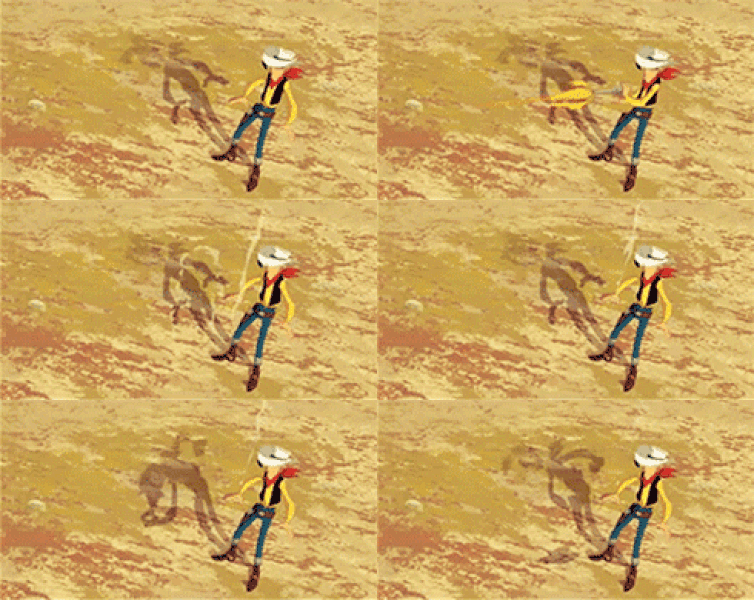
Lucky Luke, l'uomo che spara più veloce della sua ombra.
Il piedidolci è la storia che preferisco di questo personaggio, i disegni di Morris e la penna di Goscinny mi hanno colpita al punto da girare un breve video al riguardo sul mio canale Youtube. [Link al video] La gif è tratta dal cartone animato omonimo.
I have a very battered 1974 paperback edition from Brockhampton press. Originally published in France in 1968, this was the 33rd volume of the series. A very simple story illustrating so many myths and legends of the Wild West, as well as many true events, this is the Lucky Luke formula working at its best. Engaging, hilarious, simply but powerfully drawn, this is a joy to read again and again.
This Story is about a Greenhorn getting used to the wild west. After the Death of a relative, the british Deutagonist inherited a Range in the West. Like many Francé, and Belgian Comics at the Time, there is a lot of Jokes over his Heritage. In this care hes incredible Stoic, and dry. While a bit of a klischee, thats what Lucky Luke lifes for. Hopefully inoffensive Satire based on Stereotypes.
The Book accomplisches masterfull to stick to its main Storyline, different from "the Daltons escape", where the Plot contained many mini Storys who fused into a messy Story. A rivaling Rancher is envious of his Farmland, and tries to scare him of, after failing hes assumed death, and the Greenhorn has to deal whit the Texan Injustice System.
The Story showcases a lot of Tropes, and truths of the West, especially how they treat Newcomers. After someone was attacked whit an Arrow, and shouted in Anger, he will civilize that one wild Guy, the Native switched to a Gun. After seeing this Joke, I did know; This one will be good.
The two Assistances, and there little Friendship is pretty entertaining, there good Supporting Charakter as well.
So yeah, its a realy, realy good Start in the Series, and a good Continuation for your Collection.
Μία ακόμη πολύ ωραία περιπέτεια του Λούκυ Λουκ στην οποία βοηθάει τον ανιψιό και κληρονόμο του αποθανόντος φίλου του Μπάντι, που είναι από την Αγγλία, Βάλντο, να προσαρμοστεί στα ήθη και τα έθιμα της Άγριας Δύσης.
Οι ντόπιοι τον αποκαλούν υποτιμητικά -οπώς κάνουν σε όλους τους νεοφερμένους- τρυφερό πόδι, πράσινο κέρατο και ο ανταγωνιστής του τεύχους Τζάκ Ρέντυ εποφθαλμιά την γη που κληρονόμησε. Ο Λούκυ Λουκ όμως θα τον βοηθήσει, όπως υποσχέθηκε στον Μπάντι, όπως βοήθεια επίσης θα πάρει από τον μπάτλερ του και τον Σαμ τον ινδιάνο. Ο Τζακ Ρέντυ καμώνεται τον νεκρό, ότι τάχα τον σκότωσε ο Βάλντο. Οι ντόπιοι συλλαμβάνουν τον Βάλντο και τον Λούκυ Λουκ, ο τελευταίος όμως δραπετεύει, βρίσκει τον Τζακ Ρέντυ με τη βοήθεια του πιστού του μπάρμαν που δεν ακουμπάει την μπουκάλα με το ποτό του και τον φέρνει πίσω στην πόλη.
Οι κάτοικοι καταλαβαίνουν την κομπίνα του και ο Βάλντο τον προκαλεί σε μονομαχία με παλιά πιστόλια τα οποία ο Τζακ Ρέντυ δεν ξέρει να τα χειρίζεται. Πετυχαίνει μόνο το χέρι του Βάλντο και υπόσχεται να του δώσει όλη την περιουσία του αρκεί να μην τον πυροβολήσει.
Πολύ έξυπνος ο τρόπος με τον οποίο καταλαβαίνει ο Λούκυ Λουκ ότι ο Τζακ Ρέντυ είναι ζωντανός, αφού το ποτό στην μπουκάλα του μειώνεται παρότι ο μπάρμαν δεν αφήνει κανέναν να την ακουμπήσει παρότι υποτίθεται ότι ο φίλος του είναι νεκρός. Ο ίδιος ο μπάρμαν όπως σχεδόν όλοι δεν πίνει αλκοόλ. Στιγμές γέλιου χαρίζουν τόσο ο μπάτλερ του Βάλντο που δεν ανέχεται να πατάνε με λασπωμένες μπότες στα χαλιά και ο Ινδιάνος Σαμ, που δεν αφήνει κανέναν να πλησιάσει στο σπίτι του Μπάντι, εκτός από τον Λούκι Λουκ κα τον Βάλντο.
Kahlaan läpi oman lapsuuteni luetuimpia sarjakuvia ja kirjoja, nostalgiasäväreistä nauttien. Lucky Luke seikkaili useaan otteeseen keittiön pöytämme ääressä aina kun isän kanssa kirjastosta tultiin. Tällä uudelleenlukukerralla huomaan kuitenkin pyöritteleväni päätäni jatkuvasti erinäköisille väkivaltaisuuksille, jota ruuduissa on.
Ehkä aika on kulkenut kohdallani Lucky Luken ohitse ja yksinkertaisesti sarjakuva ei pysty enää viehättämään minua samassa määrin kuin aiemmin. Tai ehkä olen hivenen pöyristynyt, että olen todellisuudessa saanut lukea tämänkaltaisia teoksia useasti lapsuusvuosina.
Kun unohdetaan kaikennäköiset tappelut, mukiloinnit, aseiden esiinvetämiset ja hirttotuomiot - huumori sarjakuvassa on välillä oikein hauskaa.
Ντάξει, υπέρτατο κόμικ με μοναδικό μειονέκτημα το γεγονός ότι ο κακός αυτή τη φορά δε χρησιμοποιεί και πολλά μέσα για να πετύχει τον σκοπό του, μιας και βρίσκει πολύ εύκολα τον δάσκαλό του από το «τρυφερό πόδι». Επίσης, σχεδιαστικά είναι ίδιος με κάποιον κακό σε παλιότερη ιστορία του Λούκυ Λουκ, αλλά δε θυμάμαι με ποιον.
Tenderfoot adalah sebutan yang diberikan oleh para koboi kepada orang baru datang di wilayah Barat, terutama untuk mereka yang tidak cocok menjadi koboi. Komik ini sebetulnya menceritakan tentang perundungan kepada para tenderfoot, namun Morris membungkusnya dengan cerita gaya khas koboi, lengkap dengan duel memakai pistol.
Εξαιρετική ιστορία, από τις καλύτερες του Λούκυ Λουκ, αν και αδικείται από τον τίτλο. Για χρόνια δεν το διάβαζα καθώς ο τίτλος "Το τρυφερό πόδι" δεν μου κινούσε καθόλου το ενδιαφέρον! Φυσικά, η ιστορία εξηγεί τον τίτλο και ο αναγνώστης δικαιώνεται πλήρως διαβάζοντας την πολύ όμορφη αυτή ιστορία που έγραψαν ο Μορίς με τον Γκοσινί.
Κλασσικό Λούκι Λουκ, με ενδιαφέρουσα πλοκή και εξαιρετικό pacing που διαβαζετε ευχάριστα. Ωραίος κακός. Τα πλάνα είναι απλά κινηματογραφικά. Ο λόγος που αφαίρεσα το ένα αστεράκι είναι επειδή τα αστεία δεν ήτανε τόσο επιτυχημένα, ούτε με κάνανε να γελάσω φωναχτά όπως με τα άλλα τεύχη. Γενικώς, δεν θεωρω τις διακωμωδήσεις του Γκοσινί για τους Βρετανούς ιδιαίτερα επιτυχημένες.
Una de las mejores aventuras de Lucky Luke. Real como la vida misma, el recibimiento a los forasteros no ha cambiado mucho...al menos en el salvaxe oeste galego ;)
"onde os homes son homes e as mulleres..tamén son homes" Teatro Chévere
Un albo decisamente divertente, con una storia che è classico topos del west, quello del piedidolci che arriva per ereditare il ranch dal parente defunto. Luke che funge da padrine del giovanotto, ed un finale a suo modo epico e comico allo stesso tempo. Disegni e colori di un'ottima fattura.
En muista olenko lukenut Lucky Lukea. Velipoika muisteli, ettei lapsuudessa näitä luettu, kun Pappa ei niitä arvostanut. Hän oli Tex Willer -miehiä. Ehkä siksi Lucky Luke jäänyt väliin. Suomennokset alkavat tästä albumista 33. Miksi ihmeessä? En ainakaan vielä innostunut tästä. Englantilaiset tulokkaat olivat kyllä varsin hauskoja. Englantilainen jäyhyys on aina hyvä vitsi.
In questo numero Lucky Luke cerca di introdurre agli usi del west un "piedidolci", ovvero uno straniero proveniente dall'antica Inghilterra, che cercherà di adattarsi agli usi "barbarici" dei cowboy.
Uno de los grandes álbumes de Lucky Luke. Reune todos sus ingredientes en las mejores proporciones. Trabajo genial de dibujo y caracterización de Morris y enorme guión de Goscinni.