Jump to ratings and reviews
Rate this book

Socialist Education in Korea

Rate this book
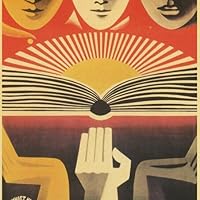
Publishing the selected works of Kim Il-Sung on education is a controversial move in the United States. In fact, there's almost a proportional relationship between the demonization of the DPRK and the level of ignorance one has about the state, the country, its government, its people and society, and its history. This is particularly striking given the recent interest in decolonial and anti-colonial education, in socialist and communist educational methods, and in socialism and communism more generally. Given these recent activist and scholarly interests, Riley Park and Cambria York's new collection, Socialist Education in Korea, is a welcome contribution. Their book not only provides key insights into the socialist educational project in Korea-including its pedagogical philosophies and practices, organizations, purposes, government institutions, and more. It also helps provide a more accurate description of the DPRK's socialist project as articulated by the state's founder and, for almost five decades, central leader.

"Academic and public libraries in the West should expand their collections with revolutionary education. Socialist Education in Korea delves into the history and educational praxis of North Korea in a way that is rarely studied in the US, as this work counters many of the western media narratives against North Korea. As librarians, it is our duty to build collections with a wide range of ideas, and the research in this book presents a challenge to our current institutionalized education systems. Only through the study of a socialist pedagogy, can we really see that the education of the working class is paramount to our collective liberation."

-Stephen Lane, Reference and Outreach Archivist, Indiana University-Purdue University of Indianapolis

"As decolonial and anti-racist educational projects gain global prominence, especially in the epicenters of imperialist power such as the U.S., it is high time critical educators reject the racist, Cold-War anti-communism so viciously aimed at North Korea, and open our minds to the rich pedagogical lessons taught by one of the DPRK's most important historical figures, Kim Il-Sung. Since the U.S.'s so-called Pivot to Asia in 2015, escalating military aggression, and increasing crisis and white supremacist backlash in the U.S., Riley Park and Cambria York's important collection of Kim Il-Sung's writings is a welcome contribution to the field."
-Donna-Marie Cole-Malott, Assistant Professor of Professional and Secondary Education, East Stroudsburg University of Pennsylvania

160 pages, Paperback

Published April 1, 2022

9 people are currently reading
256 people want to read

About the author

Kim Il Sung

230 books2 followers

Ratings & Reviews

What do you think?
Rate this book

Friends & Following

Create a free account to discover what your friends think of this book!

Community Reviews

5 stars
28 (44%)
4 stars
24 (38%)
3 stars
8 (12%)
2 stars
1 (1%)
1 star
2 (3%)
Displaying 1 - 17 of 17 reviews
Profile Image for Dan.
219 reviews170 followers
April 27, 2022
Great short collection of Kim Il-Sung's writings on socialist education, bracketed with some really good essays providing historical context. While I'd love for a new selected works on broader subjects by Kim Il-Sung since the DPRK is so rarely talked about, it's very nice to have them on this important subject. Pairs well with the PSL's recent short book on Revolutionary Education.
Profile Image for Leo46.
120 reviews23 followers
February 23, 2023
This is nothing less than a peculiar read in the best way possible--that of a socialist country unlike any other, utterly subordinated and determined to autarky (which is impressive in their own right of survival) all the while being pummeled by the fetishistic demonization of the Kim family in the most overtly idiotic western propaganda (just see "We Went To North Korea To Get A Haircut"). Their survival is profound, and their particular emphasis on education in their conception of Marxism-Leninism reflects their accomplishments in socialist construction under the treacherous conditions global capitalism has imposed on them, not allowing them access to the most advanced technology, food import, etc.
Derek Ford and Curry Mallot open with some great myth-busting. Then, "Eliminating Dogmatism" introduces the reader to the seminal ideas and essence of Juche that adds the pen to the hammer and sickle--concretely materializing the semi-Gramscian/Althusserian idea of all people being able to be theorists and intellectuals themselves, a clear anti-elitism all socialist society should strive for. Then, the three speeches introduce, explain, and discuss the implementation of Kim's seminal project of socialist education. The introduction reinforces the idea of anti-dogmatism and importantly anti-revisionism that shows that the DPRK is successfully carrying out the continuation of revolution under socialism (as opposed to Stalin's mistake Joma critiques the USSR for), fortification of the dictatorship of the proletariat, and the eliminating of distinction between heavy and light labor (all reminiscent of Mao's ideas). These are the real reasons the DPRK is so demonized; the things vanguardism is criticized for by liberals and western Marxists actually is still standing in the DPRK today and look at how the world treats them...
The thesis itself maps out an entirely different system of reality where education and study are integral parts of everyday life. Study and education aren't subordinated to the purely preparatory utilization it functions as in capitalist society; instead of education only preparing you to best alienate yourself, and gain success in the sense of most efficiently pouring your labor into the mystical totality of capital, education becomes a way of life that is omnipresent in society. It both reminds me of and is the opposite of Che Guevara's desire for society to be a huge school/university; instead of making society a school, the traits of school permeate society. The DPRK is able to do this by constantly putting education at the prime spot of importance; even in years of turmoil after and during war, they substantially increased the quantity of schools and secured 11-year compulsory, FREE education, continuing to implement part-time schools for workers, have students to do work-studies in work environments to materially apply their education, and make all these opportunities accessible and free. This all funnily enough solves the entire issue the western Marxists of Frankfurt School critical theory pose about western, enlightenment thinking's fetishization of logical necessity rather than real necessity (connecting fields of study to their application in reality): Kim simply would respond, "theory for theory's sake and knowledge for knowledge's sake that are detached from revolutionary practice are utterly useless in our society," and the DPRK actually keeps to their word (73).
Other than that, the speeches can at times be a bit repetitive and didactic at worst, which makes the thoughts evoked from reading it the more important than the content itself (as it made me rethink and look into a lot more), and also some language can seem almost to the worshipping of the party and worry of bureaucracy but that's no surprise to critiques of Leninist vanguardism. Additionally, the emphasis on compulsion for education may be weird translation or just too pushy, but it doesn't seem like the people of DPRK dislike it (although I wouldn't be entirely able to tell). I still have much more to learn about the current material conditions and circumstances of the DPRK and the Worker's Party of Korea, but this served as a great introduction. The afterword was also amazing in contextualizing Japanese colonization and the current state of oppressed Koreans in Japan.
Profile Image for Breanna.
35 reviews
July 11, 2024
really liked the intro made me rethink my understanding of korean history as a korean american
Profile Image for Joseph Bierlein.
10 reviews2 followers
April 25, 2022
This book espouses the Theses on Socialist Education as spoken by the historical leader Kim Il-Sung. The forward and afterward explore a bit of historical and contemporary Korean history while attempting to dispel myths regarding the nation and its people.

Kim Il-Sung's speeches refute the notion that juche is detached from Marxism-Leninism. In fact, Il-Sung references Marxism-Leninism several times in the text. His speeches clarify the necessity of developing socialism in a country surrounded by great powers. Specifically, Il-Sung recognizes the need to apply the socialist process to the unique conditions of Korea, while highlighting the relevance of Korean culture, resources, climate, and such in socialist construction. Juche is as much a monolithic ideology as American Exceptionalism, Neoliberal Psychology, or disinterest in general.

The book is generally easy to read because Il-Sung delivered the speech to be transcribed for the Korean people.

I do highly recommend reading this text. Reading the position of the leader and the socialist movement in korea with the provided historical context serves as an excellent antidote to the constant propaganda served to western people.
Profile Image for Abri.
3 reviews
February 8, 2023
Amazing summary of the Juche Idea's principles, especially the ones that aren't talked about the most. That's why I'd recommend reading Kim Il-Sung's quotation books or, at least, read some articles on it before reading this one.

Nonetheless, it's by far the best and most concise explanation of the DPRK's reality, and pretty beginner friendly because of its simplicity (in a good way). It portrays it in a more social/ecofriendly-ish way so young people like me have a better approach and understanding of it all. 10/10.
Profile Image for Zoe.
79 reviews17 followers
July 17, 2022
An important collection that serves to Demystify the ideology of the DPRK and also raises important pedagogical questions for activists in the west. Of particular note are the Theses on Socialist Education, and Derek Ford’s essay on Chongryon schools in Japan
17 reviews1 follower
April 25, 2023
As Ford and Malott note in the foreword, Koreans endured incredible hardship and dehumanization under the imperial Japanese. Writing from occupied land on Turtle Island and actively studying ways to assist Indigenous people and nations here with proliferation and resurgence of their own revolutionary theories and goals, I found many of the ideas in this work useful. Though some of the writing is slightly dated and the minutiae of socialist teaching methods are less examined than I would like, these writings clearly establish the importance of: adherence to scientific principles, instilling revolutionary attitude and ideology, knowing your own history to understand your present and build your future, individual responsibility to the community and the community's responsibility to the individual, lifelong critical education, and the costs of universal education being outweighed by the benefits to the people and society.
Profile Image for Silk.
6 reviews
April 14, 2025
I cannot stress enough how important this read is to anyone claiming they are a socialist, let alone a communist, or even just mildly left-wing. Along the main content written by Eternal President Kim Il-sung, the foreword and afterword written by Derek R. Ford in collaboration with Curry Malott give a clear and necessary insight and historical context regarding the Japanese occupation from then, through annexion of Korea, and now, through the persecution of Koreans in Japan and their self-owned and self-funded schools.
Beware, though, as it is very depressing to read such brilliant takes on socialist education and, de facto, education in general when coming from a western country whose educational system has heen parasitized by capitalist revisionism, liberalism, and pro-colonial rhetorics.
580 reviews
September 8, 2022
An interesting and illuminating read underlining the importance of education in freeing the people from capitalist imperialism and in constructing the socialist state

I particularly enjoyed the thoughts on compulsory education that is not free is never compulsory and that the fundamental distinction between the compulsory education in socialist society and so-called "compulsory education" in capitalist society lies in the fact that education costs are borne by the socialist state that actually provides the people with the right and freedom to study
Profile Image for Connor Leavitt.
75 reviews5 followers
December 13, 2022
Accessible, immediate, and yet full of depth as "living theory." Derek Ford's bookending essays are indispensable as well.

With limited access to Korean material and language, the juche idea is difficult to explicate. Korea is judged as "no longer marxist" even by dedicated leninists due to misapprehension of juche. This work gives the concept full definition, in all of its brilliance.

As Assata Shakur says, "We're taught at such an early age to be against the communists, yet most of us don't have the faintest idea what communism is. Only a fool let's somebody tell them who the enemy is."
Profile Image for Pope.
7 reviews
April 9, 2023
Phenomenal read, gives a thorough insight into the basic framework for nationalized public education in the DPRK, and how it is rooted in a thoroughly dialectical and grassroots manner. Also includes some relevant, and oft not discussed information on the experiences of Koreans living abroad and how they adapt the concepts of mass education formulated in their homeland.
Profile Image for Daisy.
10 reviews
January 17, 2024
Riley Seungyoon Park and Cambria York did such a fantastic job of writing this book. It was a short read with a lot of cited sources and information. If you were curious about North Korea's education system, then I cannot recommend this book enough.
Profile Image for Brannon O'Neal.
Author 2 books4 followers
April 1, 2023
Cool book that gives a glance into the importance and value of education in Korea!
Profile Image for Jared Palencia.
36 reviews
March 13, 2025
Good overview on attempted education goals in DPRK despite obvious economic and global obstacles
Profile Image for holly.
56 reviews
April 12, 2025
Found the Introduction and Afterword particularly enlightening. Enjoyed reading the translated essays by Kim Il-Sung, but they got a little repetitive (understandably), so started to skim through them a bit towards the end. Has made me interested to learn more about the DPRK and the Korean War as it's not a topic I know lots about already.
Profile Image for Daniel Ahmed Ortega.
15 reviews5 followers
October 9, 2022
If it was possible, i would give it a 0. Not only filled with your typical stalinoid jargon and constant repeat of meaningless words, also practically out of no use for contemporary revolutionaries. A relic that should have stayed forgotten.
Profile Image for Nick Girvin.
211 reviews4 followers
May 26, 2023
Hardly essential, but a nice look into Juche and the importance of socialist education in the DPRK, as the title would suggest. It's four collected works of Kim Il-sung, with a great intro for better understanding of the situation in the nation early on.
Displaying 1 - 17 of 17 reviews

Can't find what you're looking for?

Get help and learn more about the design.