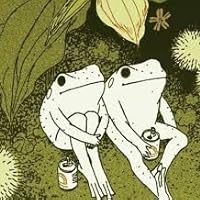
With luminous illustrations, this original folktale about the discovery of a lifeless bird offers a sympathetic exploration of grief, loss, and hope.
One morning, Fox is drawn toward the forest. There, in a clearing, he sees something small and silent, perhaps forgotten. It’s a bird, lying as still as can be. Fox is confused, upset, and angry. Is the bird broken? Why doesn’t it move or sing, no matter what Fox does? His curious antics are spied by a little moth, who shares a comforting thought about the circles in the sky—that the sun, even after it sets, is reflected by the moon and the stars, reminding us of its light. In an author-illustrator debut, Karl James Mountford pairs a text at once lyrical and humorous, meditative and down-to-earth with glorious, multilayered artwork that will take your breath away. Told with sensitivity and an enchanting visual style, this story of the ineffable nature of death and life has the feel of a universal folktale for modern times.
Karl James Mountford is an Illustrator, born in Germany and brought up in the U.K. Karl graduated in 2013 at Swansea Met Uni with a Masters degree in Illustration and Visual communication. Karl works in both traditional and digital mediums . He loves Illustration full heartedly, from picture books, writing stories, screen printing, contemporary design. His style of illustration is 'visually edible', sometimes witty, sometimes odd but always full of gusto.
Often picture books are a way for children to expand their knowledge of the world around them. That knowledge can address exciting events, scary moments and much more. In the Circle in the Sky we follow Fox towards his own discovery about one of the unavoidable aspects of life. This book takes us through Fox's discovery of the concept of death and how to come to terms with it. Mountford use of characters and illustrations helps to guide the reader through this process and ends on the hopeful note that no one is every truly alone to deal with life's hardships. Just as the Sun has the Moon so do we have our friends. – Whitney W.
Fox sees something lying still, completely still, in a forest clearing. It is a bird. The bird does not move. The bird does not make any sounds. Fox does not understand.
It is Moth who helps explain to Fox what has happened. The bird is dead.
Very few picture books take on such complex subjects as death, and very few picture books attempt to help children understand death; The Circles in the Sky does this, and does this beautifully.
Not very often you run across a children's book that actually uses the word "dead", so I find that impressive that this one not only does, but also does so in a sensitive way - as well as exploring sadness and anger involved with death.
The artwork alone deserves massive praise, it drew my kids in and never let them go.
"Sad things are hard to hear. They are pretty hard to say, too. They should be told in little pieces."
This book is breathtakingly beautiful, both in its gorgeous illustrations and in the gentle guidance it offers. It introduces and explores concepts of death and grief in a sensitive and accessible way. Though the subject is sad, the story ends on a hopeful note.
EARC provided by Edelweiss Plus This is a moving story about loss and grief that is simply told for even young readers and listeners. I love the lines “Well, sometimes there’s a different kind of here. Bird’s not here anymore in the way you and I are.” rather than simply equating death with being “gone”. It also has a lovely part about feeling sadness. This is a great choice for school and classroom libraries.
This is a beautiful, touching, magnificent book. I highly, HIGHLY recommend it for anyone, of any age, especially for those dealing with their own grief or who want to help someone else with theirs.
This book is gorgeous. I’ve been a huge fan of Karl James Mountford’s illustrations for some time, and I was so excited to see he wrote his own picture book! The illustrations are stunning and the story is equally beautiful, introducing readers to the topic of death in a way that is gentle and hopeful while still honoring experience of grief.
Just a random pick from the children's section given to the stylistic cover and the fox that was included.
Has a brief introduction that explains that to heal the earth all of creation was suppose to sing to it at dawn and dusk. Yet as is common practice at least between humans many fell away from the practice except for the birds. And that is how our story actually starts since the fox who is the main character notices that the birds aren't singing their normal morning song.
The Circles In the Sky is a book that explores what death is, how to simply explain it even when it is so hard to do so and gives the reader a chance to ponder the ways we respond to it. As such it is a rather deep book and one that would make for a great read, especially if a family should have lost someone and/or are are looking to lose member due to extended terminal conditions.
What I loved about the book was the artwork for it is stylistic yet simple although the faces were a bit weird. The colors were in the middle this giving the book a neutral ground while it was the details such as the various bones under the ground where the still bird was lying that gave away its condition to the observant reader.
All in all it was a really good book that I would recommend for starting talks about death and thus a wonderful recommendation to any libraries that may be set-up for any deeper subjects for children.
Such a beautiful book. When Fox comes across Bird, who does not respond to anything and seems "broken," he has trouble understanding until Moth helps explain death in a way that is empathetic and simple and complicated all at the same time. No matter what you believe about death, this book offers a truism: what we can do for the dead is to remember them, and to be there for each other. The art further gives the story the feeling of a folktale, with a limited color palette layered like a screenprint. The world is a mix of organic and geometric shapes, and the characters are portrayed in black and gray.
A beautifully illustrated story about loss, grief and hope. It’s not long, but it creates a little moment of reflection about death and all the feelings surrounding it.
Children's book that deals with death in a beautiful way. Though whether intentional or not it leaves out what happened to the bird which makes sense but also leaves a "gap" because my toddler desperately wants an explanation of why the bird died.
I bought this (on release date a couple years ago, and just getting to it now) because I've followed the artist for a while. I've had a wolf-patterned cushion from Society6 on my living room chair for nearly a decade.
So the art is obviously quite pleasing for me. I like the papercraft look of it and the muted color scheme, with all the little "hidden" bits that kids would love to pick out, like the rabbits hugging in their burrow. Not mentioned in the text, but visible to someone looking carefully, beyond the words. That's the type of kids' book I always liked when I was a kid.
I have no idea how this would actually come across to its intended age group - 3 to 7 - but it's a very gentle introduction to the idea of death. It doesn't entirely make sense that Fox would be so upset about a random Bird in the woods (the reality is that he'd probably try to eat it), but his conversation with Moth is lovely.
Even for an adult, it somehow creates a peaceful, healing space to think about the dark parts of the world as not entirely bad. Not just death: all the things you see on a daily basis that seem terrible, like an abandoned house or a chopped-down forest.
I rebelled against the latter, at first, curling my lip angrily at the idea of "space for new things to grow" when a forest was razed to the ground, probably for corporate profit. But then...that's the point. It's not that it was good to lose the trees. But that doesn't mean that space has to be bad forever. New things can, and will, bloom.
Surprisingly thoughtful for its limited story and space. I hope it has ended up working well for the kids it was written for.
When Fox returns to his den after a long night of hunting, he cannot get to sleep due to the chatter of the birds in the trees. It wasn't happy or sad...just different. Fox followed the birds as they flew off, hoping to learn what they were chattering about. When Fox arrived at the birds' destination he didn't at first understand what the birds were looking at. When the birds flew away, Fox was finally able to see what was so interesting. On the ground was a bird that looked exactly like the others, but it wasn't moving. Fox tried surprising the bird, tempting it with a worm and he even tried singing. Nothing worked; the bird would not wake up. Moth had been sitting in a tree, watching Fox. Finally Moth flew over to Fox and tried gently explaining what had happened. Fox becomes frustrated as he doesn't understand what Moth is trying to say. Eventually Moth is able to help Fox learn about death and what grief looks and feels like.
3.5 stars Gentle story about death, grief and that life continues. There is also acknowledgement that not everyone believes the same thing about death. A fox grieves for a bird she doesn't even know, making this book possibly a good choice for sharing with children who are sad about the death of someone they don't know and don't understand why.
Beautifully presented--poetic and artistic. This may be best if used as a read aloud with a personal discussion or even for an adult to read and then talk about death and dying with children. I just don't think that all by itself, the book will appeal to kids.
This is a book about the death of a Crites intended for 3-7 year olds. I wanted to like this more than I did. It seemed like the story needed more depth. Illustrations were not my cup of tea.
When Fox hears a strange song from the birds, he ventures outside to see what's changed. He travels a long way until he stumbles upon a group of birds that fly away at the sight of him. When they clear out, Fox notices one bird on the ground, so still and all alone. Fox tries to stir him with scares and food but nothing seems to work. A moth who's watching nearby approaches Fox to try to explain what's happened. At first, Fox doesn't understand. How can Bird be here, but not? So Moth tries a different approach and Fox finally understands. Bird is dead and it invokes an odd sensation from Fox. Moth realizes that he's sad and helps him work through it, even staying with him on his journey home.
THE CIRCLES IN THE SKY is a children's book that introduces the idea of grief and loss. Moth explains that something so sad can't just be spoken. It has to be explained in pieces so it isn't too jarring. Moth is understanding and patient, even as Fox grows angry and frustrated. The illustrations are breath-taking with its unique art style and attention to detail. This story will spring tears to the readers' eyes, but it's a great way to teach children about loss and the circle of life. With animals as the main characters, it gives the sad blow a softer feel.
Final Verdict: Overall, THE CIRCLES IN THE SKY is a stunning story that will touch the hearts of both the children and their parents who are reading it to them. It's a great tool for those who have recently lost someone but don't quite understand. Death isn't an easy topic to speak about, but it's a necessary one because it's a part of life. This story is the perfect way to open that door.
Fox discovers a small bird lying still in a forest clearing. He wonders why it doesn't sing or move. A moth sees his confusion and comforts him with the idea that the moon and stars reflect the sun's light even after it sets.
The Circles in the Sky explores the difficult emotions of grief, the continuity of life, the natural cycle of life, remembering those we have lost, and the power of hope and healing.
Discussion Questions How does The Circles in the Sky illustrate grief and loss through the journey of Fox? What symbols does the author use to convey these themes? How do the illustrations enhance the storytelling, especially when exploring complex emotions like sorrow and hope? The story uses nature and the cycle of life as its setting. How does this help you understand the story's message about loss and renewal? Have you ever had an experience that changed your perspective on the world? If so, how did it change your perspective? The book balances remembering those we've lost and moving forward. How does it achieve this, and what can we learn from it? Why do you think the author chose to tell this story through the perspective of animals? What do you think the title, The Circles in the Sky, represents? How does it connect to the story's exploration of grief and hope?
This is not one of your normal picture books that bounce along from page to page. This isn't a picture book for just any child. The words in this book make you pause, look at the pictures, and think about them, before turning the page. Sometimes, in life or in this book, you just have to stop and sit still for a while. It's even better if you can stop and sit and ponder with someone else. The story starts with the noise of a flock of birds in a certain morning, that lead fox through scenes of loss and change (an abandoned cabin, a field of chopped down trees) to find a bird on the ground. Why won't bird move? Why won't the bird eat or sing? Moth observes, then tries to explain death metaphorically. It's OK to be sad. The art is angular and geometric, with a limited palette of pale olive green and peach, while the animals are black. I liked how even when it is really sad, the pictures show love: two rabbits cuddling, or even two human skeletons cuddling amongst other fossil skeletons. This should be read one on one with an adult, so they can sit with it and talk about whatever death they happen to be facing. This obviously won't appeal to many children, but for the right child at the right time, this will be just right.
I love the artwork in this book. I found this on a Mock Caldecott 2023 list. After seeing other books from last year, I don't think this should have been an honor book, but it's in the top ten for the year for sure.
The author uses all the shapes. Most pages there is a 'V' at the bottom of the page made to look like a valley with Sun or moon behind. The landscapes and the patterns that make up everything are so colorful and beautiful. Our main characters are all black, and white or gray.
The book is quite powerful. Fox finds a dead bird and it hits him so hard this death. He doesn't understand it. Luckily a moth has been watching him and he helps to understand what this death is and this feeling of sadness. It's so well handled, this subject of death.
My nephew wouldn't read a children's book anymore, but this story would be good for him. He has said that he is constantly thinking about death and people dying. He worries about it.
Anyway, this story was powerful and well done. I loved it. I love stories about foxes and this fox was very unfox-like. We don't think of foxes as being innocent. The artwork was amazing and the story was so gentle and reverent. I really enjoyed this story.
Anthropomorphism is a wonderful story technique used on countless books such as Watership Down. Here though, the story's anthromorphism choices clash with its themes. A fox is confused over a dead bird. A bird that's now carrion and a fox would normally eat? A fox that in this story has just finished hunting, yet never before pondered carrion or the prey it kills? Now it worries about a dead bird other birds (presumably crows) were mourning? (An inciting incident that arguably occurs rather late in this story).
So, the fantasy "rules" here clash--having a baby bunny protoganist (or other herbivore) would've been believeable and far more interesting? The art is well done though, and the story might help some children struggling with how to process loss. But for children who have any understanding of "the circle of life" in the wild, their suspension of disbelief will be jarred repeatedly.
Beautifully illustrated with a palette of muted reds and greens, this lovely children's book gently explains death. Fox awakens in the woods wondering about the sad bird song he hears. Out of curiosity, he follows the song and startles a flock of birds. After they leave, Fox spots a lone bird on the ground, but he can't understand why Bird isn't acting like a normal bird. Moth has been watching Fox and tries to explain that Bird isn't here anymore. When Fox doesn't understand, Moth offers him a wonderful analogy: even though the Sun and Moon can never see each other, they will always remember one another. Fox begins to understand that Bird is dead, making him sad, but then he starts to realize there is something he can do for Bird. Remember him. Fox and Moth place Bird in the wildflowers, then head home together to a dawn filled with a new bird song. Highly recommended!
Fox finds a bird in the woods. But the bird is very still - it doesn't move or eat. Fox is confused so Moth tries to help. Moth talks about the circle in the sky at day - the sun - and the circle in the sky at night - the moon. They go away but we remember them. Fox is still confused. Moth explains that, "Sad things are hard to hear. They are pretty hard to say, too. They should be told in little pieces." And then gently lets Fox know that Bird is dead. Fox weeps for Bird. Death and letting go are hard things to come to terms with - but having a friend helps. Fox admits that Moth's explanations and company have indeed helped. I liked that Moth admitted that their interpretation of death might not be the same as Owl or Rabbit - everyone approaches death in their own way. A lovely book that can be used for the death of an animal or a person.