This scarce antiquarian book is a facsimile reprint of the original. Due to its age, it may contain imperfections such as marks, notations, marginalia and flawed pages. Because we believe this work is culturally important, we have made it available as part of our commitment for protecting, preserving, and promoting the world's literature in affordable, high quality, modern editions that are true to the original work.
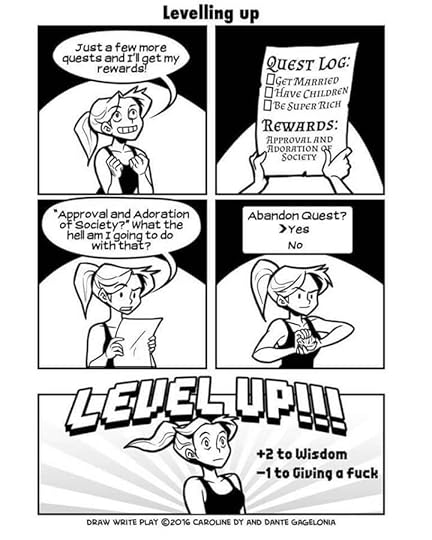
"Our ideas may be higher than society's, but society rewards and punishes its members according to its own ideas, not ours."
The winner of first Pulitzer prize was this controversial comedy which questions the institution of marriage and divorce on the logical, practical, moral and religious ground.
The story revolves around an early 20th-century rich family and their interaction with each other about marriage. One of the major plots revolves around Helen and Ernest, who works in the field of science and doesn't believe in marriage even though they love each other. The other members of the family are horrified by such "atrocious notions" and try to either avoid their union or join them by means of marriage.
This drama is basically a debate where society and marriage are on trial. The tone is cynical in nature, giving no quarters to the philosophy of marriage. Every single relationship portrayed in the story are twisted in nature; There is one relationship in which the couples stay together just because they were used to that and in another, the husband says to the wife that she belongs to him. Not in a romantic, Taylor swift-y way, but as in she is his property.
Well, 99 years have passed since this play and, with relief, I can say that things have indeed changed for the best. I understand the divorce rates are up globally, but unlike the situation in the play, the majority of couples marry according to their own wish and not to satisfy the society... well, majority might be a strong word when it comes to India, where surprise parties called arranged marriages are still at large.
Nevertheless, Why marry 2017 looks something like this for our generation.
You marry: if you want to marry, when you want to marry and who you want to marry!
This play was considered as a comedy (oh, the irony), but it's not very humorous for most of the parts. The absurdly satirical ending might be the reason they consider this as a comedy. This is a well written period piece which portrays the ugly side of matrimony and its relation to society: A topic which is still, sadly, relevant in some parts of the world.
Having recently read and distained the most recent Pulitzer Prize winning plays, I decided to take a look back at some of the earliest winners. This play's claim to fame, such as it is, is that it was the very first to be awarded the Prize back in 1919 (although the play had premiered in NY two years earlier).
Very obviously modeled after G.B. Shaw's debate plays, it concerns a solid middle-class family with two marriage aged daughters. The older, Helen, is a 'New Woman', working outside the home as an apprentice to humanitarian doctor/researcher Ernest Hamilton, who she is deeply in love with - but refuses to marry on the principle that the institution is outmoded and actually detrimental to true love.
Meanwhile, her younger sister, Jean, is attempting to ensnare Rex Baker, the scion of a wealthy family, who was initially besotted with Helen, but is willing to become engaged to Jean. The sisters' overbearing older brother, John, is appalled at the first situation, while doing everything in his power to bring about the second union. Uncles Theodore (a clergyman) and Everett (a judge, undergoing his own divorce) and John's dithering wife Lucy complete the characters.
Everyone pontificates at length with their views on the pros and cons of wedded bliss, and if there is a BIT too much back and forth with Helen and Ernest's on again, off again engagement, the play is never less than entertaining and interesting .... and much of the discussion still bears relevance today.
Summary: Couples in a family are each having separate issues surrounding the subject of marriage. Main plot: Ernest and Helen: two scientists who agree that they love each other; and also agree that they do not want to marry. Sub-plots: Rex and Jean: probably don’t really love each other but have decided that it is time to marry. John and Lucy: Established married couple of the family. All of the action of the play takes place at their home. Amidst all the marriage craziness, Lucy eventually announces that she wants a divorce because she’s never really loved John in the first place. John dismisses this as female hysteria. Uncle Everett and unseen wife Julia: Everett provides comic relief throughout the play. He and his own wife are “secretly” attempting a trial separation, but she keeps sending cute telegrams from Reno, eventually revealing that they both miss each other and she’s on her way home.
Thoughts: This play was originally published under the title And So They Were Married, but perhaps in an attempt to not give away the ending…it was changed and The Pulitzer committee recognizes it under the title Why Marry? I have to say that I wasn’t particularly thrilled when I received this play through ILL and noticed that the first recipient of the Pulitzer is 242 pages long; but I was actually delightfully surprised. The text is shockingly progressive, especially for 1918. Helen is a brilliant, working scientist whose family believes that it is time for her to get married. She and Ernest profess their love to each other and both agree that, “those who love each other truly don’t need anything to bring them together. The difficulty is to keep apart” (148). Clearly, Helen’s family thinks that this idea is ludicrous. The play contains major commentary surrounding not only the subject of family and marriage; but also the role of both the church and state in marriage and civil unions and gender bias in academia. Though these are all weighty subjects, the comedic elements of the play are both intelligent and whimsical. Additionally, many of William’s lines are pointedly succinct—clearly using word economy to his advantage to create snippets of dialogue that can be quoted and remembered. I think a fascinating paper would be a queer reading of this play, especially because many of Helen and Ernest’s thoughts about marriage are reminiscent of rhetoric currently being used on both sides of the gay marriage/civil union argument.
This entire review has been hidden because of spoilers.
Winner of the inaugural Pulitzer Prize in Drama, Why Marry? has a lot going on. One of the things I like about reading plays is they tend to be fairly quick and straightforward reads (excluding Elizabethan and other older drama). Why Marry? is an exception: dense, with a lot to unpack, it feels more like a novel set to script form.
I should mention I read an expanded edition of the play: scenes that were cut or shortened during the play’s original run were restored for this edition. Plus it includes an introduction by the author that is not to be missed. Also, three cheers for online databases of old literature as trying to find a paper copy of this play is a joke.
Why Marry? is, as the title suggests, a play about marriage. It centers on three grown siblings: John, who has married an obedient wife and works in business; Jean, the younger sister, who has been raised to be nothing but the perfect society wife; and Helen, the older sister, who turned down a proposal for marriage and works as an assistant in a laboratory. The play opens with Jean announcing her engagement to a rich playboy (the man spurned by Helen years earlier) and Helen returning from Europe, where she was sent after a scandal involving her working late in a lab with a male co-worker.
Why Marry? feels awkwardly outdated in places, but it’s surprisingly radical for a mainstream theatrical production of the 1910s. While some of the conflicts within the play (e.g., a married woman not working) are no longer at issue and some of the romantic scenes have all of the charm of a jackhammer (I hope they are more charming onstage, as reading the dialogue makes them seem simultaneously twee and leaden), I very much enjoyed the play and the conflicts between the characters. The main issue – what is the point of marriage – remains relevant today, and I was disappointed to be able to find only one recent production of the play. I would love to see this play on stage.
While the dialogue is occasionally heavy handed, most of it is light on its feet and witty, nicely balancing the serious nature of the subject matter with the somewhat ridiculous plot. And the plot is ridiculous, but in a way that manages to buttress the central themes.
Overall, Why Marry? is a fascinating examination of marriage and its place in society. The conflict, while perhaps more slapstick than I expected, keeps the play on even footing. It’s a pity it has fallen by the wayside. Recommended
"Why Marry?" was the first play by Jesse Lynch Williams and it was difficult to live up to since it won the first Pulitzer Prize for Drama in 1918. Originally titled "And So They Were Married" it is a smart and humorous look at society's view of marriage and love and how the two aren't always the same or even appear to be related. While this theme could still be used today, the play probably wouldn't do very well with a modern audience since it is clearly a product of the early 20th century. Nevertheless, for those who enjoy classic plays, this one is certainly well done.
The subjects of the play's title are Helen and Ernest. Helen is a woman with a career as Ernest's lab assistant, and the two have fallen in love Helen has become convinced that the worst thing they can do is get married; after all scientists are not paid well and she does not want to disrupt his career or hers. Ernest is more inclined to get married, but Helen is able to sway him with her arguments. She is not able to so easily sway her brother John, who does believe in marriage but not divorce. John is married to Lucy, who is trying to be a good wife, but who recognizes problems in her own marriage. Then next couple involves Jean, Helen's younger sister, and Rex, a man from a noted family who is in love with Helen but is pushed into marrying Jean as John is trying to arrange a match.
One half of another couple, Uncle Everett who is a judge, provides some sanity even as his own marriage seems headed towards divorce due to each other accommodating the other, even to the point of doing things they hate, such as eating Tutti-Frutti ice cream. The last major character is Cousin Theodore, who is a clergyman and who tries to guide Helen and Ernest to marriage.
It is interesting that the play shares the themes of love and marriage (and even one of the main character's first name) with two other Pulitzer winners from the same year: Sara Teasdale's "Love Songs" (technically not a Pulitzer winner, but close enough), and Ernest Poole's "His Family". Teasdale's poetry deals with the passion of the subject of Love, and Poole's "His Family" deals with the subject (among many others) in a much more serious way, but all three serve their purpose well. This play's humour and wry societal commentary help make it accessible to people still today, even if the unheard of idea of a man and woman living together outside of marriage no longer would shock anyone.
A fairly cruddy Pulitzer prize winning play. Some of the characters are dreadfully overbearing and unfortunately the discussion of the benefits and social utility of marriage and family life no longer hold the same relevance today in the world of de facto relationships. The two main characters scandalise their friends and relatives by deciding not to marry but to live together, until they are tricked into marriage by a suave old judge.
I don't make a habit of reading plays and would not have done so.on this case but, as I have committed to read all #pulitzerprize winning works, this also includes the #pulitzerprizefordrama , as was the case for this play #whymerry by #jesselynchwilliams which won the drama prize in 1918.
Now, I commend the #playwright for his intention in creating a story about a modern woman, in this case, a young scientist with a domineering brother who controls the sizeable family estate. With three sisters in his charge, his goal is to get all three married off to men of means so they can continue to live the life of privilege they have always enjoyed. But his scientist sister, who works for and is enamored with another gifted scientist has no intention of yielding to her older brothers demand that she submit to the conventional wifely role.
The three act play, with a running time of about 2 1/2 hours, is mildly humorous as the family schemes to convince the sister and her equally modern scientist boss and paramour, of their societal requirement to marry despite their serious intention to eschew convention.
I would have given a better review if this play had been about a half hour shorter. The family scheming was overwrought and the ending prompted a pronounced eyeroll. But I can imagine that Williams had to workshop a lot of finales to finally achieve the one that his producers would authorize.
And it was a Broadway success, performed at the Astor Theatre for 120 engagements from December 25, 1917 to April 1, 1718 to critical review with comparisons to George Bernard Shaw. No major theaters have attempted a revival as the language and premise is rather archaic. But the story is quintessentially American and, for the time, rather bold in the suffragette era.
An old play yet we are still dealing the same prejudice and notions which are being discussed in it. The content is all about Marriage its foundation, when a woman is questioning about the morale of marriage the so called society gives those arguments in support which increases her doubts on marriage and the holy union. Holy union of two minds they say, it is sacred in the eyes of God they say, but when we think about marriage is for the validation from society it has nothing to do with god when two people are fit in their love in constraints of marriage..
Few thought provoking quotes I would share:- 1.Domestic Duty is the most Prestige career a woman can have in the world 2.No love without marriage No marriage without money 3.I would prefer domestic unhappiness in my own life than looking at the domestic unhappiness of another household.
This Pulitzer Prize winning drama does present a few gems. Do sample these: Our ideas might be higher than society's. But society rewards and punishes its members according to its ideas and ours.
Then the practical objective of marriage is not to bring together those who love each other but to keep together those who don't.
Dare lay hands on the existing order and you will find you have laid hands on a hornet's nest
That being said, a rant about the inadequacy of the text's argument against the human institution that it claims to question to follow. Also, dear god, are the characters hard to care for!
I mean, genuinely hilarious when you consider this was published in 1917. Way, way more readable than I expected, and bravo to Williams for his sharp criticisms of marriage, many of which would stand today. Legit this play includes a man begging anyone in a large to make a good case for marriage, and no one can. Fascinating.
Then again, the play ends with a cessation to the trickery of marriage, and the author has the overwhelming tone of not a feminist, but instead a man who has happened upon feminist ideas as a coincidence when his real goal was pointing out all the ways he is smarter than the average “normie”
Play #2 in my quest to read all of the Pulitzer winners for drama
Ok this play is a mammoth. In the introduction, the author said that he added dialogue for clarity while not seeing the staging and acting. And it sure felt bloated tbh. It was the inaugural Pulitzer winner (1918!), and we will see if that is consistent among early winners to do. That being said, there was a lot of text (and basically repeated text).
I totally get it winning the Pulitzer, it’s somehow both cutting edge and squarely inside of the norm at the same time?
I disliked the ending quite a bit.
Lots to appreciate about this piece objectively. That being said I didn’t really “enjoy” it. But I did enjoy it intellectually, you dig?
This actually won the very first Pulitzer award for the drama category back in the early 1900's. I've been reading through the Pulitzer award winning works for awhile now and have found it quite interesting. The most widely impactful works *usually* win the prizes in their respective categories and one can use them to feel the pulse on a particular issue at that particular time in history. This one shows the evolving views on marriage, fidelity, and commitment that were used as satire back then, but are commonplace now.
This is a fun light-hearted romance and winner of the first Pultzer Prize for Drama in 1918. I had great fun reading it and wondered how it would be received by today's theater-goers. It is available for free for Kindle. While it is available for epub from gutenberg.org, something went wrong and it's display cuts off the words on the right margin. Changing the margins does not affect its display and it remains unreadable in epub format.
This small play won the first Pulitzer Prize for drama and it is very well written. It’s a comedy and a look at the constitution of marriage. It was good, but the character of John drove me completely insane so I didn’t care for it too much. But, still a very interesting look at the reasons for marriage and against it.
My 2020 reading resolution is to delve into older works. Why Marry won the Pulitzer Prize for drama in 1918. It has aged well and, perhaps with some editing or contemporising would be an interesting production for our times - some things change but much hasn't in the marriage game.
The first play to win the Pulitzer Prize for Drama in 1918, Why Marry? takes a look at marriage and divorce. It's interesting to look at with today's lens but besides that, never ever needs to be performed today due to being a complete bore.
Progressive, funny and brilliantly written, Why Marry is a play that stands true and is relevant even today. I enjoyed how the thoughts on marriage are portrayed and how the characters unravel through the scenes.
It was a nice and short audiobook, a good way of practicing English. I used it to train my hearing before a proficiency test, and I recommend it. The only thing is that a play as an audiobook can be quite weird to listen to.
This was the first play to win the Pulitzer Prize in the category for drama in 1918. It has some interesting commentary on the institutions of marriage, the church, the rich, and gender roles that would be deemed topical even today. That they were arguing some of these issues a hundred years ago is refreshing.
It was funny, but the pacing and length seemed a bit off. It needs to be tightened and adapted a bit to play on the modern stage, I think.