

What do you think?

Love and Obstacles
A new book of linked stories by the author of the National Book Award finalist The Lazarus Project .
Aleksandar Hemon earned his reputation- and his MacArthur "genius grant"-for his short stories, and he returns to the form with a powerful collection of linked stories that stands with The Lazarus Project as the best work of his celebrated career. A few of the stories have never been published before; the others have appeared in The New Yorker , and several of those have also been included in The Best American Short Stories . All are infused with the dazzling, astonishingly creative prose and the remarkable, haunting autobiographical elements that have distinguished Hemon as one of the most original and illustrious voices of our time.
What links the stories in Love and Obstacles is the narrator, a young man who-like Hemon himself-was raised in Yugoslavia and immigrated to the United States. The stories of Love and Obstacles are about that coming of age and the complications-the obstacles-of growing up in a Communist but cosmopolitan country, and the disintegration of that country and the consequent uprooting and move to America in young adulthood. But because it's Aleksandar Hemon, the stories extend far beyond the immigrant experience; each one is punctuated with unexpected humor and spins out in fabulist, exhilarating directions, ultimately building to an insightful, often heartbreaking conclusion. Woven together, these stories comprise a book that is, genuinely, as cohesive and powerful as any fiction- achingly human, charming, and inviting.
Aleksandar Hemon earned his reputation- and his MacArthur "genius grant"-for his short stories, and he returns to the form with a powerful collection of linked stories that stands with The Lazarus Project as the best work of his celebrated career. A few of the stories have never been published before; the others have appeared in The New Yorker , and several of those have also been included in The Best American Short Stories . All are infused with the dazzling, astonishingly creative prose and the remarkable, haunting autobiographical elements that have distinguished Hemon as one of the most original and illustrious voices of our time.
What links the stories in Love and Obstacles is the narrator, a young man who-like Hemon himself-was raised in Yugoslavia and immigrated to the United States. The stories of Love and Obstacles are about that coming of age and the complications-the obstacles-of growing up in a Communist but cosmopolitan country, and the disintegration of that country and the consequent uprooting and move to America in young adulthood. But because it's Aleksandar Hemon, the stories extend far beyond the immigrant experience; each one is punctuated with unexpected humor and spins out in fabulist, exhilarating directions, ultimately building to an insightful, often heartbreaking conclusion. Woven together, these stories comprise a book that is, genuinely, as cohesive and powerful as any fiction- achingly human, charming, and inviting.
209 pages, Hardcover
First published January 1, 2008
About the author
Aleksandar Hemon
73 books911 followersAleksandar Hemon is a Bosnian American writer known for his short stories and novels that explore issues of exile, identity, and home through characters drawn from Hemon’s own experience as an immigrant.
Hemon was raised in Sarajevo, where his father was an engineer and his mother was an accountant. After graduating from the University of Sarajevo with a degree in literature in 1990, he worked as a journalist with the Sarajevan youth press. In 1992 he participated in a journalist exchange program that took him to Chicago. Hemon intended to stay in the United States only briefly, for the duration of the program, but, when war broke out in his home country, he applied for and was granted status as a political refugee in the United States.
In Chicago Hemon worked a series of jobs, including as a bike messenger and a door-to-door canvasser, while improving his knowledge of English and pursuing a graduate degree at Northwestern University. Three years after arriving in the United States, he wrote his first short story in English, “The Sorge Spy Ring.” Together with several other short stories and the novella “Blind Jozef Pronek & Dead Souls,” it was published in the collection The Question of Bruno in 2000, the same year Hemon became an American citizen. Like much of Hemon’s published work, these stories were largely informed by Hemon’s own immigrant experience in Chicago. Hemon brought back Jozef Pronek, the protagonist from his earlier novella, with Nowhere Man: The Pronek Fantasies (2002), the story of a young man growing up in Sarajevo who later attempts to navigate a new life in Chicago while working minimum-wage jobs. The book, like the rest of Hemon’s work, was notable for the author’s inventive use of the English language. He was awarded a MacArthur Foundation “genius grant” in 2004.
The Lazarus Project (2008) intertwined two stories of eastern European immigrants to Chicago. Vladimir Brik, a Bosnian immigrant writer and the novel’s narrator, becomes obsessed with a murder case from nearly a century earlier in which Lazarus Averbuch, a young Russian Jew, was shot and killed by Chicago’s police chief. Hemon received much critical acclaim for the novel, which was a finalist for a National Book Award. He followed this with Love and Obstacles (2009), a collection of short stories narrated by a young man who leaves Sarajevo for the United States when war breaks out in his home country. The Making of Zombie Wars (2015) chronicles the quotidian difficulties of a workaday writer attempting to finish a screenplay about a zombie invasion.
Hemon also cowrote the screenplay for The Matrix Resurrections (2021), the fourth installment in the popular sci-fi Matrix series. His other works included the memoirs The Book of My Lives (2013) and My Parents: An Introduction/This Does Not Belong to You (2019). The latter book consists of two volumes.
Hemon was raised in Sarajevo, where his father was an engineer and his mother was an accountant. After graduating from the University of Sarajevo with a degree in literature in 1990, he worked as a journalist with the Sarajevan youth press. In 1992 he participated in a journalist exchange program that took him to Chicago. Hemon intended to stay in the United States only briefly, for the duration of the program, but, when war broke out in his home country, he applied for and was granted status as a political refugee in the United States.
In Chicago Hemon worked a series of jobs, including as a bike messenger and a door-to-door canvasser, while improving his knowledge of English and pursuing a graduate degree at Northwestern University. Three years after arriving in the United States, he wrote his first short story in English, “The Sorge Spy Ring.” Together with several other short stories and the novella “Blind Jozef Pronek & Dead Souls,” it was published in the collection The Question of Bruno in 2000, the same year Hemon became an American citizen. Like much of Hemon’s published work, these stories were largely informed by Hemon’s own immigrant experience in Chicago. Hemon brought back Jozef Pronek, the protagonist from his earlier novella, with Nowhere Man: The Pronek Fantasies (2002), the story of a young man growing up in Sarajevo who later attempts to navigate a new life in Chicago while working minimum-wage jobs. The book, like the rest of Hemon’s work, was notable for the author’s inventive use of the English language. He was awarded a MacArthur Foundation “genius grant” in 2004.
The Lazarus Project (2008) intertwined two stories of eastern European immigrants to Chicago. Vladimir Brik, a Bosnian immigrant writer and the novel’s narrator, becomes obsessed with a murder case from nearly a century earlier in which Lazarus Averbuch, a young Russian Jew, was shot and killed by Chicago’s police chief. Hemon received much critical acclaim for the novel, which was a finalist for a National Book Award. He followed this with Love and Obstacles (2009), a collection of short stories narrated by a young man who leaves Sarajevo for the United States when war breaks out in his home country. The Making of Zombie Wars (2015) chronicles the quotidian difficulties of a workaday writer attempting to finish a screenplay about a zombie invasion.
Hemon also cowrote the screenplay for The Matrix Resurrections (2021), the fourth installment in the popular sci-fi Matrix series. His other works included the memoirs The Book of My Lives (2013) and My Parents: An Introduction/This Does Not Belong to You (2019). The latter book consists of two volumes.
Ratings & Reviews
Friends & Following
Create a free account to discover what your friends think of this book!
Community Reviews
Displaying 1 - 30 of 176 reviews
August 26, 2009
New Yorker: How much of your work is autobiographical Mr. Hemon?
AH: “Here’s how it works: Last night, on my way to give a reading, I hurt a ligament in my right hand while putting my shoe on. As I was driving this morning and talking on the phone with my sister in London, I lost my grip and sideswept my neighbor’s car. Being honest, I went to their house to tell them what I had done. When I rang the bell nobody answered. I knocked and went in anyway, thinking they might be in the backyard. The house was empty, and as I walked through I noticed a vase in the shape of a monkey head. The light angle made it somehow seem that the monkey was winking at me, so I picked the head up to examine it, but then, dropped it, what with the weak hand ligament, and it shattered in a thousand pieces. For a moment, I considered cleaning up or waiting for my neighbors to show up, but then decided to sneak out. Now I dread hearing the door bell.
I could go on and turn this into a story. I did hurt my hand last night and I did get into the car this morning, but I did not cause any damage, nor did I trespass. I did not talk to my sister yesterday, but she does live in London. And I’ve never seen a monkey head like that. So, how much of this putative story is autobiographical?”
I love this quote. It is the definitive answer to that hackneyed but irresistible question, forever, for all writers everywhere. Aleksandar Hemon is my freaking hero and while it's probably stupid to spout absolutes I've still got to spout that AH is the most talented young English-language writer in the world today.
Love and Obstacles isn't a perfect short story collection (name one that is, and whoever says fucking Dubliners gets to run extra laps after school) but it is a return to form after the somewhat overbaked The Lazarus Project. Love and Obstacles is a refracted, lighter, and more worldly companion to his masterpiece Nowhere Man. Each story can be read on its own and each has a killer clincher straight out of the O'Henry manual (though these involve unexpectedly engorged penises and eyeballs getting knocked out of their sockets) but like Nowhere Man the reader is gradually clued in to the prismatic shape of the narration towards the second half of the book. All is then sealed in final pages. The story is one, but it is not linear, it is multi-faceted and tangential. The narrator knows his own story but often others, outsiders, know it even better and are able to shine light into the far-off unlit corners. Yeah, a prism.
Love and Obstacles has Hemon shifting away from Nabokov (even if the influence is still there) and picking up a little from Bruno Shultz (in particular the character of the father) in making his own cynical but somehow very humane style more distinct. The surprise for me here is the twist on his "Plucky Immigrant Does Well in America" story: The sparkle fades and the immigrant discovers, to his own surprise, that American culture is just as bland, brutal, and superficial as the one he left behind.
Finally if you can only read one of these stories and want a distinct sample of what Aleksandar Hemon is all about, read either "The Conductor" or "The Noble Truths of Suffering."
AH: “Here’s how it works: Last night, on my way to give a reading, I hurt a ligament in my right hand while putting my shoe on. As I was driving this morning and talking on the phone with my sister in London, I lost my grip and sideswept my neighbor’s car. Being honest, I went to their house to tell them what I had done. When I rang the bell nobody answered. I knocked and went in anyway, thinking they might be in the backyard. The house was empty, and as I walked through I noticed a vase in the shape of a monkey head. The light angle made it somehow seem that the monkey was winking at me, so I picked the head up to examine it, but then, dropped it, what with the weak hand ligament, and it shattered in a thousand pieces. For a moment, I considered cleaning up or waiting for my neighbors to show up, but then decided to sneak out. Now I dread hearing the door bell.
I could go on and turn this into a story. I did hurt my hand last night and I did get into the car this morning, but I did not cause any damage, nor did I trespass. I did not talk to my sister yesterday, but she does live in London. And I’ve never seen a monkey head like that. So, how much of this putative story is autobiographical?”
I love this quote. It is the definitive answer to that hackneyed but irresistible question, forever, for all writers everywhere. Aleksandar Hemon is my freaking hero and while it's probably stupid to spout absolutes I've still got to spout that AH is the most talented young English-language writer in the world today.
Love and Obstacles isn't a perfect short story collection (name one that is, and whoever says fucking Dubliners gets to run extra laps after school) but it is a return to form after the somewhat overbaked The Lazarus Project. Love and Obstacles is a refracted, lighter, and more worldly companion to his masterpiece Nowhere Man. Each story can be read on its own and each has a killer clincher straight out of the O'Henry manual (though these involve unexpectedly engorged penises and eyeballs getting knocked out of their sockets) but like Nowhere Man the reader is gradually clued in to the prismatic shape of the narration towards the second half of the book. All is then sealed in final pages. The story is one, but it is not linear, it is multi-faceted and tangential. The narrator knows his own story but often others, outsiders, know it even better and are able to shine light into the far-off unlit corners. Yeah, a prism.
Love and Obstacles has Hemon shifting away from Nabokov (even if the influence is still there) and picking up a little from Bruno Shultz (in particular the character of the father) in making his own cynical but somehow very humane style more distinct. The surprise for me here is the twist on his "Plucky Immigrant Does Well in America" story: The sparkle fades and the immigrant discovers, to his own surprise, that American culture is just as bland, brutal, and superficial as the one he left behind.
Finally if you can only read one of these stories and want a distinct sample of what Aleksandar Hemon is all about, read either "The Conductor" or "The Noble Truths of Suffering."
September 11, 2013
2015 was definitely the year of Aleksandar Hemon. I got obsessed with everything he wrote. Reading four books of his (including his memoir, The Book of My Lives) I could see how he narrates same stories/themes in different forms, with plain and somewhat Nabokovian language, unexpected humor, and how he (a Bosnian immigrant writer struggling to find his me-here in US and to move on from his me-there in Bosnia) is everywhere in his books, in every single characters.
Love and Obstacles is his second short story collection. His crafts are getting more American, more funny, less avant-garde, and less naive by every book. I could say I prefer his early years.
I've got to say this. Hemon is not the greatest author I've ever read, of course not, but I think he is my favorite one. He gives me this feeling that I am the only one who has discovered him, that he is writing for me alone, that I have found my best friend.
Love and Obstacles is his second short story collection. His crafts are getting more American, more funny, less avant-garde, and less naive by every book. I could say I prefer his early years.
I've got to say this. Hemon is not the greatest author I've ever read, of course not, but I think he is my favorite one. He gives me this feeling that I am the only one who has discovered him, that he is writing for me alone, that I have found my best friend.
April 1, 2020
It is a story about Sarajevo!
https://www.youtube.com/watch?v=dGtWd...
https://www.youtube.com/watch?v=6-ZF9...
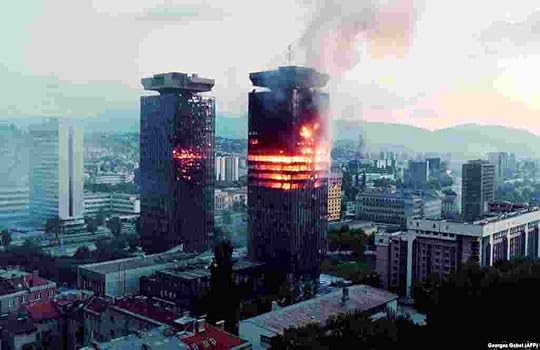
My heart is sieged!
Yesterday's Sarajevo is today's China, India, ... and the list goes on ...
https://www.youtube.com/watch?v=dGtWd...
https://www.youtube.com/watch?v=6-ZF9...
My heart is sieged!
Yesterday's Sarajevo is today's China, India, ... and the list goes on ...

December 30, 2019
Have been battling a cold all weekend and this collection was at hand. So much of Hemon’s work is but variations on a theme. This is much the same, semi autobiographical sketches, though aside from Sarajevo and Chicago, an exotic take of Zaire in the 1980s is included. I do find the Balkan details interesting. I try to keep verification through my wife to a minimum. I do regard the endeavor as artful, I just expected more at this point.

June 24, 2009
As a young writer, Aleksander Hemon has already accumulated a lifetime of writer accolades: he’s a MacArthur Foundation “genius” grant recipient, he’s been a Guggenheim fellow, and both of his recent books (“The Lazarus Project” and “Nowhere Man”) have been short-listed for the National Book Award. So expectations for “Love and Obstacles,” a collection of short stories, was high. Aleksander Hemon did not disappoint.
It takes a little while to immerse yourself in the autobiographical world of Bosnian Hemon if you’ve never experienced his writing before. Somewhat jarring, too, in this volume is that the first story is set in Africa, where he tells his own “Heart of Darkness” tale about disaffected youth and a rogue CIA type. It’s a good story, but once the book moves on to other, more typical Hemon fare--stories of Sarajevo, transplantation to North America, and stories of family life--it’s easier to see what all the fuss is about.
Hemon writes with humor and pathos. He is able to poke fun at his own writerly ambitions, as well as those of his father (who writes the story of his life via a movie script that he then wants his son to act out), a Bosnian poet who haunts the cafes of Sarajevo (and mistakes the Hemon character for a conductor), and a visiting Pulitzer Prize winner whose life’s trauma (Vietnam) mirrors that of Hemon’s (the fall of Sarajevo). It’s all fodder for the vagaries of life and the impossibility of living in an absurd world when you aspire to see its truth and beauty.
Two factors will leap out when readers attempt to decipher just what it is that makes this writing so potent. One is the way in which the writer is able to bring his characters to life. In each of the eight stories told in “Love and Obstacles,” the characters are larger than life, strong in personality but vulnerable and frail, too, from the life experiences they have suffered through (yet are reluctant to reveal). The second strength Hemon brings to his writing is his unexpected use of language. The twists and turns, the play on songs and other cultural motifs, the odd phrasing that cuts to the quick--these are the heart and soul of “Love and Obstacles.”
Finally, the key turn that brings most stories in “Love and Obstacles” to their climax is done with a poetic phrasing that’s almost startling. Caught up in the humor of the situation, readers don’t see the vulnerable punch line coming. It’s magic when it arrives. And that is the reason Aleksander Hemon is worth reading.
It takes a little while to immerse yourself in the autobiographical world of Bosnian Hemon if you’ve never experienced his writing before. Somewhat jarring, too, in this volume is that the first story is set in Africa, where he tells his own “Heart of Darkness” tale about disaffected youth and a rogue CIA type. It’s a good story, but once the book moves on to other, more typical Hemon fare--stories of Sarajevo, transplantation to North America, and stories of family life--it’s easier to see what all the fuss is about.
Hemon writes with humor and pathos. He is able to poke fun at his own writerly ambitions, as well as those of his father (who writes the story of his life via a movie script that he then wants his son to act out), a Bosnian poet who haunts the cafes of Sarajevo (and mistakes the Hemon character for a conductor), and a visiting Pulitzer Prize winner whose life’s trauma (Vietnam) mirrors that of Hemon’s (the fall of Sarajevo). It’s all fodder for the vagaries of life and the impossibility of living in an absurd world when you aspire to see its truth and beauty.
Two factors will leap out when readers attempt to decipher just what it is that makes this writing so potent. One is the way in which the writer is able to bring his characters to life. In each of the eight stories told in “Love and Obstacles,” the characters are larger than life, strong in personality but vulnerable and frail, too, from the life experiences they have suffered through (yet are reluctant to reveal). The second strength Hemon brings to his writing is his unexpected use of language. The twists and turns, the play on songs and other cultural motifs, the odd phrasing that cuts to the quick--these are the heart and soul of “Love and Obstacles.”
Finally, the key turn that brings most stories in “Love and Obstacles” to their climax is done with a poetic phrasing that’s almost startling. Caught up in the humor of the situation, readers don’t see the vulnerable punch line coming. It’s magic when it arrives. And that is the reason Aleksander Hemon is worth reading.

July 15, 2015
I couldn’t put this one down. Hemon writes in a superbly plain language with an understated humor. He displays a nuanced masculinity: a tough, blunt, directness, with a degree of genuine self-deprecation. Part of the latter involves his own ambivalence about his identity as a writer. The last story in the collection is about a hilarious, near malicious attitude toward another writer celebrity. This story, like the others, is semi-autobiographical. Hemon in the New York Review of Books about writing the personal:
"The beauty of literature—also its limit—is that it is inescapably personal, even if you’re writing science fiction. Even if your story takes place on a different planet, it comes out of your personality, your personal experience, your sensibilities, your interests, your passions, the whole of you. Even if you tried to extinguish your personality, what is left in the story will reflect it, perhaps by its negation. Our lives provide the bricks from which we build these cathedrals.
The hard part in writing a narrative of someone’s life is choosing from the abundance of details and microevents, all of them equally significant, or equally insignificant. If one elects to include only the important events: the births, the deaths, the loves, the humiliations…one denies the real substance of life: the ephemera, the nethermoments, much too small to be recorded (the train pulling into the station where there is nobody; a spider sliding down an invisible rope and landing on the floor just in time to be stepped on…). But you cannot simply list all the moments when the world tickles your senses, only to seep away between your fingers and eyelashes, leaving you alone to tell the story of your life to an audience interested only in the fireworks of universal experiences, the roller coaster rides of sympathy and judgment."
"The beauty of literature—also its limit—is that it is inescapably personal, even if you’re writing science fiction. Even if your story takes place on a different planet, it comes out of your personality, your personal experience, your sensibilities, your interests, your passions, the whole of you. Even if you tried to extinguish your personality, what is left in the story will reflect it, perhaps by its negation. Our lives provide the bricks from which we build these cathedrals.
The hard part in writing a narrative of someone’s life is choosing from the abundance of details and microevents, all of them equally significant, or equally insignificant. If one elects to include only the important events: the births, the deaths, the loves, the humiliations…one denies the real substance of life: the ephemera, the nethermoments, much too small to be recorded (the train pulling into the station where there is nobody; a spider sliding down an invisible rope and landing on the floor just in time to be stepped on…). But you cannot simply list all the moments when the world tickles your senses, only to seep away between your fingers and eyelashes, leaving you alone to tell the story of your life to an audience interested only in the fireworks of universal experiences, the roller coaster rides of sympathy and judgment."

February 22, 2017
Do sięgnięcia po tę książkę skusił mnie kraj pochodzenia autora. Hemon jest Bośniakiem, który opuścił swoją ojczyznę jeszcze przed wojną. Jako stypendysta zamieszkał w Chicago i tam już pozostał.
Love and Obstacles to zbiór ośmiu opowiadań. W pierwszym z nich Hemon wspomina Conrada - emigranta, który pisał po angielsku. To odwołanie ściśle związane jest z autorem, także on tworzy w tym języku - na pozór zasymilowany z amerykańskim społeczeństwem, w swoich opowiadaniach ciągle wraca do Bośni. Każde z nich wydaje się być zabarwione autobiograficznie, bohaterem jest młody chłopak, kochający książki i marzący o karierze pisarza. Alter ego Hemona poznajemy na początku lat osiemdziesiątych w Kongu. Jako szesnastolatek odwiedza wraz z rodziną ojca, jugosłowiańskiego dyplomatę. W kolejnym opowiadaniu wysłany zostaję na granicę słoweńską, w celu zakupienia koniecznej dla rodziny zamrażarki. I te dwa pierwsze opowiadania najbardziej mi się podobały. Wraz z kolejnym tekstem Hemon przenosi się do Stanów Zjednoczonych, a Bośnia obecna jest tylko w reminiscencjach oraz pod postacią nie umiejących się przystosować do kanadyjskiej rzeczywistości rodziców.
Ciąg dalszy: https://przeczytalamksiazke.blogspot....
Love and Obstacles to zbiór ośmiu opowiadań. W pierwszym z nich Hemon wspomina Conrada - emigranta, który pisał po angielsku. To odwołanie ściśle związane jest z autorem, także on tworzy w tym języku - na pozór zasymilowany z amerykańskim społeczeństwem, w swoich opowiadaniach ciągle wraca do Bośni. Każde z nich wydaje się być zabarwione autobiograficznie, bohaterem jest młody chłopak, kochający książki i marzący o karierze pisarza. Alter ego Hemona poznajemy na początku lat osiemdziesiątych w Kongu. Jako szesnastolatek odwiedza wraz z rodziną ojca, jugosłowiańskiego dyplomatę. W kolejnym opowiadaniu wysłany zostaję na granicę słoweńską, w celu zakupienia koniecznej dla rodziny zamrażarki. I te dwa pierwsze opowiadania najbardziej mi się podobały. Wraz z kolejnym tekstem Hemon przenosi się do Stanów Zjednoczonych, a Bośnia obecna jest tylko w reminiscencjach oraz pod postacią nie umiejących się przystosować do kanadyjskiej rzeczywistości rodziców.
Ciąg dalszy: https://przeczytalamksiazke.blogspot....

August 7, 2017
O carte subțirică, dar cu impact! În această culegere de povestiri, Aleksandar Hemon împletește foarte frumos (și extrem de subtil) realitatea cu ficțiunea din dorința sa de a prezenta periplul prin viață al unui tânăr bosniac (el însuși), de la perioada socialistă de dinainte de război, când Sarajevo era o mică bijuterie cosmopolită, și până la perioada post 9/11, când nici în America traiul nu mai părea atât de promițător, Hemon simțind mizeria umană cum îl strânge și-l sufocă precum un cojoc de iarnă purtat în toiul verii. Mi-a plăcut foarte mult fiecare povestire în parte, uneori nu atât pentru subiectul ales, cât pentru talentul magnific de povestitor al lui Hemon, însă preferata mea de departe a fost „Albinele. Partea I”, în care scriitorul adună mici bucățele din istoria familiei sale, folosind activitatea de stupărit a înaintașilor săi, pentru a crea un fir invizibil care să lege trecutul de prezent, și prezentul de viitor. Foarte frumos, am apreciat enorm ce a făcut el în această proză scurtă! Mă repet, totuși: nici celelalte texte nu sunt de lepădat. Recomand!

April 4, 2023
Aleksandar Hemon scrie minunat, dar stilul lui (care e, deja, o manieră) face ca tot ce a scris, cândva, să devină prototip - în acest caz, nu doar îndepărtat, ci și de neegalat. Povestea albinelor o știam (este și cea mai frumoasă, o rescrie în toate cărțile lui). Totuși, devine prea evident că scrie cu miză, la comanda unui editor, deoarece folosește aceeași rețetă: cursivitate, puțin ingredient balcanic (pentru exotism) și o aducere din condei simpatică, la final. Chiar și atunci când materia narativă lipsește (și se simte), povestea se salvează doar prin umor și ironie, dar într-un mod facil, de stand-up comedy. Cartea este tradusă din engleză (probabil că autorul a scris în engleză pentru marile reviste), dar dialogurile în sârbo-croată -deși numeroase- nu beneficiază nici măcar de un Google Translate, de ca și cum editura ar miza pe necitirea cărții, simpla ei tipărire asigurând îndeplinirea misiunii, de unde și treaba de mântuială. Nu aveam pretenții la note de subsol pentru diversele referințe bosniace, deși tocmai ele sunt miza scrierii și celebrității autorului (nu întâmplător, toate povestirile au un filon local, real și/sau autoficțional), dar replici întregi sunt lăsate neatinse (e drept, cu diacritice). Nu e prima asemenea constatare în privința standardelor acestei edituri.
September 22, 2020
Pe alocuri puțin cam vulgară pentru gustul meu, dar m-a prins pe parcurs. Cred că cel mai mult mi-au plăcut secvențele în care vorbește despre familia lui, sunt foarte duioase, în special povestea albinelor (cine a citit deja o să recunoască episodul). Oricum, spațiul fostei Iugoslavii mi se pare fascinant (și terifiant - anii '90) și-mi place să citesc tot ce vine din zona asta; mi-au plăcut și secvențele în care exprimă cumva sentimentul de inadaptare/dezrădăcinare pe care-l încearcă în SUA după plecarea din Bosnia.

June 14, 2025
Hmm… nu știu exact cum să încep. Cartea asta m-a lăsat mai degrabă confuză decât impresionată. Când am început-o, mă așteptam la o colecție de povestiri, dar pe parcurs am avut tot mai mult senzația că citesc un roman scris pe bucăți. Toate poveștile par să fie despre aceeași persoană, spuse la persoana întâi, dar fără ca personajul să aibă vreun nume. Și exact asta mi s-a părut ciudat – parcă citeam niște fragmente dintr-un jurnal personal, dar camuflate sub formă de ficțiune.
Ce m-a neliniștit cel mai mult a fost tonul… Cartea se declară ficțiune, dar sună foarte autobiografică. Personajul principal – sau cel care pare să fie același peste tot – este bosniac, locuiește în Chicago, a fost prins în SUA când a izbucnit războiul în Bosnia și are familie acolo. Toate lucrurile astea oglindesc viața autorului într-un mod care m-a făcut să simt că citesc despre el, nu despre un personaj fictiv. Ceea ce poate că a fost intenționat… dar mie mi-a dat o stare de nesiguranță și m-a scos un pic din poveste.
În plus, fiecare capitol/povestire se concentrează foarte tare pe un singur detaliu sau moment, atât de mult încât simțeam că mă pierd acolo. E intens, da, dar prea intens într-un mod care nu duce nicăieri. Și cumva, totul mi s-a părut repetitiv, fără claritate, fără structură.
La final, mi-a rămas un gust amar. Mă așteptam la ceva care să mă prindă, să mă facă să simt mai mult – și am simțit, dar mai ales confuzie și frustrare. Nu pot spune că a fost o lectură plăcută. Știu că autorul e foarte apreciat, are chiar și un MacArthur Genius Grant, ceea ce înseamnă că mulți oameni îi iubesc stilul… dar se pare că eu nu sunt printre ei.
Ce m-a neliniștit cel mai mult a fost tonul… Cartea se declară ficțiune, dar sună foarte autobiografică. Personajul principal – sau cel care pare să fie același peste tot – este bosniac, locuiește în Chicago, a fost prins în SUA când a izbucnit războiul în Bosnia și are familie acolo. Toate lucrurile astea oglindesc viața autorului într-un mod care m-a făcut să simt că citesc despre el, nu despre un personaj fictiv. Ceea ce poate că a fost intenționat… dar mie mi-a dat o stare de nesiguranță și m-a scos un pic din poveste.
În plus, fiecare capitol/povestire se concentrează foarte tare pe un singur detaliu sau moment, atât de mult încât simțeam că mă pierd acolo. E intens, da, dar prea intens într-un mod care nu duce nicăieri. Și cumva, totul mi s-a părut repetitiv, fără claritate, fără structură.
La final, mi-a rămas un gust amar. Mă așteptam la ceva care să mă prindă, să mă facă să simt mai mult – și am simțit, dar mai ales confuzie și frustrare. Nu pot spune că a fost o lectură plăcută. Știu că autorul e foarte apreciat, are chiar și un MacArthur Genius Grant, ceea ce înseamnă că mulți oameni îi iubesc stilul… dar se pare că eu nu sunt printre ei.

October 20, 2021
3,5/5
Amor e obstáculos de Aleksandar Hemon narra histórias aparentemente baseadas em passagens de sua vida na forma de contos, desde sua versão particular de Coração das trevas de Joseph Conrad até o conto final, um inusitado encontro com um certo celebrado autor norte-americano. A maioria dos contos que narram suas vivências em Chicago e na Bósnia e Herzegovina podem ser consideradas recontações de seu O livro das minhas vidas.
Hemon é um autor que sabe tirar de elementos aparentemente banais retratos das nossas vivências, tal como Soldado americano, em que um brincadeiras de crianças pode alcançar um status de violência inimaginável, como se a maldade fosse algo peculiar ao ser humano; ou colocado em outros termos, como apesar da nossa racionalidade, somos instintivamente piores do que os animais que vivem na natureza. A vida das abelhas - Parte I é como uma ode à sua família paterna, de apicultores, com elementos tragicômicos à vontade.
Para mim, a leitura de Hermon por vezes tem essa capacidade de me tirar desse circuito literário que parece apenas se recordar ou privilegiar uma Europa mais a ocidente. Até porque a literatura oriunda dos países de línguas eslavas guardam um passado tão rico e não adstrito somente à literatura russa.
Amor e obstáculos de Aleksandar Hemon narra histórias aparentemente baseadas em passagens de sua vida na forma de contos, desde sua versão particular de Coração das trevas de Joseph Conrad até o conto final, um inusitado encontro com um certo celebrado autor norte-americano. A maioria dos contos que narram suas vivências em Chicago e na Bósnia e Herzegovina podem ser consideradas recontações de seu O livro das minhas vidas.
Hemon é um autor que sabe tirar de elementos aparentemente banais retratos das nossas vivências, tal como Soldado americano, em que um brincadeiras de crianças pode alcançar um status de violência inimaginável, como se a maldade fosse algo peculiar ao ser humano; ou colocado em outros termos, como apesar da nossa racionalidade, somos instintivamente piores do que os animais que vivem na natureza. A vida das abelhas - Parte I é como uma ode à sua família paterna, de apicultores, com elementos tragicômicos à vontade.
Para mim, a leitura de Hermon por vezes tem essa capacidade de me tirar desse circuito literário que parece apenas se recordar ou privilegiar uma Europa mais a ocidente. Até porque a literatura oriunda dos países de línguas eslavas guardam um passado tão rico e não adstrito somente à literatura russa.

January 25, 2012
Hemon is a brilliant stylist, a writer to admire for his wizardry of language. His prose bursts off the page, the way he turns dazzling phrases and conjures spectacular metaphors and descriptions. His narratives, however, can be bewildering, which I believe is definitely a main component of what he’s trying to convey, because he’s often examining displacement and exile, states of ambience that defy any sense of permanence. Many of the stories have compelling scenes, although in their entirety they often leave you with a feeling of disorientation and confusion. Moreover, Hemon does not shy away from shocking and unsettling moments, whether lewd or violent, while he is also masterful at delivering dark humor. It’s difficult to finish Hemon’s stories and say you love them, but it’s also impossible not to appreciate his ingenious literary talents. Love and Obstacles is a perfect title because the stories offer plenty to like about them although they can be challenging to handle.
Read
January 11, 2012Who knew I could get so bored by a Hemon collection of short stories? I've heard him speak; I've loved the work he's presented on stage, yet I can't wait for this book to be over already.
The material isn't dull. I like the tales o exiles and immigrants and the gloriously observed bizarrerie of the America that they are confronted with. It's just a bit cold, this book. Very intellectualized, somewhat choked emotionally.
Yawn. I already know enough men like that. Don't need them to be my narrators.
The material isn't dull. I like the tales o exiles and immigrants and the gloriously observed bizarrerie of the America that they are confronted with. It's just a bit cold, this book. Very intellectualized, somewhat choked emotionally.
Yawn. I already know enough men like that. Don't need them to be my narrators.

May 19, 2022
Una serie di racconti autoconclusivi che saltano avanti e indietro nella vita (romanzata) dell'autore, di origine bosniaca e immigrato successivamente negli States, scritti in maniera solida, quasi mai fini a se stessi e con una bella empatia ruvida nei confronti dei personaggi narrati.
Una bella scoperta e un autore da approfondire
Una bella scoperta e un autore da approfondire

July 18, 2016
Balkan edebiyatını severim. Hemon da çok başarılı bir Balkan yazarı. Geçirdiği savaşı bile gülümseterek anlatabiliyor.

September 8, 2019
Cred ca micile povesti despre cum a incercat tatal lui sa faca un film despre viata familiei lor mi-a placut cel mai mult, simplitatea si incercarea unui om de a scapa de fictiune din simplul motiv ca atunci cand a incercat sa intre in ea, sa-i seduca pe altii cu ea, nu a reusit de fapt sa fie consecvent in a le oferi suspansul de care aveau nevoie "ascultatorii". Incapacitate de a-i seduce pe altii cu arma povestirii, l-a determinat pe tatal acestui pusti sa ramana fidel realitatii, acelei realitati careia "nu avem voie" sa ii adaugam nici un alt layer in plus, pentru ca asta ar insemna sa mintim si sa nu fim onesti fata de acuratatea monotoniei pe care oricum cu totii am putea sa o cartografiem.
"In gimnaziu, iubeam saptamanile in care eram redar, adica cel care trebuia sa stearga tabla. Treaba mea era sa ud buretele si sa sterg tabla cand imi zicea profesorul. Adoram sa sterg totul, mirosul de creta umeda si uscaciunea mainilor, sa ies din clasa, sa ud buretele la baie. Coridorul era tacut si gol, si mirosea a copii curati si a ceara de parchet. Imi placea grozav scartaitul pantofilor mei, ecourile vidului; ma duceam la baie incet, potrivindu-mi pasii astfel incat sa produca un ritm scartaitor. Era ceva palpitant in a fi liber si singur in acel spatiu gol, in timp ce restul copiilor erau tinuti in clasa, pentru a fi eliberati doar la pauza. Uneori, ma opream la usa cate unei clase si trageam cu urechea. Auzeam murmurul copiilor ascultatori si vocea egala, solemna a profesorului. Ma bucura ca nimeni nu stia ca ma aflu acolo liber, ascultand. Ei nu ma vedeau, dar eu auzeam totul; ei erau inauntru, eu eram afara."
"In gimnaziu, iubeam saptamanile in care eram redar, adica cel care trebuia sa stearga tabla. Treaba mea era sa ud buretele si sa sterg tabla cand imi zicea profesorul. Adoram sa sterg totul, mirosul de creta umeda si uscaciunea mainilor, sa ies din clasa, sa ud buretele la baie. Coridorul era tacut si gol, si mirosea a copii curati si a ceara de parchet. Imi placea grozav scartaitul pantofilor mei, ecourile vidului; ma duceam la baie incet, potrivindu-mi pasii astfel incat sa produca un ritm scartaitor. Era ceva palpitant in a fi liber si singur in acel spatiu gol, in timp ce restul copiilor erau tinuti in clasa, pentru a fi eliberati doar la pauza. Uneori, ma opream la usa cate unei clase si trageam cu urechea. Auzeam murmurul copiilor ascultatori si vocea egala, solemna a profesorului. Ma bucura ca nimeni nu stia ca ma aflu acolo liber, ascultand. Ei nu ma vedeau, dar eu auzeam totul; ei erau inauntru, eu eram afara."

August 19, 2021
Day 13 of the #30booksin30dayschallenge
“Time does nothing but hand you down shabbier and older things.”
It is a truth universally acknowledged that I love Aleksandar Hemon, he speaks to me on a level that only I can truly understand; his blurry lines between fiction and reality nurture my soul. His “Book of My Lives” is the book of MY lives. Even though I’m not always a fan of his short stories, this was one of the books I haven’t read yet so here we are.
“Time does nothing but hand you down shabbier and older things.”
It is a truth universally acknowledged that I love Aleksandar Hemon, he speaks to me on a level that only I can truly understand; his blurry lines between fiction and reality nurture my soul. His “Book of My Lives” is the book of MY lives. Even though I’m not always a fan of his short stories, this was one of the books I haven’t read yet so here we are.

September 3, 2018
ben bu kitaptan çok umutluydum, çok tatlı bir kapağı vardı, tam plajda güneşlenirken bir günde bitirebileceğim yazlık bir kitaptı kafamda. Ama tam tersi çıktı. Oku oku bitiremedim 200 sayfayı, okuduğumdan birşey de anlamadım, belki bana hitap etmiyordur ama yinede tavsiye etmem açıkçası.

September 17, 2022
Unii cititori s-au plâns că e vorba doar de (aceleași) scheciuri autobiografice. Ei și? Plăcerea lecturii e mult mai puternică decât un puseu de taxonomie, cuvintele au o dinamică a lor, o intensitate precisă a observației, strălucesc ca ”nestematele într-un colier”, ficțiunea păcălește realitatea prin umor și poezie.
April 24, 2023
Hemon zna šta (nam) radi i to (nam) radi dobro. Dječak koji odrasta i pronalazi sebe kroz priče i avanture jednog svodnika. Također, odlično postavljen porodični portret, jednostavni dijalozi s emotivnim nabojem - najčešće između oca i sina. 4/5 zato što nisam oduševljena samim nizom radnji, dječaka kao subjekta između roditelja i svodnikovog podzemlja - malo ručak s roditeljima pa malo kokain na stolu. Sablasno brzi prelazi. Možda je tako i trebalo, kao prikaz odrastanja?

December 23, 2014
In this remarkable work, a series of linked, episodic short stories, the narrator tells a series of tales of his alienated youth, somewhat in the mode of Catcher in the Rye, though it jumps in time and locale in a way that evokes Slaughterhouse Five. He always seems to be out of place, and feeling it, whether in the Congo (his father is on a diplomatic mission), or in the Yugoslavia-that-was (his father sends him to Slovenia to buy a freezer), or in Chicago, where he is stranded in 1991 by the start of the siege in his home town, Sarajevo.
And in many of the stories, he links up with older, jaded, unforgettable guides, who are out of place and time as well. An American rogue (or rogue agent) in Congo, a demented Bosnian poet in Chicago, a gang of boys in his childhood who wage war over a barren playground in a metaphor for the war to come.
His prose is sparse but vivid, quirky, never dull. "When America settled into its mold of patriotic vulgarity," he writes in one of the later stories, "I began to despair, for everything reminded me of Bosnia in 1991. The War on Terror took me to the verge of writing poetry again, but I knew better."
These may be sketches for a much larger work as this author grows and expands his craft. Not many authors can write in English as a second language and achieve this much so quickly, but Mr. Hemon does. As Joseph Conrad once did. His future work will be something to see, and for now, this book will be a worthwhile trip along that road.
And in many of the stories, he links up with older, jaded, unforgettable guides, who are out of place and time as well. An American rogue (or rogue agent) in Congo, a demented Bosnian poet in Chicago, a gang of boys in his childhood who wage war over a barren playground in a metaphor for the war to come.
His prose is sparse but vivid, quirky, never dull. "When America settled into its mold of patriotic vulgarity," he writes in one of the later stories, "I began to despair, for everything reminded me of Bosnia in 1991. The War on Terror took me to the verge of writing poetry again, but I knew better."
These may be sketches for a much larger work as this author grows and expands his craft. Not many authors can write in English as a second language and achieve this much so quickly, but Mr. Hemon does. As Joseph Conrad once did. His future work will be something to see, and for now, this book will be a worthwhile trip along that road.

Read
July 15, 2009Like Nowhere Man and The Question of Bruno, Aleksandar Hemon’s Love and Obstacles is a collection of short stories whose main narrator is a Bosnian man of Ukrainian extraction, or an American man of Bosnian-Ukrainian origin, whose father has worked as a diplomat in Africa and the Middle East during communism.
Another autobiographical element is the fact that in the early nineties, when he was a recent immigrant in Chicago, Hemon (apparently) worked as a door-to-door magazine salesman. “Good Living,” a story that takes its title from the magazine with the same name, narrates one day in the life of the young salesman with a strong Bosnian accent.
“American Commando” begins with a narration that could play the role of metaphor for Hemon’s own position within the context of American literature and culture: while in grammar school in Bosnia, he was in charge of wiping the chalkboard, so he would often leave the classroom to wash the sponge. As he walked back to the classroom, he would stop by the door, taking an intense pleasure in eavesdropping on what was going on inside. The pleasure came from the feeling that, while everyone else was inside, he was outside, and thus free. Later in the same story, he comes back to this feeling and redefines it: maybe the pleasure came from the ambiguous state of being both inside and outside.
Another autobiographical element is the fact that in the early nineties, when he was a recent immigrant in Chicago, Hemon (apparently) worked as a door-to-door magazine salesman. “Good Living,” a story that takes its title from the magazine with the same name, narrates one day in the life of the young salesman with a strong Bosnian accent.
“American Commando” begins with a narration that could play the role of metaphor for Hemon’s own position within the context of American literature and culture: while in grammar school in Bosnia, he was in charge of wiping the chalkboard, so he would often leave the classroom to wash the sponge. As he walked back to the classroom, he would stop by the door, taking an intense pleasure in eavesdropping on what was going on inside. The pleasure came from the feeling that, while everyone else was inside, he was outside, and thus free. Later in the same story, he comes back to this feeling and redefines it: maybe the pleasure came from the ambiguous state of being both inside and outside.

July 30, 2009
"""Steeped ... in male ego [and] sexuality"" (Houston Chronicle), Hemon's wry, robust, and entertaining stories bring to light the immigrant's hunger for identity -- caught between two worlds but truly belonging to neither -- and the writer's hunger for validation. Poised between two worlds himself, Hemon's vantage point and marvelous flair for the English language yield deliciously sardonic cultural observations and ask insightful questions about the meaning of family and home. Critics were especially moved by his portrait of his eccentric father and the growing chasm between father and son. Though the Milwaukee Journal Sentinel considered Hemon's subject matter trite and uninspired, most critics, in spite of a few complaints -- including some awkward language, a sporadic anti-American undercurrent, and forced connections among stories -- were pleased by Hemon's return to familiar terrain."

May 30, 2009
If you have not read Hemon up to this point, well, why not, and when you do, start with this. Absolutely gorgeous stuff--I've grown tired of the well-crafted, poignant short story collection (I'm looking at you, Iowa), but this really makes me believe that there is an actual reason people still write short stories.

July 29, 2009
There is something of The Emperor's New Clothes about the serendipitous juxtapositions of Hemon's itinerent prose: many of his metaphors have the unconvincing quality of non-sequiturs and these stories are doubly troublesome because the bulk of them seem like underworked fragments discarded from larger pieces rather than having the inexorable nature necessary for the best short stories.
July 14, 2010
I was not expecting to like this book so much. It's a collection of "coming of age" short stories told from the perspective of a teenager/young man who moves to the United States from Sarajevo during the Bosnian War. The stories are artfully written and thought provoking. I can't wait to read more from this author.

February 27, 2023
Nice 2009 collection of eight stories by the wildly talented Aleksandar Hemon. My favorites were "Szmura's Room" (about a recent Bosnian immigrant to Chicago) and "The Bees, Part I" (recounting the story of the author's father's family). Many critics compare Hemon to Nabokov, but his later-in-life mastery of English puts me in mind of Joseph Conrad.

June 25, 2009
Hemon's style knocks me out. His language and syntax read like poetry. The situations in this collection of stories have a lurking dread just off screen somewhere.

March 9, 2010
apparently no obstacle to publication when 6 of 8 stories previously appeared in the new yorker; no obstacle to love that author is snotty, anti-american and coarse-mouthed. awesome writing!
Displaying 1 - 30 of 176 reviews