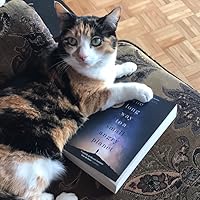
WINNER for the Los Angeles Times Book Prize for Poetry
An immense achievement, comprising a decades-long career--new and collected poetry from one of Canada's most honoured and significant poets.
Spanning almost four decades, Dionne Brand's poetry has given rise to whole new grammars and vocabularies. With a profound alertness that is attuned to this world and open to some other, possibly future, time and place, Brand's ongoing labours of witness and imagination speak directly to where and how we live and reach beyond those worlds, their enclosures, and their violences.
Nomenclature: New and Collected Poems begins with a new long poem, the titular "Nomenclature for the Time Being," in which Dionne Brand's diaspora consciousness dismantles our quotidian disasters. In addition to this searing new work, Nomenclature collects eight volumes of Brand's poetry published between 1982 and 2010 and includes a critical introduction by the literary scholar and theorist Christina Sharpe.
Nomenclature: New and Collected Poems, features the searching and centering cantos of Primitive Offensive;the sharp musical conversations of Winter Epigrams and Epigrams to Ernesto Cardenal in Defense of Claudia; the documentary losses of revolutions in Chronicles of the Hostile Sun, in which "The street was empty/with all of us standing there." No Language Is Neutral reads language, coloniality, and sexuality as a nexus. Land to Light On writes intimacies and disaffections with nation, while in thirsty a cold-eyed fl�neur surveys the workings of the city. In Inventory, written during the Gulf Wars, the poet is "the wars' last and late night witness," her job not to soothe but to "revise and revise this bristling list/hourly." Ossuaries'futurist speaker rounds out the collection, and threads multiple temporal worlds--past, present, and future.
This masterwork displays Dionne Brand's ongoing body of thought--trenchant, lyrical, absonant, discordant, and meaning-making. Nomenclature: New and Collected Poems is classic and living, a record of one of the great writers of our age.
As a young girl growing up in Trinidad, Dionne Brand submitted poems to the newspapers under the pseudonym Xavier Simone, an homage to Nina Simone, whom she would listen to late at night on the radio. Brand moved to Canada when she was 17 to attend the University of Toronto, where she earned a degree in Philosophy and English, a Masters in the Philosophy of Education and pursued PhD studies in Women’s History but left the program to make time for creative writing.
Dionne Brand first came to prominence in Canada as a poet. Her books of poetry include No Language Is Neutral, a finalist for the Governor General’s Award, and Land to Light On, winner of the Governor General’s Award and the Trillium Award and thirsty, finalist for the Griffin Prize and winner of the Pat Lowther Award for poetry. Brand is also the author of the acclaimed novels In Another Place, Not Here, which was shortlisted for the Chapters/Books in Canada First Novel Award and the Trillium Award, and At the Full and Change of the Moon. Her works of non-fiction include Bread Out of Stone and A Map to the Door of No Return.
What We All Long For was published to great critical acclaim in 2005. While writing the novel, Brand would find herself gazing out the window of a restaurant in the very Toronto neighbourhood occupied by her characters. “I’d be looking through the window and I’d think this is like the frame of the book, the frame of reality: ‘There they are: a young Asian woman passing by with a young black woman passing by, with a young Italian man passing by,” she says in an interview with The Toronto Star. A recent Vanity Fair article quotes her as saying “I’ve ‘read’ New York and London and Paris. And I thought this city needs to be written like that, too.”
In addition to her literary accomplishments, Brand is Professor of English in the School of English and Theatre Studies at the University of Guelph.
“I have nothing soothing to tell you, that’s not my job, my job is to revise and revise this bristling list hourly.”
An examination of Canadian poet, Dionne Brand’s, almost four decades of work.
“What does it mean to bear witness. What is the work of the poet. What is a poetry of witness.”
Includes selections of writings from Brand’s eight volumes of poetry, published between 1982 and 2010.
“And this is how it went down First they persuaded us we needed technocrats Then they persuaded us we needed businessmen And then they persuaded us we needed fascists Then we all had the flu from which we never recovered.”
The invasion of Grenada, Black lives and liberation, the Gulf Wars and the ordinariness of queer life.
"At least someone should stay awake, she thinks/ someone should dream them along the abysmal roads."
I ordered this book to my local bookstore, even though I knew I already have most of the books that are within this collection. Honestly I haven't read the whole book yet. I bought it for the new poetry and the forward which I loved. I've also been rereading some of the writing that I haven't read since 1996 with my new lenses, but my attention drifts after a few pages. In theory I would like to reread my earlier Dionne brand collection, but in reality I prefer her later prose and poetry.
from Nomenclature for the Time Being 3 ‘the atrocities saturate our latent notebooks’
14 ‘and grief looked like archaeology’
22 ‘I am turning into the something necessary to live this’
69 ‘we are remainders of burning oxygen we are just the end of helium, we are speeding we are slow, water doesn’t end’
from Chronicles of the Hostile Sun 217 ‘I am not a refugee, I have my papers, I was born in the Caribbean, practically in the sea, fifteen degrees above the equator, I have a canadian passport, I have lived here all my adult life, I am stateless anyway.’
from No Language is Neutral 242 ‘between me and history we have made a patch of it, a verse still missing you at the subject, a chapter yellowed and moth eaten at the end’
from Land to Light On 281 ‘I read the terrifying poetry of newspapers. I notice vowels have suddenly stopped their routine, their alarming rooms are shut, their burning lights collapsed
the wave of takeovers, mergers and restructuring … swept the world’s … blue chips rally in New York … Bundesbank looms … Imperial Oil increases dividends … tough cutbacks build confidence’
282 ‘Life is porous, unimaginable in the end’
309 ‘I’m giving up on land to light on, slowly, it isn’t land, it is the same as fog and mist and figures and lines and erasable thoughts, it is buildings and governments and toilets and front door mats and typewriter shops, cards with your name and clothing that comes undone, skin that doesn’t fasten and spills and shoes. It’s paper, paper, maps. Maps that get wet and rinse out, in my hand anyway. I’m giving up what was always shifting, mutable cities’ fluorescences, limbs, chalk curdled blackboards and carbon copies, wretching water, cunning walls. Books to set it right. Look. What I know is this. I’m giving up. No offence. I was never committed. Not ever, to offices or islands, continents, graphs, whole cloth, these sequences or even footsteps’
354 ‘but surrender the parentheses, what are those but tongues slipping in and out of a mouth, pages’
from Thirsty 408 ‘From time to time . . . frequently, always there is the arcing wail of a siren, as seas hidden in the ordinariness of the city the stream and crash of things lived if it is late at night and quiet, as quiet as a city can get, as still as its murmurous genealogy you can hear someone’s life falling apart
Most people can sleep through a siren. I can’t. It isn’t the proximity of it that wakes me, as shores, it is its emotion. Its prophecy. Even at a great distance you sense its mortal discoveries whoever it is calling for, whoever is caught human, you can hear their gnawed substance in its song
In a siren, the individual muscles of a life collapsing, as waves, stuttering on some harm, your fingers may flutter in the viscera of an utter stranger I wake up to it, open as doorways, breathless as a coming hour, and undone’
from Ossuaries 511 ‘to undo, to undo and undo and undo this infinitive of arrears, their fissile mornings, their fragile, fragile symmetries of gain and loss’
577 'its paths through space under these forces, flights impossible to correct, the unnecessary barbed wire’s twisted crosses
horizontal and flimsy, these reports reach no one, satellites pick up eroded gigabits, in decades to come
perhaps but not now, cracked and crystalline, this news lays on the soul’s floor, like numberless calendars
what does it matter, dates by any reckoning dates don’t count, nor the sight of lilies that must bloom beyond the lines
to be missing in all hemispheres, is a great feat for some, disappearances are not uncommon, for the figure in the foreground'
there is no doubt that this author is unique, passionate and talented. I had no intention of buying a bok when I entered the bookstore, and then I left with this, as I was attracted to some of the prose and words that I skimmed while doing my walkabout. It's really good. But it is not a happy story. you can only read a little bit at a time. I love the smartness of the words and how there meaning behind meanings. but it is not an uplifting series of poems. and for that, for me, this is a 3. The writing is undoubtedly a 5. but for what the writing does for me, I would rate this lower.
An essential read. All too relevant for today. In a world trying to cling to a superficial fluff, Brand’s perspective has the breadth and depth of deeper meaning that only a person of intersecting marginalities could voice. Chilling and all-too-real, these poems embody the struggles that people faced and will face. Several times I laughed out loud in absurdity that she even needed to give such a response. A profound volume that should be read and revisited. Bravo
CW: racism, misogyny, homophobia, allusions to sexual assault, war and violence, slavery, plus many others I just didn't keep track of them all
2.5 stars rounded up
Although Dionne Brand's poetry wasn't necessarily to my liking, doesn't mean it isn't good. I recognize that she is a widely admired poet and an important voice to listen to.