
What do you think?
Rate this book


608 pages, Paperback
First published January 1, 1954


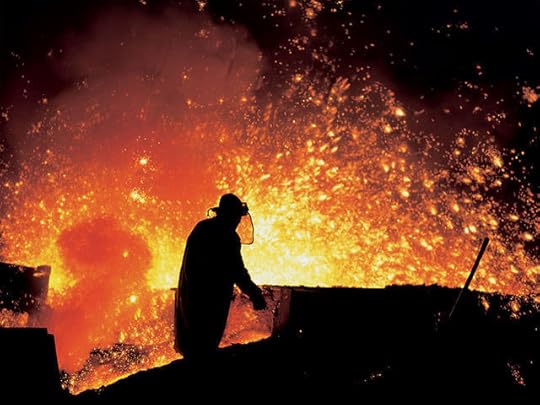
In the United States the preparation for industrial mobilization was negligible until 1940; in fact, there was no serious effort even to restrict civilian automobile production until after the attack on Pearl Harbor in December 1941. Still, the American automotive industry represented such a concentration of productive capacity and skill that, once its resources had been harnessed to war production, its contribution was tremendous. Between 1940 and 1945 automotive firms made almost $29 billion worth of military materials, a fifth of the country’s entire output. The list included 2,600,000 military trucks and 660,000 jeeps, but production extended well beyond motor vehicles. Automotive firms provided one-half of the machine guns and carbines made in the United States during the war, 60 percent of the tanks, all the armoured cars, and 85 percent of the military helmets and aerial bombs.
It had been assumed that automotive facilities could be readily converted for aircraft production, but this proved more difficult than anticipated. Automobile assembly plants did not readily accommodate airframes, nor could an automobile engine factory be converted without substantial modification. These problems were eventually resolved, and automobile companies contributed significantly to aircraft production.
Source: http://www.britannica.com/EBchecked/t...
“Are you sure you won’t mind leaving it? I guess it’s an heirloom,” the man said.
Gertie smiled. “I’ve left four youngens here. I oughtn’t to mind leaven an old split-basket.”
“They’ll be all right,” the man said. “They will” – now he didn’t seem himself at all, but was like Mrs. Vashinski – “adjust. This school has many children from many places, but in the end they all – most – adjust, and so will yours. They’re young.”
“Adjust?” One empty hand pulled a finger of the other empty hand.
“Yes, adjust, learn to get along, like it – be like the others – learn to want to be like the others.”
“Oh,” she pondered, looking down the hall – ugly gray – and at the children laughing in the doorway, then turned to him with a slow headshake. ”I want em to be happy – but I don’t know I want em to – to – “
“Adjust?”
“Leastways not too good.”
Mrs. Whittle bit her freshly lipsticked lips. “The trouble is,” she went on, “you don’t want to adjust – and Rueben doesn’t either.”
“That’s part way right,” Gertie said, moving past her to the stairs. “But he can’t hep the way he’s made. It’s a lot more trouble to roll out steel – an make it like you want it – than it is biscuit dough.”
In glancing at the basket, she saw a huge and ugly woman, flat-cheeked, straight-lipped, straggly-headed, her face grayed with tiredness and coal dust, even her chapped lips gray. The straight, almost bushy black brows below the bony forehead were on a level with her own, and she realized she was looking at herself – the same old Gertie who had made her mother weep.
Gertie could hear no rejoicing, no lifting of the heart that all the planned killing and wounding of the men were finished. Rather it was as if the people had lived on blood, and now that the bleeding was ended, they were worried about their future food.


