Dubus's stories (now included in his Collected Short Stories & Novellas ) tell of a suburban girl coming beautifully of age as her mother doesn’t; a woman who refuses defeat at the hands of her brutal and pathetic husband; an eleven-year-old kid who meets up with a broken, angry, and decidedly dangerous Vietnam vet who takes him into a local bar for a treat. As novelist Richard Ford has said, “Dubus is a patient, resourceful and profound writer who never gives in to convention―although his situations are our situations, and imminently recognizable. The great, addictive pleasure of reading him arises from our anticipation that he is always going to say something interesting.”
Award-winning author Andre Dubus II (1936–1999) has been hailed as one of the best American short story writers of the twentieth century. Dubus’s collections of short fiction include Separate Flights (1975), Adultery & Other Choices (1977), and Dancing After Hours (1996), which was a National Book Critics Circle Award finalist. Another collection, Finding a Girl in America, features the story “Killings,” which was adapted into the critically acclaimed film In the Bedroom (2001), starring Sissy Spacek, Tom Wilkinson, and Marisa Tomei. His son Andre Dubus III is also a writer.
Il primo racconto, Le morti in mare, lungo più di sessanta pagine, è scritto in prima persona, giustificato dall’essere una corrispondenza: qualche lettera scritta dal marito alla moglie. L’uomo, uomo del sud, è ufficiale a bordo di una portaerei americana all’ancora in qualche isola del Giappone. Divide la cabina con un ufficiale afroamericano, uno dei soli tre neri a bordo, che viene dalla Pennsylvania. Tra i due nasce una grande amicizia. E il lungo racconto man mano si trasforma in un inno contro il razzismo come ce ne sono pochi.
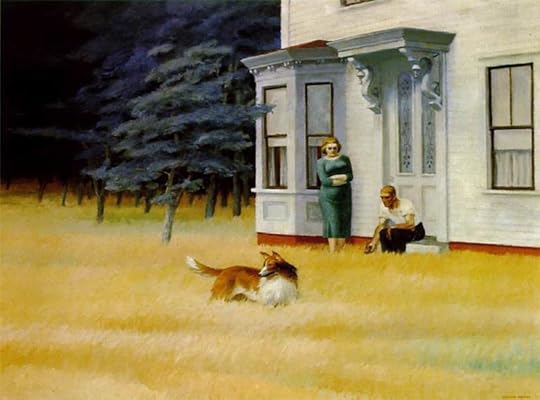
Edward Hopper: Cape Cod Evening. 1939
I seguenti due sono due racconti corti:, Dopo la partita e Vestito come di foglie d’estate. Sembrano girare intorno al niente: raccontano due momenti che si cristallizzano pur se non sembra che succeda alcunché. Non so se è proprio per questo che si caricano di una tensione pazzesca, come se qualcuno stesse per premere il grilletto. Ma, anche, forse, no. Sotto la superficie di apparente nulla, ribolle un magma tesissimo che può esplodere, diventare violenza, devastare. Ma anche no.
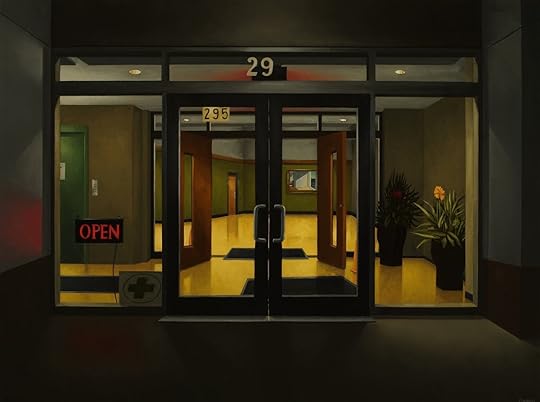
Peter Harris: Evening with Hopper (Nighthawks).
Il quarto, La terra dove sono morti i miei padri, è dedicato a James Crumley, l’amico scrittore di noir hard boiled, e i protagonisti sono di origine greca e armena. Karambelas finisce in prigione per aver commesso uno sbaglio, trovarsi nel posto sbagliato nel momento sbagliato: come se questo non bastasse, come se essere entrato dove c’è un morto per terra non fosse abbastanza, si è portato via come souvenir il revolver del morto. L’avvocato Archimede Nionakis lo difende. Scopre la verità e… Il gusto di Dubus per la suspense da storia crime: delitto e castigo, anche se a dire il vero la somiglianza è solo col primo dei due sostantivi. La punizione, il castigo non viene applicato.
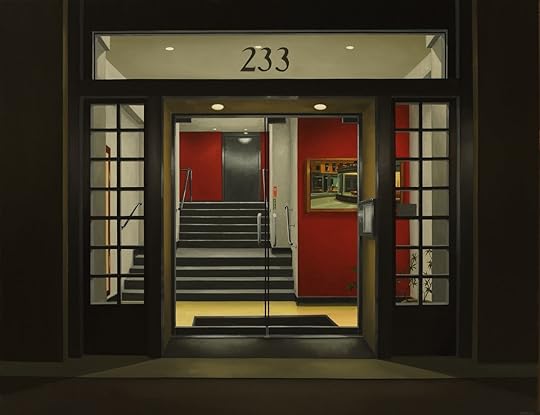
Peter Harris: Evening with Hopper.
Il quinto è anche più lungo del primo. S’intitola Molly, ma per un bel pezzo è Claire la protagonista, giovane madre poco più che ventenne che da sola cresce la figlia, la Molly del titolo. Il marito se n’è andato in California del sud, fa l’antropologo, non tornerà: manda regolarmente assegno di mantenimento, ma è fuori dalle loro vite. Molly ha tre anni: e man mano la vediamo crescere, avvinta alla madre, che le fa anche da padre, ma è anche la sua migliore amica. Molly cresce e noi la seguiamo fino all’ultima notte della sua adolescenza, nella quale fa l’amore per la prima volta, col ragazzo che sente di amare, o forse crede di amare, il dolce fratello maggiore di una sua compagna di classe. E siccome appartengo anch’io a quella generazione che nell’automobile ha vissuto come in camera da letto, ho seguito la storia con particolare vicinanza.
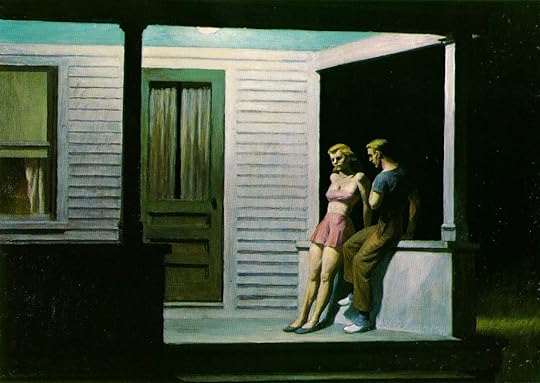
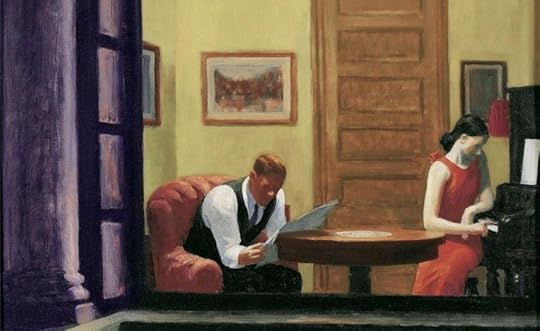
Edward Hopper: Room at Night. 1932
La raccolta si conclude con un altro racconto dedicato a un nome femminile, Rose. Rose frequenta un bar dove va anche il narratore (in prima persona): uno di quei bar dove le anime vengono accolte e dissetate, e avvicinate. Una sera racconta la sua storia al narratore senza nome e senza storia. È una storia di redenzione. E Dubus, o meglio quel narratore senza nome, che s’era preso il tempo per una bella digressione iniziale prima di addentrarsi nella storia di Rose, ricuce il prima e il dopo con un movimento magistrale.
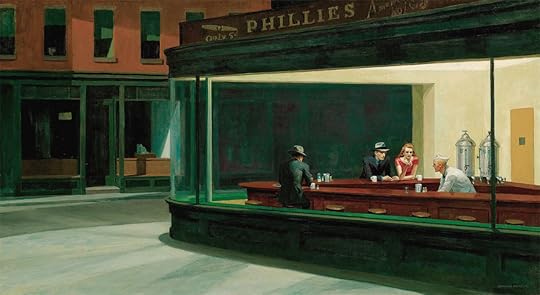
Edward Hopper: Nighthawks. 1942
In tutti e sei, racconti serali, come dice il titolo, come sottolinea il traduttore Manuppelli nella prefazione, per tutte le oltre duecento pagine, Dubus è stato capace di sorprendermi e stupirmi, di mostrarmi una parte dello spirito che avevo forse immaginato, ma non avevo mai visto né sentito. Meraviglia.
Sempre che uno creda che non si possa commettere del male o tollerarlo o anche solo evitare di affrontarlo, senza pagare un prezzo. Ci incontriamo ancora, vecchio mio; e stai pur certo che non sarà l’ultima. A meno che … La mia conoscenza della letteratura a stelle e strisce si fonda sulla lettura di una manciata di libri e su una assai approssimativa conoscenza di alcuni monumenti, Asimov, Bradbury, Faulkner, Steinbeck. Da qualche anno ho aggiunto a questo piccolo scaffale anche McCarthy e Dubus. Non amo molto i racconti. Anche di quelli che mi hanno maggiormente coinvolto, dopo un po’ resta un ricordo offuscato e, a volte, ho bisogno di riprendere il mano il libro per rinnovare le emozioni provate. E Dubus non fa eccezione. Ma ogni suo racconto mi colpisce al cuore e mi strazia l’anima. Sarà per via della sedia a rotelle, ma, barba a parte, me lo immagino sempre come il Raymond Burr di Ironside … duro e asciutto nel raccontarti la realtà, ma uomo di rara acutezza e profonda sensibilità.
Leggendo questa raccolta di racconti mi sono reso conto di avere un problema con Dubus. Le sue storie sono 'vere' perché hanno radici che affondano nella sua personalissima esperienza e questo aspetto appare evidente nella narrazione, sempre perfetta, impeccabile, per certi aspetti anche rasserenante. Ma...ma c'è qualcosa che non mi convince nel suo modo quasi solenne di descrivere i personaggi e le vicende di cui narra che sembra siano collocati in una sorta di spazio etereo in cui manca il pulsare degli istinti, delle emozioni. I suoi racconti sono come una straordinaria birra filtrata che, servita alla giusta temperatura, sprigiona i suoi profumi ma che è priva di quel retrogusto amarognolo, 'grezzo', della birra non filtrata. I racconti di Dubus sono 'buonissimi' ma privi, secondo me, di carica emotiva, di 'furore narrativo' e non riescono a raggiungere e ri-svegliare il lato istintivo, primordiale dei lettori che, come me, cercano, nelle storie che leggono, anche il 'gusto amarognolo'.
The first story was quite beautiful. So were the next two I read, but they were all exactly the same. And when you can't tell the difference between a narrator who's a naval officer from New Orleans, a MLB player and a drunk in a Lowell bar, there's a problem.
just now finished this short story/novella collection and i feel as though i've had the wind knocked out of me. the final story (rose) is by far the best of the lot. generally, the writing is sparse (similar to hemingway) and the insights into our humanity subtle, sophisticated and moving. there is a great deal of despair, shame, anguish amongst the pages, but also a few tender, redemptive moments. he writes about uneasy, complicated topics and illustrates how one mis-timed, poorly-considered act can inflict damage lasting a lifetime. having finished this, i want to read everything andre dubus ever wrote.
What works for me in Dubus' writing is his evocation of mood and his ability to write a woman's perspective with honesty. I can't read more than one or two of his stories at a time, and so his books are read in fits and starts for me. There is something both lovely and terrible about the stories so that I can't look too long.
A bit wider in scope than his other collections which hurts the laser like focus and precision he paints domestic life. You think this will end up as his weakest collection before "Rose" kicks you in the teeth.
The first story in this collection presents two naval officers, one white and the other black. A chance encounter on the dock while returning to their ship after a leave presents a glimpse of prejudice and compassion. Another story details harsh bar banter as observed by a young boy who is dragged into the establishment. Searching for the answers to a doctor's murder and the life of a young mother who divorces her absentee husband are the focus of two of the stories. The final story tells about a bar regular who reveals her tale of married abuse and escape. Her neighbors who spare her from a murder conviction are the same ones who seal the fate of her children. All of the stories in Last Worthless Evening deal with the very complicated things that people experience. Debus' writing is filled with powerful dialog and strong characters. I enjoyed every sentence of every story.
I’ve read a few of his books now because my friend knew him in college and they were in his bookshelf as I stayed in his home for the last year. Dubus’ tone seems the same in most stories. True that the characters all seem to have the same general flavor, male and female. Some stories can be interesting from a humanities standpoint. Quite honest, really capturing the inner sanctum of our minds. But, they also can become quite mundane and tedious. Shorter sections of this is great, but 50 pages of it, without a break, is difficult to stay with.
A small collection of short stories and novellas, several are good, one ("Land Where My Fathers Died") is very good and the final novella ("Rose") is a 40-page masterpiece.
The Last Worthless Evening Andre Dubus David R. Godine Publisher, January 1st 1997
Full of drama in every story that shocks my view on his characters, The Last Worthless Evening by Andre Dubus creates enthralling stories that must be finished. This book contains six different stories each with their own cruel twists. Dubus is able to portray real believable people and creates for them their personal tormented history and future in a condensed but not rushed story so you get the full effect of their feelings, their uneasiness or their pain. The first story titled Deaths at Sea is a serious of letters from a naval officer to his wife back home. Gerry is set in an era where race is a healing bout still tender subject and he as a white southerner is given a black roommate named Willie Brooks. Although uneasy at first they become firm friends and over the course of the story become very close. Willie has to deal with various traumatic events while on board that range from possible murder to blowing up the entire ship he is stationed on but always is able to deal with them in a sense of removed humor. The next story, After the Game, is a quick story of a baseball team just after a win. The story is told from the perspective of Billy Wells, the teams successful pitcher, as he tries cooling down after the game. Soon after the story begins his fellow player Joaquin Quintana is found frozen in the locker rooms and no one knows why. The story is told like an episode of Family Guy but without the punchlines, constantly shifting to different scenes that emerge from a shred of the storyline then diving back in. Another short story but full of cruel worn men is Dressed like Summer Leaves. Told from a third person who likes to look into the small details of its characters, the story follows a young eleven year old Mickey Dolan as he is dragged into a bar by a veteran named Duffy. Duffy decides to pick on one of the bar mates, another veteran that Duffy sees as an inferior warrior who he constantly ridicules while playing it off in a jolly attitude. Before long things escalate into their own war Mickey retreats from. Land where my Fathers Died is the tale of a murder mystery. Though the perspective switches to two other characters it mainly follows behind the detective, Archimedes Nionakis, as he figures out who killed the doctor and tries solving his own personal issues along the way. We find out more about Nionakis as he discovers quirks out about his suspects. Molly, my personal favorite and very touching story is at first the struggle of a mother who tries raising her daughter after her negligent husband leaves them to work across the country. In the second and third chapters it follows Molly after she’s grown to fifteen years and the horrible lifestyle that I found almost unthinkable for a girl her age. I was torn apart as I read, discovering after what her mother had done to raise her, how the child fell so low. The last story, Rose is a story within a story. First from the perspective of a bar’s regular who daily listens to the stories and problems of the local college students as his interest is in deciphering why humans act the way we do and what a greater good we can do. He talks with another mysterious and legendary commoner, Rose. She reveals to him her story of a broken, lifeless, and abusive marriage, why she no longer has her three children, and why she constantly fears fire burning her. The Last Worthless evening is by no means a jolly book of happy endings but I find meaning in every story. Each is certainly worth a read through at least once to expand one’s mind. I get the feel of every character in a real setting and a real sense. In almost every story there is one thing that connects it to the next, mainly Timmy’s bar. This book is a passionate telling of non fiction that I already have suggested to my friends and I will to you as well.
Andre Dubus has been billed for years as perhaps the U.S.’s premier short story writer, and I certainly see evidence of such talent in this collection. But the trap our preeminent writers sometimes seem to fall into as their reputation grows is to allow their talent to drift into stories in which shortcomings settle, take seed, and grow. And I see ample evidence of that in this collection.
The stories here are on the surface a mixed bag: racism in the ‘50s U.S. Navy. A fatally sick Hispanic baseball player. Irish-American war veterans. Greek families. Teen coming of age (sexually). Domestic violence. What’s the common denominator here? A gritty view of American life in its lower social strata. There’s no stylizing here – except possibly in Dubus’ varied structure for these pieces. His dialogue often sizzles, and his characterizations are paramount, some of the best you’ll find in contemporary writing. He gives us stories through an unflinching, pull-no-punches voice. Still, I’m troubled, not by the impact these stories leave, but with something else.
There’s little in the way of arc to these pieces. Dubus may have wished to imply things his stories didn’t contain, but these six pieces each left me wanting. They’re really more detailed character sketches than stories; each drawing lives, or multiple lives, in excruciating detail, these taking the reader nowhere. This approach works magnificently in his two short stories, which condense and distill characters to a moment. But in the longer pieces, this preoccupation fails to lead the reader to answer broader question about American life. As a result, they’re extended snapshots, telling us much, but not enough. Too, I grew to feel bludgeoned by his first person approach to these stories, so many depicting drugs, drinking, gratuitous sex, concern with looks and weight. It’s as if Dubus himself is thinly veiled by his narrators, who are most vividly women – whatever that says about Dubus. And all too often, his narrative goes on and on in these longer pieces, giving the reader minutiae, not panorama.
There’s certainly no doubt about Dubus’ talent. But some writers are born to the short story, others to the novel, while still others manage both. But those who juggle long and short fiction successfully play each by different sets of rules, something I don’t think Dubus could bring himself to realize.
If I could have given this book 4.5 stars I would have. It didn't change my life, so it does not get the elusive 5 stars from me. Fantastic short stories. This author was certainly influenced by Hemingway so if you like that style, you'll most likely enjoy this book. I will definitely purchase other books by Dubus.
As short story/novella collections are want to be, this one was uneven. I particularly enjoyed the first novella which addresses race relations post-integration. The "detective" novella and "Rose" were other top performers.
A mixed bag but overall a good collection. atmospheric, heart-rending, and able to express the complicated things people think and feel in simple language. i read this b/c it was a kindle daily deal and I'm very glad I did.
Although all the stories in this book were excellent, the novella "Rose" was amazing. A great writer who can condense so much within the parameters of short story.