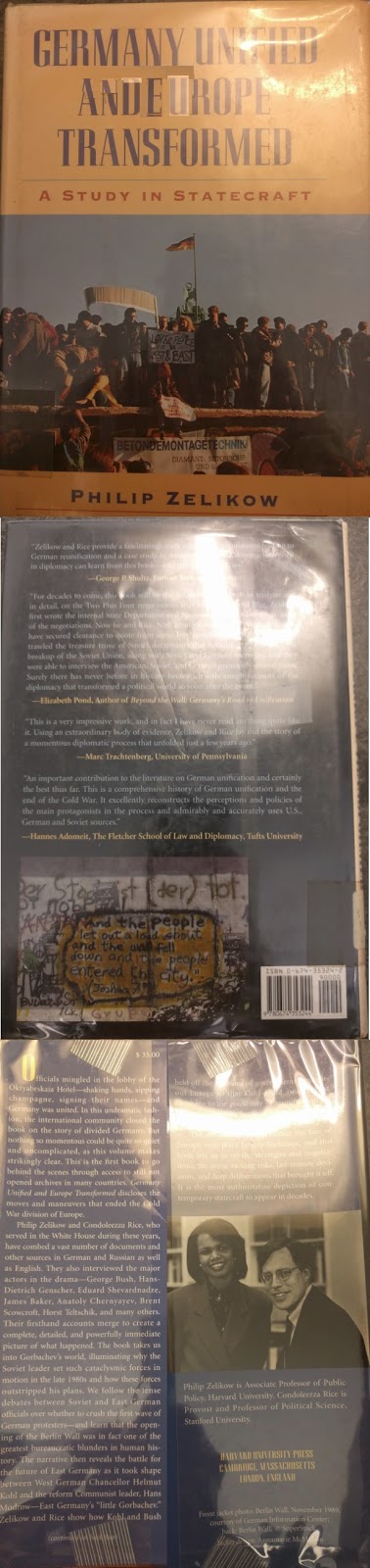
Officials mingled in the lobby of the Oktyabrskaia Hotel--shaking hands, sipping champagne, signing their names--and Germany was united. In this undramatic fashion, the international community closed the book on the drama of divided Germany. But nothing so momentous could be quite so quiet and uncomplicated, as this volume makes strikingly clear. This is the first book to go behind the scenes through access to still not opened archives in many countries. Germany Unified and Europe Transformed discloses the moves and maneuvers that ended the Cold War division of Europe.Philip Zelikow and Condoleezza Rice, who served in the White House during these years, have combed a vast number of documents and other sources in German and Russian as well as English. They also interviewed the major actors in the drama--George Bush, Hans-Dietrich Genscher, Eduard Shevardnadze, James Baker, Anatoly Chernyayev, Brent Scowcroft, Horst Teltschik, and many others. Their firsthand accounts merge to create a complete, detailed, and powerfully immediate picture of what happened. The book takes us into Gorbachev's world, illuminating why the Soviet leader set such cataclysmic forces in motion in the late 1980s and how these forces outstripped his plans. We follow the tense debates between Soviet and East German officials over whether to crush the first wave of German protesters--and learn that the opening of the Berlin Wall was in fact one of the greatest bureaucratic blunders in human history. The narrative then reveals the battle for the future of East Germany as it took shape between West German Chancellor Helmut Kohl and the reform Communist leader, Hans Modrow--East Germany's "little Gorbachev." Zelikow and Rice show how Kohl and George Bush held off the reactions of governments throughout Europe so that Kohl could awaken East Germans to the possibility of reunification on his terms. Then the battle over the future of the NATO alliance began in earnest.The drama that would change the face of Europe took place largely backstage, and this book lets us in on the strategies and negotiations, the nerve-racking risks, last-minute decisions, and deep deliberations that brought it off. It is the most authoritative depiction of contemporary statecraft to appear in decades.
Philip D. Zelikow is an American diplomat, academic and author. He has worked as the executive director of the 9/11 Commission, director of the Miller Center of Public Affairs at the University of Virginia, and Counselor of the United States Department of State. He is the White Burkett Miller Professor of History at the University of Virginia and was American Academy in Berlin Axel Springer Fellow in the autumn of 2009. He has written on terrorism, national security, public policy, peace settlements of WW1 and many significant events of the 20th century.
This book is an analysis on the diplomatic moves and other factors involved in the negotiations that lead to the fall of the Berlin Wall in 1989. This was a remarkable event that was surprisingly quick and easy to do. Nobody knew how it happened, but suddenly, almost magically, every little or big problem that could have aroused to avoid the final result just disappeared, and in the end the wall was gone in a few weeks. It was like magical history.
I ended up reading this book -about a topic that is very difficult for me to get interested in- because I took a history class with professor Zelikow and it turns out that he is a remarkable communicator and a skilled speaker. I thought it would be interesting for me, as a private experiment, to see if he could keep me engaged in history reading, which is a topic that my brain is inundated with antibodies against.
I have to be truthful: I read the book aright, but I picked up only a percentage of it. And this is not any Prof. Zewlicow guilt. Far from it. Turns out that my antibodies are stronger than I thought. However, he managed to keep me interested by means of excellent writing that I certainly payed a lot of attention to, because I wanted to pick up at least some skill. I hope I succeeded at least in that.
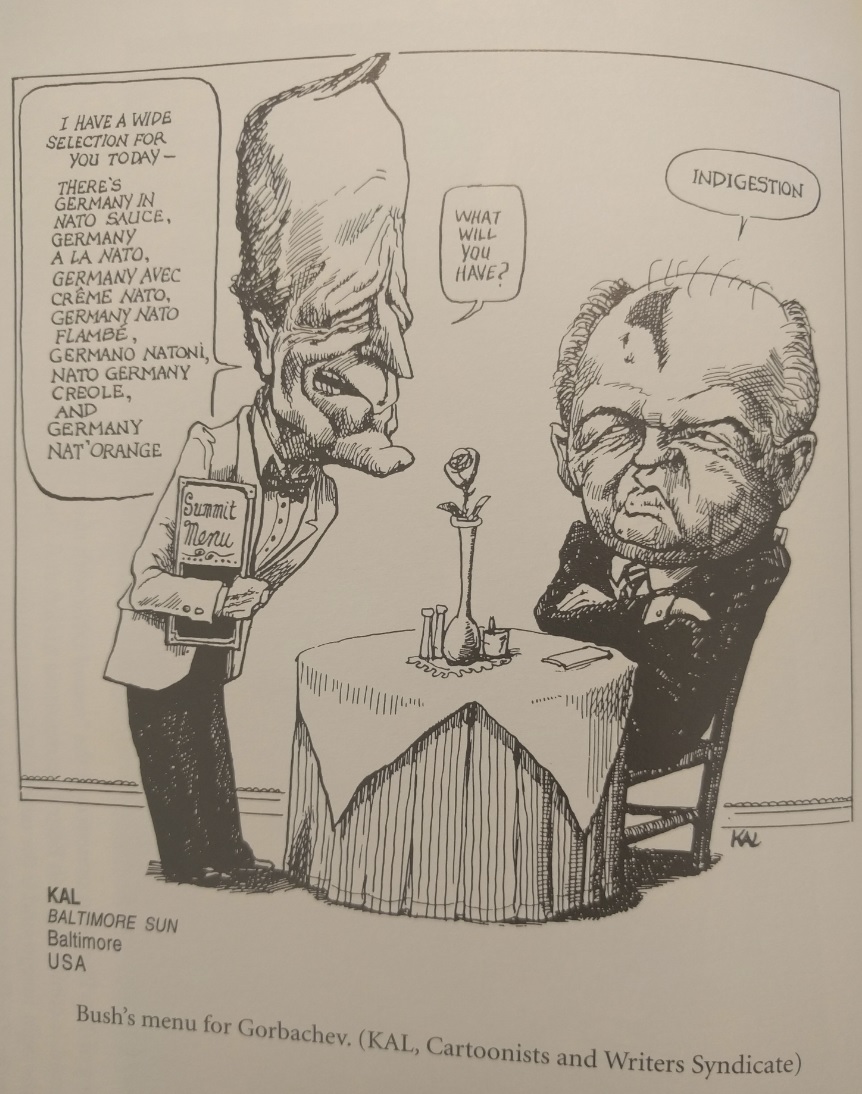
This is my favorite cartoon in the book. This book contains a wealth of graphic documents that make it more than worthy to pick up:
This is the cover of the book I read:
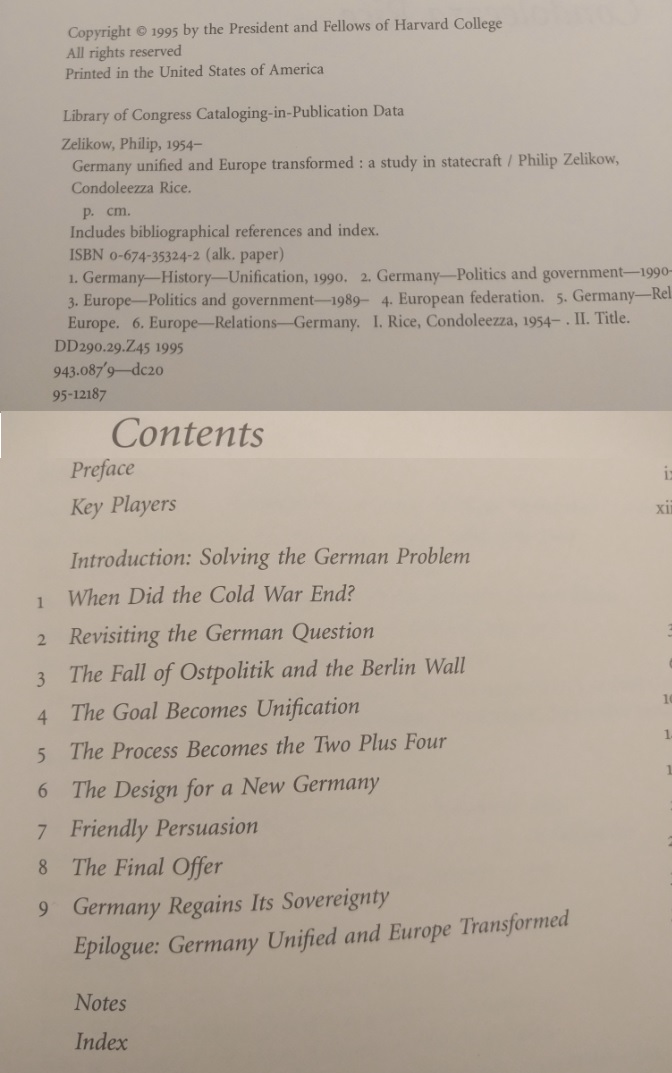
Table of contents:
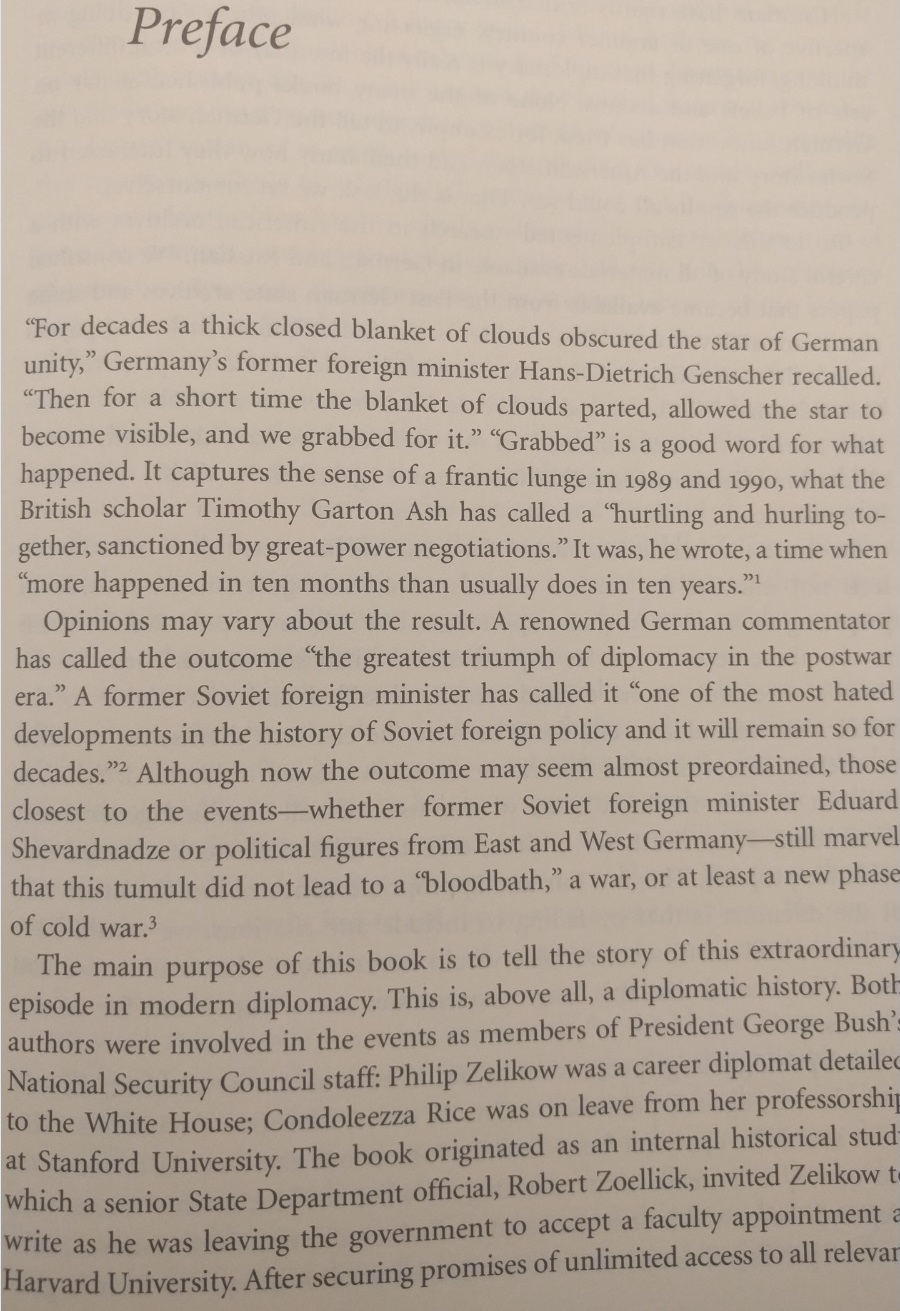
The first page of the excellent preface. I really like the fluency and clarity of this author:
A complete list of the authors in this historic happening:
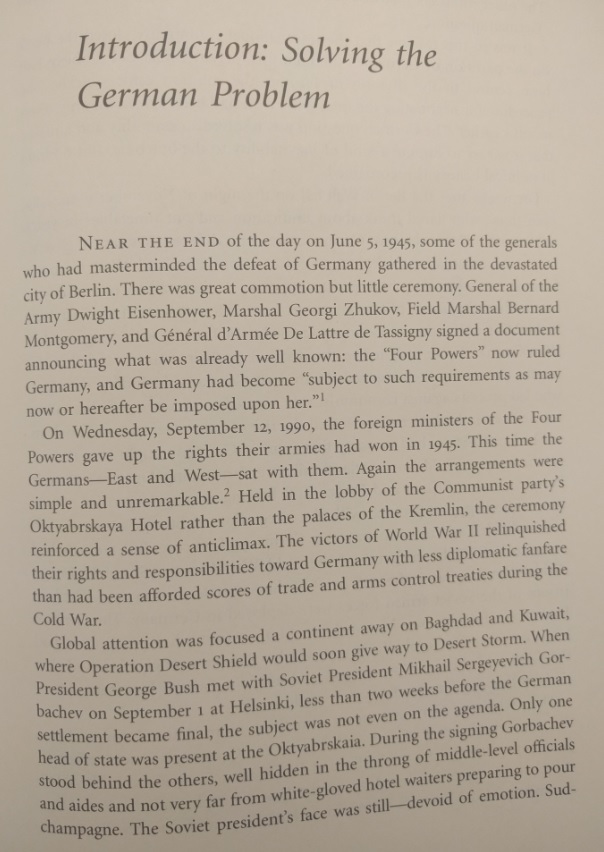
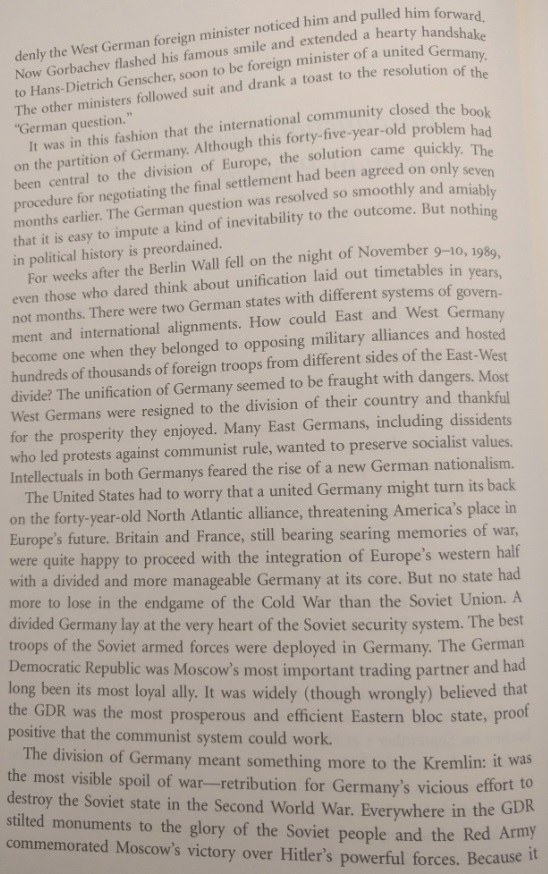
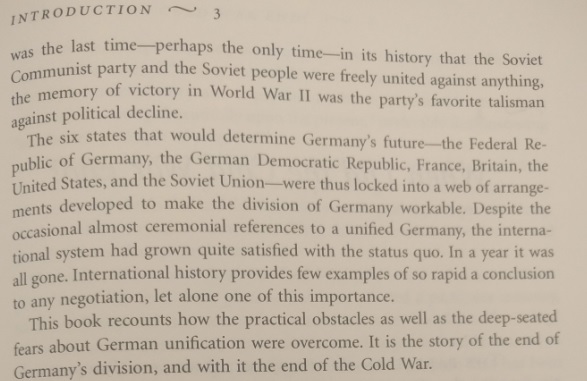
This is the introduction. It is so engaging that it is worthy of a deep reading. I just loved this piece:
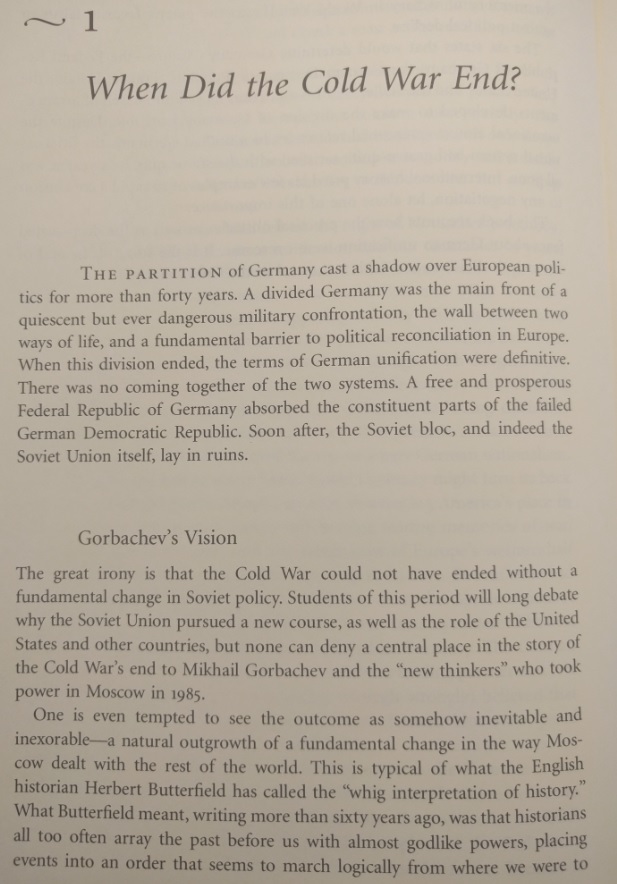
The first page of the work. Let's start from the beginning:
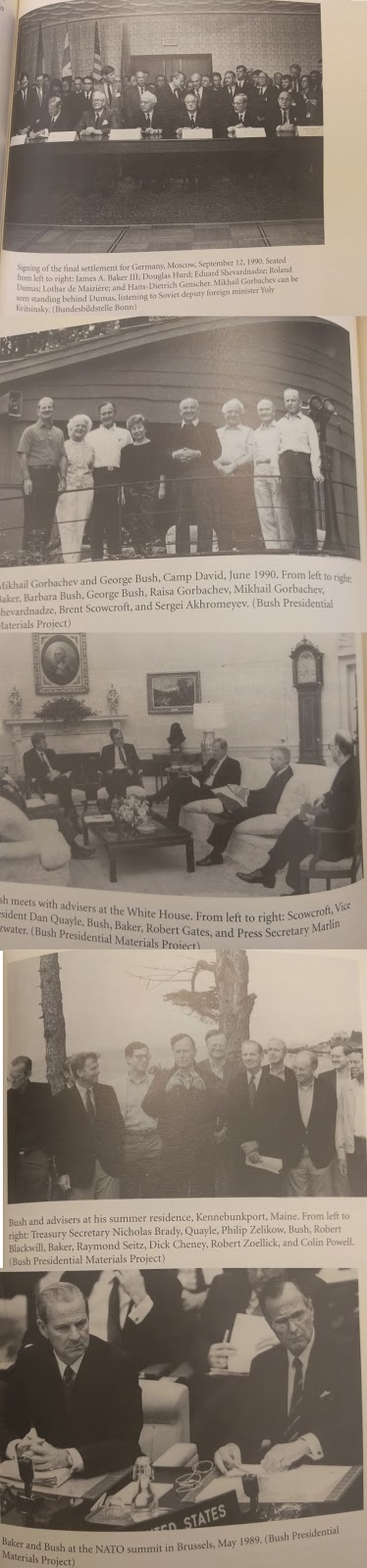
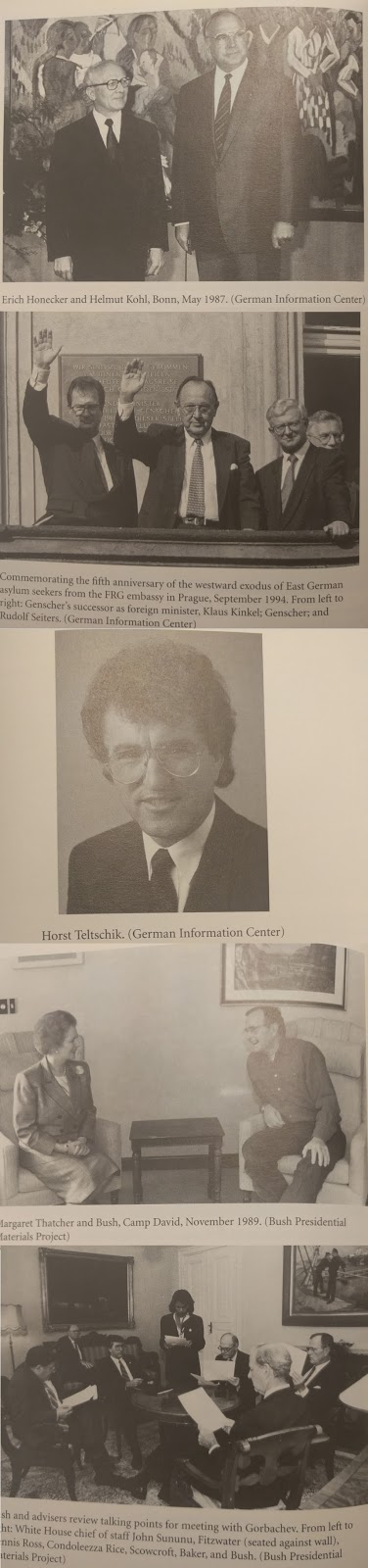
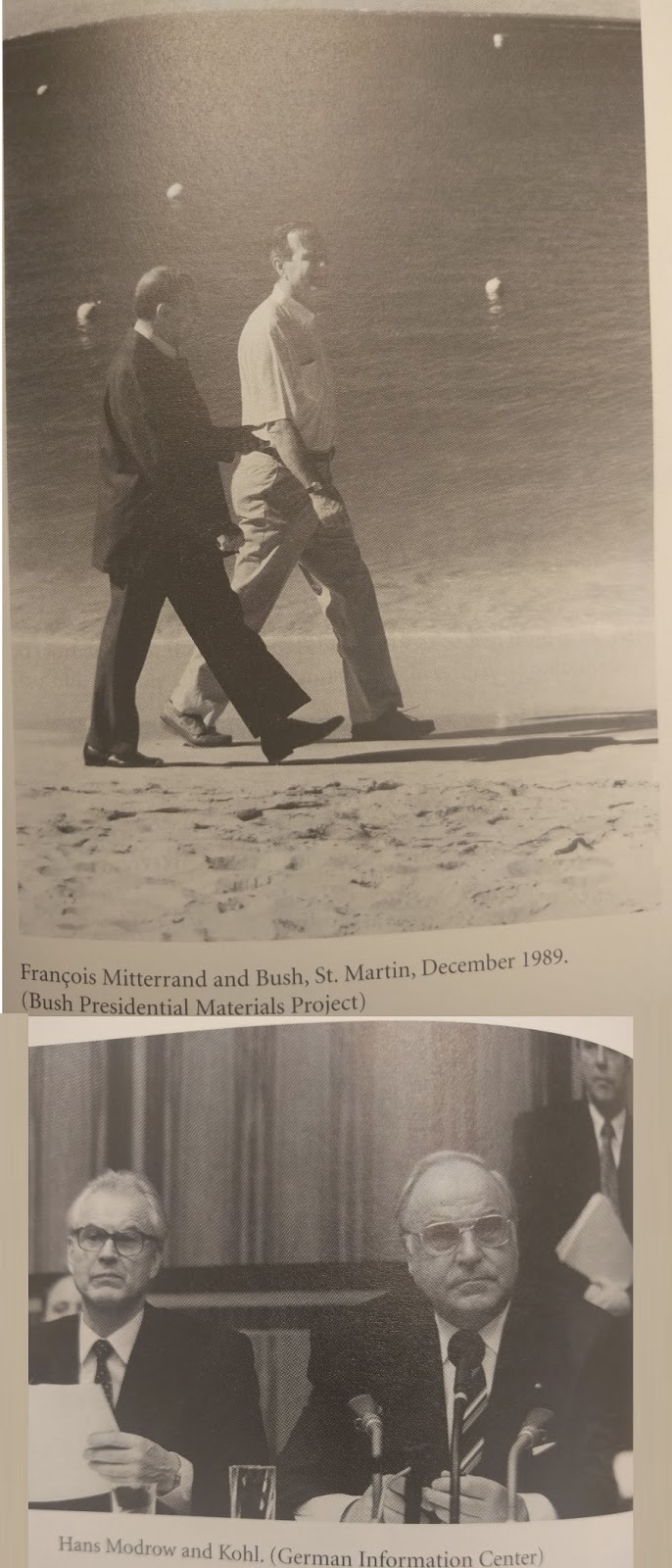
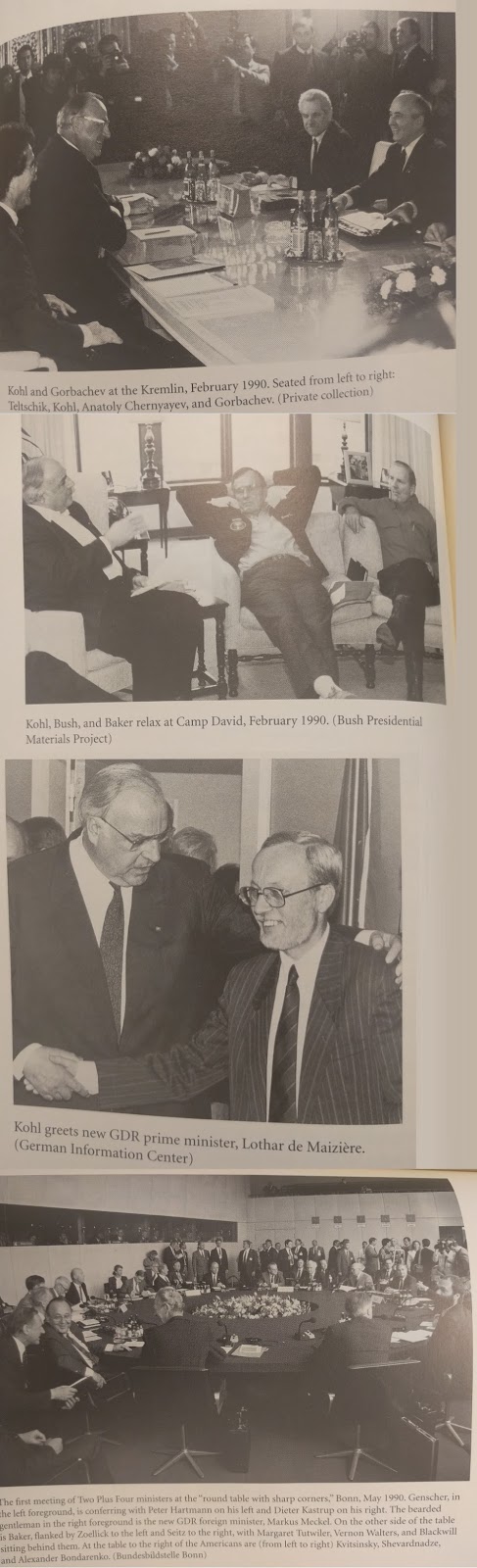
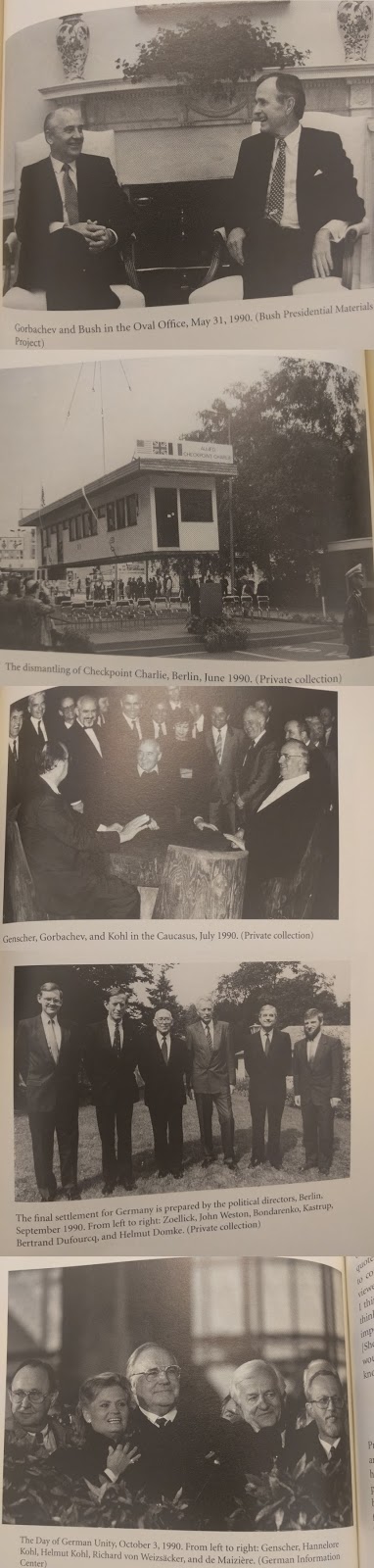
Some photos in the book:
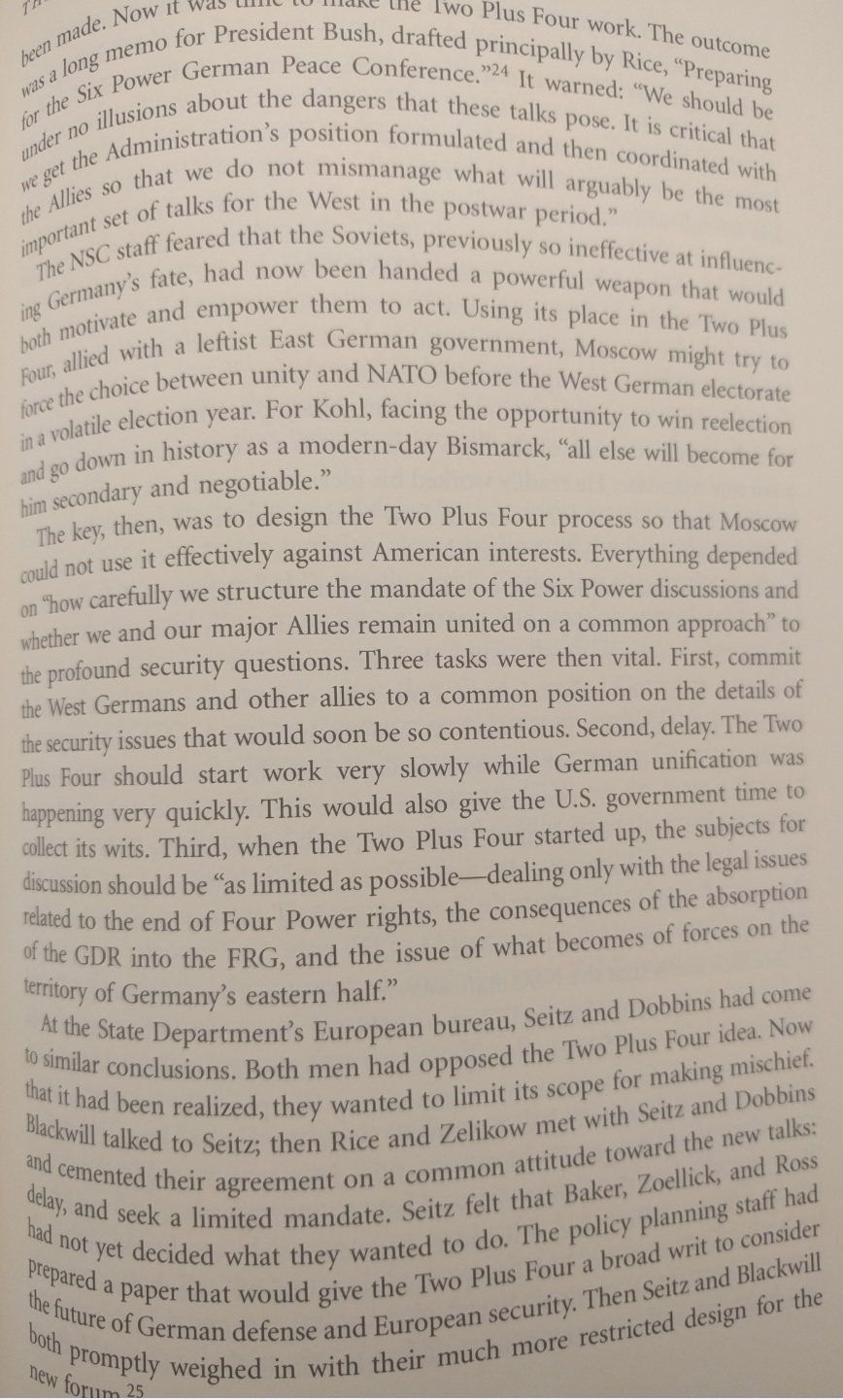
An interesting description on how NATO was a key factor in the whole process:
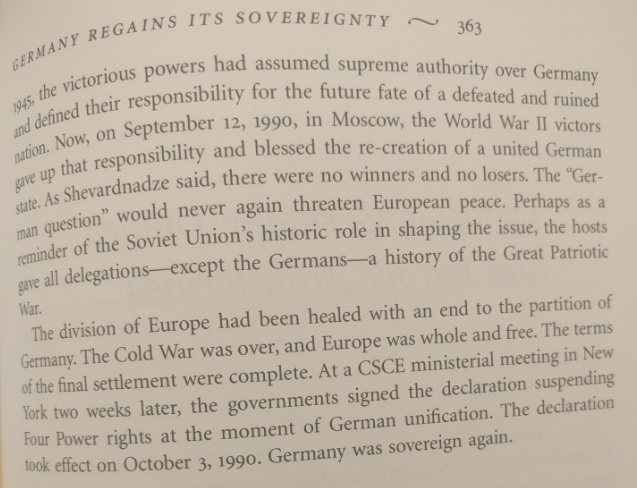
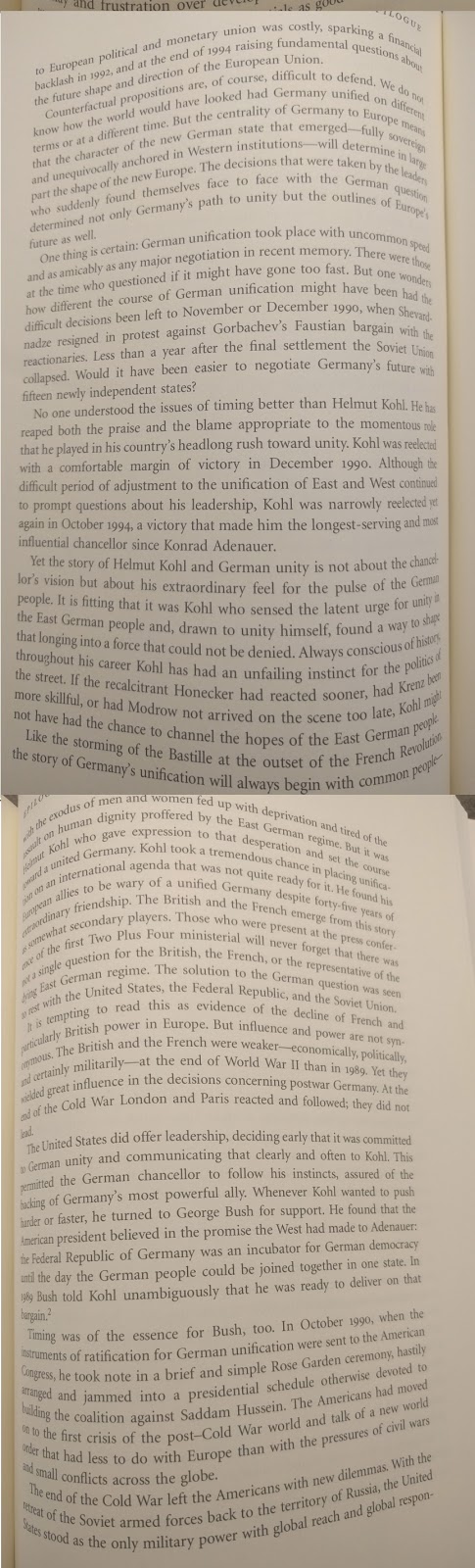
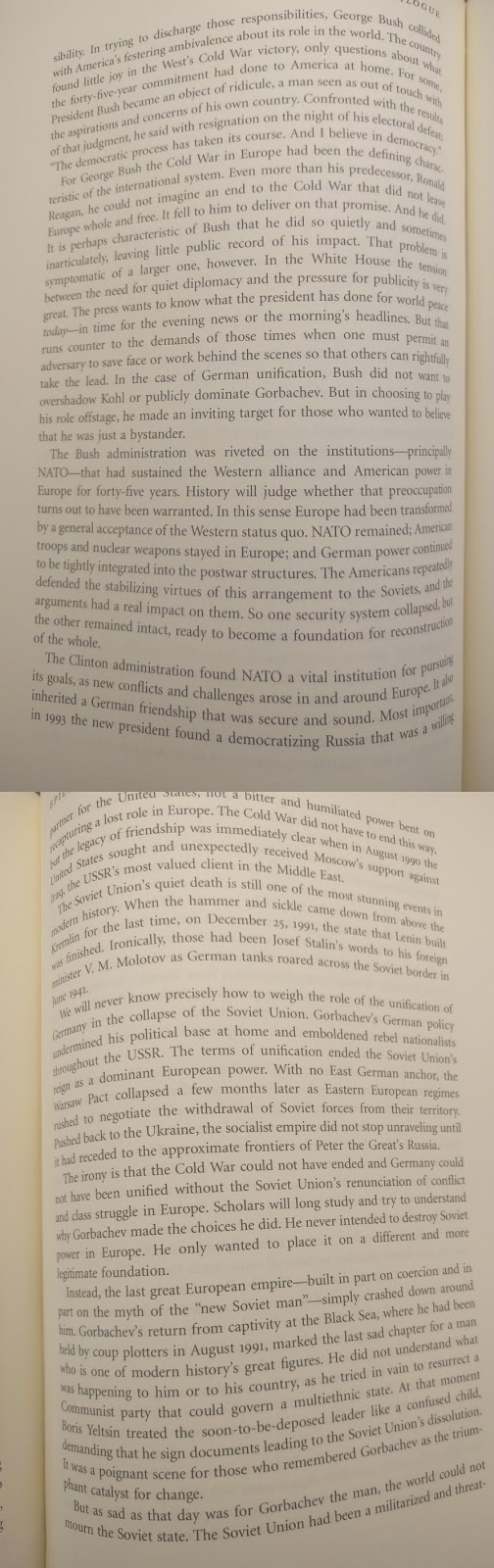
The last page of the work:
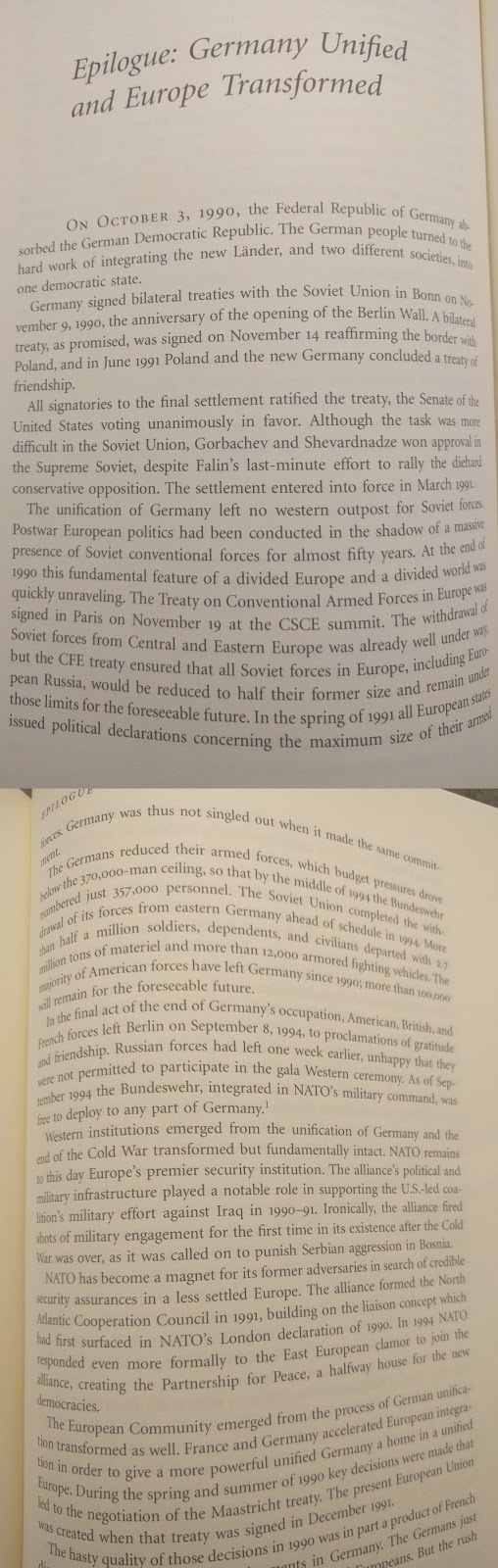
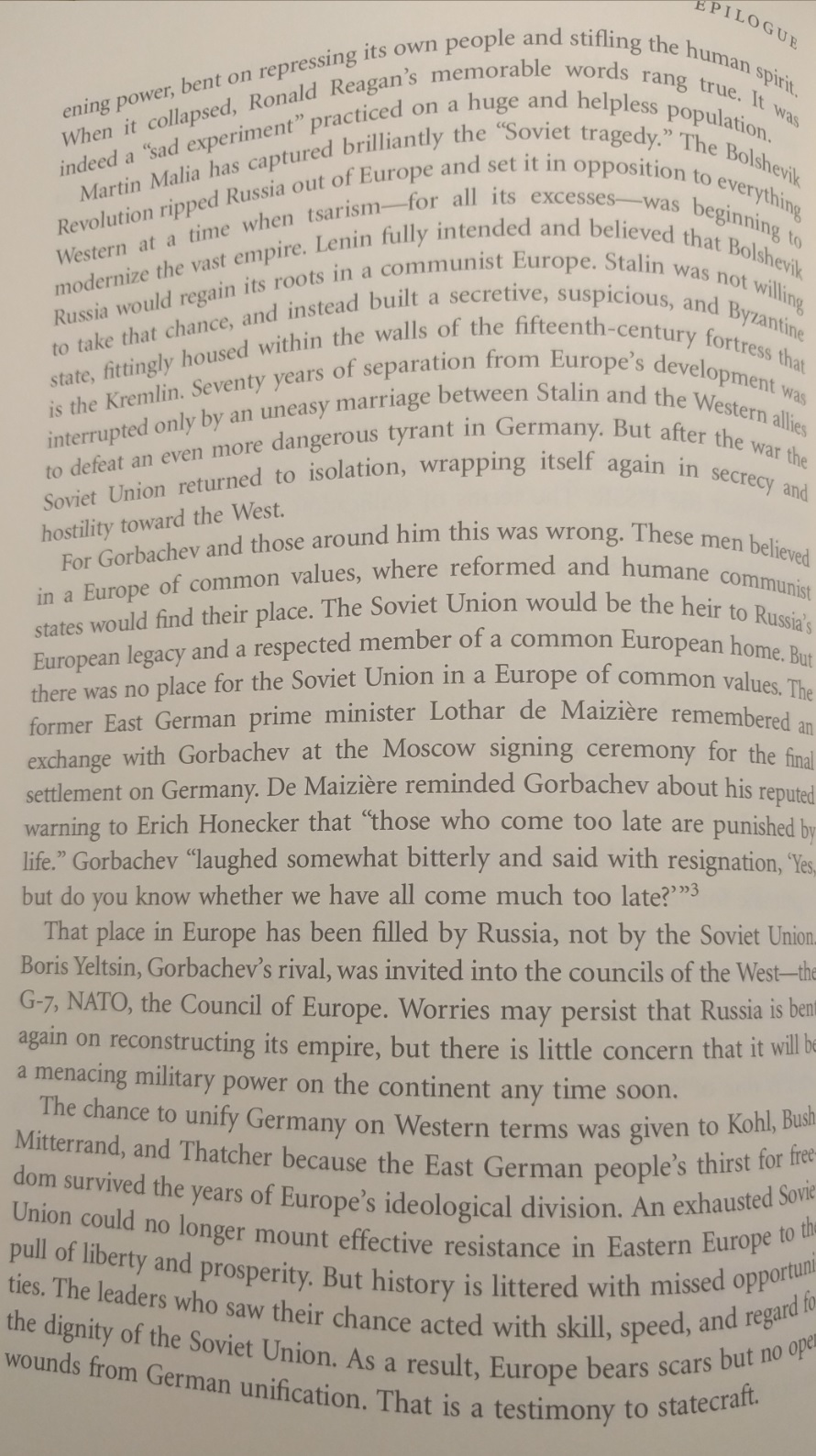
The epilogue. Another invaluable piece. I absolutely enjoyed it:
In the end, a lovely book with a professional voice, written by a very charismatic professor. Loved it, even though I understood only a small fraction of the whole thing.
On the positive side, this is an intricately detailed, thorough, and balanced work about a crucial event in American, European, and world history. On the negative side, this book is so detailed and thorough! It's often hard to see the forest for the trees as you wade through page after page of memos, meetings, and committees. There are entire chapters devoted to preliminary meetings and large sections given to preparations for Cabinet meetings. As insiders to this process, Zelikow and Rice have an outstanding grasp of the key issues and turning points, which most readers will pick up on in spite of the details. The event they portray is downright remarkable. The reunification took place peacefully, relatively amicably . It's one of the happiest endings of any 20th century political conflict. If someone in 1980 had been given this book from the future, I doubt that she would believe that Germany would be reunited in 10 years and that it wouldn't take a war to do so. I gained a whole new respect for Bush and Gorbachev, who acted like true statesmen: wise, tempered, tuned to domestic and foreign policy, and confident of the role they wanted to play in history. If only Bush II had followed in his father's footsteps. Still, I don't recommend this book for people who have a problem with the dry inner workings of diplomacy.
more spin than you would think and still somewhat reliable
Hint: It's always a diplomatic success story
oh yeah, and also the reviews
This is a remarkable book for a number of reasons. The first is because Philip Zelikow and Condoleezza Rice take a complex story--the peaceful reunification of Germany within the Western alliance, and turn it into a suspenseful, engaging, and illuminating account of successful statecraft...This book will long stand as the definitive account of a diplomatic success story. Thomas Alan Schwartz, American Historical Review
An important behind the scenes account of how East Germany was folded into West Germany at breakneck speed, an event that precipitated the demise of the Soviet Union. The authors, both of whom served on the National Security Council in the Bush White House, persuasively argue that, far from being a passive bystander, the Bush Administration was actively involved in stage-managing the dénouement of the Cold War. They also argue that the historic opening of the Berlin Wall, in November 1989, was actually the result of a bureaucratic error. The New Yorker
Can nations learn from history? If so, why in [the case of German unification] and not in others? How could German unity be achieved at all, given a long-established (but rarely expressed) conviction among the influential that it could make 'everything' break down?...Those seeking answers to these questions have a new study to turn to, in many ways the best so far, written by Philip Zelikow and Condoleezza Rice on the unification of Germany and the various bilateral and multilateral negotiations that surrounded it.... The authors were members of the National Security Council in the Bush administration, and thus participated directly in the decision-making process and diplomatic events surrounding German unification. Equally important, the book is based on the US government's "official history", traditionally composed after important negotiations, with its privileged access to all records of conversations, telegrams and Central Intelligence Agency documents. Zelikow wrote that history and was allowed to use it as the basis for this study, which he co-wrote after both he and Rice had interviewed many of the major actors involved and consulted governmental archives not only of the defunct German Democratic Republic but also of the Soviet Union, to which they were given access... The study is written in the best traditions of historical sociology. It analyzes negotiations and examines the motivations of governments, the role of individuals, and the internal economic, political and social situations. Overall, it provides fascinating reading and a welcome respite from the increasingly dull products of contemporary political science scholasticism in the US and Europe. Karl Kaiser, Survival
It is the book's 'insideness', the extent to which the authors were not merely observers but participants in the negotiations, which gives it its value. The book is rich with quotations as well as anecdotal evidence. Hugo Miller, Historical Journal
Point after point the two authors list, at every step supporting their assertions and interpretations with documents and interview material...The two show two kinds of insights into the events of the eleven months between the fall of the Wall and the conclusion of the '2+4' Treaty: First Zelikow and Rice succeed in pulling off, what most as a rule portray superficially or through colorful personality publications about the international dimension of German unity, a work of undeniably long, continuing value. Thereby they do not just settle for the saying, 'documents don't lie,' but always try again and again to cross-check their study of the documents and hard-won knowledge from their experience with interviews of the actors in the international negotiations. Second, Zelikow and Rice show clearly that accurate historical writing cannot just be done on the basis of memoirs... and newspaper articles. Peter M. Wagner, Die Welt
In one of the most extraordinary accounts of contemporary diplomatic history, Zelikow and Rice, both on the National Security Council staff during the events they describe, use normally inaccessible records and interviews with many of the players to describe the unification of Germany, itself one of the most remarkable events of the postwar world... In its scope, insight, and suspense, this account sets a standard for the genre. Kirkus Reviews
Germany Unified and Europe Transformed is a diplomatic history recounting the process that was kicked off by the fall of the Berlin Wall. This book follows the efforts of Bush and Kohler against Gorbachev and Shevardnadze with the other players of France, Great Britian and East Germany. This book is definitely only for those very interested in diplomatic history and goes through in minute detail the policy shifts and compromises proposed by each country. James Baker’s determination is showcased numerous times as well as the delicate balance between State, Defense and the National Security Council. There is no doubt the unification of Germany happened faster than anyone would have predicted once the Berlin Wall fell. This book serves as one of the great descriptions of that process and tracking how it occurred and what it meant for the nascent European Union.