

What do you think?
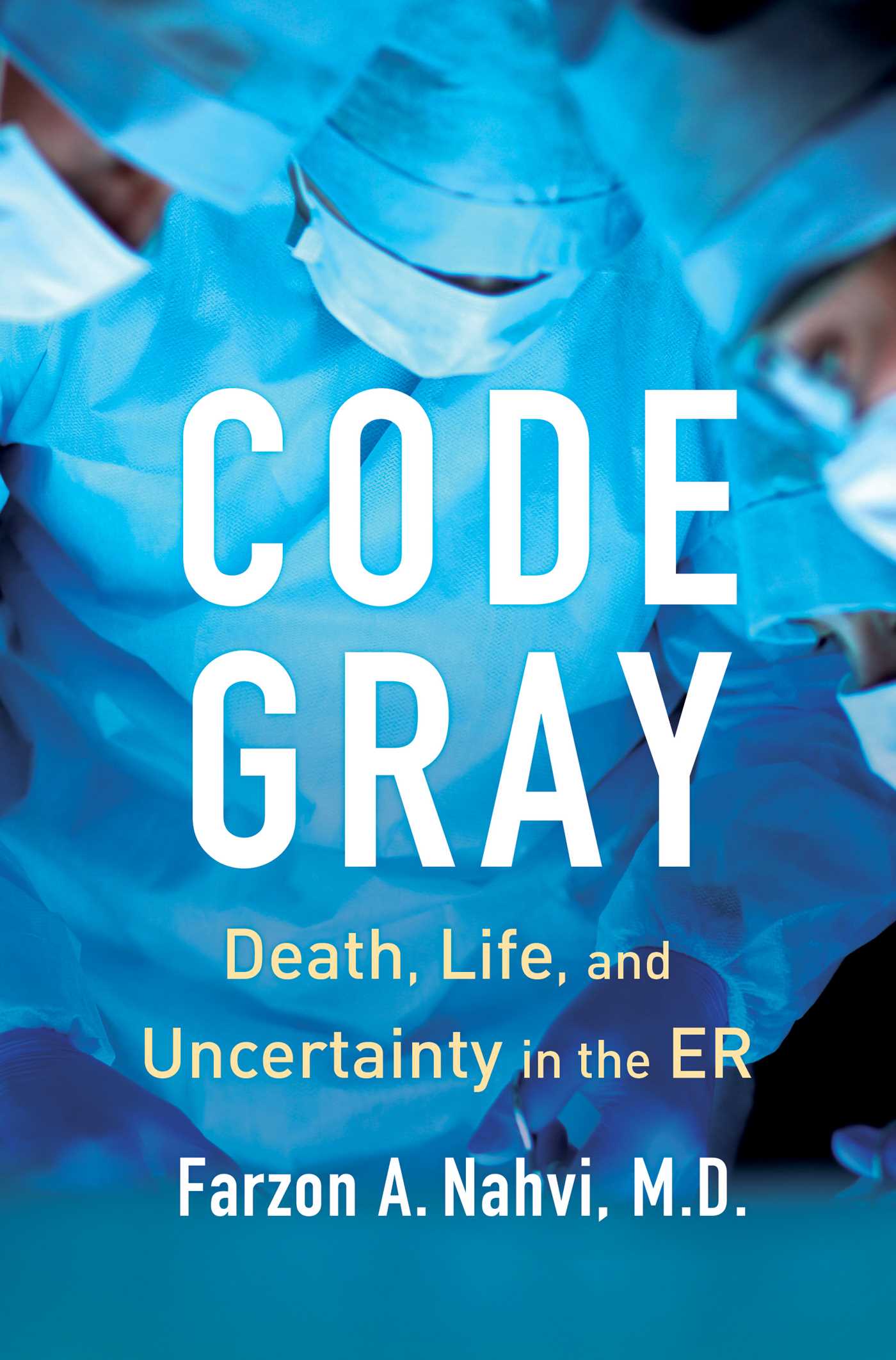
Code Gray: Death, Life, and Uncertainty in the ER
Code Gray is a “provocative and meaningful” (Theresa Brown, New York Times bestselling author of Healing ) narrative-driven medical memoir that places you directly in the crucible of urgent life-or-death decision-making, offering insights that can help us cope at a time when the world around us appears to be falling apart.
In the tradition of books by such bestselling physician-authors as Atul Gawande, Siddhartha Mukherjee, and Danielle Ofri, this beautifully written memoir by an emergency room doctor revolves around one of his routine shifts at an urban ER. Intimately narrated as it follows the experiences of real patients, it is filled with fascinating, adrenaline-pumping scenes of rescues and deaths, and the critical, often excruciating follow-through in caring for patients’ families.
Centered on the riveting story of a seemingly healthy forty-three-year-old woman who arrives in the ER in sudden cardiac arrest, Code Gray weaves in stories that explore everything from the early days of the Covid outbreak to the perennial glaring inequities of our healthcare system. It offers an unforgettable, “discomfiting, and often bracing” (Bloomberg Businessweek) portrait of challenges so profound, powerful, and extreme that normal ethical and medical frameworks prove inadequate. By inviting you to experience what it is like to shift in the ER from a physician’s perspective, we are forced to test our beliefs and principles. Often, there are no clear answers to these challenges posed in the ER. You are left feeling unsettled, but through this process, we can appreciate just how complicated, emotional, unpredictable—and yet strikingly beautiful—life can be.
In the tradition of books by such bestselling physician-authors as Atul Gawande, Siddhartha Mukherjee, and Danielle Ofri, this beautifully written memoir by an emergency room doctor revolves around one of his routine shifts at an urban ER. Intimately narrated as it follows the experiences of real patients, it is filled with fascinating, adrenaline-pumping scenes of rescues and deaths, and the critical, often excruciating follow-through in caring for patients’ families.
Centered on the riveting story of a seemingly healthy forty-three-year-old woman who arrives in the ER in sudden cardiac arrest, Code Gray weaves in stories that explore everything from the early days of the Covid outbreak to the perennial glaring inequities of our healthcare system. It offers an unforgettable, “discomfiting, and often bracing” (Bloomberg Businessweek) portrait of challenges so profound, powerful, and extreme that normal ethical and medical frameworks prove inadequate. By inviting you to experience what it is like to shift in the ER from a physician’s perspective, we are forced to test our beliefs and principles. Often, there are no clear answers to these challenges posed in the ER. You are left feeling unsettled, but through this process, we can appreciate just how complicated, emotional, unpredictable—and yet strikingly beautiful—life can be.
256 pages, Hardcover
First published February 21, 2023
Ratings & Reviews
Friends & Following
Create a free account to discover what your friends think of this book!
Community Reviews
Displaying 1 - 30 of 173 reviews
February 19, 2023
After reading many medical books, I stumbled onto this one and was prepared to hear the detailed stories of ER patients. That;'s not what I found. I also didn't find the things a physician learns in medical story.
Instead, I was treated to 24 hours in an emergency room that could be anywhere, and inside the mind of an ER Doctor, a very special doctor, who was able to put into practice the reason he became a doctor in the first place - he wanted to help people.
From the beginning of the book when he treats a deceased patient's family with tenderness and care, doing the unthinkable in terms of time and money, by paying more attention to the deceased woman's husband. From there the reader is taken inside the reasons a doctor does what he does.
It's a rare opportunity to understand a little of what makes a good doctor a good doctor.
Instead, I was treated to 24 hours in an emergency room that could be anywhere, and inside the mind of an ER Doctor, a very special doctor, who was able to put into practice the reason he became a doctor in the first place - he wanted to help people.
From the beginning of the book when he treats a deceased patient's family with tenderness and care, doing the unthinkable in terms of time and money, by paying more attention to the deceased woman's husband. From there the reader is taken inside the reasons a doctor does what he does.
It's a rare opportunity to understand a little of what makes a good doctor a good doctor.

February 19, 2023
You should read this book.
As an emergency room physician in a New York City hospital, Dr. Farzon Navhi is inherently qualified to describe the trial and tribulations of working in an ER. As an outstanding writer and an ER physician, he is uniquely qualified to tell the story in a way that will keep you turning pages deep into the night.
Code Gray: Death, Life, and Uncertainty in the ER begins with a somewhat lengthy (though not overbearing) prologue that describes the dark days of the beginning of the COVID epidemic. Navhi weaves text messages sent between health care providers with insight that can only be gained by standing on the front lines into a gripping story set in what must have felt like hand his colleagues had descended into a previously unknown level of hell.
The book then describes a single pre-pandemic night shift in a New York City hospital. If you've ever been unfortunate enough to visit a large urban ER in the middle of the night, you probably think you know something of the general chaos that ensues. But you haven't experienced it from a ER doctor's perspective. Yet.
Dr. Nahvi's first patient arrives in the ER with paramedics giving her CPR. That patient's story is cleverly intertwined throughout the shift as Nahvi and the team of professionals it takes to make an ER function press their way through the evening.
If you have any interest in the practice of medicine, or our health care system, Code Gray is a fascinating and enlightening read. If you have zero interest in medicine or the health care system, Code Gray is a fascinating and enlightening read. The life-lessons it contains were a pleasant surprise. You don't need to be an Ivy League graduate, as Nahvi is, to grasp how his experiences translate into valuable insight on living life.
Code Gray is extremely well-written, a terrific story, a historical look at a once-in-a-century pandemic, and a primer on how attitude and self-reflection can help you live a more enriching life. I'm not sure what else anyone could ask from a book.
You should read this book.
Publication date February 21, 2023.
Special thanks to Netgalley, Simon & Schuster, and Dr. Farzon A. Navhi for providing the Advance Reader Copy of Code Gray. This review is my honest and personal opinion.
As an emergency room physician in a New York City hospital, Dr. Farzon Navhi is inherently qualified to describe the trial and tribulations of working in an ER. As an outstanding writer and an ER physician, he is uniquely qualified to tell the story in a way that will keep you turning pages deep into the night.
Code Gray: Death, Life, and Uncertainty in the ER begins with a somewhat lengthy (though not overbearing) prologue that describes the dark days of the beginning of the COVID epidemic. Navhi weaves text messages sent between health care providers with insight that can only be gained by standing on the front lines into a gripping story set in what must have felt like hand his colleagues had descended into a previously unknown level of hell.
The book then describes a single pre-pandemic night shift in a New York City hospital. If you've ever been unfortunate enough to visit a large urban ER in the middle of the night, you probably think you know something of the general chaos that ensues. But you haven't experienced it from a ER doctor's perspective. Yet.
Dr. Nahvi's first patient arrives in the ER with paramedics giving her CPR. That patient's story is cleverly intertwined throughout the shift as Nahvi and the team of professionals it takes to make an ER function press their way through the evening.
If you have any interest in the practice of medicine, or our health care system, Code Gray is a fascinating and enlightening read. If you have zero interest in medicine or the health care system, Code Gray is a fascinating and enlightening read. The life-lessons it contains were a pleasant surprise. You don't need to be an Ivy League graduate, as Nahvi is, to grasp how his experiences translate into valuable insight on living life.
Code Gray is extremely well-written, a terrific story, a historical look at a once-in-a-century pandemic, and a primer on how attitude and self-reflection can help you live a more enriching life. I'm not sure what else anyone could ask from a book.
You should read this book.
Publication date February 21, 2023.
Special thanks to Netgalley, Simon & Schuster, and Dr. Farzon A. Navhi for providing the Advance Reader Copy of Code Gray. This review is my honest and personal opinion.

January 27, 2026
This book is an honest and thoughtful look into the life of a doctor in the ER. I appreciated how openly he talks about death and the difficult responsibility of telling patients/patient's family things they don’t want to hear such as living with a chronic illness or the loss of a loved one respectively.
What stood out to me most was his reflection that the real question is not “What is the point of these stories?” but rather “What is the point of going through life without exploring stories like these?” This idea stayed with me. The book shows that medicine is not just about treatment, but also about empathy, communication and facing human vulnerability.
Overall, this book is emotional, honest and meaningful.It helped me see the medical profession from a more human perspective rather than that of a patient.
What stood out to me most was his reflection that the real question is not “What is the point of these stories?” but rather “What is the point of going through life without exploring stories like these?” This idea stayed with me. The book shows that medicine is not just about treatment, but also about empathy, communication and facing human vulnerability.
Overall, this book is emotional, honest and meaningful.It helped me see the medical profession from a more human perspective rather than that of a patient.

February 12, 2023
Well written and extremely informative. The first part of the book deals with the pandemic at its start. Until you read this, or if you are a health care worker or have a family member who is, I don't think you can really appreciate what heroes they were. Dr. Nahvi does an amazing job sharing his thoughts and beliefs while realistically understanding the constraints our health care system is under. Thanks to Netgalley, the author and publishers for an advanced copy in exchange for my honest opinion.

March 8, 2023
To borrow from another reader, "This is a better read for those people who know very little about emergency rooms, and need a fundamental level base explanation."
I found the prologue on Covid interesting and was glad to see there was a bit of support around the country in the texting, as God knows, the front line employees needed it! But as far as the book itself, I just didn't find it all that interesting.
As a realistic person with a lot of medical knowledge literally from advocating for myself, I'd be pissed to see the charade of prolonging the calling of death just to put on a show for the living. Not to mention the fact of the cost of everything pumped into my dead body.
What I'd like to see is a book on what the damned insurance companies have done to our healthcare on the front lines. The author alluded to it a bit, but not near enough for the general public to see and understand what has happened to us all!
I found the prologue on Covid interesting and was glad to see there was a bit of support around the country in the texting, as God knows, the front line employees needed it! But as far as the book itself, I just didn't find it all that interesting.
As a realistic person with a lot of medical knowledge literally from advocating for myself, I'd be pissed to see the charade of prolonging the calling of death just to put on a show for the living. Not to mention the fact of the cost of everything pumped into my dead body.
What I'd like to see is a book on what the damned insurance companies have done to our healthcare on the front lines. The author alluded to it a bit, but not near enough for the general public to see and understand what has happened to us all!

March 27, 2023
Wow! What a great book! Before I started, I was expecting a compilation of “crazy” emergency room stories, but instead this book was about the humanity, feelings, internal struggles, helplessness, emotional wins and losses of Dr Nahvi and his patients and their family members while he was practicing at a NYC ER. It’s really well done. And now he practices in Concord, NH. He comes across as a genuinely kind, good, caring person.

September 13, 2026
This was an interesting reflection that ER Physician, Farzon A. Nahvi wrote about his encounters in the ER. It speaks of COVID during the midst of the pandemic, but explores the limits the ER had already reached before ER’s were ever encountering COVID. Many of the cases he deals with are not fixable, they often deal with chronic illness and a visit to the ER just helps ease the current problem. He sees the cracks so many people face and knows he can’t easily rectify the situation. Sending ill people back home who struggle to stay in a home or have enough to cover basic bills and medical needs often just requires listening and offering the limited health our broken healthcare industry offers. It showed the humanity that this Dr and others face when needing to give very bad news to families or patients. The one story of continuing resuscitation for longer than necessary so a man could see everything was done to save his wife really mattered. This is not TV, usually once someone is in cardiac arrest after a few minutes, it’s highly unlikely that you can save that person. Yet, he felt for the husband arriving in the ER and didn’t want to have him find his wife dead and alone in a room. Was that the right thing to do? That is the type of uncertainty people working in the ER confront often. It exposed many problems with healthcare, yet showed professionals committed to still trying in spite it all.

January 21, 2025
My husband was talking about hospital caring more about profits than patients because of a show he is watching. I told him you should read this because I think it proves that the show he's watching is correct. He asked how and I explained that according this doctor they'll run labs and other things while trying to resuscitate thir patients. They do this even if the patient died elsewhere or in the ambulance on the way to the ER and even if they've been dead for a long period of time. They'll be stuck with a massive bill even if they doctors know it's pointless or they want to keep up appearances for the family. It makes me want to a get a tattoo that says do not resuscitate to hopefully save my family hundreds of thousands of dollars when I die. The book itself was okay I was expecting more stories or cases but for the most part the mentions a few with the focus mainly on one.

August 2, 2026
as a hospital chaplain serving in the icu of a major hospital, I spend my days walking alongside some of the sickest patients and their families. while my role is different from dr. nahvi, I found myself connecting deeply with so much of what he shared. his stories felt honest, authentic, and true to the realities of working in healthcare.
he captures the emotional weight that medical professionals carry - the constant decisions, the grief, the uncertainty, and the moments of hope that exist alongside heartbreak. he also does an excellent job of describing the many "gray areas" that healthcare workers face every day, where there often aren't easy answers or clear right and wrong choices.
one of my favorite sections was his discussion of discomfort and his encouragement to learn how to live within it rather than constantly trying to escape it. as a chaplain, this resonated deeply with me because so much of my work is helping patients, families, and staff remain present in difficult moments that cannot be fixed.
I would recommend code gray not only to those who work in medicine but also to anyone considering a career in healthcare. it's equally valuable for spouses, family members, and friends of healthcare workers, offering a meaningful glimpse into the emotional and moral landscape their loved ones navigate every day. whether you're inside or outside the medical world, this book invites readers to better understand the humanity behind the profession.
he captures the emotional weight that medical professionals carry - the constant decisions, the grief, the uncertainty, and the moments of hope that exist alongside heartbreak. he also does an excellent job of describing the many "gray areas" that healthcare workers face every day, where there often aren't easy answers or clear right and wrong choices.
one of my favorite sections was his discussion of discomfort and his encouragement to learn how to live within it rather than constantly trying to escape it. as a chaplain, this resonated deeply with me because so much of my work is helping patients, families, and staff remain present in difficult moments that cannot be fixed.
I would recommend code gray not only to those who work in medicine but also to anyone considering a career in healthcare. it's equally valuable for spouses, family members, and friends of healthcare workers, offering a meaningful glimpse into the emotional and moral landscape their loved ones navigate every day. whether you're inside or outside the medical world, this book invites readers to better understand the humanity behind the profession.

May 1, 2026
I've been obsessed with The Pitt, and this memoir has a similar vibe to the show. There are crazy stories of patients and situations with a healthy dose of humanity and existentialism. I generally appreciated the view into the ER, and I admired the nuanced takes on what it means to respect life and people's dignity while working in a system that seems intent on focusing on profits alone.
The author was sympathetic towards his patients, but the one thing that really bothered me was the "golden retriever vs doctor" section. He writes that some people don't really need a doctor; they need a dog that will listen to them and love them. In this category of people, he puts chronically ill patients. People with chronic illness don't need a dog -- they need doctors who actually care about their illnesses and research solutions! This section felt incredibly tone deaf and dismissive of people with autoimmune disorders and chronic illness. But, other than that, it was a good look into the ER and an empathetic look at that.
Would recommend if you are into medical dramas or like vocation-based memoirs.
The author was sympathetic towards his patients, but the one thing that really bothered me was the "golden retriever vs doctor" section. He writes that some people don't really need a doctor; they need a dog that will listen to them and love them. In this category of people, he puts chronically ill patients. People with chronic illness don't need a dog -- they need doctors who actually care about their illnesses and research solutions! This section felt incredibly tone deaf and dismissive of people with autoimmune disorders and chronic illness. But, other than that, it was a good look into the ER and an empathetic look at that.
Would recommend if you are into medical dramas or like vocation-based memoirs.

September 22, 2023
I love medical non-fiction books. I also love medical TV shows. I've read many books of this subject. This one was a bit different. It wasn't the usual "this is what happens" in an ER, hospital, etc. The focus of the book was on one event in the ER and what it meant for the family, the medical profession, and humanity in general. It was interesting to see his take on it and the fact he left you questioning everything. I enjoyed this book. The only reason that I didn't give it a 5 star rating is because of the lack of "this is what happens". I love to read about the action. Otherwise, this was a good book.
May 30, 2023
I'm a sucker for medical memoirs, but this one was not what I expected. Along with some compelling stories from this doctor's experience was a scathing commentary on the state of health care in the U.S.A. An example of the mess that is health care in America was a woman who came to the ER, hoping to get her next chemo infusion. She was unable to keep her insurance when she lost her job for having cancer, and thus lost her insurance as well. She had heard that emergency rooms had to offer treatment regardless of her ability to pay. Sadly, she found out that not only was there was no way to administer chemotherapy in the emergency room, but that the mandate to provide care applies only when a patient's life is in immediate peril. So, theoretically, this woman could have had treatment in the ER only when she was actively dying from the disease.
Dr. Nahvi wrote a compelling chapter on the Covid-19 pandemic in New York City, offering the reader a scary but accurate view from the vantage point of a health care worker. It was a reminder of just how bizarre life was in the early months of the pandemic and told about the wrong-minded policies that probably resulted in many more deaths.
The takeaway: Remind me never to get sick.
Dr. Nahvi wrote a compelling chapter on the Covid-19 pandemic in New York City, offering the reader a scary but accurate view from the vantage point of a health care worker. It was a reminder of just how bizarre life was in the early months of the pandemic and told about the wrong-minded policies that probably resulted in many more deaths.
The takeaway: Remind me never to get sick.

December 3, 2024
CODE GRAY is a poetic, philosophical memoir written by an ER doctor practicing in NYC (or at least, the State of NY) during the beginnings of COVID and beyond. I must say, if all else fails, I wouldn’t be adverse to being treat by Dr. Nahvi. I, along with countless other female people, have grown to become wary of doctors, especially male doctors, due to the growing amount of medical experiences where my complaints are brushed off because I am, in fact, the home to a uterus and the dreaded, ever fluctuating HORMONES. “Hey doc, I’m having these wild, thunderclap headaches that start with the most pain I’ve ever felt in my life, dwindle down to dull aches in a few hours, and last for several days, what are your thoughts?” “Well, you have hormones, so…”
This book does not try to make light of the ER, like a certain specific ER professional I’ve seen on the TikTok, but rather shines a light on the ethical, morale and lightning-fast decisions that need to be made daily, if not hourly, by hard-working emergency professionals. I enjoyed how this doctor’s goal was to help us understand the medical professional’s thought processes behind the mask. I expected this book to be a million funny stories about wild things people have done to wind themselves up into the ER; what I experienced was so much more meaningful and impactful. I think everyone should read this.
This book does not try to make light of the ER, like a certain specific ER professional I’ve seen on the TikTok, but rather shines a light on the ethical, morale and lightning-fast decisions that need to be made daily, if not hourly, by hard-working emergency professionals. I enjoyed how this doctor’s goal was to help us understand the medical professional’s thought processes behind the mask. I expected this book to be a million funny stories about wild things people have done to wind themselves up into the ER; what I experienced was so much more meaningful and impactful. I think everyone should read this.

April 25, 2026
This will be a longish post, so I'll understand if you decide not to read the whole thing.
I picked this book up at the local library, in part, as an extension of my fascination with the HBO television show "The Pitt." Like that show, this book captures well the inner workings of a busy urban emergency department, the patients it serves, the bureaucratic limitations that are a necessary evil of emergency medicine, and the physical and emotional toll the profession exacts upon its practitioners.
Written by a veteran ER physician, Code Gray also serves as kind of a love letter to the fellow doctors, nurses, technicians, and first-responders who stand alongside him in his daily battle against death, illness and despair, McGyvering their way around a broken system in an effort to administer the best possible care to people who, quite often, are having the worst day of their lives.
I would have liked to see a little more attention paid to the victories ER staffers experience (lives saved, babies born, crises averted), and perhaps a few amusing stories (foreign-body extractions are almost always funny) sprinkled into this well-written narrative. Filled with anecdotes from Dr. Mahvi's career but set against the backdrop of a single case -- a seemingly healthy woman in her early 40s who complains of stomach pain before collapsing and losing her pulse -- Code Gray is a tough read. But it is a highly informative book, with an apt subtitle: Death Life, and Uncertainty in the ER.
I recommend it. Read it if the subject matter interests you. But it ain't pretty.
I picked this book up at the local library, in part, as an extension of my fascination with the HBO television show "The Pitt." Like that show, this book captures well the inner workings of a busy urban emergency department, the patients it serves, the bureaucratic limitations that are a necessary evil of emergency medicine, and the physical and emotional toll the profession exacts upon its practitioners.
Written by a veteran ER physician, Code Gray also serves as kind of a love letter to the fellow doctors, nurses, technicians, and first-responders who stand alongside him in his daily battle against death, illness and despair, McGyvering their way around a broken system in an effort to administer the best possible care to people who, quite often, are having the worst day of their lives.
I would have liked to see a little more attention paid to the victories ER staffers experience (lives saved, babies born, crises averted), and perhaps a few amusing stories (foreign-body extractions are almost always funny) sprinkled into this well-written narrative. Filled with anecdotes from Dr. Mahvi's career but set against the backdrop of a single case -- a seemingly healthy woman in her early 40s who complains of stomach pain before collapsing and losing her pulse -- Code Gray is a tough read. But it is a highly informative book, with an apt subtitle: Death Life, and Uncertainty in the ER.
I recommend it. Read it if the subject matter interests you. But it ain't pretty.

August 23, 2023
I was absolutely enthralled by the prologue, & the rest of the book was very good as well. While I understand the purpose was to show that the experiences in the ER are as extraordinary in daily life as the chaos of Covid, I really enjoyed that glimpse into the experience from a doctors perspective. The chapters were well thought out, & I enjoyed hearing about his experiences working within a medical system that has so many flaws, while trying to put his patients first.
June 14, 2023
First person account of what it’s really like to work in the ER in NYC esp during Covid. I love hearing about the medical world so this was very revealing and gripping.

August 28, 2023
Interesting but far from profane.
March 25, 2024
At parts repetitive and a bit slow, but overall an interesting look into life as an ER doctor

September 21, 2024
A powerful book that puts life and death in to a thoughtful perspective from an ER physician
February 12, 2024
Very short and light read. Centers around one tragic case with other stories sprinkled in.

December 6, 2023
For people who want to know the basics about emergency departments and doctors.
May 31, 2023
@Chris - pretty eye opening but written in a very negative way. I didn't like how he demonized hospital administration during COVID - things were changing every day and no one knew what to do.

October 10, 2023
I liked this a lot. Very accurate, really wants you to ask the hard questions of life.

November 14, 2023
Insightful book by an ER doctor on some of his encounters in the emergency room. The first part is what he dealt with during Covid. THe second part is a lot about a few patients that stuck with him for one reason or another- drunk homeless patients that you don’t know how to treat. And a young woman who dies from an ectopic pregnancy. Sad and fascinating.

September 19, 2024
I listened to this one on audio. Regardless I loved this book and I think anyone who works in the ER or has a loved one that does should read this book. The author speaks on topics that typically we do not stop to think deeply about. Truly makes you appreciate how raw yet beautiful life can be.
May 3, 2023
Four and a half stars. Good, engaging quick read about a doctor’s day to day life in the ER. It appealed to me after having spent many hours in hospitals with my elderly parents. I have a respect and appreciation for these healthcare workers.

April 29, 2023
I’ve read many medical books and found this one a refreshing addition to the mix. Nahvi is an excellent storyteller who thoughtfully addresses issues of morality, medical ethics, and healthcare reform. He does not, as he signposts in the prologue, offer easy answers to the questions he poses nor happy endings to stories that have none.
The book’s ending lines are among the best I’ve read in a long while.
The prologue, focused on it was on the pandemic, was compelling. I worked in a hospital when COVID-19 reared its deadly head. He shared the fragility of provider’s health and their comical and grotesque bargains when supplies ran short: How often can one re-use a mask? Is baking a respirator in the oven enough to kill germs and if so, at what temperature?
The opening was a teaser in my view, a hook to the reader until the author pivoted by saying, I WAS going to write a book just about the pandemic, but … I think the prologue would have been better as a short story.
Stylistically, I have but one pet peeve. Martin Luther King Jr. was a skilled orator who employed the cadence and rhythm of repetition for impact. He would begin his sentences with a phrase and repeat that several times for emphasis, to drive home a point. Apparently, Dr. Nahvi, a rap enthusiast, likes this approach … a lot. The doctor used it every 5-10 pages. The doctor used it twice. The doctor used it thrice. It became a distraction, as it was such a predictable sentence framework. A stronger editor would have reined him in. A stronger editor would have … well, you get the point.
The book’s ending lines are among the best I’ve read in a long while.
The prologue, focused on it was on the pandemic, was compelling. I worked in a hospital when COVID-19 reared its deadly head. He shared the fragility of provider’s health and their comical and grotesque bargains when supplies ran short: How often can one re-use a mask? Is baking a respirator in the oven enough to kill germs and if so, at what temperature?
The opening was a teaser in my view, a hook to the reader until the author pivoted by saying, I WAS going to write a book just about the pandemic, but … I think the prologue would have been better as a short story.
Stylistically, I have but one pet peeve. Martin Luther King Jr. was a skilled orator who employed the cadence and rhythm of repetition for impact. He would begin his sentences with a phrase and repeat that several times for emphasis, to drive home a point. Apparently, Dr. Nahvi, a rap enthusiast, likes this approach … a lot. The doctor used it every 5-10 pages. The doctor used it twice. The doctor used it thrice. It became a distraction, as it was such a predictable sentence framework. A stronger editor would have reined him in. A stronger editor would have … well, you get the point.

Read
December 13, 2023Very rarely, I come across a book that captures the essence of my professional experience as an emergency physician. As an avid reader and reviewer, I have read several medical memoirs that came close. They tend to be compilations of the most moving (and awful) experiences in the lives of the physicians and staff of the emergency department.
I am pleased to say that in this book, “Code Gray: Death, Life and Uncertainty in the ER,” author Farzon Nahvi, MD, has absolutely captured the essence of the great privilege, joy, despair and uncertainty of working in a modern urban emergency department. As an emergency physician in New York City during the early months of 2020 through the first wave of the deadly COVID-19 pandemic, Dr. Nahvi draws back the opaque curtain on what was really happening and how frontline medical staff were sharing information and trying to figure out how to treat the novel coronavirus.
Read our entire review and see more book club selections on The DO!
I am pleased to say that in this book, “Code Gray: Death, Life and Uncertainty in the ER,” author Farzon Nahvi, MD, has absolutely captured the essence of the great privilege, joy, despair and uncertainty of working in a modern urban emergency department. As an emergency physician in New York City during the early months of 2020 through the first wave of the deadly COVID-19 pandemic, Dr. Nahvi draws back the opaque curtain on what was really happening and how frontline medical staff were sharing information and trying to figure out how to treat the novel coronavirus.
Read our entire review and see more book club selections on The DO!
This entire review has been hidden because of spoilers.
April 12, 2024
The book starts out with an email chain between various doctors during the Covid-19 crisis. Those conversations reveal that doctors knew very little about the virus and the best ways to treat patients during those early months. Often they were handcuffed by their hospital's administration in their response. Dr. Nahvi detailed the routine he went through every day when he came home from his shift, the precautions he took to avoid spreading the virus to his wife. If you remember those early days, the public knew very little and the doctors knew just a bit more.
The rest of the book follows patients as he goes through a typical shift, obviously written before the prologue Covid year.
The story of a woman patient who arrives deceased (her name is Lola) is juxtaposed with other patients he sees that night. She came in with no pulse, no breathing and yet they continued compressions to revive her with no positive response. Those actions were performed much for her husband benefit as he watched. They knew the futility, but wanted to show that they were doing all they could, until she was pronounced.
The patient stories he told demonstrated that in the ER, there is no black and white. There were ethical considerations that put decisions in the gray area. A drunk came in several times a day, having passed out. He didn't want the help the doctors recommended, only to sleep it off, be discharged to have the cycle repeat itself. Talking to him was a futile task.
He is often asked, when it is revealed he is an ER doctor, what the most interesting thing he has seen or treated.
"Instead, I often feel the need to change the subject. Asked about the misfortune of death, I deflect to a story about a patient who came in seeking assistance in removing a Magic Marker from his rectum. Asked about the misery death leaves in its wake, I steer the conversation toward a prisoner who learned to swallow forks in order to get transferred out of his jail cell and into the infirmary. Asked about death itself, I do not tell about the gunshot victims who died, but about the rare one who survived. I describe the miracles performed by our trauma surgeons as they fillet a young man's thorax wide open massage his heart out of his chest cavity, sew up the hole that the bullet made as it plowed through the chambers of his heart, and ultimately place his heart beating on its own once more, back inside his chest."
He was later required to fill out forms detailing the death of Lola. She came in already gone, so he had no idea of what brought about her death. He knew that she had complained of abdominal pain before she passed out. The answer came in the form of the blood drawn when she had arrived. One result revealed that she was pregnant. (Her husband had said that they were trying but had been unsuccessful.) The quandary he faced was should he reveal that fact to the husband? Was he the father or was there someone else? What would she have wanted to tell him? Had she intended to keep the child? (Ultimately she had an ectopic pregnancy which grew outside the womb and ultimately burst causing internal bleeding) Would revealing her pregnancy have provided some solace in the loss of his wife? Grey areas abounded...
"A clerk pointed me toward a death certificate to fill out. A nurse asked me to check a box to indicate whether Lola's body was destined for the morgue or the autopsy room The bureaucratic demands of our job stand in stark contrast to its more human elements. When one has just walked a man through the slow internalization of the death of his wife, it is difficult to appreciate the value of check boxes, classifications codes and billing procedures. Compounding matters, the medical world seems to embrace a particularly absurd version of bureaucratic demands."
Bureaucracy demands black and white, but reality is anything but.
He recalls a time when he was requested to administer chemotherapy to a patient who didn't know that she had cancer. Her family knew, and her oncology doctor was told not to tell her. He was in a quandary about his position in this drama. Was it ethical to treat her for cancer without her knowledge? In reality, she knew all along but just didn't tell them.
Despite his education and experience, he often felt inadequate with the advice and medicine he had to offer, often with treatments being rejected, as with the alcoholic who just wanted to sleep it off.
He reveals the coding and billing systems often seemed unethical and cold.
"My hospital's billers and coders would extract my note (about Lola's care) from our computer system. Sitting in offices located in building that are a world away from the clinical environment in which we work, they would apply sophisticated software that would scour it for its most profitable phrases. Then, using a sort of free market alchemy, they would turn these words into revenue. 'Strive to five' is a mantra of this process--a playful phrase that our billers and coders use to emphasize the importance of reaching a level five billing code, the most profitable one in an emergency room.
Ultimately, these billers and coders would generate not a condolence letter, but a bill."
"Life is raw, it is fragile, and it is beautiful. Often, it is discomfiting. When we find that it is, we should treat these discomfiting bits of life in much the same way we treat a sculpture in a museum. We should inspect it and take the time to walk around it, analyzing it from every angle and appreciating the way every ray of light bounces off each of its different surfaces. We might find that what may look ordinary from one perspective may be extraordinary from another.
Our everyday lives are meaningful and profound. It is worth slowing down to take a closer look."
I am glad I read this book, and I have a real appreciation for those that serve us in the medical profession.
The rest of the book follows patients as he goes through a typical shift, obviously written before the prologue Covid year.
The story of a woman patient who arrives deceased (her name is Lola) is juxtaposed with other patients he sees that night. She came in with no pulse, no breathing and yet they continued compressions to revive her with no positive response. Those actions were performed much for her husband benefit as he watched. They knew the futility, but wanted to show that they were doing all they could, until she was pronounced.
The patient stories he told demonstrated that in the ER, there is no black and white. There were ethical considerations that put decisions in the gray area. A drunk came in several times a day, having passed out. He didn't want the help the doctors recommended, only to sleep it off, be discharged to have the cycle repeat itself. Talking to him was a futile task.
He is often asked, when it is revealed he is an ER doctor, what the most interesting thing he has seen or treated.
"Instead, I often feel the need to change the subject. Asked about the misfortune of death, I deflect to a story about a patient who came in seeking assistance in removing a Magic Marker from his rectum. Asked about the misery death leaves in its wake, I steer the conversation toward a prisoner who learned to swallow forks in order to get transferred out of his jail cell and into the infirmary. Asked about death itself, I do not tell about the gunshot victims who died, but about the rare one who survived. I describe the miracles performed by our trauma surgeons as they fillet a young man's thorax wide open massage his heart out of his chest cavity, sew up the hole that the bullet made as it plowed through the chambers of his heart, and ultimately place his heart beating on its own once more, back inside his chest."
He was later required to fill out forms detailing the death of Lola. She came in already gone, so he had no idea of what brought about her death. He knew that she had complained of abdominal pain before she passed out. The answer came in the form of the blood drawn when she had arrived. One result revealed that she was pregnant. (Her husband had said that they were trying but had been unsuccessful.) The quandary he faced was should he reveal that fact to the husband? Was he the father or was there someone else? What would she have wanted to tell him? Had she intended to keep the child? (Ultimately she had an ectopic pregnancy which grew outside the womb and ultimately burst causing internal bleeding) Would revealing her pregnancy have provided some solace in the loss of his wife? Grey areas abounded...
"A clerk pointed me toward a death certificate to fill out. A nurse asked me to check a box to indicate whether Lola's body was destined for the morgue or the autopsy room The bureaucratic demands of our job stand in stark contrast to its more human elements. When one has just walked a man through the slow internalization of the death of his wife, it is difficult to appreciate the value of check boxes, classifications codes and billing procedures. Compounding matters, the medical world seems to embrace a particularly absurd version of bureaucratic demands."
Bureaucracy demands black and white, but reality is anything but.
He recalls a time when he was requested to administer chemotherapy to a patient who didn't know that she had cancer. Her family knew, and her oncology doctor was told not to tell her. He was in a quandary about his position in this drama. Was it ethical to treat her for cancer without her knowledge? In reality, she knew all along but just didn't tell them.
Despite his education and experience, he often felt inadequate with the advice and medicine he had to offer, often with treatments being rejected, as with the alcoholic who just wanted to sleep it off.
He reveals the coding and billing systems often seemed unethical and cold.
"My hospital's billers and coders would extract my note (about Lola's care) from our computer system. Sitting in offices located in building that are a world away from the clinical environment in which we work, they would apply sophisticated software that would scour it for its most profitable phrases. Then, using a sort of free market alchemy, they would turn these words into revenue. 'Strive to five' is a mantra of this process--a playful phrase that our billers and coders use to emphasize the importance of reaching a level five billing code, the most profitable one in an emergency room.
Ultimately, these billers and coders would generate not a condolence letter, but a bill."
"Life is raw, it is fragile, and it is beautiful. Often, it is discomfiting. When we find that it is, we should treat these discomfiting bits of life in much the same way we treat a sculpture in a museum. We should inspect it and take the time to walk around it, analyzing it from every angle and appreciating the way every ray of light bounces off each of its different surfaces. We might find that what may look ordinary from one perspective may be extraordinary from another.
Our everyday lives are meaningful and profound. It is worth slowing down to take a closer look."
I am glad I read this book, and I have a real appreciation for those that serve us in the medical profession.

June 22, 2024
This was a powerful read and not for the faint of heart. Personal disclaimer: I used to work in and Emergency Department in America and all of the accounts and criticisms of the American Healthcare system and the Emergency department ring true from my experience. It's an emotional storm of moments that show how complicated and frustrated getting proper Healthcare or affording it can be. The first third of this book was an epilogue criticizing the gross mismanagement of the Covid Outbreak and how America screwed the proper precautions and support and supplies of PPE was restricted to the cost of millions of lives. Check it out if you want to take a look into the world of Emergency Medicine.
Displaying 1 - 30 of 173 reviews