World War II was one of the defining moments in modern history, a global conflagration that transformed the world through battles, shifting alliances, and horrors unlike anything in recorded history. The story is often told as a series of great campaigns by famous generals, dramatic turning points, and cataclysmic combat. But what about the millions of ordinary people - the citizens and soldiers whose names none of us know but whose impact rippled through every aspect of the war?
From the icy front lines of Soviet Russia to the bombing campaigns against Britain to the American submarines lurking beneath the choppy waters of the Pacific, step into the shoes of remarkable everyday men and women in World War II: Up Close and Personal. Your lecturer is Dr. Keith Huxen, a historian and project director at The Henry M. Jackson Foundation, which supports the Defense POW/MIA Accounting Agency. In 24 engrossing lessons, Keith takes you into the story of ordinary people doing extraordinary things - bringing history to life through the flesh and blood of battles, the diplomatic skirmishes, or beleaguered civilians eking out their next meal.
From the Nazi’s propaganda machine to recruit German youth and the shocking Japanese invasion of China to the bloody Battle of the Bulge and the dropping of the atomic bombs, Keith traces the course of the war to give you a sense of its global scope. While he touches on the alliances and strategies and dynamic weapons of war, history is the story of people. Each lesson zooms in for a view through the eyes of soldiers, sailors, pilots, war correspondents, and citizens struggling to survive a war-torn world.
Meet witnesses to the Rape of Nanjing, see what it was like to drive a Panzer tank during a blitzkrieg, or to be a Black pilot in a segregated American Army. With its focus on the “felt life” of the war, this course is an absolute must-have for anyone interested in the story of our modern world.
World War II: Up Close and Personal was a somewhat middle of the road presentation. I have listened to, watched, and/or read a few dozen courses from the people over at The Great Courses, and they can often be pretty hit or miss, in my experience.
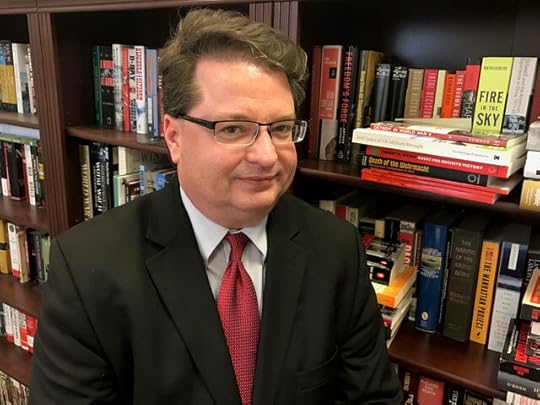
Course presenter Keith Huxen is the Korean War Oral History Project Director at the Henry M. Jackson Foundation in support of the Defense POW/MIA Accounting Agency. His work promotes the agency’s mission to locate, identify, and recover the remains of fallen American service members from World War II, the Korean War, the Vietnam War, and Middle Eastern wars. He received an MPhil in American Diplomatic History and a PhD in American History from George Washington University.
Keith Huxen:
As the course's title implies, professor Huxen attempts to tell the story of the war that shaped the modern world through the eyes of a handful of regular people who experienced it; in one way or another.
The formatting of the course is fairly typical of offerings from The Great Courses. The series is 24 lectures long, each ~30 mins long. Prof Huxen presents the material here in a decently engaging format that shouldn't struggle to hold the finicky reader's attention.
Although the course did cover a wide swath of history around the war, there was nothing really new or captivating about the material presented here. If you have read a few books about the war, then I'd be willing to bet that you won't find anything novel in these lectures.
********************
I enjoyed this course, although I didn't really find anything especially remarkable about it. 3 stars.
Unrelated to the quality of the book but I found out that U.S Forces consumed 135 million lbs of ice cream within the year of 1943. If I was alive then I would’ve invested in Ben & Jerry’s.
Not bad. Some lectures are better than others and are more personal testimony as described but others are more context than these accounts. Be a good introduction to the war, i suppose. The lecturer didn't do much for me either, a bit lacking in charisma.
I liked that rather than just an overview of the whole war (which you can get in a lot of different lectures and books), the focus was on experiences of the victims and soldiers as individuals as well as overall. Personally, I enjoyed that I had already read several of the works he referenced.
He needs to work on his pronunciation - he has to refer to things in French and Japanese, he really needs to put more effort into doing it well. It was very distracting and irritating during his lectures on Japan and the South Pacific.
Focussing on the experiences of individuals on all sides, soldiers, scientists and civilians, this course provides an interesting look at various aspects of WWII across different theaters. Somewhat uneven both in how informative each lecture was and in the lecturer's performance.
Well researched and presented. I personally love when historians try to talk about major events in the points of view of individual people. I thought this professor did a great job, and I enjoyed it.
This is a lecture series and it's definitely worth a listen, if you are a WW2 historian, history buff, etc. There is a lot of valuable information that is presented.