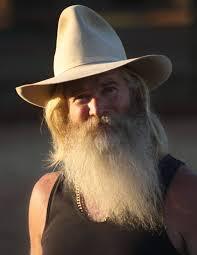
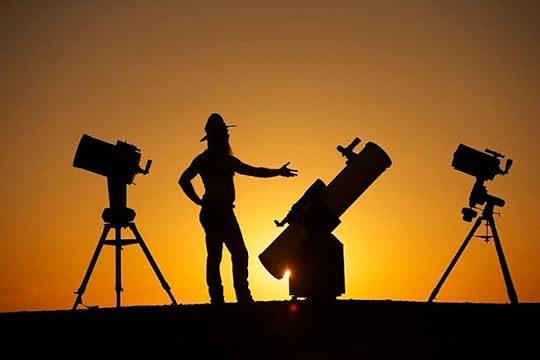
Australia's 'Space Gandalf' answers all the questions you never knew you wanted to ask about the night sky. During his younger days working as a bush mechanic and pearl diver in remote WA, Greg Quicke spent countless nights lying in a swag and staring at the stars. That daily distraction grew into a passion that has seen him become one of Australia's best known and most engaging astronomers. In recent years Greg - aka 'Space Gandalf' - has taken on cult status among audiences via his appearances alongside Professor Brian Cox in the hit TV series Stargazing Live. Greg's practical explanations of the complexities of space have also earned him respect from astronomers around the world. Is The Moon Upside Down? is an absorbing guided tour of the cosmos as seen through Greg's eyes. Unlike many of his peers who studied at university he offers a unique and refreshing perspective on astronomy that was instead forged on cliff tops outside Alice Springs, in the endless expanse of the Great Sandy Desert, on the floor of the Indian Ocean and in his own front yard in Broome. No matter what mysteries you've pondered about Earth's astral dance with the Sun, planets, Moon and the stars, it's guaranteed Greg has thought about them too, and the answers can be found in the pages of this book.
A much more in depth look at the cosmos than his first book offers, Is The Moon Upside Down? is a great read for anyone who has ever looked up at the sky and wondered what might be going on out there. For beginners and not-so-beginners alike Quicke manages to break down the mechanics of the Earth and its relationship with the stars into a language that is easy to follow and understand and will make you wonder why it took you this long to delve into this way of thinking about our world. Highly recommended for anyone willing to look up and out.
I could listen to this audiobook, over and over again. Greg Quicke (aka Space Gandalf) is an awesome communicator and surprisingly this audiobook is not narrated by him but by an excellent narrator who captures him perfectly. I only wish I was better at absorbing all the knowledge in this guide by listening, but perhaps that isn't a bad thing because I will need to listen to this over and over again and it's so good I'm happy to do so. I can't think of any other book on astronomy that would be better on our Southern skies.
I have often wanted to find out more about the universe and the stars yet most books were too complicated or expected a fair amount of "prior knowledge". This book was great. It brought me closer to the stars and answered a lot of questions. I had the audio book and found at one stage it was getting to the complicated bits and I had a bit of trouble following. But I have made a commitment to myself to build on what I learned in this book. I think it's a great book for teenagers to be introduced to the subject and I would love to take part in one of Greg's stargazing tours one day. A lovely book with lots of info. I will recommend it to many.
A brilliant read! Challenges your way of thinking...and what you think you already knew about the cosmos. Surprised me so many times with information I had never really considered. A few times I had to put the book down....look 'out' and figure it out for myself. Looking into getting an Astronomy yearbook as we speak!
Greg Quicke, otherwise known as Space Gandalf, was a much beloved icon in the remote Kimberley town of Broome, in Australia’s tropical northwest, until his untimely death last year. In this book he shares his passion for the stars and his detailed knowledge about the workings and intricacies of our solar system. It extends on his previous book Earth Turning Consciousness: An Exercise in Planetary Awareness, and also on the material in his famous Astro-Tours.
Greg developed a love for astronomy while working as a bush mechanic in outback Australia sleeping in a swag under a blanket of stars, watching with awe the movements about him, and working as a pearl diver off the coast of Broome, learning to understand the rhythms of the tides and the moon. Since then he has learned the stars by name and speaks of them like friends. He has shared his wonder for the universe with thousands of locals and visitors to Broome each year. In more recent years he also became famous for his appearances on TV with British astronomer Brian Cox in Stargazing Live, screened by both the BBC and the ABC. He also recorded his own ten part series A Stargazer's Guide to the Cosmos.
Greg’s philosophy is one of groundedness and mindfulness, achieved by tuning into the amazing rhythm and movements of our solar system. He encourages us all to step outside every night and observe the stars around us, and as we do so each night, begin to tune into the movement of the earth itself through space. As we watch, the stars appear to shift from east to west during the course of the night, while in reality this is the earth spinning in an easterly direction. As we return each night the stars appear in the same place 4 minutes earlier, and at the same time each night appear to move one degree further westward, meaning that in six months time a completely different set of stars is visible above us. This philosophy of attunement to nature and its seasons and cycles is also very much part of Australian Indigenous culture and tradition.
Hubble Images
Greg explains how the earth, moon and planets all move through the ecliptic plane of the sky, moving through the constellations of the zodiac. He explains everything in a vivid, simple manner. I have attended many of his tours with group after group of university students who, like me, all had their minds blown with lightbulb moments of understanding about the workings of our universe, that somehow we had all managed to graduate from school without fully grasping. I still find it hard to imagine that at the North and South Poles, all the stars appear to constantly circle around us rather than rising and setting.
I would highly recommend reading one of Greg’s books, watching his TV series and most of all getting out there and watching the stars. We could all do with a little more starlight in our lives! Quickey, Broome certainly misses you.
Greg Quicke – aka ‘Space Gandalf’ – enthusiastically chats to the reader like an old friend in Is The Moon Upside Down?, discussing his interesting life and introducing the cosmos while sharing the many wonders of the universe. His practical, self-taught knowledge provides a down to earth approach to learning and discovery, explaining complex concepts and mind boggling celestial relationships with humour and simplicity.
Filled with astronomical data and facts, guides to visible stars, and other useful information, the book is an easy read that is casual while maintaining technical and scientific accuracy.
Definitely not a good audiobook if, like me, you can't handle heaps of numbers thrown at you without seeing them written down. Too many numbers!
Probably the paper version is fine. I hope it has some diagrams in it, because some of the concepts were impossible to grasp just from the audio narration.
This book is by ‘space Gandalf’ himself. I really enjoyed his approach to astronomy, he is not an ‘institution trained’ astronomer, he simply was fascinated by the stars, invested the theory behind it and taught himself by observing the stars. He gives practical advise about how to observe the stars and talks about his life and what led him to the career as an astronomer. He talks you through events such as eclipses and comets, surprisingly not much about meteor showers, what telescopes to use and where. A good book different to all the others I’ve read as it’s not rooted in the science but in the observer
Written just like Greg speaks, simply & beautifully, making it easy for everyone to understand. Thank you for sharing all your wisdom, Greg. And thank you for all the clues you leave in between your sentences. A book so relevant to right now.