From the New York Times bestselling author of The Shift comes a frank look at navigating the world of healthcare as a cancer nurse becomes a patient and experiences the system from the other side.
Despite her training and years of experience as an oncology and hospice nurse, Brown finds it difficult to navigate the medical maze from the other side of the bed. Why is she so often left in the dark about procedures and treatments? Why is she expected to research her own best treatment options? Why is there so much red tape? At times she’s mad at herself for not speaking up and asking for what she needs but knows that being a “difficult” patient could mean she gets worse care.
Of the almost four million women in this country living with breast cancer, many have had, like Brown, a treatable form of the disease. Both unnerving and extremely relatable, her experience shows us how our for-profit health care industry “cures” us but at the same time leaves so many of us feeling alienated and uncared for. As she did so brilliantly in her New York Times bestseller, The Shift , Brown relays the unforgettable details of her daily life—the needles, the chemo drugs, the rubber gloves, the bureaucratic frustrations—but this time from her new perch as a patient, looking back at some of her own cases and considering what she didn’t know then about the warping effects of fear and the healing virtues of compassion. “People failed me when I was a patient and I failed patients when working as a nurse. I see that now,” she writes.
Healing is must-read for all of us who have tried to find healing through our health-care system.
Theresa Brown's new book HEALING: WHEN A NURSE BECOMES A PATIENT will be published April 12. Pre-order it here: https://www.theresabrownrn.com/ HEALING explores her diagnosis of and treatment for breast cancer, viewed in terms of her own work as an oncology nurse. Brown's sad realization is that modern health care is sorely lacking in compassion for patients, but she also shows how compassion could be restored.
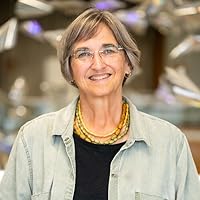
Brown, a nurse, is also the author of the New York Times Bestseller THE SHIFT, and CRITICAL CARE, a memoir of her first year working as a nurse. After working clinically for ten years, Brown decided to dedicate herself to writing full-time, though she very much misses working at the bedside. She lives in Pittsburgh with her husband and their dog. Her three children are now all grown up. In addition to her nursing degree, Brown also has a PhD in English from the University of Chicago.
The blurb is putting me off. The first thing is a citation from James Patterson. Why would I trust James Patterson's opinion about a medical biography when he's a churner out of mass market thrillers and has a whole legion of ghost writers* anyway? Ever since I discovered that the quotes from famous authors were either made up by the PR dept or even the author and sent to the famous person for approval, or sent to his publishing company at least, I distrust them.
Ever since GR changed its rules that the blurb was supposed to be about the book, not citations and advertising it's been a free-f0r-all of promotion. Every book is the best book ever, NYT best seller, Amazon best seller. It's manipulation - you want to be on the side of the winners don't you, so BUY it now. And I say this as a bookseller who has to sell books to pay the rent. Indie bookshops were always about selection, about hand-selling, about interest, about a love of reading. A quieter way of selling books than Goodreads and Amazon is promoting, one more concerned with customer experience than mass-selling to make money, like selling cans of beans.
"People failed me when I was a patient and I failed patients when working as a nurse. I see that now."
Learning of a Cancer diagnosis is devastating. It turns your whole world upside down and is overwhelming to imagine and deal with. That is what happened to Theresa Brown, who had years of experience and training in oncology and as a hospice nurse. But that training did not prepare her when she received her own diagnosis. She had to navigate not only the health care field and red tape, she had to do her own research all the while knowing that asking too many questions could get her labeled as a difficult patient.
Theresa Brown has first hand knowledge of what it is like to be on both sides of the spectrum. To be on the side providing care and help, to be the one who needed help and caring. Brown gives readers a glimpse into her world, her life, her cancer treatment and her navigation of the the field she worked in. She also shares some of her own cases from when she worked in the oncology and hospice field.
I found this book to be well written and I appreciated how shared her own personal story. This book also shows her growth, her resiliency. She learned a lot and also was able to reflect on previous cases, her regrets and to acknowledge that she didn't know the affect that the disease and treatment had on people. It's one thing to see and another thing to experience.
I found this to be a powerful and moving book. I loved her honesty and her insight on being a patient vs. being a healer. Navigating our health care system is hard enough when you are healthy - what you insurance will pay for, co-pays, denying coverage, etc. But to imagine when you are faced with a serious health issues, it can be nightmare that one does not need when facing a medical crisis.
This was my first book by Theresa Brown and I look forward to reading more of her books in the future.
Well written, moving, and powerful.
Thank you to Amanda Dissinger, Algonquin Books and Theresa Brown who provided me with a copy of this book in exchange for an honest review. All the thoughts and opinions are my own.
As a breast cancer survivor and patient advocate, I was dismayed by this book. Many of Theresa Brown's points about the healthcare system are valid. But many are not. It does not show a lack of compassion that the scheduler left her seat one minute early and so was not available to immediately schedule Brown's biopsy. The scheduler had no way to know that Brown (or anyone else) was going to be diagnosed right before the end of her shift. Similarly, it does not show a lack of compassion to fail to provide routine mammogram results early when the educated patient elected--as a breast cancer patient--to schedule a routine mammogram rather than a diagnostic one. Demanding preferential treatment is not the same as demanding compassionate care. There were also several factual errors (no, HER2+ breast cancer is not referred to as Herceptin; Herceptin is the brand name of the drug used to treat HER2+ breast cancer). And spelling errors. (No one is put through the "ringer." They are put through the "wringer." The way you "wring" out wet clothes or towels. In all, I hoped for more given the good reviews.
The author is almost completely unlikeable to me and that’s hard to do as a nurse and cancer survivor. Perhaps because I regular the MQSA program as an inspector I am more familiar with the system of getting a mammo and obtaining the result- way more so than the author. It’s as if she expects every since possible hiccup/complication to be eliminated bc of her diagnosis. Her points are valid but many of what she sees as a lack of compassion is just policy or the fact that every person she interacts with isn’t intricately familiar with her diagnosis and isn’t coddling her enough.
One example- her routine mammo after cancer having the results delayed more than she would have liked. The fda requires 30 days for a routine and “as soon as possible” for serious findings. She demanded hers in 2 days, and was unwilling wait 6 days after a holiday weekend. As her findings were not serious there was no obligation to provide these in 2 days, save her being incredibly demanding. After the nurse navigator explained it wouldn’t be possible she would not accept that. But it’s true that nobody is going to make the radiologist read an image- that’s not how it works. And she couldn’t understand the IT issues saying that hospitals employ people in that area and should be able to fix it right away. Not all of them know/understand PACS.
Honestly this book wasn’t what I was expecting. Do NOT recommend.
A worthwhile read for someone who experienced the healthcare system with a cancer diagnosis. I appreciate the viewpoint of a healthcare professional who sees the lack of compassion that is often felt. How do you balance a capable and reliable care team with one that you actually don’t mind interacting with on a regular basis? People that hold your hand and give you a second to catch your breath. How do we become more than just a diagnosis?
I read The Cost of Living this year as well (recommend for anyone who’s received a medical bill and was astonished at the costs).
I did skim over some parts that didn’t resonate with me but I enjoyed the sections where she talked about her cancer journey, treatment and the afterwards.
Loved her references to Audre Lorde and Cancer Journals. So relevant even years later.
TITLE: Healing: When a Nurse Becomes a Patient AUTHOR: Theresa Brown PUB DATE: 04.12.2022 Preorder Now
REVIEW:
This is the perfect must read book for every Healthcare Provider, anyone that wants to aspire to become a nurse, anyone whose lives have been affected by cancer or any illness, the survivors, and for the multitude of friends and families that support and give their love.
Just like me, Theresa Brown is a nurse. I loved reading the chapters where she shares her stories from when she started her career as a new graduate nurse. All her anecdotes along with her profound thoughts and observations resonated with me as she tells the story in a very powerful way. Through her journey, she recounts her experience with breast cancer, as she critically provides insights from the unique perspective of both as the patient, and as an oncology and hospice Registered Nurse.
This book was a gem that I will continue to recommend to everyone to read! Loved it!
Won in goodreads giveaways, all my opinions are my own. *****
A very moving book. I hope I have the courage 🙏 she did in advocating for herself with the things she mentioned. She was brave, even if she couldn't see it at times.
Some of the things she talked about with the healthcare system: *shakes head* We need to do so much better for everyone. I agree with alot of what she said in here, and hopefully one day, we can achieve something that benefits everyone equally.
Some of the medical terms were confusing but not hard to follow along with (more of my brain issue than anything).
Would recommend 👌 👍 definitely will be checking out her other book and I wish her al the best and continued food health.
Tired brain 🧠 review so bear with me if it makes little sense.
Theresa Brown, an RN who worked in oncology and hospice, is at a followup scan to her mammogram when a mass is found in her breast. She takes us through her journey as nurse and patient in her moving memoir Healing-When A Nurse Becomes A Patient.
Brown describes in intimate detail being told by the radiologist that she sees "an ugly mass". She writes of calling her college aged twin daughters to pick her up and telling her family what is happening, and it puts every woman in her place. We all have that fear in the pit of our stomach when we go for that mammogram.
Brown also shares her story working as a nurse, what she learned there, and the nurses (good and bad) with whom she worked. As the mother of baby twins and a toddler, Brown felt she knew that speed was most important in her work as a nurse. Her preceptor taught her that it was more important to take time with the patient to truly discover what was going on.
Brown's journey as a cancer patient through the medical system in this country was eye-opening for her. As a nurse who worked in a hospital setting one would think she would know how to get the best care, but she had to transverse many mazes to get the treatment she needed.
Like everyone else, she turned to Google for answers to her questions, but that led to what she called "rabbit holes". She learned to trust the "safe sites- American Cancer Society, the National Cancer Institute and the CDC". She found that some breast cancer blogs and websites sponsored by pharmaceutical companies were untrustworthy.
She shared her experiences choosing a surgeon, having to wait too long for results, and arriving at the outpatient surgical center only to be told brusquely that "she wasn't on the list". After her surgery, she had to undergo four weeks of radiation threatments, and she takes us along with her.
Theresa Brown has a PhD in English, and her writing is crisp, detailed and informative. She doesn't waste a word in this important and personal memoir. One of Brown's biggest takeaways from this experience is that for-profit health care doesn't work for patients. When the biggest motivator is a profit for health care companies and their shareholders, patient care suffers.
Her other big takeaway is that "treatment can be imbued with kindness and compassion so that caring for ohers feels like the act of grace that it is." The care that people get should not depend on where they live, their skin color or the amount of money they have. Health care is a basic human right.
Healing is an important book, as most of us will face health care crises either as a patient or as the loved one of a patient. I highly recommend it. Brown is also the author of The Shift, about her work as a nurse.
Thanks to Algonquin Books for putting me on Theresa Brown's book tour.
Another great memoir from a fantastic writer and most likely an even more amazing nurse! I have read two of Theresa’s other books, and loved them both so I was very excited (and also very worried) when I found out that she was working on another book, this time about her own journey as a patient. Theresa is an oncology and hospice nurse who tells the stories of her patients beautifully and with dignity and respect. The details she includes demonstrate her care for her patients as well as her masterful understanding of her nursing practice. In this memoir she ties her nursing experiences in with her experiences as a cancer patient. She takes the reader on an emotional journey throughout the course of her diagnosis, tests and procedures, surgeries, treatment, healing and the ongoing physical and emotional recovery which will continue likely for the rest of her life. Theresa also includes many life lessons and personal details that were less prominent in her other books, I enjoyed learning more about her family and life as well as the medical and health care stories which I loved from the first two books. I also think that the unique perspective of the health care system from someone who has spent significant time on the other side, is a valuable addition to this book which validated patients’ feelings as they navigate a challenging system, often with little understanding of their rights and what they can expect. If you’ve read her other books you should definitely read the latest instalment, and if you haven’t had a chance, but enjoy medical memoirs as much as I do, definitely give this a try! I’m incredibly grateful to have been given the chance to read this book through Netgalley, and with the support of the publisher.
A very moving and poignant look at a nurse who gets the unfortunate experience to live on the flip side of healthcare; no longer a career but as a patient. You reach the same emotional depths as if you were the patient with such honest writing of her experiences that have your heart pouring with compassion and having you face your own morality. It is a connection I made unlike any other and appreciate having read such a courageous novel from a woman that has made quite an impression with her bravery.
A well written book by an oncology and hospice nurse who finds herself diagnosed with breast cancer. She reflects candidlyupon her experience as a patient from diagnosis, through treatment and afterwards. She brings up how compassion, empathy and taking the time to listen are crucial and important for healthcare workers to have. She also points out just how broken healthcare is in the US making it difficult for patients to receive the compassionate care they deserve because frankly hospitals and healthcare systems put profits over people! This is a thoughtful memoir and I highly recommend it.
Reminiscent of Dr. Paul Kalanithi’s “When Breath Becomes Air” with such beautiful and clever storytelling. Highly recommend this book to anyone in healthcare for a reminder that action beyond expectation is at the center of providing compassionate care.
(2.5/5) Ah, American healthcare. What're we gonna do with you.
This book was... not what I expected. It wasn't really anything at all. I picked this up at the library, read the blurb, and expected one of three things: a patchwork of anecdotes about being a cancer patient, a dichotomy of providing care versus receiving it, or a commentary on the healthcare system. The good news and the bad news are the same thing: this book was all three, and because of that, it didn't cover any of the topics well. Theresa wrote about a LOT of important things-- equal access to healthcare, the weaknesses of for-profit systems, and the dangers of various attitudes in the field of medicine, to name a few-- but her points were a little disorganized because she'd try to draw lines between things that weren't entirely related, or she'd demand too much of her skills by making this book into more than it could be. I didn't connect with a lot of the metaphors she used, and I didn't catch the depth of the majority of the experiences she shared.
What I DID appreciate about this story was its valuable perspective, especially to healthcare workers like myself. A few of the mistakes she made as a nurse are similar to my own; I'm encouraged to think more about the difference between well-meaning and patronizing in my work interactions. I appreciated her honesty and, in her experiences, her tenacity. Her love for patients (and supreme distaste for healthcare bureaucracy) resonated with me, and it renewed my determination to fight off empathy-fatigue as long as I can, in honor of her and other nurses like her.
Maybe I missed the point of the book by reading it as a healthcare worker and not a patient, but I can't exactly put my finger on what this book is supposed to be. Calling out American healthcare? A guide to navigating hospital systems? A mixed bag of commentaries on cancer? No idea. At the least, it was a decent read.
I was WRONG! (and happily so)! I thought this book would be covered in medical jargon since it was written by a nurse. Much to my surprise, I felt like I was having a conversation with the author - she is very deliberate in stating her fear of having cancer….”deliberate”….maybe the word is “observant” combined with a little “warrior spirit” is a better description.. I wanted to read this book to help me understand what a friend with cancer is going through. Well, this book really helped me in that aspect. The author shares more of the mental game/state/process from being told you have the “C” through the post-medicine life. This is a VERY GOOD READ and I recommend it to all readers. I felt like a friend to the author since she really opened herself up emotionally while also sharing the mental images, thoughts, pictures in her mind of her time living with cancer, and now without it, though, like she says, no doctor will say you are cured of cancer once you have it. Well done, my friend. This is a good book. I won this book in a Goodreads giveaway. The cover and title caught my attention and though I thought it may be a depressing book, I still entered the giveaway. Well, she speaks truth, does not go into tons of medical jargon, walks us through each stage, and became vulnerable. On top of that, she is a good writer and has a gift with words.
In the midst of chemotherapy for breast cancer myself, this book was timely. I couldn’t help but compare both my treatment and reaction to the diagnosis to the author’s. I found her to be so ANGRY at her diagnosis and thus took out her anger by badgering staff to treat her as special and get HER results to her as soon as possible. Which is kind of her point: people awaiting cancer test results want to know what they’re dealing with as soon as they can. I found her jumping to worst-case scenarios and informing family of her diagnosis before she even had her biopsy results to be…well, very irrational. But not everyone can be rational in the face of cancer.
Brown’s bottom line of personalization in health care is nothing revolutionary but in the midst of EHRs and for-profit medicine, it is becoming more and more rare. (Which is why in my career as an optometrist, I wanted to have control over my practice life and to be able to spend time with my patients in order to address their concerns).
I enjoyed Brown’s writing style (her PhD is no surprise) and will look for THE SHIFT.
I did not enjoy this book at all. I found the author kind of insufferable and felt she just took her anger at the healthcare system out on the people at the bottom of the ladder which got her results, but probably added an insane amount of stress on their days.
Having not been in her exact situation, I can’t tell if this was justified or not, but from a readers standpoint, I just found her very unlikeable.
The author seemed not be barely aware - or to perhaps think she was owed - her (and her husband's) vast privilidge. As a nurse who has had a LOT of trouble accessing medical care, has been a family caregiver & advocate, and has worked with vulnerable populations professionally, this book grated.
Theresa Brown, who proudly carries her RN degree up front, is a rare and precious package: an expert nurse in challenging specialties (cancer and hospice), who has the gift of writing clearly and eloquently about her job, her patients, and often (and necessarily) our healthcare system. Through her previous books and essays in the New York Times, she tells important stories that inform, move, and enlighten. In Healing, she tells the story of another encounter with cancer — this time as a patient. She discovers that, with all her prior knowledge, she did not actually understand what her patients might have felt, seen, or experienced. When patients fuss about losing their hair or complain about nausea or painful neuropathy caused by chemotherapy, the nurses’ response tends to be “But we saved their lives.” Brown says she chose oncology as her focus because the “science was really interesting,” and by the way, cancer had run rampant through her family. She’s even used to being called back for additional imaging on her own mammograms — no big deal. Then one day, the radiologist says “I see a mass, and it looks ugly.” She is blindsided and does what most women do: cry. The radiologist walks away, and it’s the ultrasound technician who wraps her up in a hug and whispers: “They can fix this.” They can and do, but with a level of inefficiency and lack of compassion that adds enormously to the distress of the process. This lack of compassion is an abiding theme throughout, and while she examines it in some detail, doesn’t seem to have a lot of concrete ideas about how to improve it. The technician’s hug and someone who hands back her hairband which has fallen off are examples. But how much those gestures meant to her! Brown had a huge advantage over most of us. She works in the system. She knows who’s who and what’s what in the dizzying maze of serious disease care — most of us can’t tell the phlebotomist from the neurosurgeon from the nurse’s aide or the unit clerk when they come trooping through, all in scrubs. Brown has everyone’s email, people’s cell phone numbers. When her scan results are not forthcoming the day she expects them, by God, she uses them. And somehow, someone retrieves her results so she does not have to wait over a holiday weekend like the rest of us do. Yet, in this era of contract workers, electronic medical records that will not spit out anything until all the boxes are checked, when only specific individuals are allowed (and required) to sign off on data… what’s to be done? Her description of trying to get pain medication refilled for a dying young woman in hospice before the cartridge runs out is harrowing: obstructed, diverted, delayed… but finally, somehow, it gets delivered. In a system so broken at so many places on so many levels for so many reasons, just how do we start to fix it? Brown is vigorous and clear on the problems, but vague on how to go from there. But yes, let’s start with desk clerks who protest, “But I leave at four.” Brown gets a “patient satisfaction survey” after the tussle over scan results: she fills it in with a sharp description of her experience… but doesn't tell us if anyone ever followed up. Probably because no one ever does. Overall, what we have here is a crisp, passionate critique of how the American healthcare system treats patients, as told by a professional within that system who suddenly finds herself on the receiving end. There are other writings by professionals (such as Atul Gawande or the deeply humane Victoria Sweet), and many, many patient-experience memoirs, and I had hoped this book would be a strong synthesis of the two viewpoints. It seems to fall somewhere in between, where the perspectives don’t fully cohere into a rousing call for action to unjam these clashed gears. Pages on bicycle riding and house buying don’t add much; there is good advice about just how helpful frantically trolling the internet is (or, often, is not) and some useful discussion of the pros and cons of being an "easy" patient or the "squeaky wheel." The chapters often wander back and forth: the troublesome brain fog she experiences from the radiation therapy doesn’t come up in the chapter on the radiation therapy – she mentions it in passing many pages later. She admits in an opening disclosure that her memory is faulty throughout and she often says she doesn’t have any memory of conversations or events, which begs the question: how reliable is this? There is an arc to the overall book, from diagnosis to recovery, but the chapters stutter and veer. In fact, the book often reads more like a collection of shorter separate essays – like those strong and engaging pieces for the New York Times – each with its own interest and value, but which doesn’t quite assemble into a flowing whole. Gawande may be more effective in calling the American healthcare system to account; Sweet also inspires closer attention to healing and compassion therein. But Brown is an essential voice – especially from and for nurses – raised in a call for those same things. As she says: “Modern health care saved me, saved my life, but Theresa the person got lost in the process.” And this is what we still need to hear – and act on.
* Thanks to NetGalley for an ARC in exchange for an honest review.*
I really wanted to like this book but I got a bad taste in my mouth when the author wrote about other things that had nothing to do with her cancer. She was very lucky that her breast cancer was very small (1 cm) and she didn’t have to go thru chemo!! I have had breast cancer 2 times ( in 2 and 1/2 years) surgery, chemo and rads both times. I don’t think I will read her other books…
Theresa Brown writes the story of her breast cancer diagnosis, but since she was an oncology nurse and hospice care provider, she offers a unique perspective. She shares the frustration and confusion that can come when dealing with the American healthcare system. Her story illustrates the fine line a patient walks between wanting answers to their questions and yearning for the best possible treatment with getting fed up with a system that, at times, disregard’s a patient’s humanity-and may even ‘punish’ a patient perceived as difficult, for the simple act of asking too many questions. The story shed light on, not only what it’s like to be a patient today, but also the pressure and guidelines medical personnel work under, that get in the way of treating the whole patient, not just the disease.
I struggled a little bit at first to really get started with this book. Something about the author’s voice just wasn’t really working for me. The further I got though, the more invested I felt in this book. It has a really interesting structure where each chapter seems to have its own theme. The book does somewhat follow the timeline of her diagnosis and treatment but it did skip back and forth just a bit here and there depending on what the theme of the chapter was.
This book felt really well researched. I’ve noted down several articles and books I want to read in the future that were mentioned here. It was interesting to see how someone that has worked in the health care industry for years now experienced it as a patient rather than a provider. Sadly, her experience was rather rough through much of it but it made for an interesting analysis for this book. It was also interesting to hear about the negatives of the industry from both the patient as well as the provider side as neither seems to really get the care and support they should.
Aside from the analysis of the industry, she also made other interesting connections between various topics and her life, her health, and her profession. I was really absorbed in the book over the last two days and will be adding the rest of her books to my TBR as well.
Theresa Brown is an experienced oncology and hospice nurse, treating patients with care and respect. One day after a fateful mammogram, she becomes the patient. Diagnosed with breast cancer, she experiences the medical system from the other side, and is surprised at the coldness of the care and the confusion that even a nurse can experience on the other side of the system. She also deals with the difficult position of wanting to be an advocate for her own care, and also trying not to be a difficult patient. It is from this experience that she gleans insights into medical care, previous patients she cared for, and ways the health care system could improve.
I always enjoy people's real experiences, and especially those that relate experiences that occurred because of alternate or opposing perspectives due to a change in circumstance. Theresa's real story as an oncology nurse, suddenly dealing with oncology from the point of view as a patient, was fascinating to me. Even as somebody who understands the health care system, she too became frustrated with the lumbering nature of it, the cold grinding of its machinery, the dispassionate care and attention she received from most health care providers. Certainly even though she understood that these professionals kept her at arm's length to spare their own feelings and to preserve professionalism, it still did not assuage her own pain, fear, and uncertainty she felt.
So what is the answer then? Unfortunately, as with many of life's complicated systems, the answers are no less complicated, and fraught with problems of their own. Theresa offers some ideas, though she also recognizes the complexities that exist within the system, and how difficult it can be to untangle them. Sometimes these aspects are at odds with each other. An insurance company wants doctors to be efficient with their time, whereas patients want to be seen, heard, cared for, and empathized with through their pain.
Theresa's account is an important perspective, that of an insider and a patient, within the stressful world of oncology, and her viewpoint is equal parts compassionate and professional, easy to understand and informative. Healing When A Nurse Becomes A Patient is Theresa's real story of living through cancer as an oncology nurse, and the sharp difference in her perception of the field by being on the receiving end of its care. I recommend it for readers interested in real life accounts of medical professionals as patients, the stories of cancer patients, and examinations and critiques of the health care system that all of us, invariably, rely on at some point in our beautiful, all-too-brief lives.
Thank you Algonquin Books for the complimentary copy of Healing: When a Nurse Becomes a Patient. All thoughts and opinions are my own.
Healing When a Nurse Becomes a Patient Author: Theresa Brown Algonquin Books Genre: biography and memoir
Nurse and author Theresa Brown is very honest and straightforward as she reveals intimate details about her diagnosis and treatment of breast cancer. She is to be commended for wanting to share her story in the hopes of making someone else's journey better. Having found her previous book, The Shift, very enlightening, I was anxious to read more of her work.
Brown is a very talented writer, and her knowledge combined with engaging writing style yield a riveting memoir. She gives us insight into experiences in her nursing career, as well as relationships with co-workers and patients. As part of her frankness, she is candid about the frustrations she felt during her work and in her battle with cancer. The book has references to studies about treatment options and methods, along with the importance of compassion, listening, and understanding.
Everyone who has faced cancer in any form has a unique and individualized story. I fully appreciate that Brown chooses to share her account with readers, providing information and hope about breast cancer.
Thank you to Net Galley and Algonquin Books for the advance reader's copies and opportunity to provide my unbiased review. #Healing #NetGalley
A big thank you to NetGalley and Algonquin Books for the eARC and physical ARC of this poignant memoir. Healing is a story that I can fully relate to. I work in the medical field as well and found the mixture of Theresa Brown's perspective as a nurse as well as her perspective as a patient to be spot on. I haven't had this exact experience, however having had a close family member with an acute medical diagnosis in my field did the exact same to me. I found myself drained of all medical knowledge in the moment of diagnosis, despite having made the same diagnosis many times myself. Her writing really brings this strange disassociation between your work life and your personal life into perspective. I also appreciated the honesty and reality that she projects in her writing. This could not have been an easy thing for her to relive in prose but she nailed it. This is definitely a great book to pick up for those who like memoirs and especially honest medical stories and the difficult journey through the medical system. As if fighting a disease isn't bad enough, you also have to fight the system to obtain the best possible treatment. I have only positive things to say about this wonderful book and highly recommend it. #Healing #NetGalley #AlgonquinBooks
I wanted to like this book more than I did. Or maybe, like the author more than I did. Generally I find a lot to relate to in accounts of other women dealing with breast cancer, but this one left me a little cold. For one thing, she had friends in the medical field to pull strings for her to get things done faster and never acknowledged that privilege. Or acknowledge the privilege of not having to work while in treatment. I was driving in to work as soon as my arms were able to work again after my mastectomy and dragging myself through the day at work on the chemo off-weeks. For another, she complains endlessly about how bad Tamoxifen made her feel and all I could think was that if she’d had to go through chemo like so many of us do, tamoxifen might have felt like a walk in the park to her. (And dammit, she is an oncology nurse - why would she say something as factually wrong as Her2 positive cancer is called Herceptin. No, that’s a chemo agent used to treat Her2 positive cancer. A minor point, but she should know better.) I’m all for rejecting the cult of positivity and allowing yourself to feel the negative emotions that go with cancer, but for someone who had a lumpectomy and radiation only, and not a mastectomy and chemo, she sure does express a lot of outrage.
I also had breast cancer 11 years ago and my case was similar to the authors in that I had a stage 1 cancer with no lymph node involvement that was treated by radiation. I was curious to read about her experience. I was struck about how just a small incident can affect your decisions about your treatment and how important compassion and empathy are for this particular cancer. In my case I had overheard a conversation at a large medical center while I was waiting to have my mammogram. In a small room I overheard a woman being told that although she was feeling so much better, her cancer had spread to her brain and was probably going to kill her. I decided then and there that if I ever did have breast cancer, I would never be treated at that facility in spite of its wonderful reputation.
Oof. Theresa is a great writer, I loved The Shift, but this one missed the mark for me. The metaphors were confusing, some of the medical information was inaccurate, and she was an incredibly rude and entitled patient. Maybe it would've been better had there been more case studies of others or statistical/systemic analysis. I guess since it was a memoir it was bound to be more self-centered, so it was a mistake on my part to expect anything different.
This entire review has been hidden because of spoilers.
Firstly, the author comes across as incredibly entitled at some points. She complains about various things throughout the book, often wait times, and I felt like someone needed to remind her that she is not the only patient in the system! She is waiting because other people are too. And I agree, things could be much better and the system is flawed! But it felt like she took everything as a personal slight, which I was surprised by given her experience as a nurse. I kept waiting for some insight, or some reflection of her actions, which never came.
Secondly, the narrative structure made no sense. It sometimes felt like I was reading about a bunch of random moment cobbled together, with no connecting thread.
I think I might have liked this book a liiiitle more if I had not just read Left on Tenth by Delia Ephron, which deals with similar topics but does it so much better.
I do agree with her points that the medical system and practitioners need to have more compassion. I would have liked to have seen more of her thoughts on what a better system could look like because things certainly need to be improved. That would have been more valuable than another random and drawn out metaphor.
Along with her own story of breast cancer diagnosis and treatment , Theresa includes her interactions with cancer patients during her years as an oncology nurse . Seeing both perspectives gives so much more depth to this memoir . SHE also highlights some of the gaps in US healthcare system as well as lack of empathy in Healthcare, which makes difficult times even more difficult for patients and their families.
I found the relatively short chapters and writing style made this book fairly easy to read - especially considering the topic