Jump to ratings and reviews
Rate this book

ट्रॉय के किस्से: Tales of Troy: Ulysses the Sacker of Cities. Hindi edition

Rate this book
This book was converted from its physical edition to the digital format by a community of volunteers. You may find it for free on the web. Purchase of the Kindle edition includes wireless delivery.

92 pages, Paperback

Published April 2, 2021

Loading...
Loading...

About the author

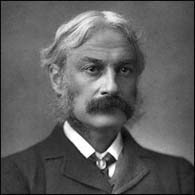
Andrew Lang

3,003 books585 followers
Tales of the Scottish writer and anthropologist Andrew Lang include The Blue Fairy Book (1889).

Andrew Gabriel Lang, a prolific Scotsman of letters, contributed poetry, novels, literary criticism, and collected now best folklore.

The Young Scholar and Journalist
Andrew Gabriel Lang, the son of the town clerk and the eldest of eight children, lived in Selkirk in the Scottish borderlands. The wild and beautiful landscape of childhood greatly affected the youth and inspired a lifelong love of the outdoors and a fascination with local folklore and history. Charles Edward Stuart and Robert I the Bruce surrounded him in the borders, a rich area in history. He later achieved his literary Short History of Scotland .

A gifted student and avid reader, Lang went to the prestigious Saint Andrews University, which now holds a lecture series in his honor every few years, and then to Balliol College, Oxford. He later published Oxford: Brief Historical and Descriptive Notes about the city in 1880.

Moving to London at the age of 31 years in 1875 as an already published poet, he started working as a journalist. His dry sense of humor, style, and huge array of interests made him a popular editor and columnist quickly for The Daily Post, Time magazine and Fortnightly Review. Whilst working in London, he met and married Leonora Blanche Alleyne Lang, his wife.

Interest in myths and folklore continued as he and Leonora traveled through France and Italy to hear local legends, from which came the most famous The Rainbow Fairy Books . In the late 19th century, interest in the native stories declined and very few persons recounting them for young readers. In fact, some educationalists attacked harmful magical stories in general to children. To challenge this notion, Lang first began collecting stories for the first of his colored volumes.

Lang gathered already recorded stories, while other folklorists collected stories directly from source. He used his time to collect a much greater breadth over the world from Jacob Grimm, his brother, Madame d'Aulnoy, and other less well sources.
Lang also worked as the editor, often credited as its sole creator for his work despite the essential support of his wife, who transcribed and organised the translation of the text, to the success.

He published to wide acclaim. The beautiful illustrations and magic captivated the minds of children and adults alike. The success first allowed Lang and Leonora to carry on their research and in 1890 to publish a much larger print run of The Red Fairy Book , which drew on even more sources. Between 1889 and 1910, they published twelve collections, which, each with a different colored binding, collected, edited and translated a total of 437 stories. Lang, credited with reviving interest in folklore, more importantly revolutionized the Victorian view and inspired generations of parents to begin reading them to children once more.

Last Works
Lang produced and at the same time continued a wide assortment of novels, literary criticism, articles, and poetry. As Anita Silvey, literary critic, however, noted, "The irony of Lang's life and work is that although he wrote for a profession... he is best recognized for the works he did not write," the folk stories that he collected.

He finished not the last Highways and Byways of the Border but died.

Ratings & Reviews

What do you think?
Rate this book

Friends & Following

Create a free account to discover what your friends think of this book!

Community Reviews

5 stars
30 (30%)
4 stars
28 (28%)
3 stars
29 (28%)
2 stars
6 (6%)
1 star
7 (7%)
Displaying 1 - 5 of 5 reviews
Profile Image for Anisha Inkspill.
538 reviews60 followers
February 19, 2019
When I read The Iliad I became aware of the gap between this ends and Homer’s next one, The Odyssey. Wanting to be prepared I found this short book, available free on Gutenberg, to filled that gap.

Reading this gave me a good grounding on why Odysseus is so important. Just to give you an idea, this is a scene after the The Iliad ends, the Greeks and Trojans are still fighting; Achilles has been killed by Paris, not good, he’s their best soldier. So, Odysseus offers to fetch Achilles’s son to help them, meanwhile the Greeks keep the battle up but it’s tough even with their leader Agamemnon, so what they do? Make an excuse to the Trojans to pause the fighting until Odysseus returns.

Also, he plays a big part in how the Greeks conquered the Trojans, and you could also say he has the last scene; the story ends with him cashing in on any gift he asked of Menelaus.
Imagine the scene: Menelaus rushes off to where the treacherous Helen is living, now with one of Paris’s brother as he is dead, he is ready to kill that brother and deal with Helen – but oh no, he’s too late!!! Odysseus has beaten him to it. The Paris’s brother is dead and he is wounded with Helen nearby. Is the guy in mortal pain? We guess not he asks Menelaus for that gift now.

To forgive Helen – awww, what a guy !! :))

Menelaus does, all is forgiven as he remembers his love for her.

Nicely explaining how the two are reunited again. Hence, not just a helpful read that provided context but an enjoyable one.
Profile Image for Fawls13.
60 reviews1 follower
April 4, 2014
So I'm about half way through this book and realizing that it will be nothing more than a re-telling of the Ilaid. I liked the Iliad and it's been a while since the last time I read it so I'm still reading this.
It's just that it seems pointless to have written this book. The Iliad is already a great book. This is a retelling (no apostrophe this time so one spelling is correct)...why? Imagine that I or someone else who read the Iliad sat down and told it to you. That's it. No more, and certainly no less. It's not a bad telling but what's the point when you can just as easily read the original and the original is better.

Finished it. Just a retelling of the tale with no significant difference from the classical telling.
2 reviews10 followers
August 15, 2014
Well the author had copied Illiad however I loved classic English in this fictional literature.. moreover a good piece of Greek mythology always takes one to their world the more one reads the more he recreates the scenes in ones mind.
Profile Image for KyBunnies.
1,208 reviews9 followers
August 14, 2011
If you enjoy the Greek and Roman gods then this is a story that you will enjoy. Sorry but I am not interested in mythology. This was a free book in the kindle store.
145 reviews1 follower
April 24, 2016
I enjoyed it. Of course this seems a condensed retelling of the classic but I liked it just the same.
Displaying 1 - 5 of 5 reviews