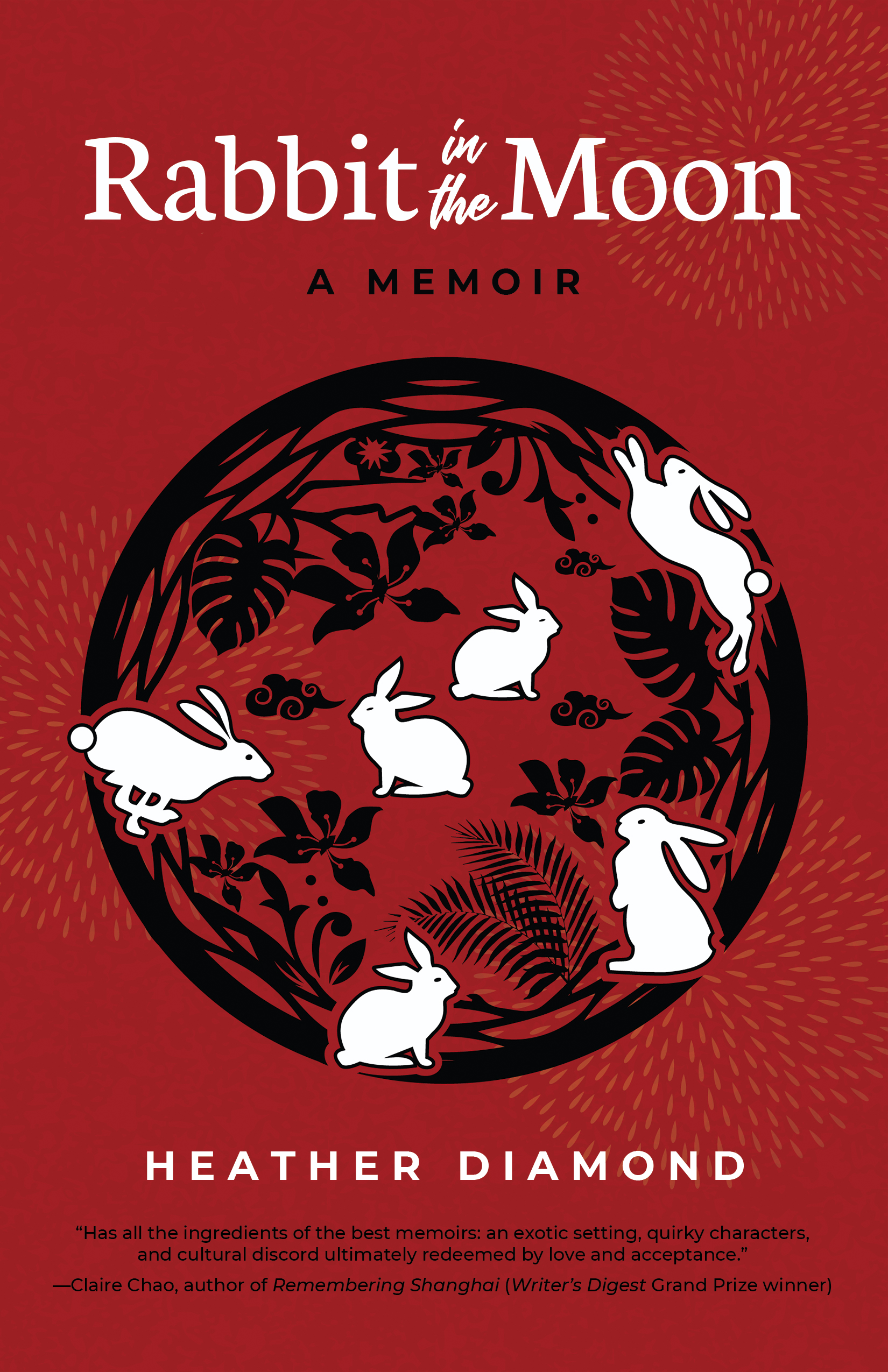
The memoir by Heather Diamond titled The Rabbit in the Moon had me from the front cover (cavorting white rabbits on a Chinese red background) right through the last page. It’s a storybook love story, a cultural impression, a learning experience about family cohesion, respect for elders and the legacies they cherish and pass down, all found in the neat package presented by the author. The scope spans the author’s life, the USA, Asia and the Pacific, and more insights into family and its meaning in China and the U.S. than this reader thought was possible in a relatively short book. It is readable, insightful, and educating, even for us old China hands who have immersed ourselves in Chinese life and culture for decades, but equally accessible for those with no background in China at all.
The author learns her lessons well while filled with doubt and making mistakes along the way—how to fit into her in-laws’ Hong Kong family and their unique rhythm of life, how the same behavior does not transfer well into an American household, all while Dr. Diamond goes from fascinated observer of her inlaws’ family and Chinese customs to preserver and participant in both. One is amazed at her resilience to persevere in her new life, and her commitment to picking up everything she needs to navigate life in Hong Kong as a professor’s “trailing spouse,” all against the background of her determination to make this third marriage not falter. The book hits undeniable Chinese touchstones. The first, jade, which aside from being good for health, in the context of this book is also an indication of acceptance of this white woman by her husband’s parents into their family. That something as treasured as a jade bangle can also evince a physically painful, literally bruising, experience, as we see when the undersized bracelet her mother-in-law buys for her is forced over the author’s hand, is an unexpected peek into old Chinese marital customs. The second touchstone is food, which is referred to copiously throughout the book. Accepting and adopting a second culture’s cuisine is always an important step to engaging fully in a new culture; and in China, a country that once knew famine but can now revel in abundant and exotic foods of all sorts and special ways to prepare them, Chinese food takes on at least the importance that French cuisine does in France. The author does not underplay culinary significance and fully grasps what a central role it plays in Chinese family life, where Sunday extended family dinners can take on the feel of a weekly lively Thanksgiving feast for an American.
The author picks up cultural lore at a clip influenced by her Ph.D. in American (read Ethnic) studies and enhanced by her desire to please her husband, herself, and his family.
There is plenty of wit and acumen behind the keen cultural observations of the author. You’ll laugh, you may cry, you’ll sympathize and wonder. And you’ll probably share the agony I did when Dr. Diamond tries to introduce the care and solicitude shown by the younger Hong Kong generations for the elders to her own mother, only to be rebuffed emphatically. An isolated case in a Western culture of a daughter helping her older mother navigate a curb or intersection just won’t work, even though it seems natural and desirable in China and elsewhere in Asia. So the education goes on, even when the author is back in the States in a totally familiar family environment.
That is the beauty of this memoir, in which the new becomes familiar and the familiar can become strange. It is eminently readable, pulling the reader right into the author’s many roles of culture observer, mother, daughter, spouse, daughter-in-law, writer, and always someone who is growing and trying new things that may clash with each other. Whether the reader absorbs the book as a coherently chronological whole or just dabbles in selected individual chapters, which stand clear and reachable on their own, the rewards from reading this book are many.