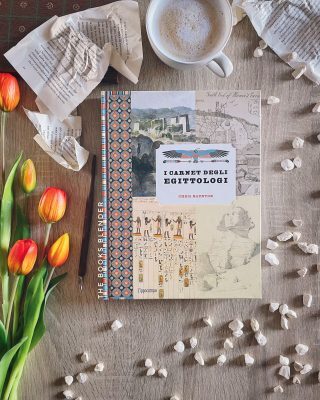
A gorgeous presentation of intimate diaries and journals that captures the excitement of the golden age of Egyptology.
For centuries, the ancient ruins of Egypt have provided an endless source of fascination for explorers, antiquarians, archaeologists, and the public. All, from the very earliest travelers, were entranced by the beauty of the landscape and the remains of tombs, temples, and cities consumed by drift sand. Early adventurers were gripped by the urge to capture what they saw in writings, sketches, paintings, and photographs.
While it was always the Egyptologists who were in charge, they depended on the assistance of architects, artists, engineers, and photographers. Yet when we read about Flinders Petrie and Norman de Garis Davies, we rarely hear about their wives, Hilda and Nina, or how the work of Amelia Edwards helped to fund their explorations. Only through diaries, letters, and other archival discoveries have we come to realize how important these other partners were. Similarly, the contributions of Egyptians, such as Hassan Effendi Hosni, are only now coming to light.
Egyptologists’ Notebooks is a visual celebration of Egypt’s ancient past, featuring evocative sketches, paintings, and photographs from pioneering explorers’ and archaeologists’ journals. Reproduced in their original form, they provide intimate, behind-the-scenes access to the archaeological discovery of Egypt.
Egyptologist Dr Chris Naunton's second book is both handsome and interesting. Printed at a good size with the illustrations reproduced in full color and sold at a very fair price, it makes a perfect companion to Dr Toby Wilkinson's recent book A World Beneath the Sands: The Golden Age of Egyptology, which covers most of the same period: Wilkinson goes into more detail, but Naunton gives you the pictures, sketches, book pages, and letters and rounds the story out (of course both books can be enjoyed by themselves!). Names familiar and unfamiliar are covered, as are finds and places that are ignored in TV's manic focus on "Popular Egypt" - i.e. the pyramids, King Tut, and Ramesses II. Indeed the book will be very helpful as a guide for further reading and research. Delights abound - pages from early books on Egypt with colorfully inaccurate descriptions and illustrations, original sketches of archaeological sites now entirely destroyed, and many beautiful watercolors, a medium explorers found perfect for being both portable and serving well to illustrate archaeological sites and walls of hieroglyphs in accurate color (you'll find that Howard Carter in particular was a very talented watercolorist: I wouldn't mind having a print of his watercolor of Hatshepsut's temple on my wall).
Anyone interested in the topic will find this solid reading immersed in a beautiful presentation: recommended. Naunton himself was frustrated that he couldn't fit in everything he wanted to: second volume, Chris?
This is a fascinating and glorious book. It's pleasingly heavy and large as it is a folio book. Some pages fold out to show images in their full glory rather than shrunk to fit which is also very helpful.
Dr Chris Naunton is a fantastic writer, as mostly academic history or archeology books tend to be drier than the sands of Egypt to read. His style is very engaging and it's a wonderful book to dip in and out of as much as one you can sit down and read all at once. Chris has also run a lot of lectures which are available to watch online that run along side this book and it is great to combine the two as they do give fantastic perspectives of those pioneers of Egyptology. If you love Egyptology (either Armchair or Academic) this should be added to your collection!
The moment I laid eyes on Egyptologists' Notebooks by Chris Naunton, I knew I absolutely had to have it. This country's past has held a fascination for countless generations of Europeans, so to have an introduction to this deep, abiding love for Egypt's ancient history has been been an absolute treat. Not only are we introduced to many of the movers and shakers at the dawn of modern archaeology, but we also gain a glimpse into how these minds set about their work.
Chris Naunton himself is not only an eminent Egyptologist, writer, and broadcaster, he also has a very conversational, engaging style that takes what can easily be a rather dry topic (talking about the lives of long-dead archaeologists) and turning it into an adventure. Chronologically, we start with the likes of Athanasius Kircher, and work our way to Jean-François Champollion, Karl Richard Lepsius, Amelia Edwards, Howard Carter, and an entire passel of luminaries ... or tomb robbers, depending on how you view the manner in which the Western Europe carted off entire piles of priceless artefacts. We also gain a glimpse into how attitudes towards antiquities have changed over the years, and I totally understand why Egypt now wants her stuff back (!!!).
This wonderful book is filled with gorgeous colour prints scanned in from the original watercolours and artwork created before the domination of photography, that often provides us with a somewhat fanciful yet valuable glimpse into the past. Considering that the damming of the Nile put so much under water, some of these images are the only remaining records of an all but forgotten, distant past. Not only does it serve as a reminder of all that has sadly been lost, but it underscores the importance of treating what remains with sensitivity and respect, as a legacy of the cultural history of our species.
This rather hefty tome (I scored myself a hardcover, first edition) is a lush addition to any serious collector's library, and I consider it a valuable starting point for further research.
Una storia iconografica dell'egittologia. Può definirsi sinteticamente così il bellissimo volume di Chris Naunton edito da L'Ippocampo. Il libro documenta, attraverso foto e disegni d'epoca, la costruzione dell'immagine dell'Egitto in Occidente, attraverso i resoconti dei primi archeologi. Le prime esperienze dei viaggiatori in Egitto furono caratterizzate dallo stupore per la maestosità delle vestigia, magnificamente stagliate su pendii rocciosi o in deserti. Privi di apparecchi fotografici, provarono a catturare la bellezza di quanto scoprivano in disegni o dipinti, ma anche in descrizioni liriche e malinconiche su quel mondo perduto. Leggere I carnet degli egittologi significa rivivere attraverso i taccuini, le carte, le mappe, i disegni egli schizzi , ma anche i telegrammi e le lettere, le emozioni vorticose provate dai primi egittologi, che non sapevano ancora cosa avrebbero trovato continuando a camminare per paesaggi aridi e polverosi, in un caldo infernale. Il testo ci offre uno spaccato emozionante dei viaggi e della fame di conoscenza dei primi egittologi: da Athanasius Kircher a Ernesto Schiaparelli, passando per James Burton, Jean-Francois Champollion, Howard Carter e tantissimi altri. La storia dell'egittologia rivela anche la storia spirituale dell'Occidente, ossia il modo diverso in cui si è interrogato il mistero egizio dal '600 al '900, dal platonismo di Kircher, che sosteneva l'esistenza di una "teologia primitiva", ai Grand Tour dei giovani europei di alto lignaggio, fino ad un approccio decisamente più positivista e accademico. Ma è anche una storia politica, fatta di nazionalismi e colonialismo, corsa ad accaparrarsi il reperto più prezioso. Il volume di Chris Naunton è una delizia non solo per i cultori dell'egittologia, ma la semplicità della scrittura, lo stile "in presa diretta" della vita degli archeologi, lo rende una lettura avvincente anche per chi voglia avvicinarsi al mondo misterioso e magico dell'antico Egitto.
This was so good! Beautiful to look at, easy to follow the structure, and full of (some) people I knew and (many) things I didn't know. This one is particularly good for the reproductions from the explorers' own notebooks
I appreciate how Naunton handled the historic characters with intellectual generosity. He did not hide their egregious failings, but he left the reader with a sense of what they did accomplish.
🏜OH, EGIPTO, lugar de Arenas doradas. ✈Fue el viaje de mi vida, siempre lo diré. Desde hace dos años que pise la tierra de los faraones, me he obsesionado un poco. 🌄La cultura egipcia me fascinó, sus ritos, su escritura, sus dioses y sus costumbres. Una maravilla por todas partes. Por eso cuando cuando vi este libro, no pude menos que rendirme. 📜En CUADERNOS DE NOTAS DE LOS EGIPTÓLOGOS de Chris Naunton y publicado por @editorial_blume, nos encontramos con un libro solo para amantes de toda la historia egipcia. 🗞 🧮Aquí nos llevan año por año los primeros viajes a la tierra de los jeroglíficos y como fue cambiando la geografía y los principales monumentos en función del período histórico (hicimos mucho mal a un patrimonio único en el mundo😞). 🔎Es una edición de 10, muy visual, con imágenes originales de las notas de los principales egiptólogos, mapas y dibujos que nos ayudan a hacernos una idea de la gran RIQUEZA QUE EXISTIÓ y de la que conservamos apenas un poco. 📖Mi parte FAVORITA ha sido sin duda la de las momias. SÚPER recomendado a todos los que os apasiona el tema.