Set against the backdrop of three major American Civil War battles at Antietam, Vicksburg, and Gettysburg, the same five narrators return to tell the stories of what happened in their communities of conscience. Members of Mennonite, Amish, and German Baptist churches choose their loyalties, when their traditional belief of not participating in warfare collides with the demands of Union and Confederate forces. As state and national military drafts and exemptions sweep through the North and South, women and children find themselves raising crops in the Shenandoah Valley, while the ""menfolk"" join up or flee.
Fretz Funk, a young man in Chicago, lives with uncertainty also, immersed in his new lumber business, disenchanted with the glorification of war on both sides, and disappointed by President Lincoln's slowness in establishing equality for dark-skinned people. A bishop in Iowa fears the growing fissures in the Amish church and sorts through his own failures. A family in western Virginia faces the repeated absence of Poppa, when he is forced to work as a teamster.
The war pushes relentlessly from the summer of 1862 through January of 1864, creating a cumulative pressure of upheaval, dissension, resistance, and teetering faith among civilians.
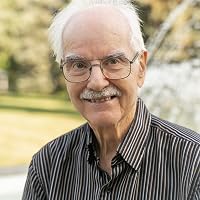
I grew up in a small town, Kalona, in southeastern Iowa in the 1940s and 1950s, immersed in a family unit of parents and three older siblings, a Mennonite church, and a rural community. In 1962 I graduated from Iowa Mennonite School, and four years later I earned a college degree from Goshen College, Goshen, Indiana, with a major in English and a minor in physical education. After living a rather conventional life, albeit nineteen years in Appalachia, I went back to grad school in mid-life and received an M.A. (1994) and a Ph.D. (1998) from Ohio University, Athens, Ohio.
I’ve published stories, poems, and essays in small presses, but the novel form is my writing preference. After working with historical material in Eyes at the Window, I enjoyed the shift to a contemporary setting in Everyday Mercies. For the past ten years plus, I’ve focused on a historical novel set during the Civil War in the U.S. Book I, Shadows, of my trilogy is now available. Book II, Loyalties, is coming this fall.
My interests in education continue, even though I’m now retired from teaching. I’ve worked in high school, community college, and university settings, most recently teaching composition and creative writing/fiction writing classes for ten years at the University of Wisconsin-Whitewater. In addition, my two daughters and four grandchildren keep me young. Relaxation comes by reading, gardening, listening to music, watching movies and sports on TV, and traveling when there isn’t a pandemic.
This book picks up with the same cast of five characters from Shadows, the first book in the Scruples series, and tells of their experiences during the worst times of the American Civil War. These narrations told in first person are by individuals from religious groups that have historically shunned participation in war—Amish, Mennonite, German Baptist, and Brethren.
The book's characters live in different geographic locations, including north, south, and border region which provides multiple perspectives on life during the war. The story covers the time of 1862 through 1863 during which three major battles occurred that affected Anabaptist civilians, Antietam, Vicksburg, and Gettysburg. There’s the draft, armies are raiding farms for food, horses are being requisitioned, and in some cases women and children are the ones left to take care of the farmwork. We as readers in the twenty-first century know where history is headed, but the fates of the book’s narrators are less certain.
The novel is in essence made up of five parallel short stories, parts of each being told in alternating chapters switching from one location to another. The following are my brief descriptions of the five characters.
J. Fretz Funk is a young man of Mennonite background living in Chicago working in the lumber business. He teaches a class of children on Sundays at a Presbyterian Church, is on speaking terms with a young Dwight Moody, and has a number of friends who have enlisted in the Army. He is visited from time to time by Mennonites passing through the City, and toward the end of the book he is making plans to begin publishing a periodical for a Mennonite readership. This is a historical character and the newspaper he is planning is the Herald of Truth, however I learned that fact from Wikipedia, not this book.
Betsey Petersheim is a young preteen girl who is part of an Amish family with seven children living in Virginia near the border with Maryland and Pennsylvania. By the end of the war this area becomes part of the new state of West Virginia. But when we first meet the family the father is gone having been forced to work as a teamster for the “gray coats.” He does eventually return minus the work horses and wagon. The family lives on a hill so that their farm is raided less frequently than some neighbors living closer to a main road. I learned from the notes of Book 1 that this character is based on a historical person, but the first named is changed.
Jacob Schwartzendruber is an Amish preacher living in Iowa very concerned with church matters, and perplexed by some young men from his community that have volunteered for the war. He is involved with various meetings regarding conflicts within in the Amish groups. This is based on a historical person.
Esther Shank is a Mennonite housewife living in Shenandoah Valley, Virginia. She has six children, and one of her sons is in the Confederate Army. The details of her life are portrayed in such realistic detail that I suspect the author had access to somebody's diary. The reader gets glimpses of the major battles in the war when her son comes home for a visit.
David Bowman is a farmer, a cooper, and a German Baptist living in Shenandoah Valley, Virginia. He hides army deserters in a secret closet. He is very concerned with controversies related to participation in the war. David travels with John Kline to visit Joseph Funk on his deathbed to make amends for strongly expressed disagreements years earlier. John Kline actually makes some trips north into Union territory for some church meetings. That caused him to be questioned by Confederate officials.
This second book of Miller’s trilogy set during the American Civil War is compelling in its movement. It kept me reading eagerly, feeling the alternate hope and despair of the characters as they watched one side gain and then the other. It is hard for me to remember that the outcome of the war was not a forgone conclusion, reading it as I do, so many years later. However, Miller does an excellent job, through her characters, of keeping us present in the reality of facing an unknown outcome. In that way, the story feels relevant to the division that our country is once more facing, in many ways growing out of this earlier division.
The characters represent five unique perspectives and in addition to their common challenges, each faces unique dilemmas. The main characters, along with their families, are drawn as complex, imperfect people that I found myself identifying with—David’s sense of inadequacy, Fretz’ restless search for something beyond his immediate community, Betsy’s anxiety about the issues she couldn’t really understand, Esther’s concern for her children, Jacob’s dismay at change.
A strikingly relevant read, Loyalities personalizes the impact of conflict on family and community within historic peace church people as they experience the uncertainty and trauma of the Civil War. Author Evie Yoder Miller delves deeply into the hearts and minds of the five narrators whom she had introduced in Shadows. Reminiscent of divisive issues in present day U.S., dissension, economic hardships, rifts in relationships develop. From rural Shenandoah Valley, amidst devastating loss through recurring visits by Union and Confederate soldiers who pillage their farms, family members respond to demands of the state in various ways. In Chicago and rural Iowa as well, Miller’s Mennonite, Amish, and German Baptist narrators give voice to issues of injustice and inequality, matters of conscience and consequence, while seeking to live with integrity.
This is the second in Miller's trilogy about the Civil War and Anabaptist communities. It continues the stories of the five main characters and their families. For me, the most interesting character is John Fretz Funk, then based in Chicago. Based on the man who became the major leader in the Mennonite Church in the last third of the 19th century, this is the volume in which he turns back towards the church of his youth after dabbling in big-city life and being attracted to a strong pro-Union war position.
I find the author's extensive historical research has fostered a compelling narrative. The other characters are also advanced, though further resolutions of their situations remain to volume III.