"As with her previous books, ‘Living Treasures’ and ‘My Old Faithful,’ Huang’s latest explores the generational push-pull of family life in post-Tiananmen China. . . . Mr. Cai remains front and center, always compelling, a man doing everything for his boy, the way a good father — supposedly — should.” —The New York Times
In MY GOOD SON, award-winning author Yang Huang explores both the deep power and the profound burdens of parental love through the story of Mr. Cai, a tailor in post-Tiananmen China, and his only son Feng. Like many of his generation, Mr. Cai’s most fervent desire is for his son to succeed. He manages to get Feng to pass his entrance exams, and turns to an American customer, Jude, to sponsor his studies in the States. This scheme, hatched between the older Chinese man and a handsome gay American ex-pat, exposes readers to the parallels and differences of American and Chinese cultures—father-son relationships, familial expectations, sexuality, social mobility, and privilege.
“A poignant meditation on fathers and sons, American and Chinese cultures and traditions in the face of modernity, Yang Huang’s latest novel is layered, evocative and engaging.” —Ms., May 2021 Reads for the Rest of Us
The Millions, Most Anticipated: "The Great First-Half 2021 Book Preview"
Electric Literature, "43 Books By Women of Color to Read in 2021"
“About difficult and rewarding connections across generational and cultural divides, Yang Huang’s novel MY GOOD SON is a captivating masterpiece centered around a father and son in post-Tiananmen Square China. . . . Earnest in its portrayal of complicated family bonds, MY GOOD SON is a resonant novel set during a turbulent time in China, wherein families face the universal struggles of connection and commonality.” —FOREWORD REVIEWS
“MY GOOD SON is a mesmerizing portrait of at least two societies in flux, seen in the story of one Chinese family challenged to change their sense of what a ‘good son’ is and what it would mean to love and support him. Provocative, funny, charming, Huang’s novel takes on the challenges of this moment of sexual politics with affection and honesty.” —Alexander Chee, author of HOW TO WRITE AN AUTOBIOGRAPHICAL NOVEL
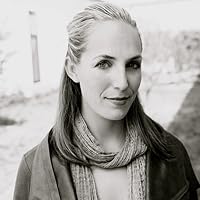
Yang Huang grew up in China and has lived in the United States since 1990. Her novel MY GOOD SON won the UNO Publishing Lab Prize. Her linked story collection, MY OLD FAITHFUL, won the Juniper Prize, and her debut novel, LIVING TREASURES, won the Nautilus Book Award silver medal. She works for the University of California, Berkeley and lives in the Bay Area with her family. To learn more about Yang and her writing, visit www.yanghuang.com or follow her on Twitter: @yangwrites.
A Chinese father micromanages the life of his son so that now, at age 22, he is unable to make any of his own decisions, and is really weak, useless, feckless, irresponsible and a lot of other unattractive adjectives. And at the end of the book the father gets to spoil another boy. I kept hoping for some awakening or self awareness, but it never came. The gay character was a stereotype. I didn’t care for the writing style which was very simplistic. It felt like the book had been translated, but I don’t think that was the case. I received a free copy of this book from the publisher.
I was moved by this novel for its authentic exploration of conflicting expectations within a Chinese family. There's a growing son (college age), and a tailor father (self-made and proud, with his own story) and a sensible mother (intelligent and practical), and a gay American (rich and disaffected and likable), and a hotel chambermaid (angry and proud), and all of them (plus more interesting characters) entangled in one big drama of seeing the son settled. It is humorous, poignant and relatable, every character rich and appealing. I found the ending especially moving. I recommend it for an easy, accessible read of great depth: a small miracle of clean prose getting at the heart of things very simply and economically. Along the way, I learned about Chinese culture and the universality of human striving and aspiration.
An affecting and insightful novel about parenting, ambition, and unconditional love. My interview with Yang Huang will appear in the Spring 2021 issue of Newfound Journal (publishing in March).
I read the galley proof of My Good Son. This story reminds me of some of Jane Austen’s novels. People desperately wanted better lives for themselves and their children, but they had few options.
These characters were far from perfect, but all of them were likable. They struggled, made mistakes, and they kept on trying. They were selfish, but they did care, especially when they were needed. The son, Feng, spent most of his time pursuing his own happiness, regardless of the consequences to others. Still I liked him; for he reminded myself when I was at his age.
The story moves quickly, and the plot seems too tight occasionally. I had to put the book down to give myself some breathing room. My Old Son reads like a play sometimes. A lot of dialogs, and everybody had their own voice. If you like fashion, you may appreciate the details of fashion design and making clothes. The ending was surprising, perhaps controversial. But I think the ending made this story perfect.
My Good Son brings readers an intimate, engaging view of Tiananmen-era China through the lens of a tailor, Mr. Cai, and his college-bound son, Feng. I was immediately riveted by the tight, narrative-driven prose and a story that wove several characters (including the tailor, a gay American art student, a pregnant young hotel worker, and a young female neighbor) into a compelling, unexpected tangle.
While the book doesn't explicitly address historical themes, it perfectly exemplifies how historical moments like the Tiananmen Square massacre impacted everyday people in China. This is a great book for a reader interested in knowing more about Chinese culture and yet also is just an approachable, inspiring read about what it is that makes a family worth fighting for and the enduring nature of the father-son relationship.
I think what resonated with me the most about this book is the way that the story and the main character navigate differences in culture and the separation that entails, whether it’s the difference between nationalities or generations or even between the present and past. In every case there is a failure of communication but also an attempt to connect, and ultimately it seems like the book is an example of that connection.
A nice book that teaches a nice lesson: allow your children to make their own mistakes. But I already knew that, and wasn't enthralled by the painfully straightforward way Ms. Huang repeated it to me. It's a flat narrative dressed up with a few obvious symbols (needles, silk, carp) that kept me hoping for a twist that might provide some depth or complexity. Maybe I can't handle this much sincerity.
I am completely enchanted by this novel. The story follows the thoughts and actions of Mr. Cai, a tailor and loving father in Yangzhou, China in the ‘90s. Mr. Cai has strong ideas about what his only son, Feng, should do, along with a total devotion to giving him what he sees as a better life and a college education. The novel allows so much ambiguity and deep exploration of their lives, including a wonderful investigation of the texture and humor and habits of Mr. and Mrs. Cai’s long marriage, their concern for Feng and the other characters who become part of their lives, including some wonderfully alive women. Feng is quite a complicated character (they are all complicated characters), and his parents’ huge love for him contains both clear perceptions and mistaken ideas. Especially Mr. Cai, whose own secrets resonate with his son’s. I couldn’t stop reading this and stayed up very late into the night. The plot, which completely comes from the characters, is so satisfying.
There is so much generosity and reality in the ways Yang Huang depicts these relationships. It’s a family in which everyone wants the best for each other, but has entirely different ideas of what it means to be free and to live a good life. It’s also a family under the kinds of pressure that come from only being able to have one child.
All the textures and descriptions are wonderful and convey Feng’s gift for design and passion for fabric, his father’s beautiful workshop that still feels somehow imprisoning to him. And the book handles food wonderfully, both delicious meals and the family power struggles over different ways of eating. The book feels both real and a bit like a fable--it captures the deep necessities and conflicts of the moral/psychological life in the way that fables do. I also love that the conflict here comes from too much love. I admire the mastery of My Good Son and love how a book that’s so thoughtful can still be a page-turner. I’m looking forward to reading it again.
My good son is a touching story between a Chinese father Mr. Cai and his son Feng. The father did his best to push his son to go to college or go abroad. But the son preferred to find his own life in his own way, rather than obeying his father. He would wait in front of the school to wait for Feng to finish his tests for three days in a row. The father would do anything he could for his son’s future. He would ask for sponsorship from a foreigner that he only met once in order to fulfill Feng’s American dream. He would stay in line in front of the U.S. Consulate overnight for his son's visa application. Almost every move was intended for his son rather than his own. And the son? All of his actions were aimed at being more comfortable with himself. So one can imagine, such a son to the parents of the burden, to the lover of the harm.
Yang Huang's story is full of the atmospheres that I am familiar with, and it also makes me examine my way of raising my child. Unconditional love can sometimes become a big burden on both sides, and it can make our kids irresponsible offspring. At the end of the story, the father saw his and his son’s problems more clearly. He learned to forgive himself and his son. But the son, it seems, is still on the way to growing up, succeeding, or even falling. Good ending!
In Ms. Huang's book, I feel the taste of the British writer George Elite. The story is about the daily routine of ordinary people, but there are enough parts of the daily routine to make us reflect. Instead of judging the characters from a God-like perspective, she leaves the right to the reader. Congratulations to the author. This is a wonderful book.
I mostly enjoyed the story which was heartfelt and real. I loved the proverbs. I connected emotionally with the Dad and the Mom as they dealt with their son growing up.
It all seemed very real to me and I was involved throughout the book and was kept captivated by the author.
The ending somewhat bothered me [ hey no spoilers here ] so read it to find out about that
This is a drama about a Chinese family in the 90s and how a parent's love and expectations for their child can overbear and make things more difficult for everyone involved. Despite being about a topic as mundane as a father (Cai Liang) worrying about the future of his son (Feng), the main characters were all so realistically written that I couldn't help but be drawn into the story.
This book also features a character named Jude, who is a young gay American running away from the prospect of coming out to his father. Jude isn't as prominent a character as I expected or hoped him to be, though. And as Mr. Cai is middle-aged and spent his life largely unaware of queer folks, he has some pretty offensive/ignorant opinions about Jude and other gay men. It's important to keep the setting in mind, so I didn't hold any of this against him; some of his thoughts made me cringe, though.
I very much enjoyed "My Good Son"! I absolutely felt transported to the setting of this book and into the POV of a father who wants the very best life for his child.
I loved the deep immersion into the mind of this novel's protagonist, Mr. Cai, a doting father who is trying to provide for his son and for his son's future, while negotiating rapidly changing culture. I felt that I was so deeply within his point of view that, even though his son Feng is closer to me in generation and spirit, most of the time, I was just as lost as Mr. Cai as to what Feng could be thinking and feeling. Feng's decisions were as bewildering to me as though I were his parent. What a powerful way of storytelling -- on top of a great story!
An excellent novel that captures the ambition of a Chinese father for the success of his son, and the ways in which he manipulates every encounter with a foreigner to create opportunities for his son. In the process, he never takes into account what the son wants and what are his abilities and interests.
Of course, this scenario could have happened in any culture, but in the Chinese culture, such a relationship is magnified and the author textures the novel with great prose, exotic details, and cultural sensitivity.
I can see this novel as an wonderful choice for book clubs.
In “My Good Son” Yang Huang offers an American audience a glimpse into the life of a Chinese family in the aftermath of Tiananmen Square. Politics is not the point of the novel, but it does provide the context for readers to understand the choices the father, Mr. Cai, makes regarding his son, Feng’s, future. If it wasn’t for what Mr. Cai experienced during the Cultural Revolution and the country’s one child policy, he might not have smothered Feng the way he does.
Vivid descriptions of time and place, from a passing tractor loaded with bricks to the cow dung in the road, place readers firmly in China in the 90s. A rare friendship with an American student allows for insight into Chinese culture, as Mr. Cai explains the difference between a note between friends and an official note, and the value of each. The friendship also exposes the isolation of the country and people at the time.
Told entirely from Mr. Cai’s perspective the novel has the ease of a sitcom, offering often funny insights into a father’s reasonings. Mr. Cai’s worries are foreign and yet universal, making his sometimes-absurd solutions both humorous and sympathetic. And yet we also feel the claustrophobia and pressure of Mr. Cai’s position as a tailor and that of his son as his father’s sole child. The characters’ actions are always surprising, making the book anything but predictable. Feng’s choices as well as those of his father are sometimes disappointing, just as those of real people are. A beautiful escape into one family’s life that teaches the reader about China at the end of the last century while also offering insight into our own relationships.
My Good Son is a common family story about generational push-pulls. What's uncommon is the author's deep insights into the characters' inner struggles for better life, warts and all. What makes the story interesting is that readers get to see a shade of themselves in the characters, get to have a sense of connectedness. Hence the story leaves plenty of room for reflections.
None of the character is made purely good or bad. Each character carries baggage from the upbringing and life experiences, and sometimes is blinded by the egotism and single minded wishful thinking.
The author exposes the characters' inner flaws, yet also give them good intentions, and let them deal with the painful consequences of their actions, and let them grow. Mr Cai's dramatic one year effort to send Feng to a university is both comical and sincere. One might occasionally get tired of him, but as he grew genuinely fond of Jude, and acted altruistically on Jude's well being, and Jude's father's well being - he collided with Jude's father trying to persuade him to reconcile with Jude, knowing there might be no sponsorship for Feng. Right there, one cannot have no sympathy with Mr Cai despite all his faults.
I don't remember who said this, basically that if you understand a person profoundly, you'll bond to forgive the person. And it seems that's what this book is doing: trying to provide the profound understanding of the common people. And the job is well done.
This novel was so immersive and convincing that I felt as if I was transported to another place and time--Yangzhou, China, in the 1980s. I always love when I read a novel and learn something I didn't know, and I learned SO MUCH from My Good Son. About traditional Chinese fabrics and tailoring. About dumplings and soups and buns. About the Cultural Revolution and the protests at Tianmen Square, for instance. So many of the themes are universal--a father's love for his son, which can become overbearing; conditional versus unconditional love; the way parents often live vicariously through their children; what it means to be a good or bad son or daughter; what it means to be a good parent; inter-generational misunderstandings about sexual orientation; the moral responsibility to take care of a child born out of wedlock; a parent's desire for his offspring to have opportunities he never had himself. All these themes are woven deftly into the story, to achieve a coming-of-age epiphanies for the son and the father. Both these main characters are flawed, but the author treats them with so much care and affection that we love them, warts and all.
I love the pacing of this novel, as the author patiently builds a world, day by day, making us feel as if we're living the story with these characters in real time. This slow build up also makes the surprises at the end all the more powerful.
A brilliant snapshot of a family in crisis that feels both surprising and totally relatable.
My Good Son is the latest addition to my reading-good-son-titled-books collection and this one stole my heart. Gosh. What a gorgeous, nuanced book about fatherhood. It’s a story about the hopes and dreams one has for their offspring, but also the disappointments, the pride, and the sacrifices parents make in an attempt to give their children a better life.
Mr. Cai is a tailor who jumps to the opportunity to connect with an closeted, young American in hopes to ask for his father to act as a support for his own son, Feng. With an American citizen as support, Feng can apply for a visa to study in the US. For the past four years Feng failed his exams and he still lives at home. Mr. and Mrs. Cai meddling (and nagging, and feeding) shows so much love - at the same time their good intentions put so much pressure on Feng who wants to make his own choices and live life differently.
Even though I disagree with many choices (especially Feng’s), I love how Mr. and Mrs. Cai act as parents.
I loved the introduction to Chinese thinking and life through the mind of Mr Cai. So many of his challenges are universal yet our approaches as parents all have subtle variations. As an example a one child policy will amplify many of the relationship issues a man has with his son. The book deals gently with homosexuality, sex before marriage, single parents, parental ambition for their children , and the child's response to that overwhelming parental expectation. I put the book down many times for long stretches but was always able to pick up where I left off very easily, a testimony to the book's narrow focus on a single family and their close neighbours and friends. The son, Fengs', attitude to life in general is frustrating, but it is a response to his parents expectations. That they cannot help but spoil him, trying to spur him on to great achievement means when he errs they sit back rather than admonish him. His treatment of Little Ye is appalling. The author attempts to tidy that up in the end and mete out a suitable punishment for Feng losing his new girlfriend, and I guess I felt it it had the requisite ying and yang to it, but it was only just. I felt the themes may have been aimed at a men, but Chinese men in particular where it maybe has the chance to cut through and cause some introspection. Whether the book will reach that audience maybe the key to whether it is seen as a book that can change attitudes in a society more accustomed to manners and protocol and dare I say conservative values.
This novel focuses on a small Chinese family in the recent aftermath of the Tiananmen protests of 1989. Feng, who is in his early 20s, is committed to redefine his own priorities, values, and dreams after living under the weight of his father, Liang’s, high expectations for his future and success. Feng’s parents have each made great sacrifices for their only child, despite his inability to take responsibility for his life. When an American student named Jude crosses paths with Liang, they devise a mutually beneficial plan to help them achieve their ambitious dreams and personal happiness. But will their choice to use deception for their gain backfire on them all?
I tried my hardest to like and get into this novel, but could not for several reasons:
The story’s pacing is incredibly slow There are far too many mundane details shared for my taste I found the use of repetitive thoughts, actions, and conversations to be boring
Overall, the writing style isn’t my cup of tea. At first, I thought it was off to a slow start, but the pace never picked up. I had no connection with any of the characters because I found them all to be incredibly self-serving and unlikable. Additionally, I didn’t see the character arc I was hoping for, for Feng. In fact, I ended up resenting his severe selfishness and immaturity even more by the end of the book.
Unlikeable protagonist with an infinitely more detestable son -- a key secondary character. It's unfortunate that the central conflict (and emotional hook) lies squarely on these two characters' relationship with each other. The most compelling characters happen to be the women, and somehow they get the least amount of screen time. And Jude is about as interesting as a plank of wood.
This is a fantasy. In what world would Jude's plan work? It's something you think of for a split second and abandon it upon realizing its obvious absurdity. It shouldn't work -- especially given the era.
I did like the writing style. It's fun to experience a different rhythm and structure of phrases and sentences, as well as imagery. It gives the text a distinct feeling from something written by a native English speaker.
I think this book is not for me, and that's fine! I didn't really get into it until I was well into the second half. The story is clear and familiar: parents, namely the father, who've devoted themselves to their vision for their child's future whether he's on board or not, by force of will and work, and the foreign foil with his own parental struggle who unwittingly teaches them to be better. Even if not everyone deserves it. The characters accordingly frustrated or annoyed.
I may find more to appreciate later (book club is Friday). For now, leaving it at two stars but understand that it may just be me.
A Chinese father who appreciates male beauty as if he were gay, but he's not the gay man in the novel, which is about a gay man in China written from the standpoint of a straight father with a straight son, married to a straight woman, his wife, with two, straight, Chinese women hovering around, and a straight American father and his second wife, in language which is stilted to contortion.
A quiet masterpiece about love, culture, and acceptance Yang Huang has created something rare, a story that’s both deeply personal and universally relatable. Mr. Cai’s struggle to understand and love his son in a changing world touched me profoundly. The writing is subtle, poetic, and full of heart.