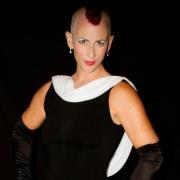
An informative, blisteringly funny, somewhat cranky and always spot-on guide to perimenopause and menopause by the award-winning sex ed/health educator and author of S.E.X. If you don't know award-winning sex educator and all-around badass Heather Corinna, let them introduce themselves and their new book: "I'm going to do what I've done for millions of people of all ages with sex and relationships: to simplify and share solid, explicit information, to provide support and be sensitive, and to help make everyone feel less alone and get us all through hard, thorny, touchy stuff so we can make it to the other side. I'm going to do this in a similar way I've done it for sex and relationships in my work over the last couple decades for young people and adults alike: by talking out loud, shamelessly and frankly, about what others are afraid or ashamed to, much in the way your favorite loudmouth aunt might have if she made this kind of stuff her life's work and if your family also didn't always apparently forget to invite her to everything." Corinna has been on the cutting edge of health for more than twenty years, always talking about what people are most afraid, ashamed, or embarrassed of. What Fresh Hell Is This? is no different. It's a companion for everyone who's reached this "what to expect when you're not expected to expect anything" time of life. It's a health-forward, feminist, no b.s. (and damn funny) perimenopause guide for the generation that time forgot (aka GenXers), offering straightforward descriptions of our bodies, minds, lives and what's going on with them during this time of hormonal chaos. Heather Corinna tells you what to expect and what to do, all while busting some myths and offering real self-care tips so you can get through this. With practical, clear information that also includes affected populations who have long been left out of the discussion, like those with disabilities, queer, transgender, nonbinary and other gender-diverse people, the working class and other marginalized folks, What Fresh Hell Is This? an accessible and inclusive guide for anyone who is experiencing the hot fire of perimenopause.
Heather Corinna is an insufferable queer and nonbinary feminist activist, author, educator, artist, organizer, and innovator. They’re the founder, director, designer and editor of the web clearinghouse and organization Scarleteen, the first comprehensive sex, sexuality and relationships education site and resource of its kind. Heather and the team at Scarleteen have provided millions of young people accurate, inclusive information and support for over two decades. They’re often tired.
Heather’s also the author of the inclusive, comprehensive and progressive sex, sexual health and relationships book for young adults, S.E.X: The All-You-Need-To-Know Sexuality Guide to Get You Through Your Teens and Twenties (Hachette, 2006, 2017), now in its second edition; and, with Isabella Rotman and Luke Howard, Wait, What?: A Comic Book Guide to Relationships, Bodies, and Growing Up (Oni Press/Lion Forge, 2019), for older middle readers and younger teen. They’ve been an early childhood educator, a sexuality, contraception and abortion educator and counselor, a member of the editorial board for the American Journal of Sexuality Education and the Board of Directors for NARAL Pro-Choice Washington; a writer and contributing editor for the 2011 edition of Our Bodies, Ourselves, and a plaintiff for the ACLU where they eventually got to stick it to the Bush administration, which was one of their Best Days Ever. By working themselves to a pulp, Heather has won acclaim and several awards in their field, and a lot of places and people say they’re awesome. Some do not.
They’re navigating middle age and all it entails with as much grace as they can muster (spoiler: not much), and currently, and begrudgingly, live and work in their hometown of Chicago after 20 years away. When not locked in a small room feverishly writing a book in a pandemic or otherwise overindulging in labor, Heather hangs out with their dog, partner and friends, goes outside, makes and geeks out about music, cooks, babies houseplants, and tries to enjoy the purportedly existential theater of life.
The upside of my disappointment about that other menopause book I reviewed was that several people reached out and told me that there was another book about menopause available for request on NetGalley. What Fresh Hell is This? Perimenopause, Menopause, Other Indignities and You is exactly what I was looking for – gender inclusive, pragmatic, compassionate, and truly, deeply feminist.
Why do I, a cis woman, care that a book about menopause is gender inclusive? The answer is, as is the answer to many things, because patriarchy. The lens of patriarchy distorts reality, and one of those distortions is making gender a binary and narrowing the range of gender expression. It is also the reason menopause was treated as an illness to be avoided or minimized. Patriarchy determines that a person in menopause is becoming irrelevant. Any book about menopause that does not acknowledge that not everyone with a uterus is a woman is adhering too closely to the reality distorting lens of patriarchy for me to trust the information within.
Heather Corinna (they/them) is a sex educator and brings their many years of experience explaining sex, sexuality, and bodies to What Fresh Hell is This? It is not a prescriptive book. It describes what happens in the body, what the impacts of those processes can be and a variety of ways those impacts can be managed. Throughout, Corinna reiterates that our individual experience with perimenopause and menopause is not isolated from the rest of our life. Genetics, overall health, wealth, marginalization, past trauma, living situation, and all the factors that make up our life play a part in how perimenopause and menopause impact us. Rather than pointing to a one true path, Corinna illuminates the many paths of which they are aware and is honest about what they don’t know. Anecdotes are used to illustrate, but not as evidence. While I did not see footnotes in the advance reader copy, there is an appendix of additional resources at the back, and as Corinna moves through the book they reference and include material from relevant sources.
Any major changes in my body make me nervous, because I am low income and have very limited access to healthcare. I found a lot of What Fresh Hell is This? reassuring. After one read through I feel like I am doing a lot of the basic things I can do for myself. My gift to myself this Summer will be buying a physical copy to keep on hand for as needed refreshers.
I genuinely feel better about going through perimenopause after reading What Fresh Hell is This?
I received this as an advance reader copy from NetGalley in exchange for an honest review.
Please take this one with a grain of salt. As I skimmed sections and read paragraphs in the sections in those areas I lack knowledge I came to several conclusions. Those who regularly read news articles, magazines or watch health oriented podcasts are probably quite familiar with the data presented in this book. In fact, I was quite disappointed at the elementary level of information presented. I felt anyone motivated to let their fingers type in search for details on the subjects featured in title looking for the latest information will already be ahead of the curve. In fact, I wanted to understand more on hormones but I didn't really learn much on the matter. Instead, I found a warm, friendly voice encouraging me to accept that this transition is normal and a part of the life cycle. If it is possible to have your hand held by a book, the author has done it.
I think this book is an average primer but I have read books that gave excellent advice decades ago and didn't find anything particularly new. In fact that book I read 40 years ago, prepared me as much for what has happened in that period of life as this delivered at this point. Or stated another way, it was light on actual medical details and that's okay if that isn't important to you.
She spends a good amount of time talking about how patronizing the medical community is and unfortunately that hasn't changed. It really seems so backwards that medical providers really understand so little about hormones (that even includes "endocrinologists" as I have found when I had a brain tumor for years!).
Add a dash of male bashing, which lets be real most don't get it but not all are pigs. I didn't really identify with this but I know my brother was a serious ignoramous with my sister-in-law, I do have sympathy for those in such circumstances.
I do suspect there are better books out there overall.
I'm not saying don't buy it. If this is all a new adventure, this will serve your purposes. However, for those who have older sisters, a mother or friends that have preceded them or who like to research on their own, I'm not sure you'll learn anything new. Check it out at the library first to see if this is a manual to keep close at hand.
Anyone who has a uterus, go get What Fresh Hell Is This? ASAP. Librarians, you should order 10. Nonbinary author Heather Corinna is inclusive, hilarious, and righteously pissed off. I was literally yelling, "Damn it, I KNEW IT!" as I read. Corinna writes up a whole range of body/brain effects of perimenopause, offering a "take what works, skip what you don't identify with" buffet, and they are vocal about the impact of overlapping marginalizations on health and healthcare and access. Corinna's compassion is deep, and they repeatedly point out that everyone's experiences are unique, so there's no right or wrong way to read/learn/identify what's happening in your body. I jumped right to the section that helped me figure out the hot mess that is happening with my digestive system (estrogen decreasing = cortisol rising = digestion slowdown which is NOT FUN) and I'm learning even more as I read the rest. Honestly, this book is a mood elevator. I'm having a better day for having started off reading this, if better = more informed, laughing, and incredibly pissed off at the patriarchy. Plus, it's a huge relief to know I can rec this book to a wide range of folks without worrying about people stumbling over gender essentialist/transphobic stuff. Highly recommended all around!
More like 2.5 stars. I seem to be in the minority on this one. As the target audience for this book, the irony is not lost on me that I was irritated by much of it. There was some useful information, but I got tired of wading through the overarching “Eff the patriarchy” mindset to find it. As for dealing with my own menopause, I’m guessing I will handle it in true GenX fashion, by putting on my metaphorical and (eventually, unfortunately) literal big girl panties and moving on.
Im a trans masc who's currently dead center of a huge flare of technicolor, multiclimate per hour perimenopause symptoms this past week -- insomnia, cold flashes, sweats, malaise, headaches, depression, intense mood swings. And this book has definitely distracted me from murdering someone more than once. I currently cuddle this book alongside my heating pad most nights as a source of comfort while I shiver and sweat.
I am only partway through reading, and so this is a placeholder review for the moment. But I have to crow about what an amazing resource this is.
The author has a wonderfully warm, friendly style as they inform and educate on all manner of issues regarding menopause without ever insisting that those of us experiencing the end of menstruation are any particular gender. I can't begin to articulate how healing this is, especially when our foundational feelings around menopause are indeed one factor (among many factors) in how it plays out for us. Having the room to embrace this as a part of our bodily journey separate and apart from being a particular gender is so deeply nourishing. Getting armed with information while not being misgendered is a godsend. And there's even more specific gifts to come for trans readers, I can tell from the table of contents. This book is a voice of a gender nonconforming perimenopause experience that is making me feel deeply supported.
I received an advanced copy in exchange for an honest review.
This IS the perimenopause book I've been waiting for. Rather than wading through oceans of patriarchal BS about making sure not to disrupt other people while you retain your supple flexibility and people-pleasing properties, this book acknowledges, names, and even celebrates the many transformational experiences of peri- and menopause. What you'll find: discussion about sexual and body changes; how to cope with other people when you want to tell them all to f off; radical self-care; calling in and being part of support systems; radical acceptance. What you won't find, and thank the Lumpy Space Princess for this: transphobia/transexclusionary language, misogyny, queer erasure, capitulation.
Extra super special points for Heather Corinna's listing their special webpage in the appendix - it includes great playlists, drink recipes, and the hilarious (and perpetually necessary) acknowledgement that sometimes that cool punk person from days of yore is now deeply problematic and probably should just be shelved for the time being.
I recommend this book to ANYONE who knows ANYONE who is, was, or will experience menopause.
I received a proof of this book from NetGalley in exchange for an honest review.
I have been looking forward to reading this book, and I was NOT disappointed.
As a long-time fan of Corinna's writing for Scarleteen, I knew they would bring the same careful research, empathy and no-bullshit approach to this project. I was especially keen to read it, because even though I am a cis woman, I haven't been able to see myself in the genre of peri/menopause advice literature that assumes the challenges I face in perimenopause are primarily related to my 'loss' of fertility and perceived prettiness or youthfulness.
'What Fresh Hell' *does* address all these issues - but it also talks about the ways peri/menopause impacts on & intersects with work; chronic health conditions; trauma; disability; race; sexual expression; diverse sexualities; trans & non-binary gender experience, and relationships of all kinds.
Having BRAVELY surveyed historical literature on peri/menopause that frames it in hideously pathological and heteronormative ways, Corinna goes on to explain what happens in our bodies and minds as our estrogen levels begin to change. As Corinna puts it "Menopause is a life stage. It’s not an illness or progressive disease" – and consequently even the most exhausting peri/menopausal experiences are contextualised as 'impacts & effects' - not symptoms.
The information in this book is so rich and grounded in rigorous research it's hard to do it justice in a short review. Standout sections include: an overview of prescription and non-prescription supplements; a great explanation of the ins & outs of different kinds of hormone therapy; advice for screening health care providers; and tips on how to treat your body well as it changes (including practical advice dealing with fluctuations in size & shape without having to buy a new wardrobe every few weeks). Plus, there is a heartfelt Ode to A Cooling Pillow that will make you laugh/cry.
If you are perimenopausal (or think you might be) - or you are supporting people who are or will be perimenopausal - you need this book.
This is a book about perimenopause and menopause: a history of thought on the subject (this part doubles as a horror story of how medicine has been consistently shitty to women from Day One), a crash course in the biology behind the phenomenon, and a self-help guide to the options out there now to get you through it. There were some helpful nuggets in here, but I admit to skimming large chunks, mostly because the author's tone and sense of humor were super nerve-grating. So, YMMV.
This is everything I've been waiting for in a perimenopause book. The key element is the "I" voice. The author is an expert in their own experience who has also done their research in what the menopausal transition might be like for others. They are also honest about what a reader may expect. They touch on what perimenopause might be like for people experiencing medical menopause, e.g., cancer survivors, as well as people assigned male or female at birth but have transitioned to another gender via hormones or surgery. However, they alert the reader that they won't feel as seen in What Fresh Hell Is This as they may in book written specifically for their own population. And yet they attempt to touch on the issues and experiences of people going through a different kind of menopause. They are clear, too, that everyone's menopause is different.
Corinna is a GenXer who writes with a gentle authority--again, using a first person narrative or by interviewing people holding other facial, ethnic, and gender identities from theirs, as well as people with disabilities of which Corinna is one. Their expertise doesn't have the ring of "I Am The Expert" that other medical and medical adjacent books I've read do.
I've also read more casual books, comics, and zines that deal with perimenopause. While they can be a lot of fun, none of them has provided the symptom by symptom rundown that Corinna does. It is reassuring, or maybe preassuring for people earlier in the meno that periods are likely to get closer together before they get farther apart. You might have flooding periods. They're normally--but here's how to recognize when they're not. I wish I'd had WFHIT five years ago. I also wish partners and family members and anyone who lives with people going through The Change would read the book. My cohabitant is going to!
A non-binary person who is angry to be experiencing peri menopause under the patriarchal system of the colonized West in the US. One of the worst things to happen to them during peri menopause? The 2016 election, of course. Just, NO. Not for me. DNF.
This is so good, I sent a copy to my sister, who is also going through the roller-coaster of mid-life transition. Not only does this book provide a bunch of well-balanced information and suggestions, it's also got wry humor that had me laughing long and loud. Even better, it's very inclusive, much more so than the majority of books on the subject.
2022 - Just revisited this a year later to check some info. Reminded me how excellent a book this is.
I have been struggling with autistic burnout (or skirting the edge of it) over the past two years, and was looking forward to putting down the work role that contributed a lot to that by the coming summer. Then it occurred to me: “Shit, I’ll be turning 42 then. What if I get to stop doing the stuff that’s been over-taxing me and making my sensory sensitivities go wild…and I start getting hot flashes? What’s THAT going to do?” And so I did what I do – go into research mode! And there’s a lot of different books about menopause, but the darkly humorous title of this one and the fact that it is written by a non-binary person caught my eye.
“My relationship with cigarettes was one of the most stable, reliable, and supportive relationships of my whole life. If you’re thinking something like ‘Well, yes, but they were also slowly killing you the whole time’ you clearly know little about some of my other relationships.”
This book contains a ton of useful information, and the author’s snarky sense of humor makes it a lot more fun and easy to absorb than your typical self-help book. It gets a bit into the history of Western views of menopause and the ways that patriarchy and other social structures can make the experience of menopause (or just being a person who will one day experience menopause) worse…but that’s not all that’s going on: "There's a troubling message that shows up in some menopause messaging:..that we are ONLY having mental health issues because we're experiencing menopause within patriarchy...DAMN STRAIGHT we need a revolution...Inequalities don't help any of our mental health...But even if those inequalities didn't exist...many of us would still have...mental health issues and would still need ways to manage them." However, they do stress community and education quite a lot, which I approve: during any challenging life stage support networks are key, and the level to which people of all genders are ignorant about menopause (and I’m including myself before reading this!) is pretty egregious and needs to change.
“Formication: Not as fun as it sounds. As nerve endings in the skin deteriorate, it can feel like bugs are crawling on or under your skin. This is probably more about aging than menopause itself, and there’s really nothing to do about it but know what it is and that is ABSOLUTELY NOT BUGS. I repeat: it is NOT BUGS.”
The bad news for me was that it doesn’t have much helpful to say about menopause and neurodivergence – despite the author being neurospicy themself! – probably because people with uteruses have been historically under-diagnosed for autism and ADHD, so those of us getting late-diagnosed NOW (right before or as we enter menopause) are likely to be the test cases for figuring that out. It’s a shame, because I couldn’t help but read the history on how menopause came to be treated as a disorder in a way that other life changes with a physical component (eg. puberty) are not and think of the parallels. When it comes to both menopause and neurodivergence, there are “symptoms” that sometimes feel like they deserve that title (when they cause actual pain or life disruption), but sometimes just feel like differences. There are social accommodations that would make them better that would be super easy to implement (and might even be the SAME things, like more options to work from home or on a flexible schedule) but which are often dismissed. And so on. But, hey…maybe I’ll write THAT book, once I’ve been through it!
“Sexual hunger is part of what makes a woman - or, more terrifying still, someone beyond the confines of gender entirely-a witch…they’re lusty, sometimes even letchy, and…old at the same time. Horror!”
I did really like how this book makes sure to acknowledge trans men and non-binary folk, and where their experience of menopause may be a bit different or even more psychologically stressful than for cis women – especially if they don’t have an understanding healthcare provider. There’s also an extra chapter at the back, written by a trans woman, that talks a bit about hormonal changes with both age and hormone therapy in AMAB folks, and how those do or don’t parallel the experiences of menopause covered elsewhere in the book.
“There is no one thing everyone can get or use that fixes all the things for everyone. No such sorcery exists. If there were one thing, it would be puppies, obviously”
And, even if the vagueness of the information about how long perimenopause lasts, what the risk factors are for having certain issues, etc. may be frustrating…we get throughout a really important illustration of how variable the experience of menopause can be, and that is valuable in itself. We could do with more of that around periods themselves, actually: I’ve often found myself wanting to try one of those period cramp simulators to see what level of cramp they deliver, because mine (I’ve learned) are quite mild but, before hormonal birth control pills, I used to bleed more heavily than average and THAT was the main annoyance. But for lots of people it’s the other way around, or some other combination!
"Nearly every postmenopausal person I talked to, whose writing I read...said that life is better on the other side of this. Not just better than in perimenopause, because what isn't? A root canal can be better than this; listening to a man in his twenties talk about himself for an hour can even be better than this. They sometimes even say life is better on the other side than it was for them before perimenopause."
All in all, I think this is probably a resource I will return to as it becomes more directly relevant for me – and there is a very nice bibliography of where to find further information that I will likely draw on as well.
Incredibly helpful book. Gender and sexuality inclusive, well researched, pragmatic, and tonally matches the indignation I'm feeling as I experience perimenopause myself in terms of how little I knew about the whole thing before beginning to experience it.
No one prepares you for perimenopause. I mean, sort of. You hear tales of hot flashes, mood swings, brain fog, and maybe you have someone in your life, a friend who is a few years ahead of you, or your mother’s “change” was discussed in hushed whispers. But there are still many mysteries about perimenopause and the mystery can disarm you like puberty, except at least with puberty you had a Judy Blume book and a public education class. And the pain of it is that everyone’s experience is slightly different. I had thought I was fairly done with it until I had what I know now is referred to as flooding. It is exactly what it sounds like.
What is this? Do fibroids burst? Do I have cancer? I called my OB/GYN and went in. She ran some tests and it wasn’t cancer, and while this doctor knew everything about my reproductive system and birthing, I didn’t feel the same level of competence with this new situation. She put me on birth control for a few months to see if it would straighten out. I didn’t even find much on the Internet, except for advice to give myself the excuse to stay on the couch a few days.
So I turned to What Fresh Hell is This? Perimenopause, menopause, other Indignities, and You by Heather Corinna a new book coming out this June. The author, while not a doctor, does have street cred having been an educator in the field of sexuality. There were parts of the book I felt were useful, a section on flooding was included, and there were some questions I had answered. Sometimes I had to pass through a lot of content to get my particular questions answered. The book tries to be all things to all people—there is a fair amount dedicated to the trans experience and a lot on the history of menopausal malpractice by the patriarchy. There isn’t a lot out there, but my hormones have made my patience thin and I want answers to MY questions. Some of the solutions also seem “in the now”, but that may be because this field is rapidly changing.
Again, my experience will be different from yours, so you may find answers to your particular situation with this book.
BTW—an excellent title for the book, because with each new experience of perimenopause, you will be asking yourself exactly What Fresh Hell is This?
Unpopular opinion is unpopular. I did not greatly enjoy this book. I'm very glad that it exists, but it was not for me.
The Good: - The information is solid and presented in a way that's easy to understand. - It is very inclusive and I'm extremely glad that there is a book written for ALL people who may be experiencing menopause -- cis, trans, non-binary, younger, older.... I was so happy to see and read a book that acknowledged that there are a lot of reasons and ways that a person might experience menopause.
The Not-So-Good: - Repetitive. So repetitive. If I had to read "ya basics" one more time, I'm not sure I could have been responsible for my actions. The information is solid and presented in a way that's easy to understand. <<= If you didn't get it the first time, you definitely got it by the 13th time it's mentioned. - The writing style was fun for a chapter or two, but I found it really rough after a couple chapters. I ended up having to re-read sentences over and over again, frequently reading them out loud in order to parse them properly. It was casual to the point of being difficult to read. - Repetitive. So repetitive. - Repetitive. So repetitive.
In reality, this would have been a 4 or 5 star book if all the repetition had been cut out and it had been slightly reorganized. It also would have been a third as long and wouldn't have taken me 2 months to slog through.
Still. Important that this information is out there, and that it is written in a way that is inclusive and welcoming.
I didn't want to admit I needed to read this. But with my fortieth birthday on the horizon, I cannot ignore the march of time anymore. Luckily, Corinna makes this journey funny and accessible. I love that this book is super-inclusive and sensitive to trans and queer needs and concerns. It is also so comprehensive, covering everything from how you'll feel about different subjects during menopause to hormonal treatments and medical care. Menopause is not a disease - it is a time of life, and things can actually get better! I am less stressed about this upcoming phase of life now! This will be a must-buy for my library and for those heading into this transition. I am sure I will reference it frequently.
One thing I've learned the hard way about having a uterus is that you really should read up on major changes the body encounters throughout life...before they happen. One could argue there's a little education that happens around puberty, and there are umpteen books about pregnancy and childbirth. But what about perimenopause and menopause? For a life change that can last a decade or more, there aren't many mainstream resources for this, outside of sitcom humor about it.
Enter Heather Corinna. I won't lie, this book bummed me out, lmao. There obviously isn't a lot to look forward to about going through perimenopause. But I'm one of those people who wants to know what's coming, so it felt like a necessary read. It was informative for me, a person who hasn't read much on the topic, though I did have questions that ultimately weren't answered. It's pretty inclusive of all uterus-having people, where most books on this aren't. Corinna's writing style didn't always feel cohesive to me, so it was often not smooth reading, and the format of the book was very clunky - breakout sections in the middle of chapters with no indication (a font change or heading) of it being a breakout section or aside...confusing but probably more the fault of the book designer than the author.
The title alone intrigued me, what fresh hell is this is something I say in my day-to-day life, so an author that chose to use it as their title would very likely be an author I’d want to read. That the book was about perimenopause was (almost) secondary.
I’m probably not in perimenopause yet (based on the evidence I’m most likely in my Late Reproductive phase where things start to go a little haywire from what they’ve been the past couple decades), so why would this book be something that I would want to read? The answer is simple: it’s coming for me. I’m a person with a utero-ovarian system which means this is an inevitability. Also, like everyone else, I’m living in a reality where the patriarchy has pathologized natural occurrences in the body systems of people with uteruses (or otherwise experiencing menopause). Information is quite literally power in situation surrounding our health, and as I experience some of the things that are hallmarks of perimenopause its time to get informed.
And what a fun time it was getting informed. What Fresh Hell is This? is health-forward, feminist, empathetic and practical guide that offers straightforward descriptions of what is happening in our bodies and how it effects our minds and lives. Sex educator Heather Corinna (they/them) gives practical, clear information that also includes affected populations who have long been left out of the discussion, those with disabilities, queer, transgender, nonbinary and other gender-diverse people, the working class and other marginalized folks. The inclusivity of this book goes to the length of including an appendix written by Joanne Mason about menopause as experienced by people who were born with testicular systems.
The whole book isn’t for me right now, but it will be for me eventually. There was an incredible amount of useful information, and just good level setting provided that reminded me to do what I can for myself to make this transition easier as it comes (or at least less confusing and scary). If nothing else Corinna’s ten points for managing stress are worth the time investment, but the book has so much more to offer.
Heather Corinna has written a smart, inclusive, HILARIOUS, relatable, extremely useful guide to illuminating a part of our lives that many (most?) women have never truly understood — I thought “menopause” was having a few hot flashes and being cranky for a month or two and then just never having a period again, rather than the sweaty, years-long perimenopausal slog through a river of blood and emotions and terrible sleep and other nonsense that I and so many of my friends are going through.
Normalizing talking about our bodies and all of the crazy stuff that happens to them and not feeling ashamed is a big step towards improving women’s physical and emotional health. We’ve been indoctrinated our whole lives to think that women’s bodies are gross and we should be ashamed of the gross things our gross bodies do, *especially* as we age and lose our reproductive value. I’ve done a pretty solid job internalizing all of that self-loathing for 46 years and am trying my hardest to not pass that garbage along to my daughter (and son, because boys should know this too).
ANYWAY. I have been recommending this book to everyone I know and will be referring to it frequently as I carry on with this magical journey.
I found this book to be very helpful, a great resource, and a really useful starting-off point for perimenopausal people, whether trans or cis or nonbinary. The language and style - snarkily GenX to the max- was very reassuring to me. The tone is richly personal, but the content is rooted in facts and data. Anecdotes and real life experiences are shared, as well as the results of relevant studies and research. Anything useful, be it medical or herbal or otherwise, is included. It’s a sassy smorgasbord of sexual health in transition, and so much more. Did I mention the fun graphics? A noted benefit!
No F-cks are given, the patriarchy gets bombed, sexist history is trashed, and inclusivity is celebrated. How can a book on perimenopause be so exhilarating and empowering and fun to read?! Whether you were born with ovaries or testes, whether you take hormone therapy or cannabis or both, this is a reality that you will face in some fashion, either personally or in people around you. Corinna’s book is a great asset in facing this future with knowledge, humor and hope. Highly recommended for humans 18+
Another plus: the flaming cover with large font title makes this a great book to bring on public transportation, or anywhere that you want people to leave you the h#ll alone.
Just six weeks ago, I entered menopause suddenly after a surgery for endometriosis. I’ve been in perimenopause for several years already and feeling all topsy turvey as a result. I feel so lucky to have stumbled across this book on Instagram.
Much of what’s out there about menopause is for cis-het women, so it was wildly refreshing, as a queer nonbinary person, to read a book about menopause written by a queer nonbinary person. The author’s witty, sarcastic humor was right up my alley and I laughed out loud many times. I learned a lot and I feel 10x less shitty about myself and my current life situation now that I recognize that what I’ve been through and what I am going through now are typical and (mostly) temporary. Now I’m trying to figure out how to be more like Maude, Our Blessed Lady of IDGAF (this will make sense once you read the book).
4.5 stars? The only reason it isn't 5 stars is because ugh I don't like thinking about any of this stuff and I find it all very triggering and dysmorphia-inducing no matter what. Is that the book's fault? No no no it is not at all. In fact more than any other book I've ever read aimed at people with uteruses, it does the very best job possible of trying NOT to make stuff worse and pretty much succeeds.
Which I appreciated.
And I learned a bunch of stuff that I was wanting to know and found a bunch of interesting further books to read and the voice is very comfortable and really it's an amazing resource, really and truly it is.
Just. Ugh. I don't like thinking about menstruation and my uterus for any kind of sustained amounts of time. Even in the best possible context.
Why yes, since you wonder, I am writing this short review at 4:13 in the morning because of perimenopause. Maybe you’re reading it in the middle of the night for the same reason! If so, I am here to tell you that the Heather Corinna’s new book What Fresh Hell is This? will make you feel better than you do right now, and you should get your (perhaps sweaty, cranky, bewildered) hands on a copy asap.
Written by a nonbinary, rad, smart, funny, sex-educator, this really is a game-changer in a field of books that try to be helpful and relevant but end up just recapitulating tired gender-binary, straight, fat-hating, ableist sexism. In place of so much that makes us sad, What Fresh Hell is This? offers practical, supportive, buffet-style advice for meeting perimenopause and menopause with kindness, feminism, and science.
The book starts with a great, short history of how messed up and sexist treatment of perimenopause and menopause have been in western medicine (easily skippable, as Corinna notes, if you just want to not think about annoying things). Then it gives a clear run-down on hormones, why they are complicated, and why their changing affects us so much. (I had no idea that there are four kinds of estrogen that bodies produce? One of which is only produced if you’re pregnant, and it is made by the fetus’s liver? How wild.) But in this part, Corinna begins their reframing of the assumed subject of perimenopause with an ease that feels casual and comfortable as you read it, although it is clearly a political decision enacted with rigor.
The “proper subject” of menopause is often implicitly imagined as a straight nondisabled white cis woman who has had kids and worries about getting fat, wrinkly, nonreproductive, and moody. Corinna writes for that woman, for sure, but she is not the central subject from which the rest of us deviate. So all throughout this book there are regular people who have had or do have uteruses and ovaries, and who enter menopause suddenly because of chemo or oophorectomy or hysterectomy, or using T, or other things.
There’s an excellent supplemental section at the end about how trans women and people with testicular systems experience menopause. Being disabled, queer, and nonbinary is not exceptionalised, and Corinna marks how racialization and poverty shape the conditions of life through which we enter menopause.
I just can’t express how relaxing it is to be able to read a book about perimenopause and not constantly brace for or read around heterosexuality, fat-shaming, and ableism, a book that acknowledges racism as a structuring condition of our lives.
But then mostly the book is just helpful about perimenopause. Corinna explains the whys and hows of various things that can happen: Vasomotor symptoms (hot flashes and night sweats), mood shifts and mental health upheavals, cognitive affects, chronic pain flares, and changes to digestion, skin, bleeding (of course), and sexuality.
The bulk of the book, which goes through various kinds of experiences people have with perimenopause is grounded, thoroughly researched, and measured. I learned a lot, including about things that I thought I had settled views upon, like about whether hormone therapies are good or bad. On that front, I didn’t know that the studies that convinced me that menopausal hormone therapy was harmful and bad didn’t actually focus on the people who might benefit most from short-term combined hormone therapy – they were done on people who were postmenopausal, on average 63 years old, and with an aim of preventing long-term health problems. And I didn’t know that testosterone can be used as part of a menopausal hormonal treatment plan.
Part of what’s so great about WFHIT? is the steadiness with which it explains that the transition to not bleeding will be personal and specific, but that we can still know things about it. And it has really good suggestions in a frame Corinna calls “Ya Basics” for thinking about managing stress, sleeping, moving our bodies, finding social support, and quitting smoking. They offer sometimes irritatingly helpful advice while acknowledging that it’s sometimes irritating to be offered helpful advice. But they’re still offering it and honestly they’re probably right.
Readers of this blog are probably like me, people who think about a lot of things and who feel like we know some stuff. It is so strange and nourishing to read a book that shows how much more stuff there is to know about something that anyone who has or has had a uterus and ovaries will go through. I feel almost embarrassed at how relieved and affirmed I feel, having read this book, and I recommend it to you. And I hope you get some non-sweaty sleep.
What an extraordinary gift to the conversation around menopause. As someone who has read a number of books and articles on perimenopause and menopause over the years, this is one of the first resources I've come across (and certainly the first book) that was so generously inclusive of a wide range of bodies, genders, identities, and experiences.
While I personally have found meaningful connection with other people's stories around menopause and the meaning-making they've done to ease the confusion, pain, and weirdness that is a changing body, there is something so refreshing in Heather's approach to talking about the experience of menopause.
Yeah, perimenopause sucks a lot of the time. It's confusing as all get out. Some days, I don't want to be anywhere near this perimenopausal body much less in it. Throughout the book, it's clear that Heather GETS IT. This isn't a fluffy promise that puts a pretty bow on everything nor is it a doom-and-gloom horror show that leaves you feeling lost and disempowered - it's raw, it's real, it's ugly, and it's profoundly informative in such an accessible way.
At no point did I feel talked down to, preached at, or judged. Instead, I felt a sense of solidarity and camaraderie as I moved through the pages.
This book is well-researched and full of history as well as the latest research (as of the date it went to print). Heather isn't trying to sell us on anything, but instead offers as much information as possible so that we, the reader, can make more informed choices about what's best for us and the context of our lives.
One other note - unlike so many other books about menopause, there is a refreshing lack of fatphobia and ableism.
I will be recommending this book to pretty much everyone because even if someone isn't in a body that will experience menopause, they most certainly know someone who is and the more we are all aware of this often-decade-long experience, the more grace and understanding we can offer each other.
If possess the female reproductive system, please read this! It's about menopause ... ALL of it! There's a wealth of knowledge, humor, and insight.
Heather Corinna (they/them) has taught sex education to teens and twenty-somethings for over 30 years. They KNOW their stuff! Heather is also a trans person. They take time again and again to share that this is all more complex for BIPOC and LGBTQIA folks. That was refreshing to hear. They don't pretend to understand what BIPOC are going through in this, nor all LGBTQIA, except to know that this is most definitely worse for them due to systemic racism and homophobia. I respect and value that in this unfortunately non-fiction work.
Heather too is going through perimenopause. They are SO good. There were some repeating, and yet I felt those things needed repeating. They shared humor, stories of real people, and the facts.
Mostly, I felt VALIDATED! This crazy hell I'm going through is NORMAL! I'm normal! As much as I feel my body is betraying me, most women end up going through this miserable time in some fashion.
I listened to the audio version, but I will be purchasing the book. Heather mentioned numerous resources, and I cannot remember them all. Plus, I listen while I drive, so I wasn't able to write all of those great resources down on paper. Well, I also want to purchase the book to support Heather in some small financial way. They validated my experiences thus far, and I am eternally grateful for that huge gift.
PS: It's okay to skip chapter 2. That was a LOT gross about what folks use to do for or think about menopause. There is enough of that mentioned throughout, that missing this chapter is simply avoiding nausea and nightmares.
We read this book as part of an online menopause support group I joined earlier this year, and WOW am I glad we did. This is the book I wish I'd had ten years ago, just to be able to know what was coming down the pike. It's inclusive, compassionate, just snarky enough, and highly educational. I was worried that it would be anti-HRT (having just started on it) based on some of the early content, but the only thing it is "anti-" about is feeling like your experience needs to be somehow dictated by anyone else. If you like audiobooks, this one is read by the author and will leave you feeling like you have a genuine connection by the end. And then if you are like me, you will Facebook-stalk them and send a message of appreciation.
I'm recommending this to all of my friends who may be approaching menopause, are or have already been there, or live with someone who will experience it. In fact, I can't believe I haven't made my partner read it yet.
Okay, I feel a bit guilty clicking "read" on this because I ended up skimming it. I really felt like the text was repetitive and included very little scientific information on peri-menopause, menopause, and post-menopause. I also thought it was a big oversight not to address what the experience would be like for women who are using birth control, as many in their early to mid-40's would be. It seems that many found this book helpful, but for me it was a miss. I did like the history of science surrounding menopause (despite it being unsurprisingly depressing).
I got through most of this book, but it ended up being a DNF for me. I felt a lot of anger from the author, and the actual facts I was looking for were stretched out between angry rants and tangential anecdotes. Not for me, but I feel it's an important topic, and perhaps this book will resonate with others.
I would never have thought that I was old enough for this book to apply to me, let alone the fact that I now think this book has been applying to me since my late 30s. That's because women's health is so poorly researched and valued. Sure, I got some basic sex ed as a kid to prepare me for puberty (sort of), but in talking with friends and colleagues, it is clear to me that I am not alone in not really having the first clue about what perimenopause was/is. And oh hey, in typing perimenopause, my computer/browser seems to never have heard of it either.
If you don't know, perimenopause is basically the few months to FIFTEEN YEARS in the life of a person with ovaries and a uterus prior to menopause. Oh and I thought menopause was that years long process - nope! Menopause is the single moment in time when a person is considered done with monthly cycles forever. Perimenopause can include the cliched hot flashes (something I have yet to experience and so therefore thought that anything menopause had nothing to do with me) but also a myriad of disconcerting symptoms and changes that can easily be confused for many other syndromes.
This book taught me a lot, and I appreciate how the author took in consideration gender identity, sexuality, race, disability, and class. You can tell from the title that the book takes a certain dark humor stance, which I also appreciated. However, I felt that the author tried too hard to be jokey, and while trying to be accessible, I think they failed somewhat in this by including some very specific references/jokes that not everyone will know.
I recommend this to anyone with a uterus/ovaries who is under 40. You may be really far away from this being relevant to you, but it's better to know what might be coming than be totally at sea, especially because the medical community can be so woefully unhelpful.
Oh, and do yourself a favor and watch the Baroness Von Sketch video titled "Is it Perimenopause?" The book recommended this and it was the single most validating thing I didn't know I needed.