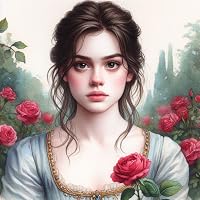
The adventures of three king's sons, who are challenged to find the source of the heavenly music heard throughout the kingdom, include encounters with hospitable old men, a captured maiden, lots of food, and a fierce giant with an appetite for princes.
Early association with the Irish republican army and experiences in prison influenced works, including The Quare Fellow, the play of 1954, and the autobiographical Borstal Boy in 1958 of Brendan Francis Behan, writer.
Brendan Francis Behan composed poetry, short stories, and novels in English. He also volunteered.
A mother in the inner city of Dublin bore Brendan Francis Behan into an educated class family. Christine English, his grandmother, owned a number of properties in the area and the house on Russell street near Mountjoy square. Peadar Kearney, his uncle and author of song and the national anthem, also lived in the area. Stephen Behan, his father, acted in the war of independence, painted houses, and read classic literature to the children at bedtime from such sources as Émile Zola, John Galsworthy, and Henri René Albert Guy de Maupassant; Kathleen Behan, his mother, took them on literary tours of the city. From father, interest of Behan in literature came; his mother originated his political ideas. She politically acted in all her life and personally befriended Michael Collins. Brendan Behan lamented "The Laughing Boy" at the age of thirteen to Collins. His mother gave the affectionate nickname, the title, to Collins. Kathleen published "Mother of all the Behans," a collaboration with Brian Behan, another son, in 1984.
Peadar Kearney, uncle of Brendan Francis Behan, composed Amhrán na bhFiann, the national anthem. People best knew "The Patriot Game," the song of Dominic Behan, his also renowned brother; Brian Behan, another sibling, a prominent radical political activist, spoke in public, acted, and authored. Brendan and Brian shared not the same views, especially when the question of politics or nationalism arose. Brendan on his deathbed presumably in jest asked Cathal Goulding, then the chief of staff, to "have that bastard Brian shot—we've had all sorts in our family, but never a traitor!"
From a drinking session, Brendan Francis Behan at the age of eight years in 1931 returned home on one day with his granny and a crony, Ulick O'Connor recounts. A passerby remarked, "Oh, my! Isn't it terrible ma'am to see such a beautiful child deformed?" "How dare you", said his granny. "He's not deformed, he's just drunk!"
Brendan Francis Behan left school at 13 years of age to follow in footsteps of his father as a house painter.
1 Star for the story, 2 for the pictures. The writing was awkward. The man hides in the horse’s tail hole? The girl has no brain and just goes along with him. Disappointing story that ends abruptly with a blurb that the writer “will make a long story short.” After that long, bizarre, choppy and awkward story, we get cut off? Who wrote this?
This entire review has been hidden because of spoilers.
Once upon a time, and a very good time it was too, when the streets were paved with penny loaves and houses are whitewashed with buttermilk and the pigs ran round with knives and forks in their hands shouting, "Eat me, eat me!" there lived a King of Ireland and he had three sons named Art, Neart and Ceart.
Thus begins a classic fairy tale of a young man who must free a lovely princess from the clutches of an evil giant. The story is well-told, but it's the art that brings it to life.
When the King of Ireland dispatches his three sons - Art, Neart and Ceart - to determine the source of the heavenly music that can be heard all throughout the land, he promises half his kingdom to the one who can solve the mystery. In true fairy-tale style, it is the youngest who triumphs, journeying through a strange underground land to the palace of a terrible giant, where he discovers the daughter of the King of Greece at her harp. Aided by a magical horse, Art defeats the giant and rescues the princess, returning home for his reward...
An original tale first published as part of Brendan Behan's Island: An Irish Sketch-Book in 1962, The King of Ireland's Son utilizes so many of the traditional motifs of the folk genre - the three sons, the three old men met on the journey, the magical horse, and the hiding places uses by Art - that it seems like "the real thing." P.J. Lynch - who has also worked on Hans Christian Andersen's The Snow Queen, and E. Nesbit's Melisande - contributes gorgeous artwork to this edition, colorful and expressive. Well worth the time of anyone interested in Irish folklore and storytelling, although readers should be aware that this is a very different tale from the similarly titled The King of Ireland's Son, written by Padraic Colum in 1916.
My 7-year-old daughter: "I liked it! Especially when he went into the little holes to hide!" My 4-year-old son: "I loooved it! I liked the giant and the horse and everything!"
We enjoyed this Irish tale about the quest of the King of Ireland's three sons search for the source of the heavenly music. Transcribed from a tape recording, it lends itself well to reading aloud. The paintings illustrate the story on every page, sometimes gracing an entire page with vivid colors and expressive characters. We really enjoyed this story and it is one my 4-year-old has requested already to be read again and again.
I loved the structure of the tale, and as an American, the exotic foods. The illustrations are Grand and I'm looking forward to the opportunity to share this story with young and old alike. Although I think I'm going to have a hard time finding an old old man.
This is a very strange tale about a young Irish prince who sets off to find the source of heavenly music. The narrative is odd enough, but the illustrations truly capture the humor, the strangeness, and the magic of the story. Overall, it's a fun read, especially for St. Patrick's Day.
The only things that I found odd were the fact that the Greek princess mentions that the giant will ask Art a number of riddles, but he doesn't actually do that. It's just a deadly game of hide and seek. Also, Art's older brothers are banished, although the story never seems to imply that Art was aware of their ill-intentions toward him.
Nevertheless, it's a fun, fast read. And after reading about all the wonderful food Art eats on his journey, I'm rather hungry!
This was a really weird fable that for some reason I had a hard time reading aloud. After the 2nd read, I discovered there were a few occasions where the author changed the from past tense to present tense (on purpose? by accident? bad copy editing?) which really ruined the flow of the story for me. Also Dex (5yo) always wanted me to skip over the exhaustive list of foods the hero ate.
Kate Greenaway medalist P. J. Lynch provides the beautiful paintings for this rollicking traditional tale, in which the youngest of the King of Ireland's sons rescues a Greek princess from a giant keeping her captive. This well-written, adventurous tale is lengthy and wordy--too long for most preschool children. The only source note given is that it was transcribed from a tape recording.
This is an Irish folktale about literally a tail. lmfao No seriously, the tail part shocked me and traumatized me a little. But this story is supposed to be a silly, quirky tale with a satisfying ending. The illustrations are a work of art.
This book is the transcription of an audio recording of this story, and it read as such. It would have been a much better book if it would have been specifically crafted as a picture book.
This is a very odd tale, but I liked it for the most part. I connected with this story for small moments of time. I enjoyed the mystical aspect to it and thought that the illistrations were very nice. This would not be my first choice of book to read to children but prehaps I might one day if the curriculum calls for something along these lines. The plot was easy to understand and the suspense was nice. Although I found this story very macbre. Over all I liked this book, it is not a favorite but was intresting.
I am not sure what part was stranger--the part where Art hid in the horse's bottom under his tail or the part where Art hid in the horse's gums under his teeth! So very odd.