Jump to ratings and reviews
Rate this book

Cancel Culture: The Latest Attack on Free Speech and Due Process

Rate this book
In Cancel Culture , Alan Dershowitz— New York Times bestselling author and one of America’s most respected legal scholars—makes an argument for free speech, due process, and restraint against the often overeager impulse to completely cancel individuals and institutions at the ever-changing whims of social media-driven crowds.
 
Alan Dershowitz has been called “one of the most prominent and consistent defenders of civil liberties in America” by Politico and “the nation’s most peripatetic civil liberties lawyer and one of its most distinguished defenders of individual rights” by Newsweek . Yet he has come under intense criticism for his steadfast and consistent championing of those same principles, and his famed “shoe‑on‑the‑other‑foot test,” to those who have been “cancelled” for any number of faults, both real and imagined.
 
Cancel Culture is a defense of due process, free speech, and even-handedness in the application of judgment. It makes the case for restraint and care in decisions about whom and what to cancel, boycott, deplatform, and bar from public life, and offers recommendations for when, why, and to what degree these steps may be appropriate, as long as objective, fair-minded criteria can be determined and met. While Dershowitz argues against the worst excesses of cancel culture—the rush to judgment and the devastating results it can have on those who may be innocent, the power of social media to effect punishment without a thorough examination of evidence, the idea that historical events can be viewed through the same lens as actions in the present day—he also acknowledges that its defenders ostensibly try to use it to create meaningful, positive change, and notes that cancelling may itself be a constitutionally protected form of free speech.
 
In the end, Cancel Culture represents an icon in the defense of free speech and due process reckoning with the greatest challenge and threat to these rights since the rise of McCarthyism. It is essential reading for anyone interested in or concerned about cancel culture, its effects on our society, and its significance in a greater historical and political context.


168 pages, Hardcover

First published November 17, 2020

57 people are currently reading
297 people want to read

About the author

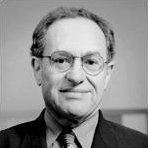
Alan M. Dershowitz

145 books318 followers
Alan Morton Dershowitz is an American lawyer, jurist, and political commentator. He is the Felix Frankfurter Professor of Law at Harvard Law School. He is known for his career as an attorney in several high-profile law cases and commentary on the Arab-Israeli conflict.

He has spent most of his career at Harvard, where, at the age of 28, he became the youngest full professor in its history, until Noam Elkies took the record. Dershowitz still holds the record as the youngest person to become a professor of law there.

As a criminal appellate lawyer, Dershowitz has won thirteen out of the fifteen murder and attempted murder cases he has handled. He successfully argued to overturn the conviction of Claus von Bülow for the attempted murder of Bülow's wife, Sunny. Dershowitz was the appellate advisor for the defense in the criminal trial of O.J. Simpson for the murder of his ex-wife Nicole Simpson and her friend Ronald Goldman.

Ratings & Reviews

What do you think?
Rate this book

Friends & Following

Create a free account to discover what your friends think of this book!

Community Reviews

5 stars
35 (20%)
4 stars
51 (29%)
3 stars
50 (28%)
2 stars
26 (14%)
1 star
12 (6%)
Displaying 1 - 30 of 31 reviews
Profile Image for Petra X.
2,460 reviews35.8k followers
1-tbr-owned-but-not-yet-read
December 10, 2020
What is freedom of expression? Without the freedom to offend, it ceases to exist. Salman Rushdie. The 21stC is all about identity politics, all about when the tolerant, left-wing socialists of the West turned into extremely intolerant people who don't care what people do, terrorism included, if they are 'woke' too or hate the same people. It's all about the herd mentality of peer politics that teenagers go in for: they all have to show how different they are by being exactly the same.

It's all about the destructive rabble rouser anarchists , usually driven by Marxist theory, who think to smash down, but never to build up inciting these people who think they are being idealistic but actually are being used. It didn't work in Russia, it didn't work in China, it doesn't work anywhere. But it's action, it's anti-authority, anti-tradition, anti-convention, and, especially if you are young, that feels good.

It's all about taking offence. Why allow a debate with someone who doesn't hold the same views (well it wouldn't be a debate if they did?) in case it hurts someone's feelings which nowadays is considered to be dangerous to their mental health, snowflakes all. Why not write on GR to BURN BOOKS, to 1 star an author's books, to urge people to cross-post nasty reviews of a book that they only know about from another hate-filled review . Why not deplatform, cancel, ostracise, fire and bully them if they do not conform?

Hypocrisy is fine, it's a virtue these days, better to deny one's true self and thoughts, than stand up for them against the culture that goes under the generic heading of 'Woke'. We don't need the thought police, everyone is so cowed by the bullying that they police themselves. Anyway,speaking up will only get you insulted, sacked or worse.

A comment I got yesterday was 'the only way to win' to pick battles carefully, and stay quiet in case one got attacked for one's views in front of one's friends. "What," the commenter, said "would I do then?" I'd stand up to them of course. Is that why decent Germans kept their mouths shut when their neighbours were dragged out of their houses and deported to concentration camps to be murdered or shot right in front of them?

A lot of people who have self-defined in unusual ways, or support causes that require people to gag themselves so they don't say even one single wrong word, are looking for that wrong word, they are looking to take offence. And then they feel entitled to recruit all their friends for a take-down campaign. And the media, which probably went into it for all the best reasons, has now become the tool of these narrow-minded, vengeful people.

The worst I heard was a boy of 16 in school, who said there were only two genders, the rest was personal identification. He was immediately suspended. No discussion of why he felt like that and others didn't, he wasn't inclusive enough they said. Take out of the class. Take him out of school. His friends should shun him. That really happened.

#Metoo doesn't mean 'I was also sexually assaulted and was too intimidated to speak up" it means, I don't want to be left out, I want to be one of the popular crowd, so whatever it is, I'm up for it, #Metoo #Metoo #Metoo.

I'm looking forward to this book. I don't care what views people have, even really evil ones like KKK or strange conspiracies like flat earth, so long as they are up for debate. I can listen to you without agreeing with you. I can learn from you even if its only how people can get so misguided and stick to theories that are so wrong and harmful. And we can talk, and we can write, and we can encourage debate, and free speech.

All the people who want to silence those who don't agree with them and say it is to protect their mental health, should remember what we all said in the playground, "Sticks and stones may break my bones, but words can never hurt me."
Profile Image for Sebastian Gebski.
1,229 reviews1,413 followers
September 21, 2021
Let me make it clear - the part of the book which is explicitly on Cancel Culture is worth at least 4.5 stars. The author has succeeded in capturing the essence of the issue, provided some good examples, made some good points about why it's so dangerous. But this material is literally not more than 20% of the book.

The rest is basically chaotic rubbish, primarily about:
* how unfair it was to attack Dershowitz in particular (he was accused of some sexual misconduct as well)
* how great his accomplishments are (aka "what is being canceled") - there's literally a FULL CHAPTER on that (!)
* Black Lives Matter and Anti-semitism (!)
* why Zionism is good (!)
* what does martial law mean in the American legal system (!)
etc.

I'm not saying these are not important topics, maybe they are crucial (for someone). But those topics do not have ANYTHING in common with the Cancel Culture.

It is clear that Dershowitz, at the end of his life, is panically afraid for his legacy. This is probably the only thing that freaks him out - that all his accomplishments will be neglected because of the recent accusations. But this fear only makes him produce more and more books on the same topic (clearing his name under the veil of some other topic) and suggest completely ridiculous ideas (like "MeToo court").

Skip it. It's a waste of time.
Profile Image for Alien Bookreader.
330 reviews46 followers
January 29, 2021
“During the height of McCarthyism, we couldn’t see movies, go to shows, or watch TV programs made by or acted in by blacklisted artists, because there were none. We couldn’t be taught by blacklisted teachers, because they were fired. We couldn’t be patients, clients, or voters for blacklisted doctors, lawyers, or politicians, because they were denied the ability to practice their professions.”


What ant apt analogy to begin the book with. Cancel culture is in many ways a new form of McCarthyism, but this time as a social phenomenon rather than a political one.

Some key takeaways of this book:

Free Speech:

- Deep down everyone wants to censor something. However if everyone had the opportunity to censor the topics they wanted, most topics would end up banned.

- Denial of free speech and due process is the way to dystopia, whether it's a right wing or left wing dystopia.

- Some speech has the legitimate potential to cause harm: Libel, threats, extortion, revealing classified material, conspiring to commit a crime, offering bribes etc. Those forms of speech we should limit.

- Cancel culture stifles creativity. Intellectuals are more and more afraid to speak publicly about anything that might be misinterpreted, taken out of context and weaponized.


Justice:

- For a system of justice to be ethical, we need to hold everyone to the same standard of accountability, regardless of their identity. No one gets a free pass to be a bigot to someone else, not even a marginalized person.

- Being principled and intellectually honest means you will stand for your principles even if they conflict with your political group. Choosing to throw away your ethics to fit into your political group is intellectually weak. Sometimes the argument the opposing political side makes is the right one and the one that actually aligns with your personal principles.

- Unlike court where a victim is assumed innocent until proven guilty, where there is due process, and a requirement for evidence, cancel culture requires none of these things. Not all accusations are true, and yet often the accused person is cancelled immediately, without evidence, and even in cases where the evidence proves the accusation was false, by the time the evidence is revealed, that person's reputation/career is gone.

- In a just society, people should have a way to establish their innocence without draining their bank accounts. In the current climate, establishing innocence often leads to expensive defamation lawsuits.

- There are costs and benefits to making a false accusations. The more successful and wealthy the person is, the more benefits there are to falsely accusing them (i.e potentially millions of dollars). In the current climate, the costs of false accusations are low, because even people who make false accusations continue to be championed as heroes (even if they are caught lying and saying contradictory things under oath, as a celebrity mentioned in the footnotes did.)

Truth:

- Many people are under the illusion that "if something appears in the media, it must be true, or at least it must have been vetted, investigated, and truth-tested before it is published.” This is often not the case. Media often publishes whatever will make for a juicy story, not necessarily well investigated, truthful reporting. It's easy to pick and choose which facts you present, and which ones you omit in order to tell the more salacious story. Even popular platforms like Netflix do this (leading to defamation lawsuits).

- "Generalizing about any group without an empirical basis is bigotry." Blindly believing all women who make accusations is not ethical or feminist. It only creates a better environment for false accusations. There is no gene that makes all women truth tellers and all men liars. It's a common sense intuition that is at the moment, unpopular.

- All historical figures have mixed records. We have to take into account the time period they lived in, view them holistically for their negative and positive actions. No historical figure (besides Jesus maybe) has a perfect history. Some of the things considered morally horrible now were common practice then. Some things considered normal and un-noteworthy now were groundbreaking then.

Meritocracy:

- "The question is not whether diversity should play a role; it is what role it should play in which private and public institutions.” Legislative bodies are meant to be representative so diversity should play a role. Would you also want representative diversity on a basketball team? There are times when talent and skill is more important than diversity.

- “Cancel culture’s effort to replace meritocracy with identity privilege is the woke mirror image of the discredited hierarchies of the past.” In a meritocracy the person who gets the job is the most skilled. In a hierarchy, you get it because of your place in society. Member of the intelligentsia? Have connections? You got the job! Historically we see this as more corrupt than meritocracy. Ideally we want to make our meritocracy more democratic, not to replace it with yet another social hierarchy.


Flipping Ethnicity - Thought Experiment

“Imagine a world in which there was only one Black African nation—a nation built largely by previously enslaved Black men and women. Imagine further that this singular Black nation had a good record on the environment, on gay rights, on gender equality, on human rights, and on defending itself against attack from predominantly white nations. But, as with all nations, the Black nation was far from perfect. It had its flaws and imperfections.

Now imagine further that do-gooder organizations in America and around the world were to single out the Black nation for unique condemnation. For example, imagine that an environmental group or a gay-rights group were to publish a platform in which it criticized the environmental or gay-rights policies of its own nation, but then went out of its way to single out only one other nation—the Black nation—from among all the other polluters and homophobic countries of the world?

Would anyone hesitate to describe the singling out of the world’s only Black nation for unique condemnations as an act of bigotry, motivated by anti-Black racism? If that is the case, how is it different when Black Lives Matter singles out the only nation-state of the Jewish people for unique and undeserved condemnation? Is not the application of a double standard based on religion as bad as a double standard based on race?”


A poignant thought experiment. When many countries have a worse human rights history and are committing worse crimes as we speak, why target the one country that is the country of Jewish people?

Is it anti-semitic or just a random act of reactionary "activism"? I can't say for sure, but it brings up an uncomfortable question "are we more ok with anti-semitism if a minority group does it?" Yikes.

The "Unsafe" Thought Experiment

Professor Ronald Sullivan was "cancelled" because students felt unsafe, knowing that as a lawyer he represented a controversial criminal defendant. Should we consider the "feeling unsafe" argument as one worth listening to? What if students said they were "unsafe" because the professor was gay, or black, or muslim? Would we fire the professor as a result? Yikes.

A just system is one that holds everyone to the same standard regardless of identity.

So far I've reviewed the chapters that I found great. I discovered that there was a whole other side to some of the highly public lawsuits of the past years that I didn't know about, because the media I consumed showed a very carefully edited narrative. When looking at the actual facts, many of which were casually omitted from the reporting I saw, the story seems very different.

The worse parts of this book were the diversions into unrelated topics like cancelling Israel, cancelling the Bible, and Marshall Law. While abstractly connected, the political tensions surrounding Israel seem outside of the scope of this book and not that related to the "cancel culture phenomenon" but to much larger socio-political issues.

Final thought:

It's better to be ethical than to be politically correct!
Profile Image for Ross Wilcox.
Author 1 book42 followers
April 12, 2021
It's not saying anything new. It's cancel culture 101 with an admittedly one-sided conception of what cancel culture is. The author is 82 years old, and though it may be ageist to say, it reads as if that's the target audience: crotchety old people who bemoan the changing cultural milieu.
Profile Image for hannah.
244 reviews1 follower
Read
May 21, 2021
very questionable.. the fact that he thinks teenagers on twitter trending hashtags can actually silence someone makes me giggle. and just to be clear i was forced to read this for uni!
Profile Image for Janet.
189 reviews8 followers
April 18, 2021
This very short offering by Dershowitz was informative and actually opened my eyes to a different way of thinking about certain aspects of Cancel Culture. Among other appreciations, I have a better understanding of the separation of creation of laws and their enforcement based on the governmental entity.
He presented one chapter and a few parts of other chapters to referencing his recent experience of (partial) cancellation due to sexual allegations from a woman whom Dershowitz never met. I understand and forgive him for bringing it up, more than once.
Cancel Culture must be read with an understanding that apparently even Dershowitz can't get real proofreading before going to press. The editing is terrible, but this is nothing new in book publishing today. Not misspelled words, spell check took care of that. 'Vacation' instead of 'vaccination', stands out. Again, I understand.
Profile Image for Shifty Reads.
459 reviews42 followers
May 10, 2021
While this book was very informative, the author was more of a cry baby than any man I had the non pleasure to meet.
Profile Image for NCHS Library.
1,221 reviews23 followers
Want to read
June 10, 2021
From Follett: In Cancel Culture, Alan Dershowitz--New York Times bestselling author and one of America's most respected legal scholars--makes an argument for free speech, due process, and restraint against the often overeager impulse to completely cancel individuals and institutions at the ever-changing whims of social media-driven crowds.

Alan Dershowitz has been called "one of the most prominent and consistent defenders of civil liberties in America" by Politico and "the nation's most peripatetic civil liberties lawyer and one of its most distinguished defenders of individual rights" by Newsweek. Yet he has come under intense criticism for his steadfast and consistent championing of those same principles, and his famed "shoe‑on‑the‑other‑foot test," to those who have been "cancelled" for any number of faults, both real and imagined.

Cancel Culture is a defense of due process, free speech, and even-handedness in the application of judgment. It makes the case for restraint and care in decisions about whom and what to cancel, boycott, deplatform, and bar from public life, and offers recommendations for when, why, and to what degree these steps may be appropriate, as long as objective, fair-minded criteria can be determined and met. While Dershowitz argues against the worst excesses of cancel culture--the rush to judgment and the devastating results it can have on those who may be innocent, the power of social media to effect punishment without a thorough examination of evidence, the idea that historical events can be viewed through the same lens as actions in the present day--he also acknowledges that its defenders ostensibly try to use it to create meaningful, positive change, and notes that cancelling may itself be a constitutionally protected form of free speech.

In the end, Cancel Culture represents an icon in the defense of free speech and due process reckoning with the greatest challenge and threat to these rights since the rise of McCarthyism. It is essential reading for anyone interested in or concerned about cancel culture, its effects on our society, and its significance in a greater historical and political context.
432 reviews4 followers
June 30, 2021
Very good book! Cancel Culture IS a cancer! We need to listen to ALL sides, not just one.
Profile Image for juls.
53 reviews
October 30, 2022
should be called “how i got cancelled and can’t get over it so i wrote yet another book about it”
Profile Image for Craig Amason.
620 reviews9 followers
June 14, 2023
If nothing else, Alan Dershowitz is consistent. He is a Libertarian to the marrow, which means he manages to regularly agree and disagree with Democrats and Republicans, but he rarely sees eye to eye with the extreme left or right. He is a bold defender of the US Constitution and a faithful upholder of the First Amendment and free speech. He certainly isn't an orthodox Jew, but with strong cultural and political Jewish sentiments, he is a solid (and almost blind) apologist for the modern state of Israel. He spends a lot of time advocating for Israel, far beyond the apparent scope and purpose of this book. He also has another underlying agenda.

The dangers of cancel culture are personal for Dershowitz, going back to a defamation case from 2014 where he was, as he claims unequivocally and repeatedly throughout the book, falsely accused of sexual misconduct. The case was settled in 2022 when his accuser admitted that she was mistaken when she identified Dershowitz as a sexual offender. However, he stresses that the pressures from the pervasive cancel culture caused him considerable hardship due to its tendency to presume guilt instead of innocence when an accusation is made by anyone against anybody else with little or no actual evidence.

The author uses his book to convince his audience of his innocence and to warn against the kind of environment cancel culture is creating. He points to specific organizations and movements, not summarily condemning them because he knows they do good work. However, he criticizes the overzealous factions of Black Lives Matter and the Me Too movement that make or support unfounded accusations.

I think Dershowitz gets a little overzealous himself with some of his protests, and he even becomes a bit hypocritical at times, especially regarding the virtues of Israel and the Zionists. It can be difficult for readers like me to keep an objective opinion about him as a lawyer, recognizing that he was "just doing his job" when he defended such clients as O.J. Simpson, Jeffrey Epstein, Harvey Weinstein, and Donald Trump. But no one can deny his record as a successful attorney and as a thoughtful scholar.
Profile Image for Elissa.
62 reviews
January 3, 2023
If you are looking for an analysis of cancel culture, the introduction to this text is the key part to read. However, as some other reviews here have noted, much of what is good in this book has been diminished by the author’s perspective of “it wasn’t fair for ME to be canceled.” The text overall reads as a quickly written rant against what the author sees as an offense against him.

In the conclusion, the author lists the rights of the law, media, institutions, and individuals as legitimate and all these things are really what make up what he identifies as cancel culture. In that sense, it seems to contradict what he has previously said about cancel culture. The definition is also muddied by the chapters on canceling science and elections, which are different issues than what he previously identified as cancel culture. The list of individuals who have been canceled in Appendix I further muddies the issue by including speakers who have been protested against and the removal of statues/changing or building names to not honor slaveholders/segregationist with those both accused and convicted of sexual misconduct. These examples are really different. Ultimately, as a whole this book was not worth reading—there are some good arguments but they tend to get lost in everything else.
Profile Image for Katie Jones.
163 reviews
June 10, 2025
he has a whole chapter in science and says that "science cannot be canceled". basically meaning that you cannot deny what scientists say.
But what if scientists have other agendas when they share their "facts"? Should we just blindly believe everything scientists say even if they're getting paid to say something that isn't backed up by evidence?
He even brings up certain "scientific claims" that were made during the pandemic and how we do not have the right to choose whether we are going to follow them or not. Mask mandates are a good example. The author states that we do not have the right to not wear a mask in public if it would put others in danger and to trust the science. However, we all now know that the whole mask mandate was literally FALSE - there was no evidence to support mask mandates. And scientists knew this and yet mandated it anyway.

The author declared that the first amendment doesn't allow us to question or refuse certain health rules when it's for the greater good. But now we know that so many of the things we were told during the pandemic were just a lie.

Don't get me started on the lies about the vaccine...

I was enjoying a lot of what the author was saying about cancel culture until that chapter.
Profile Image for Stephen.
1,960 reviews141 followers
March 16, 2022
This is an interesting collection of pieces shoehorned together as an attack against "cancel culture", but only the first half of the book addresses cancel culture properly and gives it and its adherents the literary caning they merit. Dershowtiz then shifts to a defense of Israel before wandering off the reservation entirely and arguing that the government has the right to impose masks, lockdowns, and vaccinations. The only connection coronamania has to cancel culture is on the other side -- specifically, on big tech's attempt to smother any and all discussion or criticism of the state and big pharma's risible and draconian approach over the last two years. See twitter silencing professional voices who dissent, Google removing videos, etc. This is not addressed at all: instead, people who oppose the pharma jackboot are accused of trying to 'cancel' vaccinations. The book started out promising but proved disappointing, wandering so far as it did from its titular subject -- and even if it weren't off-topic, the corona section would make the book a disappointment by proving its author a half-hearted 'civil libertarian' at best.
129 reviews1 follower
October 5, 2022
Cancel Culture: The Latest Attack on Free Speech and Due Process by Alan Dershowitz is a guide to how this concept came to be, where it’s going and how one can maybe control it.

The book gives you a harsh look at the realities of a human mind, it’s need to echo popular sentiments (of which some are correct, but not always), and also fight for what’s right without any physical weapons.

I will not like to paint a picture of what you will discover, but these are my key learnings:

1. Social boycott is powerful, but without considering facts from both sides it will turn into a delusion.

2. Radical candour doesn’t serve the purpose, polite candour works well enough.

3. Never demean others, because a social media jungle can do that in a few hours to you.

4. This is for the author- Don’t overstate facts of your innocence so much that people stop believing in it.

#bookreview #cancelculture
Profile Image for Chris Lira.
289 reviews9 followers
April 1, 2021
This is a very important topic as I think that cancel culture and the obsession with identity politics on which it is based are a grave threat. But this book doesn’t really cover the topic and do it justice, IMHO. The author talks repeatedly about his own issue(he has been falsely accused of sexual impropriety, something he says can be readily disproved), “cancellation” of Israel, and a number of other extraneous topics. I would rather have someone write about the use of cancel culture(and the role of social media) as a tactic, largely by the Left, to silence anyone with whom it disagrees. This is not that book.
51 reviews
July 18, 2022
I agree and support free speech and due process. Dershowitz starts strong with these arguments but has two fatal flaws of his generation: naive trust in institutions and failing to call out bad faith actors/arguments. I am baffled by his self identification as a civil libertarian in nearly every chapter yet seemingly compliance with the elitist rationale for the government lying to the citizens for their own good. The "trust the science" routine is not aging well nor was it ever a sound argument as no clinical data (emphasis on DATA) was presented in vaccine development.
32 reviews1 follower
May 30, 2021
Good but unfocused

There are areas where he stops discussing cancel culture, and threads he leaves unfinished to pick up at various instances. I like the tie in of him having personal skin in the game, and his discussions of case law, but the election and vaccine portions were extremely specific and have already aged poorly, I feel. Still a good read especially when discussing how the media reports on these accusations.
Profile Image for Brooke.
Author 1 book6 followers
October 28, 2022
This was a solid, thought-provoking, eye-opening read. Very good. A decent portion of it was self-serving and repetitive. However, I thought Dershowitz did a pretty decent job of presenting his information in an (at least seemingly) unbiased way that gives validation to both sides of most of his arguments and points in the book. I feel like this is an important read with regard to our culture in general.
3 reviews
May 30, 2023
Professor Dershowitz as an innocent victim of cancel culture understands its effects from the inside. He meticulously points out how cancel culture has become a massively unaccountable destructive force. When due accusation becomes the conviction and due process and the ability to confront accusers are cast aside we are in serious trouble. Social media has made the situation even worse as so much of what appears there is pure fiction. This is a very sobering worthwhile read.
Profile Image for Rodney Hall.
226 reviews2 followers
December 8, 2023
It's always a pleasure to listen to Alan Dershowitz. He is surely one of the legal treasures of the past century. Most of his arguments about Cancel Culture are thoughtful and compelling and based on personal experience. That being said, while I find most of what he says is well thought-out, his political bias humorously blinds him to many of the foibles on his side of the aisle-or is he just trying to salvage the few friends he has left on his side?
85 reviews22 followers
Read
April 14, 2024
A fairly balanced critique of cancel culture. Way too much of the content is the author's defense of his own accusation of sexual impropriety or his bemoaning of the situation. Many of his examples might not be instances of "cancel culture" cancelation, but merely businesses or individuals choosing to distance themselves from an accused person. Whether this is "right" or not, it is still within an individual's rights.
Profile Image for Joseph Sverker.
Author 4 books63 followers
January 22, 2024
Dershowitz has a point about the dangers of cancel culture. It is a threat to a liberal open society, but I do agree with another reviewer that he is at the same time too concerned about saving his own legacy. I can understand why he wants that, but he does come back to his own case of being falsely accused of sexual misconduct far too often.
16 reviews
June 7, 2025
A great read. Dershowitz shares valuable wisdom and personal experience with "cancel culture" shedding light on the ignorant (my perspective) position many "cancel culture warriors" take in shutting people, businesses, and groups they are in disagreement.
299 reviews
September 4, 2021
The author faced a false sexual allegation which forced him to defend his innocence in the public sphere. Alan rails against cancel culture and its assumption that an allegation should result in a famous person being cancelled. A short read lacking in breadth of investigation on the subject.
Displaying 1 - 30 of 31 reviews

Can't find what you're looking for?

Get help and learn more about the design.