Discover the incredible story of how plant life grew to cover the surface of planet Earth, from long before human life existed up to the present day.
This large-format, highly illustrated book will guide readers through the key aspects of the life of plants, from early ferns which were most certainly munched on by dinosaur s, to carnivorous plants that snap and ‘attack’ their prey , or powerful medicinal plants that can heal ailments and boost health.
Mysterious and wonderful plants and trees are explored through the diverse habitats they’re found in, from the Amazon Rainforest to the Sahara Desert , and through the animals found living on them or amongst them.
This book also explores how humans use – and abuse – our precious plants, and how reliant we all are on the survival of our planet’s network of botanical life.
When Plants Took Over the Planet is the latest in the Incredible Evolution series, a beautifully illustrated set of books rich with facts about how life developed on the planet.
Discover incredible stories of ancient species in When the Whales Walked , and explore the ancestry of the human race in When We Became Humans .
I received an advance reader copy of this book to read in exchange for an honest review via netgalleyand the publishers. When Plants Took Over the Planet is a beautifully illustrated and in depth book about how plants first grew on earth and how they evolved. This book is so well set out and really interesting. There is information about how plants started, evolution, what plants can be found where, what plants are still alive, illustrated pictures with information and so much more. This book is aimed at ages 7 - 11 and would be a fantastic resource for any classroom especially for children when learning about evolution in science!
When Plants Took Over the Planet is a fascinating and informative guide that explains how our planet evolved over billions of years to become swarmed with plant life. Starting right back at the beginning it discusses historic periods, fossil forests, microorganisms, algae, seaweed and the plant life that begun in swamps and waterways before it ever crept onto and conquered land. It talks about the oldest plants on earth and continues through them in chronological order showing exactly when they first appeared on earth. Filled with tidbits of interesting information on each plant species, there is a lot to learn here and the vivid, full-colour illustrations complement the text magnificently. If you would like to know more about how plant life evolved from the first known plants on earth right through to present day, this is an excellent choice. Highly recommended.
Before bugs, animals, or birds, there were plants. They were first as utility, then as fodder, later for beauty. Beautifully and comprehensively illustrated by Amy Grimes and put together by a team headed by renowned Science writer Chris Thorogood in language aimed at nonscientists/plant biologists, this is an excellent learning tool for people of many ages and English language abilities. Loved it and plan to gift it to our local library. I requested and received a free temporary ebook copy from Quarto Publishing Group – QEB Publishing via NetGalley. Thank you!
I really enjoyed the overall topic-focus and organization of this book. The accompanying illustrations and info-graphics are all presented nicely to highlight the evolutionary journey of plants over the course of life on Earth.
Based on the publisher, this book is targeted at 7-11 year olds; however, I will say that there is a LOT of terminology in here that I learned in college-level biology courses. It's a highly detailed book and would be a lot to simply read through cover-to-cover. Fortunately, the information is nicely organized and indexed, so in a way you could treat it more like a reference book. There is a nice narrative to follow through, but I just think it would be too much to expect a 7 year old to take all that in page-by-page, keeping a timeline in their head or know where we are on the plant family tree 50 pages in to the book. Again, I'm not faulting the book for the detail and information, I just think maybe the age range should skew a bit higher.
This is a fantastic book with beautiful coloured pages and pictures. My 9 year old really liked it. We had so much fun reading it together. We enjoyed trying to pronounce the names of the plants without looking at the very useful phonic breakdown seeing if we could get it right first time. We had such a laugh together. Also as an adult I also found it a very fascinating read. This book is aimed at 7 to 11 year old. I would say that its more a 9 to 12 years but if your child is an advanced reader at 7 then go for it im sure they will love it. I haven't read the first 2 books in this evolutionary series but it works great as a standalone. Every page is as stunning as the front cover. It a really brilliant reading experience and a great way to help our children understand the importance of looking after our planet. I especially loved the handy bits that explained how to grow your own tree or how to create your own seed bank. So much praise goes to the author and publishers for creating a truly beautiful book that kids and adults will love. This is a really good book that you could read with your child to create that extra special bond with. I just can't recommend this book enough.
No word of a lie, but in the last couple of years "clade" was a University Challenge answer, and only the week I read this book Only Connect asked what followed eons and periods. And yet both terms come to this school book early. But that's not because this is mindbogglingly difficult to read – it's because it's perfectly thorough, well presented, and the only book of its type a school could need. In looking back to the days of early plants we start with hints towards understanding DNA, evolution and Latin names for life-forms, and then hit the ground running with one or two full-page spreads dedicated to each specific form of plant, from the algae and the early kinds, up to the ferns, and then the seeded plants with flowers that came later. Each spread gets an introduction, and an attractive selection of visuals, either specific diagrams or landscapes with (named) critters running about. Where possible the relevant plants are ones that are on our Earth today, showing that while evolution seems to hit some things fast, plants here might not have changed a frond in 180 million years. OK, not every schoolchild is going to want to do a project on green things that have long since become coal and burned, but the benefits of this volume are manifold. My copy switched quite violently from imperial to metric measurements, but I am sure that will be sorted out to make this a resounding success.
Wow, this is a really amazing and comprehensive children's book, which is all about plants, and how they have grown and evolved over the years. It is 65 pages long, and on each page is beautiful illustrations and a lot of text which is interesting and educational.
We are shown how plant life started, and how it grew to cover the surface of our planet. We learn all about the life of plants, including medicinal plants and herbs that can heal us, as well as the magnificent trees which give us life, food and shelter.
This is a really fascinating book, which is full of so much information and knowledge. It really is a treasure of a book, and I think it should be available in all schools. This book would make a wonderful gift for any child. I would say it is suitable for children aged 7 and up. I loved it so much! Highly recommended!
Many thanks to the author, publisher and NetGalley for a copy of this book.
Thanks to Netgalley and Quarto - QEB publishing for the ARC of this in exchange for my honest review.
This was absolutely gorgeous, exactly the kind of book that I love in include in our homeschooling. The art was absolutely beautiful, there wasn't too much text to be uncomfortable reading aloud the full two page spread for each type of plant, and it was easy enough for my 3rd grader to understand. I want to point out that I *love* that the author included pronunciations of scientific names, I think all middle grade non-fiction would benefit from pronunciation alongside words that might be unfamiliar, new readers especially who are having English phonics drilled in can find these words very confusing without a guide. I'd definitely recommend this to go alongside learning about dinosaurs, different time periods, evolution, and/or plants.
I read this ARC via NetGalley, with my 11 year old. This is our review.
It was such a joy every evening, to continue our 'date' with "When Plants Took Over the Planet'', reading it but also looking at its stunning illustrations! We learned much about the importance of plants on our planet and why we need to care and protect them. Throughout the pages, we observed how they evolved from tiny ocean plants to land wonders, how they allowed for animal life to appear and thrive; and how they created smart pollination mechanisms to attract little helpers. The information provided is just enough for 9-12 years old.
We are definitely going to check out other books from Chris Thorogood and his research as well.
This book goes into a good amount of detail about how various plants developed. There is lots of interesting information about ancient plants. I really like how it gives a pronunciation guide and information on when the plant lived - or if it can still be found today. Each plant is also illustrated beautifully. Even as an adult reading this, I learned a lot.
The target audience is set to ages 7-11, grade levels 2-3, so it will be a while before my infant will be ready for this book. However, I think it would be a good addition to our library and even when she is younger than the targeted age group, she can leaf through the book and enjoy the illustrations.
Chris Thorogood’s When Plants Took Over the Plant is a fantastic full color picture book on the evolution of plants. With detailed factual information and beautiful illustrations, this is a fantastic resource for mid-upper elementary kids and their loving adults. Suitable for both home and classroom use, the book takes a wonderful look at botanical evolution.
Disclaimer: An advance copy was provided by the publisher. Originally posted at Novel Obsession.
This is such a fascinating topic, but . . . are the editors intentionally messing with us? All that technical info and no mention of Magnoliophyta??
I know what you're thinking, that's a technical botanical term. Why would they mention it? Because they use other technical info and go on about conifers. There's even a section in focus on magnolias! You can't go on about conifers vs flowering plants with the magnolias sitting right there --they can hear you.
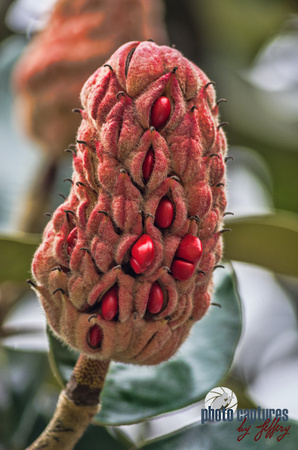
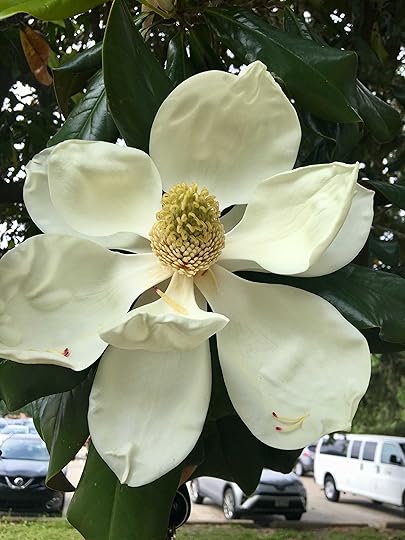
Here we see a cone and a flower.
And why, oh why, would you tell kids to seek out gingko trees? Do the authors not know what they smell like when they have those cute little berries like the pictures? (Fun fact: the berries are edible, but are often called puke berries because of their strong odor --and bless Alexis "Black Forager" Nicole for the effort put into explaining how to harvest and eat them, but oof the work and the smell.)
The main content is quite good for a topic most students don't interact with until college these days. The illustrations are nice and not overly scientific in style. And even with some missing key vocab, the book still expresses how the organisms we know as plants evolved from algae, moss, and sporous life into the floral, woody, and edible plants we know today. It is also a properly global look at plants, which many plant books just don't do. I liked that a lot. In particular, the inclusion of lesser known edible and medical plants were a treat.
I did have a minor quibble about the section on "Plants in Danger" in the back, which omits the destruction of North American forests and simplifies its concerns to only rainforests. That is a missed opportunity to reach beyond the commonly discussed global biodiversity hotspots and teach about the now hyper-urbanized world around children (including those in formerly evergreen forests in Europe and North America).
But I'd like to say A+ for these: * Pronunciation guide for Sargassum: "Sarg - ass - uhm" (emphasis from the book). * Actually shout out to the entire collection of pronunciations because some choices were made with those syllables (lol was "Pseudobornia: s-yood-oh- born-ee-ya" really the best choice?) * That kiwi with two eyes on the left side that is still haunting my dreams. * Chronology was excellent * Sneaky prehistoric life in the background (like the compy from Jurassic Park) * The volume of indifferent lizards hanging out in the backgrounds of the illustrations. (yes, more please) * A treat for people with trypophobia on page 57.
Very pretty. I'm a volunteer guide at our local botanical garden, and my team lead suggested it. The passages which were more narrative were more interesting; where it was short paragraphs about particular (usually unfamiliar) genera, it was less so—I'm not a huge fan of non-narrative non-fiction reading for pleasure (it's fine for encyclopedias, manuals, dictionaries, etc., where you're not expected to read the entire book).
I liked that it was largely chronological in concept, but the examples shown were randomly extinct or still present and a hard to keep track of; I think I would have preferred mainly extant examples, with perhaps one interesting extinct mention in a sidebar per spread.
But what lovely illustrations! So a highish three. But I won't read this again.
Note: I have written a novel (not yet published), so now I will suffer pangs of guilt every time I offer less than five stars. Whatever my response, it's personal, and has little bearing on the merits of the book itself. You may love it. The book is not bad, it's just not for me.
(5* = amazing, terrific book, one of my all-time favourites, 4* = very good book, 3* = good book, but nothing to particularly rave about, 2* = disappointing book, and 1* = awful, just awful. As a statistician I know most books are 3s, but I am biased in my selection and end up mostly with 4s, thank goodness.)
This could be a useful and appealing enrichment or reference book for middle grades school or classroom libraries. There is a great deal of information, but it's broken into logical section and presented in manageable chunks.
The accompanying illustrations are numerous, detailed, and engaging. They will help students engage with and connect to the material presented.
Many thanks to the publisher and NetGalley for the opportunity to read and review!
I had hoped this to be more of a narrative story instead of an expository text. This is well-written, informative, and interesting and would be a great text to use in classroom research, but it just wasn’t what I thought it would be.
I love this series. We use when whales walked and when we became humans for school and so this book worked perfectly. When you learn about when earth was formed and you learn about dinosaurs and humans and sea creatures you don't think much about the plants and how they became what we see now. It's beautifully illustrated and extremely informative. I will definitely be getting a hardcover version of this
An excellent introduction, covering the basics of evolution (take note Mr Harari: “a plant does not choose to evolve”), geological time, and scientific nomenclature.
We then delve into the fossil record and find that surprisingly many of those ancient plants are still around today!
I really wish there had been better generic explanations: for example, a word like “spores” was mentioned without clarification or how they differ from “seeds”. Also, it was a bit repetitive: with so many different plants, I think you’d have to be really interested in the topic to get through it all. Again, more general information about the different types of plants and the ways they reproduce and grow would have been better and more interesting.
With so much in-depth and detailed information, I would only recommend it for older children and adults.
Amy Grimes’ illustrations are excellent.
This is the third book in the series: the first book is about evolution and dinosaurs, the second book is about the evolution of humans – both of which are excellent.