In 2011 I spent four months in Costa Rica studying Spanish. After an unsuccessful search in downtown San Jose for a book or two (by a Latin author, not just a translated English novel), my host mother lent me Vivir Para Contarla by Gabriel García Márquez. After only a few pages I had to admit that the reading level was significantly higher than mine. Then, one day in class, the professor was reading a book called La Isla de Los Hombres Solos by José León Sánchez, which I managed to hunt down on another downtown excursion shortly thereafter. Not only is José León Sánchez a Costa Rican author and the book a best-seller, but it was being sold at a very reasonable price - ¡perfecto!
I only offer this information to offer insight as to why I liked the book as much as I did. It is a gut-wrenching and heartrending story told bluntly and beautifully, but I worry that I might not be separating the book from the context in which I read it. Taking into consideration that I was primarily reading the book in order to broaden and practice my Spanish vocabulary (and that I hardly put the book down as much for this reason as being engrossed by its grisliness) and the tremendous reinforcement it offered my "conversationalism," finishing this book was an enjoyable and significant accomplishment for more than one reason, and it seems unfair to award a book 5 stars because of personal context. Doing my best to isolate the two tenors though, I think that I would still struggle between giving the book 4 or 5 stars, which is why I ended up giving it the rating that I did.
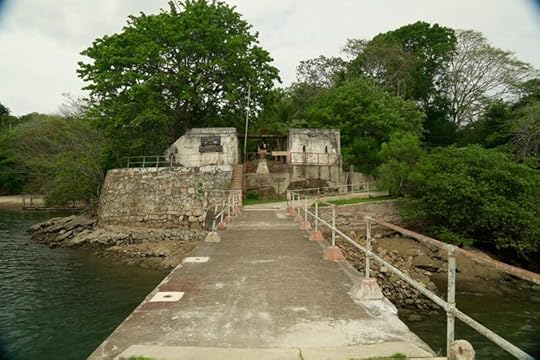
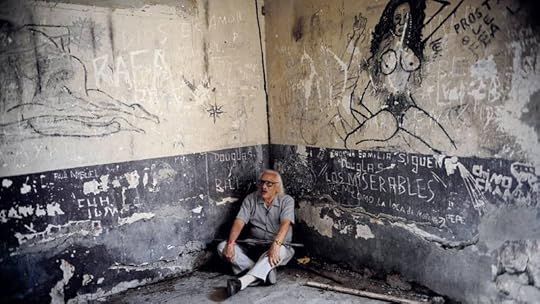
Anyway, the book tells the true account of the author, who was wrongly accused of the murder of his daughter and wife and sent to a remote and hellish jail on the island San Lucas, off the western coast of Costa Rica. The author recounts everything from happy memories to the most savage and unforgivable displays of human treatment. The book is gloomy, shocking, and depressing, but somehow manages to shed light on some of that darkness. Some parts are even slightly comical. The strength of the book is not just in that the author "conveniently" had an intriguing, compelling, and tragic tale to tell though; he is very descriptive with names, places, emotions; and offers bits and pieces of Costa Rican history to put events into a sensible timeline. Most impressive however, is that José León Sánchez avoids becoming too self-aborbed and pitying in the face of the horrors he witnesses and experiences; he truly has written the book to be about the entire island of lonely men, not just himself. While the author loses his faith in a higher power, he never seems to completely discard his hope or humanity, and ultimately ends the telling of this portion of his life on a touching and reassuring note that is satisfying and conclusive.