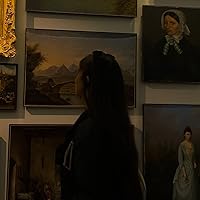
After twenty years of marriage Blanche Vernon is alone; abandoned by her husband Bertie for a childishly demanding computer expert named Mousie. While Blanche finds this turn of events baffling, she feels that Bertie must have left her because of her overly sensible demeanor. Yet many of their mutual friends disagree. In fact, Blanche has come to be regarded as undeniably eccentric--making elliptical remarks that no one knows how to read, and chatting at great length about characters in fiction. She resolutely fills her unwanted hours with activities, maintaining her excellent appearance, drinking increasingly more wine, and, in an attempt to turn her energy to good works, becoming severely enmeshed in the life of a disordered young family.
Anita Brookner published her first novel, A Start In Life in 1981. Her most notable novel, her fourth, Hotel du Lac won the Man Booker Prize in 1984. Her novel, The Next Big Thing was longlisted (alongside John Banville's, Shroud) in 2002 for the Man Booker Prize. She published more than 25 works of fiction, notably: Strangers (2009) shortlisted for the James Tait Black Memorial Prize, Fraud (1992) and, The Rules of Engagement (2003). She was also the first female to hold a Slade Professorship of Fine Arts at Cambridge University.
I have read rather a lot of Anita Brookner's novels over the last year or two, and have got to the stage where they are all starting to feel very similar. A lot of her books focus upon single, or troubled, women, who are trying to find their place in the world, as well as yearning to know themselves. I had three of her tomes outstanding on my bookshelf, and chose A Misalliance, which was published in 1986, at random. I read several rather mixed reports of it before I began to read, and the word which stood out most for me was 'bleak'.
Blanche Vernon, our protagonist, was abandoned by her husband of twenty years in favour of a 'bubbling yuppie in her twenties'. The childless woman spends her days visiting museums around her home city of London, so as not to feel the loneliness which can hit her when in her flat. The novel opens in the following way: 'Blanche Vernon occupied her time most usefully in keeping feelings at bay. In this uneasy month of the year - cold April, long chilly evenings - she considered it a matter of honour to be busy and amused until darkness fell and released her from her obligations'. Blanche is very much occupied with saving face, and appearing as cheery as she did when she was married to the outside world. Indeed, from her perspective, her marriage was a very happy one, and she was left shocked when Bertie walked out on her. 'It was her husband,' writes Brookner, in rather a tongue in cheek manner, 'who had fashioned her into the woman she was now, so independent, so dignified, so able to manage on her own.'
Indeed, A Misalliance does follow extremely similar tropes to a lot of Brookner's other works; it is an introspective study of a woman who suddenly has to live alone, and adjust accordingly, through no fault of her own. We learn a lot about Blanche's thoughts and feelings, and the drawing of her relationship is almost a psychological one when taken together. Blanche struck me as rather a pathetic character; she is incredibly gullible, and seems not to have the faintest inkling of when she is being used, or taken for granted. Brookner's portrayal of her takes any sympathy away, and she appears as a not very likeable protagonist. The lease of life which she is given is a little unlikely in places, and did not strike me as an overly realistic occurrence in consequence. Thematically, almost all of the Brookner novels which I have read to date - Falling Slowly, Providence, and Family and Friends to name but three - follow this formula; clearly it is one which worked for the author, but it leaves little to the imagination for her readers.
A Misalliance is certainly readable and intelligent, but it does seem a little as though Brookner has recycled characters, both primary and secondary, from her other books, and squashed them all together here. The secondary characters are often far more interesting than Blanche herself, and part of me would have liked to learn more about them, or for the focus to shift between Blanche and one another. This approach would have appeared as relatively refreshing, and I am almost certain that I would have ended up liking the novel a lot more than I did.
Vogue says that the novel 'has the old-fashioned virtue of being easy to read while remaining bracingly intelligent', and the Times Literary Supplement that it provides 'a civilised look at contemporary disorder, and a wonderfully poised and pointed examination of the wrong turning'. I ended up concluding that A Misalliance is a very middle-of-the-road, and sadly almost nondescript, book. Yes, it has virtue, but it is one of Brookner's weaker and less memorable tomes. If you like Brookner already, then there's no harm at all in reading this, but if you are new to her work, I would not suggest this as a fruitful starting point to her oeuvre.
16 yıl önce alıp da okumadığım bu roman ne güzelmiş. blanche’ın yirmi yıl evlilikten sonra genç ve şımarık bir kadın için terk edilmesi ve bunun sonrası kendisini, kocası uğruna değiştirdiği karakterini düşünürken geçirdiği günlerde içine düştüğü bambaşka bir yaşam. 3 yaşındaki elinor’la kurduğu bağ sonrası o kadar müthiş bir anne-kız analizi yapıyor ki anita brookner, elinor’un konuşmaması bizi blanche’ı tanımaya götürüyor. elinor’un ilgisiz üvey annesi ve blanche’ın baskın annesi... mutsuz çocuklar. 60’larda geçen roman aynı zamanda müthiş bir kadın romanı, londra’da kocişleri için her şeyi yapan kadınlar, kocayı bir onur belgesi gibi taşıyanlar... ve blanche’dan ayrıldığı halde çat kapı anahtarıyla haftanın bir iki gecesi onu ziyarete gelen kocası ve buna izin verem blanche... sonu açık... umarım blanche akıllanmıştır. müthiş bir içgörü, psikolojik derinlik, kadın meselesi, akıp giden bir anlatım (hayatta okuduğum en iyi migren krizi anlatımıydı)... ve çok iyi bir çeviri.
4.5 Anita Brookner stars, rounded up to 5 Brookner stars, since Brookner novels fall along their own unique continuum
Each of Anita Brookner’s initial six published novels display increasing complexity of plotting, characters, and narrative depth. Each Brookner novel deeply explores a particular aspect of loneliness and isolation. In A Misalliance, her sixth novel, Brookner dispassionately investigates the boredom of the lonely, as illustrated beautifully in one of Brookner’s typically marvelous first sentences: ”Blanche Vernon occupied her time most usefully in keeping feelings at bay”. In the next paragraph, Brookner tells us: ”Leaving her house—in reality a tall brick building containing several mysterious high ceilinged apartments—was the event of the day, after which she felt she could breathe more freely, having launched herself yet again on the world without meeting any resistance. Her steps were brisk although her destination was a matter of some uncertainty.” And a few pages later: ”She maintained an excellent appearance, not so much because she valued such excellence as because she could thus use up much superfluous time.”
A Misalliance portrays Blanche Vernon: recently divorced, intelligent, and painfully decorous. Here’s the moment in which Bertie, Blanche’s husband, announces his abandoning her: ”She practised a scrupulous avoidance of any reference that might be construed as malice or unkindness. When Bertie had told her that he was leaving her for Mousie, she had merely said, ‘Yes, I rather gathered that you might be,’ with a ghastly smile, the blood draining from her cheeks.” Blanche assesses herself, her future, and her divorce clearly: ”she knew, without a hint of sentiment, that her life might just as well be over. . .”
Blanche continually struggles with what she sees as the reality of her own attractiveness to men particularly and women’s attractiveness to men more generally. Here we find Blanche ruminating about Patrick, her once spurned suitor: ”Blanche’s guilty conscience over Patrick came not from the fact that she found Bertie a better man than Patrick but that she found him a worse one. Whereas Patrick would take her arm and guide her along pavements as though she were an invalid, Bertie, lost in thought, would frequently stride on ahead, leaving Blanche, quite happily ruminative, following at some distance behind him.” Here’s Blanche speaking to Patrick as she rues the limits of her own understanding of the limits of her appeal: ”What I don’t understand is why men do these things for some women and not for others. Perhaps you can tell me.’” And here’s Blanche again, speaking with Bertie about his inamorata, Mousie: ”No, Mousie is not a bad person. She is a child, defying her elders, and she is so charming that they do not slap her. But grown-up children can be very dangerous. Women who persist in thinking of themselves as little girls tend to think their misdemeanours unimportant. I have to say that they usually get away with it.”
A Misalliance is an extended commentary on the inherent mysteries and unfairness of romantic attraction. Brookner gives us Bertie and Patrick, both seemingly hopelessly attracted to younger, perhaps spoiled women who take for granted their own attractiveness and men’s attraction to them, and Brookner also gives us Mousie and Sally, both blithely absorbing male attention as their due. Brookner also gives us Mrs. Duff, happily married and seemingly knowledgeable about the compromises necessary for successfully maintaining a long marriage, and Miss Elphinstone, equally skilled in warding off boredom and loneliness as a single woman. And of course Brookner gives us Blanche as a reticent majordomo of this human menagerie.
A Misalliance is an almost entirely successful Brookner. “Almost” because in spots I understood some readers’ complaints about Brookner’s occasionally convoluted and verbose sentences. Brookner, with her characteristically sneaky humor, gives us this gem from Bertie, which could also be read as a commentary on a few of Brookner’s own sentences: ”’I do wish you’d shut up, occasionally, Blanche. You always did talk too much.’”
As with the other Brookner novels I've read (Hotel du Lac and The Debut) this one is set in the present (here, the early 1980s) but feels atmospherically much earlier (the 30s, 40s or 50s). Blanche Vernon's husband has recently left her for another woman, and she has no job, no career, and no children so her days gape open and must be filled with volunteering and strolling the rooms of the National Gallery, duties she carries out in tweed suits and polished shoes. "...the frightful emptiness of the day can be overcome if one simply leaves the house at a sensible hour and does not return until one is agreeably tired", we are horrifyingly told. (Blanche has a small but adequate "private income," as they put it in England.) Blanche is a very good homemaker, her apartment is restful and clean, and her cooking so comforting it keeps her ex-husband dropping by for the cakes, apple tarts (which are confusingly also referred to as "pudding"), and salads, and what must have sounded good to someone at some point in time: chicken in aspic, fresh pineapple with a raspberry sauce, and enormous amounts of stewed fruit. A man actually utters the words, "For years I danced attendance on my widowed mother," which could not possibly have been said after 1948. And Blanche, who hasn't smoked the entire novel, suddenly lights up a cigarette on page 172 as if she had been.
Bertie Vernon has taken up with a woman named Mousie, who is described as both a "computer expert" (she has a degree in computer sciences), and Bertie's secretary at the estate agent office. (I guess the way apple tarts are also puddings?) Meanwhile Blanche falls in with a seductive grifter, a fashionable young woman named Sally Beamish with a 3-year-old mute stepdaughter, whose husband is away, perhaps in France, wrangling a wealthy couple. The toddler exerts a magnetic pull on childless Blanche, who suspects that Sally lacks sufficient mothering skills. Blanche begins to pay visits to their disordered basement apartment and Sally smells the money on her.
"So if you could just tide us over," she heard Sally say.
Brookner's novels are short and taut, her pacing tight as Blanche and Sally move toward the resolution of their strange relationship. The reader hopes Blanche will grow a spine. Sally, though not as chilly, reminded me of the fabulously manipulative Netta in Patrick Hamilton's Hangover Square. When Blanche sends her friend Patrick to help Sally with a favor she's requesting regarding her husband Paul and his employer, you know exactly what's going to happen. The ending, however, you won't see coming.
The English writer and art historian Anita Brookner carved out a particular niche for herself during her writing career, producing beautifully crafted novels about loneliness and isolation. Her books often feature unmarried women living narrow, unfulfilling lives in well-to-do London flats, where they spend their evenings waiting for unobtainable lovers to make fleeting appearances. That probably makes the novels sound rather dull; however, in reality, they are anything but. I find them very appealing – both for their exquisite prose and for their astute insights into character, particularly as Brookner’s women feel very relatable to me.
First published in 1986, A Misalliance is very much in this vein, focusing as it does on Blanche Vernon, a respectable middle-aged woman who now lives alone in her central London apartment. Blanche’s husband of twenty years, Bertie, has left her for ‘Mousie’ – a much younger, frivolous woman who has succeeded in capturing Bertie’s imagination and protective instincts. Consequently, Blanche endeavours to fill her days with charitable work at one of the London hospitals and trips to the National Gallery where she studies the nymphs, reflecting on their romantic allure – a vision that presents a sharp contrast to the drabness of her life. Money is not an issue for Blanche – she has a small private income – and with no job or children to occupy her time, we quickly get the sense that facing the day ahead often presents something of a challenge. The expensive food and wine she buys give her little pleasure, heightening her longing for the night and a release into sleep.
Blanche Vernon occupied her time most usefully in keeping feelings at bay. In this uneasy month of the year – cold April, long chilly evenings – she considered it a matter of honour to be busy and amused until darkness fell and released her from her obligations. […]
Leaving her house – in reality a tall brick building containing several mysterious high ceilinged apartments – was the event of the day, after which she felt she could breathe more freely, having launched herself yet again on the world without meeting any resistance. (p. 5)
1986. Good book. Much introspection as usual. The second main character Sally is someone who lives her life by taking advantage of other people's goodness or weakness. I guess it's a sign of the good writing that I kept feeling very nervous at what Sally would persuade Blanche to do, wanting to tell Blanche ''no no! don't believe her! don't fall for that!" Why that sort of manipulative, seemingly amoral character pushes my buttons, I don't know, must be something in my distant past... Blanche often wonders, as I do, whether one can 'blame' people who take advantage of others..... Perhaps we *can* blame them for going against socially agreed-on conventions on which trust is based, or something like that. I noticed that, altho the divorced [against her will] middle-aged well-to-do Blanche is extensively portrayed [inner monologue], somehow I could not identify with her at all, or think of any person I know who seems like her. As to technique, it was interesting to me that Brookner was able to deviate occasionally from the single-character perspective, adding bits of thoughts by other characters -- without this seeming obtrusive.
It's beautiful, insightful writing, but A Misalliance -- and all of Anita Brookner's novels that I've read --makes me want to throw myself off a bridge. Or shoot myself. Whichever is quicker to manage. Relentlessly, relentlessly bleak.
---- Tried another book by Brookner. MC looks around restaurant and ponders customers. The woman dining alone is pitiable. The two women dining together are pretending to laugh but are, ultimately, only pathetically trying to pretend they are fine without men. The woman dining with her adult son is pathetic in her "middle-aged coquettish" efforts to please him. The middle-aged woman dining with her husband is...oh, it just goes on and on. Everyone is bleak and depressed, and being middle aged is like death. There is no escape from her bleakness. The young woman in their cheap finery that will fall apart soon are only staving off bleakness for a moment or two. But the better class of women with their good quality jewels are just as bleak. There's no way to win in Anota Brookner novels--no hope. Nothing to do but carry on, knowing it's all bleak. Ugh. Ugh. Ugh.
At one point I wanted to grab the main character and slap her. But in a moment, I felt such compassion. I love Anita.. her beautiful writing just wraps me up for weeks after I finish her novels.
Brookner's writing can be hard to get to grips with, not just because of the ornate sentences and vocabulary, but also because it doesn't yield itself to straightforward understanding. On the surface, this is a simple story: a middle-aged woman named Blanche is left for a younger woman after 20 years of marriage. Blanche - well-preserved, a good cook, self-possessed - suspects that her husband has left her because she has been too well-behaved, too undemanding. For a year she has kept up appearances, kept up an uncomplaining dignity, only to feel that she is judged to be cold and unwounded. She has spent long hours at the National Gallery, gazing at classical paintings and hoping for some kind of enlightenment. Blanche as a character lives very much in her head, and as the reader, we are privy to her tangle of thoughts and scenarios. Mostly, she thinks about being a woman, the ways there are to be a woman, and how they serve one. There is a fairly small cast of characters for Blanche to muse upon and compare herself to: a neighbour, her cleaning woman, her dead mother, her ex sister-in-law and a waifish mother and daughter who she forms an odd triangle with. Her life is quite limited, quite circumscribed. The novel covers a season, progressing from a wet, chilly April to the refreshing cool air of early September. Is Blanche eminently sane, or becoming slightly unhinged? Is the ending a triumph or a defeat? Brookner is a subtle and emotionally complex writer and her meaning is never entirely obvious. But I, for one, enjoy this sort of thing. Written in the mid-1980s, it already feels like a period piece - or at least Blanche does. But perhaps there are still Blanches to be found at the National Gallery . . . slightly over-dressed, and sitting too long gazing at paintings.
Great to get involved in this novel, as I was very disappointed in a recent second RE-reading of Anita's Booker Winner of 1984 "Hotel du Lac". This third reading wasn't what I recalled at all. WHY? (I've recently written a review of "Hotel du Lac" if you want to agree, disagree or whatever !!!)
Another WHY ? is the Disappointment in seeing that the Readership of "A Misalliance" is almost exclusively Female, which is NOT surprising or disappointing-that is the 'Female' bit; but I tend to blame the 'Genderising" of books by publishers? I suppose ??? It is more than likely categorised under "Chick Lit". It is where Jane Austen might find herself ...and I bet she would be Hopping Mad !!!!!! So would many of the British Troops of World War One who were HUGE Fans of Jane's. I found the same thing with one of My Favourite American books-"The Group" by Mary MacCarthy. I asked there why weren't American Men reading books like this? Weren't they interested in finding out what made their women 'tick' ?? ...and here was an Excellent writer, AND a Woman too , spilling the beans. more to come.....like this evening or tomorrow
Rounded up from 4 1/2 stars. This may be one of the most in depth character studies I’ve ever read, nearly too much so. I do love an author who makes me use a dictionary. And the ending, whoa!
This book explores Anita Brookner's typical theme of loneliness, of an inability to connect with other, and of the dry-eyed despair of some women's lives.
Blanche Vernon is in her fourties, comfortably off, and recently deserted by her husband, Bert. She is humbly aware that her rigorously maintained self-control and restraint were probably what pushed her husband in the arms of his much younger girlfriend, an emotional terrorist called Mousie. Blanche has nothing to do, so she spends much time in the National Gallery, where she broods over the pictures of pagan gods and goddesses doing exactly as they please. Her other major pastime is sitting alone in her flat, hoping that her husband will stop by for a quick chat and a glass of wine. When she meets a young woman, Sally, and her silent (step)daughter Elinor, she is attracted to the little girl's serious, determined demeanor. Sally is a restless young woman, who lives entirely in the memory of past pleasures and the anticipation of future pleasures. Unfortunately, the type of expensive trips and parties she enjoys are in short supply due to lack of funds. Blanche finds herself drawn into the orbit of this spoilt creature, fascinated by the utter selfishness and inability to think ahead that this girl displays, and which is so foreign to her own nature. Towards the end, she is manipulated by Sally into a distasteful errand from which she returns home with a blinding migraine that keeps her chained to her bed for three days. When she emerges, she resolves to escape to the type of warm country where she used to enjoy holidays with her husband. And so she makes her preparations....
I love Anita Brookner's books, although they can be depressing. And yet. Her heroines are devastatingly lonely, and always due to their own inability to connect with others, but they don't wallow in self-pity. They know their predicament and have learned to live with it with dignity. They are in many ways exemplary strong women, self-reliant, introspective and never given to excessive display of emotion.
This is my second Brookner novel, and I find myself liking her very much.
She seems to be interested in the problem of a certain kind of woman: one who is passive and lacking in confidence, and who sees no other alternative way of being. The other women around her are either built on this same model, or they are selfish and manipulative; her characters thus find themselves with a choice between narcissism and compliance, with no possible third way -- they are unable to find, or even to imagine, some kind of adult, responsible confidence that would allow their needs and wants to be met without pouting, manipulation, or emotional blackmail.
Not much happens in these books, or not by way of traditional plot, but the interior lives of these women are nonetheless in some kind of quiet, private crisis.
I found Hotel du Lac to be both more difficult to read than this book and also more rewarding, but both it and A Misalliance seemed well worth the time it takes to get through them. I see myself reading other Brookner novels in the future.
The story of an ordinary life. Of a woman who finds herself abandoned for a younger one so has to reinvent herself. Just when she has found her feet and has made plans to break free......well, that would be a spoiler. I'm still screaming with frustration at the ending but really enjoyed the journey.
Romanzo brillante: ironico e angosciante al tempo stesso. La protagonista, non più giovanissima, viene abbandonata dal marito per una donna più giovane ma, soprattutto, più capricciosa. Imparare a vivere da soli non è semplice, e l'analisi della Brookner (e della sua protagonista) è impietosa. Il finale è particolarmente ambivalente.
As usual, the absolutely virtuosity leaves you impressed. And, as is frequently the case in Brookner novels, an introspective woman struggles to be spontaneous, to have some fun or hurl herself into life. She casts a cynical eye on the world, for the most part, and of course that will make one depressed. I very much liked the ending.
This book contains a lot of analysis. In fact, it is rare to find bits that are not analysis. Although it is written in third person, it is Blanche who is doing the analyzing, not only of herself, constantly, but of her ex-, her ex-'s girlfriend, her own former boyfriend (not the term used in the book, however), her housekeeper, her neighbor, her neighbor's husband, and of course the population of the misalliance: Sally, Sally's daughter, Sally's husband, Sally's husband's employer, Sally's husband's employer's wife...Did I leave anyone out? Not sure. Oh, yes, the nymphs, goddesses, and kouroi she meets in various art museums where she goes because she can't think of any other way to occupy her time.
And yet for all Blanche's analyzing of her own and others' thoughts, she can quite at a glance dismiss the possibility of analysis in others. " Mrs Duff, that embodiment of heavenly duty and obedience, proud with the pride of her legitimate wifely concerns, unvisited by subversive thoughts, and happily subdued by the bonds of matrimonial felicity."
This endless stream of Blanche analysis is interrupted by short passages of conversation, in which occasionally we get more analysis. So why did I keep reading? Well, it was only 200 pages, not even actually, just over 190, how long could it take? The parts of the conversation that were not analysis were often quite interesting. I could see that Blanche was an intelligent person and I kept thinking: she's going to realize it and break out of this nasty cycle she's and she could very well be an interesting person that I want to spend time with. And I especially wanted to see if she would ever realize that she makes up whole lives for people she had less than a superficial understanding of, and how dangerous that can be, particularly if later one finds oneself in a closer relationship with said person, and none of the imagined bits are true. Here is a passage to clarify what I mean: It was clear to Blanche that this woman, trained to idleness, had been married for her money and humiliated ever since. Like certain people who never forgive their creditors, Mr Demuth had never forgiven his wife for being the only available rich woman capable of tiding him over at a difficult point in his earlier life. She had bored him in proportion to the degree in which his affairs had prospered ever since....Behind the smoked glasses which hid his eyes Blanche could sense a mind working furiously to keep ahead of everyone else, and the frustration of finding too little opposition. Here was a man not notably gifted for domesticity, since domesticity did not mean the dynasty he had originally envisaged....Now that [Mrs Demuth] had got her way she professed ignorance of the whole affair. Another trait that she and Paul had in common was their love of short-term solutions, based on a genuine inability to look ahead. Sliding away from immediate difficulty was their only concern. It was clear from Paul's very slight degree of relaxation, almost invisible except to a trained eye, that he had not even been seriously worried; clearly, this battle had been fought before. As long as Mrs Demuth controlled her won money the situation could repeat itself indefinitely. And they were all a party to this. Demuth's violence was based not only on his contempt for Paul and for his wife but on his own desire to convert them into responsible people; not only on his inability to get them to feel anything beyond their own needs. He despaired of them. His wife he had despaired of long ago. Hiring Paul had been one way of dealing with her. Now he despaired of Paul because there was no way of getting rid of him. If he got rid of him he would be saddled with his wife again. Rage fuelled his movements... How can all this be 'clear to Blanche'? She has been in their presence all five minutes and she decides that she knows their most humiliating moments. People who do this drive me crazy and I kept reading partly in hopes for some insight.
So I kept going, slow but sure. Added a nice chuck of new words to my vocabulary list and an almost equally long list of quality passages and wordings. Repetitive but well written, as unlikely as that sounds, it's true.
Then suddenly, what we have all been waiting for, Blanche 'gets it'. She finally understands that she needs to break out of her mold, change her habits, and discover what if anything is out there for her. She even understands that she must stop making stories out of these people, creating false analogies, reifying and mythologizing them. Twenty pages from the end she announces her determination to leave, to travel. Less than ten pages from the end she orders a ticket to Paris for two days thence, disposes of her excess wardrobe, says good-bye to any and all who have come to expect her regular presence, and turns in for a last night in her own bed, which is interrupted by a turning of the key, someone creeping in, creeping up to the bedroom. With the last line of the book, all her progress toward being her own person is dashed. Her ex-husband, with a thump of his suitcase announces his return.
I may have screamed in frustration. I certainly screamed in my head. All sorts of scenarios presented themselves: she laughs in his face and he slinks back out; she angrily announces herself well rid of him and to get out; she says abstractly fine, take care of the flat while I am gone. But I know, or at least I strongly suspect, that all her hard work was for naught and she will become docile again and continue living in that flat, doing the things she has been doing all along. We see foreshadowing of it a few pages back: Watching Bertie eat, as she had done so many times, she was distressed to find that she felt the simple satisfactions of an earlier mode of being. It was as if, in him, she found intimations of her own validity, as if without him that validity disappeared. This was no way, she knew for a self-respecting modern woman to feel. She also knew that his absence had driven her to strange excesses, all the more strange because they seemed so harmless. Just as some women turn to drink, to food, to shoplifting, Blanche had turned to flirtations with other lives, good works, and uplifting pastimes.
At least I can list here some passages that caught my eye, words which seemed to nail some elusive truth:
-- She maintained an excellent appearance, not so much because she valued such excellence as because she could thus use up much superfluous time. She calculated that she could spend up to an unwanted hour every morning by simply putting herself to rights, and producing a pleasing effect to lavish on the empty day. -- Blanche watched a woman wearing a heavy fur coat feel for the edge of the pavement with her stick; a scaly hand, ornamented with long red nails and an accumulation of rings, emerged from the weight sleeve like a small armadillo. -- Trying to place the woman took no small effort, simply because of the unwieldy furniture in her mind. The world is not always waiting for one to discover it, particularly when one is my age: the world, that entity bandied about so frequently, is in fact an endless multiplicity of impermeable concerns. And myself with none of my own. -- Carefully she washed away the day, brushed her hair, smoothed in what she thought of an embalming fluids. -- How Miss Elphinstone gathered her information was quite unclear to Blanche; she supposed that information, like some heat-seeking particle, flew to its natural home of its won accord or inclination. -- It was even hoped, vaguely, that she might effect her re-entry into society by marrying again; but until then she was, like certain Hollywood actresses in the bad old days, on suspension. -- But Blanche thought of herself as no age at all, as dematerialized, made hollow by [her ex-husband's] disappearance. It was as if he had taken her entire history with him. -- Blanche saw, in Sally, how occasions of pleasure had bred indifference to anything less, how a continuous level of excitement had lad to expectation of more, and how gratification had merely intensified her scorn for lives undistinguished by festivity. The parties of bygone days had simply prepared her for nothing but the next party: life had revealed itself as entertainment, enhancement, brilliance, and she could not see why she should do more than lend herself temporarily to her altered state. For this reason she seemed to have entered a period of hibernation, to have literally altered her body's rhythms, to have slowed down her energies to such an extent that she could spend days marooned on her chaise-longue, smoking, and looking thoughtfully out of the window. -- She even thought, and not for the first time, that it was her timorous decency, disguised as brusqueness, that that caused her to lose Bertie, and she compared herself with the distantly musing Sally entirely to her own disadvantage. For Sally, like Mousie, like those cynical smiling nymphs in the national Gallery, had known, with an ancient knowledge, that the world respects a predator, that the world will be amused by, interested in, indulgent towards the charming libertine. At that moment Blanche knew herself to be part of the fallen creation, doomed to serve, to be faithful, to be honourable, and to be excluded. She saw that fallen creation, mournful in its righteousness, uncomforted in its desolation, and living in expectation, as she had waited long hours in her drawing-room for the hope that would not return. -- It is as if I had never been young. I never had a bad debt in my life and now I am not proud of the fact. --At one point she had feared that the news of her engagement to Bertie would prove quite literally fatal to Patrick, but as it happened he had simply gone back to restoring old harpsichords, which were his true passion,...[harpsichords! Now there's original!] -- Routine is important. And the frightful emptiness of the day can be overcome if one simply leaves the house at a sensible hour and does not return until one is sensibly tired. -- This is torture, thought Blanche, torture by infinite recall. She is going to tell me all about her holidays and parties and what fun she had before she had the misfortune to be translated here until I beg for mercy. -- ...she and Mr and Mrs Demuth were separated only by a snarl of meaningless and unpopulated traffic. -- ...for once she had fulfilled her obligations down to the last scruple she could collapse into the nirvana of her bed and let the headache take its monstrous three-day tool. During that time she could not afford to have the slightest dissonant thought, for thoughts clanged like bells through her disordered perceptions and must be cancelled as soon as possible. -- "You forget that the Sallys of this world are very good at discarding." "But that is the way of the world, Blanche." "To discard? To lighten the load? Is it?" "If you want your own way, it is." "You mean that nature tell us to look after number one? And all the rest is superstructure, ethical systems perpetrated on us by old men?" "In a way." "But if that were so nature would tell us to desert our parents when they become tiresome, murder our rivals, take what we wanted, no matter how much it cost other people." "Nature simply tells us to enjoy ourselves from time to time."
If you are still here after all that, I have a question for all you logophiles out there: perforce, which appears to mean here 'nevertheless', instead of 'necessarily' or 'unavoidably'. I was wondering if it has ever been used like this in other texts or if this is an example of misuse by the author. Having marked Blanche down as inadequate to her purposes, Sally had perforce to make use of her (117).
And while I out listing oddities of language by a successful author (such audacity I have), I want to mention this bit: By the way, what does Sally live on? No, don't answer that, She is like Danae with the shower of gold. Money falls from the sky (130). It seemed odd so I looked up Danae. She's a figure from Greek mythology to who Zeus comes disguised as a shower of gold. But he doesn't shower her with gold because she needs money; it's only a disguise, as best as I can figure anyway. But maybe it is not Brookner's misuse, maybe Brookner is pointing out that with all Blanche's visits to museums and her fascination with the characters presented there, she still has but a superficial knowledge of what the paintings and sculptures represent. What do you think?
This entire review has been hidden because of spoilers.
Nach ihrer gescheiterten Ehe lebt Blanche alleine, ihre zunächst gehegten Hoffnungen auf Rückkehr des Ehemanns erfüllen sich nicht. Um Langeweile und Nichtstun zu entgehen, besucht sie häufig Museen und hilft in einem Krankenhaus aus. Dort lernt sie die junge, leichtlebige Sally und deren Tochter Elinor kennen. Das Mädchen spricht nicht. Warum nicht, was ist mit ihr? Ist die Sprachlosigkeit beabsichtigt und verweigert sie sich so dem Leben? Sofort ist Blanche von tiefer Zuneigung zu dem Kind erfasst. Könnte sie ihr die bessere Mutter sein, ihr das schönere Leben bieten?
Und tatsächlich ist Sally in allerlei Turbulenzen verwickelt, undurchsichtige Verhältnisse und finanzielle Probleme lassen die Beziehung zu ihrem Kind als nicht gerade glücklich erscheinen. Blanche hilft wo sie kann, geleitet vom tiefen Verlangen, anderen nützlich zu sein. " Sie wünschte sich nur, dieses Kind zu beobachten, es zu studieren, es zum Lachen zu bringen." Doch Blanche studiert auch die Kindsmutter, Sally. Jede ihrer Bewegungen verrät ihre Lebenslust und Liebesfähigkeit, ihre glückliche Flirt- und Flatterhaftigkeit gepaart mit einer ordentlichen Portion Egoismus - Attribute, die nicht auf Blanche zutreffen. So muss sie erkennen, dass "die Welt den Jungen, den Schlauen, und den Hartherzigen gehört" - Sally und ihre Tochter würden sie niemals lieben, genauso wenig wie ihre Freunde und ihr Ehemann sie je geliebt haben – Mesalliancen sind es, die ihr Leben bisher bestimmten.
Zwar lässt Anita Brookner ihre Blanche schließlich feststellen dass es im Leben darauf ankommt, etwas mit Lust und Freude zu machen, denn das hat mit Furchtlosigkeit, Trotz, Selbstvertrauen und Stolz zu tun, also genau auf das, was ihr fehlt, doch führt sie die Protagonistin nicht wirklich in ein neues Leben. Blanche kann sich bei allem reflektierten Bemühen und vielen Möglichkeiten nicht von eingefahren Wegen lösen.
Natürlich ist diese Geschichte in gewohnter Brookner-Qualität erzählt und zieht die Leserschaft durchaus in Bann, und doch reicht der Roman bei Weitem nicht an ihr bookerpreisgekröntes "Hotel du Lac" heran. Die Frage warum bestimmte Frauen im Leben und in der Liebe erfolgreicher sind als andere, ist durchaus interessant, doch die Autorin wendet diesen Aspekt zu lange hin und her und her und hin, so dass selbst mir, als ausgesprochener Brookner-Fan, die gesamte Story zu elaboriert und dadurch ermüdend erscheint. Ich hoffe auf weitere Roman-Neuveröffentlichungen im Eisele-Verlag, es gibt bestimmt noch viele Brookner-Perlen zu entdecken.
En cuanto a mi lectura, si hubiera sabido en lo que me estaba metiendo lo habría disfrutado más desde un principio. Es muy interesante, la forma de narrar me resultó muy rica y llevadera (ese fluir de consciencia en el que de a momentos te perdés en quién está pensando o diciendo qué, pero in a good way). Pero sí me costó un poco acomodarme a la idea de que no iba a pasar mucho por fuera de la cabeza de la protagonista. Una vez que le cazé la mano a que iba por ahí, mejoró para mí la lectura porque cambié las expectativas, pero le resto una estrellita (por ahí el problema fue mío y no de ella, pero bueno). En cuanto a la trama en sí, la dicotomía que plantea entre la religión cristiana y la pagana, en base a sus observaciones en la National Gallery, en paralelo a la dicotomía entre dos tipos de mujeres, es como un eje troncal del que se ramifican todas sus reflexiones a lo largo de todo el libro. Me pareció que estaba muy bien construida la forma en la que va desarrollando su idea sobre eso, sobre los roles de género en un nivel general y en uno más individual en cuanto a su propia vida, y por eso el final, que pone de repente en jaque toda esa construcción, me pareció espectacular.
A good character based, generally bleak novel about Blanche Vernon, who after twenty years of marriage, is left by her husband Bertie, for a younger woman nicknamed ‘Mousie’. Blanche still loves Bertie and feels somewhat at a loss. However Blanche is quite a strong, independent woman who continues to dress elegantly, visiting the National Gallery, volunteering at a hospital and staying in touch with a small group of friends. It is during this time at the hospital that she meets Sally Beamish and Elinor, Sally’s daughter. Elinor is a very young girl who doesn’t speak. Blanche becomes a little too involved with Sally and Elinor, providing financial and emotional support. Sally’s husband works for a rich couple and rarely sees his wife and daughter.
Another good Brookner character based novel that should satisfy Brookner fans. Readers new to Brookner should begin with novels such as ‘Hotel du Lac’, ‘Look at Me’, or ‘Strangers’.
Full disclosure: I am a huge fan of Anita Brookner. She is not to all tastes. I have re-read her a few times, mainly for her attention to detail and how well drawn her characters are.
Her characters are often passive, almost fearful, lacking in confidence, who do not seek alternatives, they are resigned to their own hopelessness and react to their own circumstances rather being proactive.
Blanche is one such woman, married to Bertie forever until he decides to leave her for a much younger woman who goes by the nickname of Mousie.
Very little happens in Brookner's books, the smallest of details are noticed, but the expansion on simple ideas are riveting.
In childless Blanche's newfound singledom we find her at the hospital, fascinated by a three year old girl and her careless mother and she follows them home.
Enjoyed the thoughts represented as those of a mature woman rather than an elderly gentleman, living alone in London with sufficient personal resources to live independently.
*A Misalliance* shares the arc of many Brookner novels (or at least the ones I've read so far...)
(Spoilers)
...Into a contained, orderly life enters an intriguing, irresponsible person (or couple) who at first seems to promise a more passionate, fulfilled existence. However, through a crisis of betrayal and disappointment, the protagonist bravely, more wisely, but not particularly happily, faces a solitary future.
These connections can be all sorts of alliances -- a lover, but also a thrilling friend or a child. What seems essential is that the connection be disappointing in the end.
However, that's not an entirely fair assessment of *this* novel, which ends more happily (or does it?) than most. Blanche is energized, rather than crushed, by her loss -- perhaps because she has already experienced a more serious injury: having been left by her husband for a person named Mousie.
The misalliance of the title, then, serves more as a means for Blanche to work through her sense of having failed in comparison to more demanding women; the end of the misalliance seems somehow to help Blanche move out of these obsessive ruminations towards the idea of creating a life more satisfying to herself as a whole person.
*A Misalliance* also avoids the melodramatic plotting that makes some of Brookner's novels feel like a beautiful garment draped over an awkward hanger. *A Misalliance* is seamless in that respect. There's a bit of the absurd comedy of manners in places, and, as one expects in a Brookner novel, plenty of reflection on just how the protagonist has failed to live properly (usually despite appearing to live an enviable life in many respects.)
Brookner's gift is for taking the humiliating social situation, the mismatch of desires between the protagonist and those she loves, and making of it something more profound. The crisis becomes an occasion for insight that rescues these books from simply being torture chambers for the extra-sensitive spirit. I often have to put her books down multiple times during an awkward scene because I don't want to live through the whole agonizing experience, but Brookner, I've found, can be trusted, and she always makes something more of these scenes; the protagonist, no matter how unhappy, always gains from the loss.
In the case of *A Misalliance*, the mismatch of desires is between Blanche's desire to have someone to care for -- the child Elinor, who doesn't speak since her father went away, and whom the divorced Blanche both identifies with and wants to protect -- and the will of Sally, Elinor's stepmother, to be provided for by whomever has the available funds.
However, there's a second mismatch that comes to a crisis on the very final page of the book: Blanche's desire for the love of her ex-husband, Bertie (only sporadically worthy, in my opinion).
Brookner presents this final crisis as a possible catastrophe, or at least a deep irony, but since the author leaves the outcome open, I prefer to believe that Blanche goes alone to Paris the next day. I like very much, though, that Brookner features the problem of finally getting what you want when you don't necessarily want it any more.
In the end, I've found other Brookner novels more satisfying, but this novel has quiet pleasures (and agonies) to offer.
This entire review has been hidden because of spoilers.