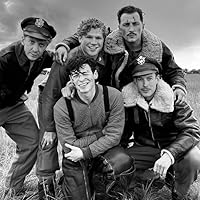
In ‘A Moment in Time’, Elizabeth recalls one year in her life at the time of the Battle of Britain in 1940; and reflects on the effect of war on English country life, and on the interaction between RAF pilots and the rural life of Southern England (under the blue skies of which the Battle is fought). Bates makes good use of his intimate knowledge of the world of pilots (anyone who has read his 'Stories of Flying Officer X' will appreciate just how deep was that knowledge); and his understanding of the complexities of human relationships. The novel was televised by the BBC in September 1979. This novel first appeared in a Penguin edition in 1967.
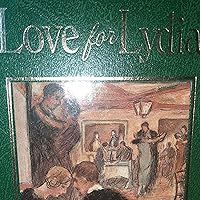
Herbert Ernest Bates, CBE is widely recognised as one of the finest short story writers of his generation, with more than 20 story collections published in his lifetime. It should not be overlooked, however, that he also wrote some outstanding novels, starting with The Two Sisters through to A Moment in Time, with such works as Love For Lydia, Fair Stood the Wind for France and The Scarlet Sword earning high praise from the critics. His study of the Modern Short Story is considered one of the best ever written on the subject.
He was born in Rushden, Northamptonshire and was educated at Kettering Grammar School. After leaving school, he was briefly a newspaper reporter and a warehouse clerk, but his heart was always in writing and his dream to be able to make a living by his pen.
Many of his stories depict life in the rural Midlands of England, particularly his native Northamptonshire. Bates was partial to taking long midnight walks around the Northamptonshire countryside - and this often provided the inspiration for his stories. Bates was a great lover of the countryside and its people and this is exemplified in two volumes of essays entitled Through the Woods and Down the River.
In 1931, he married Madge Cox, his sweetheart from the next road in his native Rushden. They moved to the village of Little Chart in Kent and bought an old granary and this together with an acre of garden they converted into a home. It was in this phase of his life that he found the inspiration for the Larkins series of novels -The Darling Buds of May, A Breath of French Air, When the Green Woods Laugh, etc. - and the Uncle Silas tales. Not surprisingly, these highly successful novels inspired television series that were immensely popular.
His collection of stories written while serving in the RAF during World War II, best known by the title The Stories of Flying Officer X, but previously published as Something in the Air (a compilation of his two wartime collections under the pseudonym 'Flying Officer X' and titled The Greatest People in the World and How Sleep the Brave), deserve particular attention. By the end of the war he had achieved the rank of Squadron Leader.
Bates was influenced by Chekhov in particular, and his knowledge of the history of the short story is obvious from the famous study he produced on the subject. He also wrote his autobiography in three volumes (each delightfully illustrated) which were subsequently published in a one-volume Autobiography.
Bates was a keen and knowledgeable gardener and wrote numerous books on flowers. The Granary remained their home for the whole of their married life. After the death of H. E Bates, Madge moved to a bungalow, which had originally been a cow byre, next to the Granary. She died in 2004 at age 95. They raised two sons and two daughters.
primarily from Wikipedia, with additions by Keith Farnsworth
I recommend this book to all my friends and rave about it and it's author. I have put it as my favourite book on Shelfari. After reading the paperback I turned to Amazon Secondary market to get a hardback edition of this book since I know I will read it over and over again and I have bought hardback edition for gifts for friends as well since this author SHOULD be read!!! The story has everything! It has lovely romance. It has excitement. Sorrow. Happiness and humour. It is a perfect study of what it was like in the countryside when WWII broke out and the Battle of Britain started. Herbert E Bates was a pilot during that war and wrote several short stories under the pseudonym of Officer X. He knew what he was talking about when he wrote this book. He knew the fear in the women that waited on the ground to see if their loved ones were coming back. He knew what it was like to live for the day because there might now be a tomorrow. He knew what it felt like to loose fellow pilots in combat. And he knew about the fatigue the pilots felt after flying too many missions in too short of a time. When you read the novel you feel yourself there. You feel that this is fiction yes, but the man that writes has seen it. The book has an upper class girl as it's "heroin". She lives a sheltered life with her dominant grandmother, her clumpsy uncle and her mother that is not all there in the head. The young woman seems like a zombie for the most part until the war one day lands on their doorstep. Young dashing pilots living a life in danger arrives to the house and make the family move to simpler lodgings so that the country house can be turned in to an officer's mess. Naturally she starts socializing with the pilots and her life never becomes the same again. For the first time in her life she gets to feel fear and sadness. But she also wakes up and sees how much the not so fortunate ones around her cope, how they pull together, help each other out and how much they care for her and her family. She starts to think in unselfish ways and wants to do her bit. In just a short time she grows up in more ways than one. In his biography, Bates explains that he does not want to waste words. He does not want to finish his stories for us. So the book has an abrubt ending which was disappointing but at the same time, that is how the author wrote his books, leaving the end to our imagination.
He will gently absorb you into the utterly beautiful nature of English countryside of a time passed and I love that you look up from his books and are momentarily not sure about your surroundings. The people in his works are ones you feel you would have known had you been there at that time, this is his true gift to the reader.
This book pays homage to a group of young people, whose destiny it was to have come of age in 1940 as the Battle of Britain draws close, and your heart aches for them.
The inscription in the book is:
Give them their life : They do not know how short it grows; So let them go Young-eyed, steel-fledged, gun-furious, For if they live they'll live, As well we know, Upon the bitter kernels of their sweet ideals.
Give them their wings : They cannot fly too high or far To soar above The dirty-moted, bomb-soured, word-tired world. And if they die they'll die, As you should know, More swiftly, cleanly, star-defined than you will even feel.
Written with exceptional simplicity yet so penetrating with respect to human relationships. The setting is the south of England (probably Kent) at the time of the Battle of Britain as seen from the ground. Bates writes in the first person and as a young lady and succeeds admirably, against the odds. The story never goes up with a plane, it is not that type of book. It focuses on the locals below and some of their friendships with the pilots. An awful and very moving "Moment in Time."
I absolutely loved this book! It was written in 1964 and based on the author's experiences with the RAF during WW2. It is set during the summer of 1940 and he takes the voice of a young girl living in the English countryside (Sussex/Kent) who becomes caught up in the lives (and deaths) of the young pilots stationed nearby. It has everything - humour, poignancy, romance, sadness, great wartime dialogue and beautiful descriptions of the changing seasons and the fruit picking. Wonderful read.
I have a funny reaction to reading stories about young love, when they're set in a time within an historical framework in living memory. When I look around at the men and women who “did their bit” in WWII, I see folks who are now in their 90s. I remember folks who have already gone. It's such an interesting exercise to look into those eyes, that have seen so much life, and wonder how it felt for them when that life was just beginning. A Moment in Time asks and answers that question, in a fictional setting inspired by an all-too-real event.
In the months leading up to the Battle of Britain, young Elizabeth is living with her family in a big old estate house (the likes of which are now mostly hotels and senior living facilities, if they're still standing). The house is commandeered by the RAF for housing, and Elizabeth and her family have to move to smaller (though still bigger than my existing, 21st century home) digs.
Elizabeth is just reaching womanhood. The young men she meets as they move into the neighborhood are similar in age, and dashing in their lives filled with danger. I don't think it takes a degree in literature to determine what will happen next.
There's a lot here that raises this beyond a simple romance. There's the thoughtlessness and casual unkindness that people, who are otherwise, decent, well-meaning folks, engage in. There's the youthful belief, soon upended, that one is invincible. There is the seemingly insurmountable pain of loss, that is somehow survived. There is the attitude of just “getting on with it” that people who lived in that time had in abundance and which is sadly lacking even in my own behavior.
So yes, there is romance aplenty here, but it is only a part of the story. What we get here in A Moment in Time is just that; a glimpse at a moment that was over almost before it could be named, and which will likely not recur – for good or ill.
A beautiful and moving book; wonderful characters and events that could very well have happened at that time. He captures the vulnerability Nd unthinking cruelty of the young as well as the very real courage they can exhibit. His characterization is amazing. I am so delighted I stumbled upon. This book.
H.E. Bates is the most under-rated writer of the twentieth century. If he is regarded as a master of the short story form, then his novels are equally impressive; in my opinion, he has written the best novel of the War I have read, and which I recommend to everyone and anyone: Fair Stood The Wind For France [1944]. I have only read it twice, and must again soon, but the wonder of it as a boy has never left me, nor its gentleness. I've read a handful of his war novels, and each was memorable. One of my favourite short stories, The Waterfall [1933], is perhaps as evocative of wonder as anything you'll read.
It is difficult to describe Bates's style of writing. Whether in the third or first person (as here), you are in a world of realist immediacy, yet somehow cosseted in the heart of England - or northern India, or Burma, as the case may be. Wherever, you have a deeply felt sense of the land as the profound cradle of story. It is this evocation of sense of place which is the key to his spell-binding.
Within a chapter, we have lived with this family of women in this house in some other life, so indelibly imbuing is his evocation of place. It opens with a separating and a connecting plane, the window: the women inside, a bright fire of ash, their shared vision the swans; outside, the view of the lake, blanketed by snow, icebound, the swans sailing round and round in a small unfrozen pool. This image frames the novel, and, like his most memorable imagery, exists in but a casual glance or a thought that captures a moment, held in you forever. Within the first pages he uses the expression 'sereing' to define grandmother's withering comment; it is, of course, more than withering, with a sharper edge, perfectly apt a choice for that very moment and action. But it is also an echo of that image, permanently captured. You notice these deliberations within what is otherwise a gentle, naturalistic style.
Although we are in the Phoney War, getting to know the spirited RAF characters, and then suddenly, 30 miles away, Dunkirk, and then, after a brief hiatus, above, the Battle of Britain, with all this flying about around and above us, there is still a profound sense of the land, with its hazel and alder copses and beech woods, its bluebell woods and honeysuckle in the hedges, the foaming meadowsweet in the ditches, the wild roses and drifts of summer scent. Even in the novels of hotter climes the land bursts with its flora, its bougainvillea and jacaranda trees. Bates's deep knowledge of the countryside enfolds you, and, bedded in the land, the people take on deeper shades of realism, along with a stream of memory, of your own experience of jungle climes or the heart of England as a child or teenager. The streams merge, and the story becomes entwined in self.
After a while, you almost forget this a man writing in the first person of a young woman; after a while, it is Elizabeth indissoluble from yourself. Although the War is being thrashed out above and around us, there is no bleakness of the terror, but rather a cause for communing, friends coming and going so rapidly, and we get that sense of 'making do', of 'carrying on', of a determination of spirit, as the realities become harsher. But always the land about, bashed and bombed, but resilient to such trivial scratches, burgeons forth its life, and its peace, through the sense of belonging shared.
This may not be among the best of his war novels (the four between 1944 and 1950 are those), but it is still highly evocative, and in that echoing of our own love of the land under vast baking August skies, spread out for miles and miles of gold and green, which we wandered in distant summers, it recalls something deeper in us that seemingly spent memories cannot merely account for. And H.E. Bates always brings this quality to his short stories and novels. And this is why I will always read him.
Reading a novel by H. E. Bates gives the comforting sense of being in the capable hands of a born and gifted storyteller. Immersion—atmospheric immersion—into the time and place of the story occurs within a few pages, followed by introduction to, and steadily growing intimacy with a set of finely-drawn, credible characters. Before they know it, readers are racing through the pages as if they are part of the story, yearning to learn what happens to everyone and, indeed, how they themselves will be changed upon encountering “The End.”
In this case, the time is 1940, when Britain is still experiencing war as a novelty. The country is arming and mobilizing, and young men and women, often just teenagers, are enthusiastically enlisting. The place is somewhere in southern England, probably not far from the coast and the English Channel. The heroine of the story is Elizabeth Cartwright, 19 years old, virginal, and ready to fall hopelessly in love. Opportunity arises when two Air Force officers arrive to requisition the Cartwrights’ spacious home for an officers’ mess. Elizabeth, her sharp-sensed, philosophical grandmother, and blustering, over-zealous Uncle Harry move into the modest bailiff’s house on the property.
But author Bates has not told a love story with a World War II backdrop: he has cleverly juxtaposed a pastoral, almost idyllic countryside vacuum, with a horrific war that either claims the lives of young, touchingly-patriotic pilots, or leaves them injured and brutally disfigured for life. Elizabeth is caught up in the glamorous drama of war, but has a ready shoulder for injured pilots to cry on, and a sympathetic ear to listen to their stories. However, while she grits her teeth and holds back tears for the physical, external injuries, she finds herself out of her depth when trying to understand how these intrepid but profoundly young men, filled with a spirit of derring-do, hopelessly battle the mental impairments.
And it is in this context that Bates does a memorable job. He writes masterfully of how young men, filled with expectations of immediate glory, struggle immensely with the emotional turmoil of killing the enemy and, all too frequently, witnessing their comrades being shot to pieces over the same bucolic landscapes on which Elizabeth might be picnicking. Of course, she wastes little time in falling for one handsome, daring pilot called Bill Ogilvy, believing him to be the love of her life and future husband.
But Elizabeth has a lot of growing up to do in a very short time, and thanks to her grandmother’s no-punches-pulled guidance, she gets a crash-course in reality over the summer of 1940. The young pilots, too, after first withdrawing within themselves at the shocking outcomes of war, find themselves reaching a new, enlightened sense of reality. Between those who quickly die, and those who forge on with devil-may-care bravado, there is a huge middle ground where young men, with undiminished patriotism, achieve maturity about real life.
A Moment in Time has innocent charm, dark and desperate drama, sparkling bursts of comedy, and a host of characters who will endure in readers’ minds for a long time. All of this is handsomely wrapped in Bates’s customary, effortless prose that runs the gamut from young romance to the gritty harshness of war.
I am a great admirer of H.E.Bates' short stories, but I was disappointed with this novel.
The 'moment in time' is the hot summer of 1940 when the Luftwaffe was bombing airfields in the south of England.
Bates captures the sense of people living for the moment. As a former RAF pilot, he has the RAF lingo to a tee.
The weakness is that we don’t really get to know the characters well. None of them have any depth.Two of the most interesting characters, the grandmother and Uncle Harry almost disappear from the novel after having been prominent in its opening pages. The animosity with which the grandmother receives the news that her house is to be requisitioned for the RAF officers is not further explored, which is a lost opportunity.
Some of the characters are stereotypes, particularly Doll, the 'life and soul' of the party. Tom Hudson also falls into this category; he is the strong, silent type who is in love with the heroine but does not declare his love until after her pilot husband's death.
If Bates intended this to be snapshot of a fleeting few months, it didn't work for this reader.
Elizabeth Cartwright recalls one year in her life at the time of the Battle of Britain in 1940; and reflects on the effect of war on English country life, and on the interaction between RAF pilots and the rural life of Southern England. I9-year-old Elizabeth lives a secluded and privileged life in a village in Kent. Her world is turned upside down with the arrival of a group of RAF officers who requisition her family home as a base. She immediately falls for Bill Ogilvie with an old sports-car, then marries 'Splodge' but the life of an RAF pilot is a dangerous one as it comes as no real surprise when tragedy strikes. This is a world HE Bates had an intimate knowledge of having served during World War II.
I needed an injection of H E Bates as a change from my recent reading and, as before, I got completely hooked by it. It's set in Kent at the time of the Battle of Britain and I spent some time in the middle of reading this book reading up on Wikipedia about The Battle of Britain. The book is a love story and involves pilots in Fighter Command. You know it's not going to end well for most of the pilots and the book describes so well the mental anguish that pilots, crew and civilians had to through. It's heartbreaking at times and yet at others it's the simple enjoyment of the beautiful countryside of the garden of England in summer. A moving book.
A sweet, reminiscent story of a young woman in (Devon?) during the war. I loved the evocative descriptions of the verdant countryside, the sweet romances..., and the descriptions of the characters living life to the full before the full impact of the war was felt. I could imagine my mother as the young long limbed tanned beauty befriending the pilots, arranging midnight picnics, and holding the heart of the local farmer.
Some of the language used in this seems quite dated now - lots of things are "wizard" and they had many gay times. But, despite that, it was a good read, and made the challenges of living through WW2 very clear, particularly the constant threats of death in the Services, and the resulting ever present threat to relationships. But it's not gloomy, it's more about making the most of all our moments in time.
This continues my HE Bates reading. It’s a little portrait of the summer of 1940, told through the experience of Elizabeth, just out of her teens and in love with the lively fighter pilots billeted in her old house. The Battle of Britain is a backdrop, as is the summer’s work on the farms, and the relationships with her family and friends. The drama is understated, but not shied away from. The book looks back to a time of intensity, and notices the experience of living in that moment.
I loved parts of this book, particularly those that talk about what it was like to fly during the Second World War and the consequences of having done so. I did not quite believe in the central female character though, and I think she was just too naive at the beginning and too unrealistic at the end.
Although I will admit upfront that I was not sure what to expect, and it isn't my usual genre, I was intrigued. I did find it difficult to really get into and I struggled to finish the read. That being said, I will be passing it on so that others will have a chance to read it and decide for themselves what they think.
A wonderful, heartbreaking read, full of Bates’ beautifully descriptive language which had me utterly immersed in time and place. Lost a star because I didn’t love Elizabeth’s character, but I’m probably being harsh.
Very moving story about RAF pilots in WW2 & the loved ones they left behind. I imagine it is realistic as the author was a fighter pilot himself in the war. Evocative portrayal of the landscape & the ending was just right, in my opinion.
This is a perfect book of its kind. If you are looking for emotion, romance, the idealism and tragedy of the Second World War, then this is the book where you will find it. Reading it is like watching one of those old war films, where the RAF pilots speak a posh kind of slang and the warm sun bathes England's green and pleasant land. What I liked best is that this book is a hymn to the English countryside and the idyylic landscape that many felt that they were fighting to preserve. Perhaps it takes a war to make writers evoke those blue remembered hills, the land of lost content, as AE Housman put it.
The story is set in 1940, during the first year of the war and at the time of the Battle of Britain. The narrator and main protagonist is a young woman who grows to adulthood as a result of her experiences during those months. In many ways it is a simple story, simply told, but the feeling for England and the English sensibility is profound.
I discovered this novel when clearing out some of my father's old books - with the intention of taking them to the charity shop. But I won't be parting with this one. I will lend it to friends and save it to read again.
The only book that I read again every year on a sunny day in June. The story of young love during an impossible time and the effects of war. I love this book and the atmosphere that it brings to mind.