An explorer spends a decade preparing for an expedition to the South Pole; what happens when you live for a goal, but once it’s been accomplished, you discover it’s not enough? A successful broadcast journalist ends up broke, drunk and sleeping rough; what makes alcohol so hard to resist despite its ruinous consequences? A teenage girl tries to disappear by starving herself; what is this force that compels so many women to reduce their size so drastically?
In this essay collection, writers share the struggles that have shaped their lives – loss, depression, addiction, anxiety, trauma, identity and others. But as they take you on a journey to the darkest recesses of their mind, the authors grapple with challenges that haunt us all.
I am a writer and social entrepreneur working at the intersection of technology, research and mental health. My creative nonfiction, published in the UK (Aeon) and the US (Guardian), aims to distil the science and stories behind our deepest struggles.
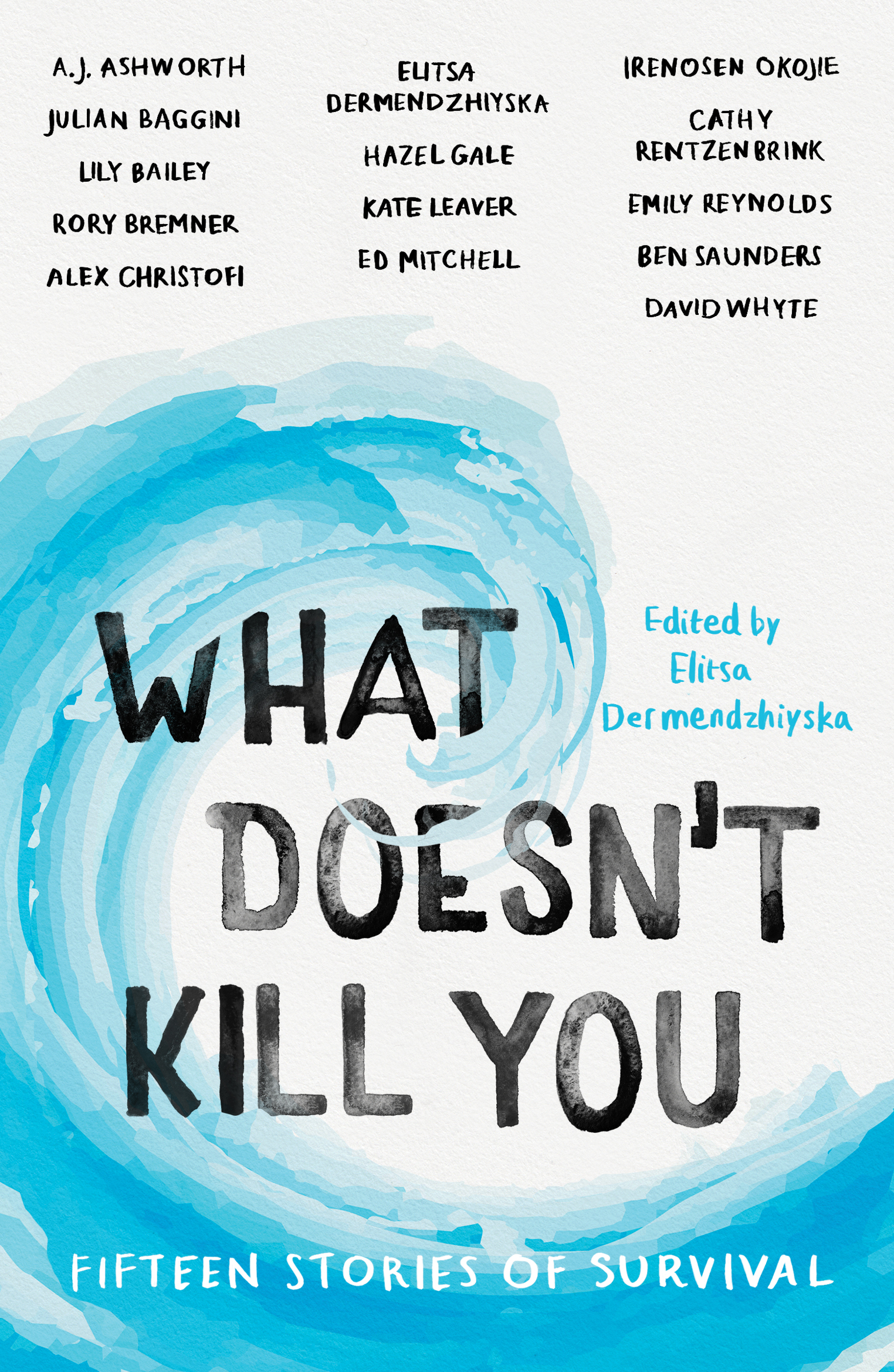
I praise this book, it’s an engaging book that’s extremely well written and has the full support of many readers and a number of patrons. The paperback What Dosen’t Kill You has fifteen short stories of survival by fifteen different kinds of people from authors to an explorer.
This book is edited by Elitsa Dermendzhiyska who does research into mental health. She has spent two years interviewing therapist, psychiatrists, NHS clinicals, and authors.
All the fifteen short stories are important to every writer, who have written short stories through storytelling and personal experience. Mental Health, loss, depression, addiction, anxiety, trauma, are all deeply one who may struggle with one of these, and are carefully woven into a short story.
Lily Bailey the author of We Are Bad OCD and a Girl Lost in Thought has a short story in this book with the title The Lily Show. And top impressionist Rory Bremmer has a short story called ADHD and Me
Every reader will either have their favourite short story or maybe able to identify with a certain topic from one of the short stories.
One of the short stories is about an explorer who spends a decade preparing for an expedition to the South Pole, but once it’s been accomplished you discover it’s not enough. A broadcast journalist ends up broke, and drunk and sleeping rough.
I particularly liked the short story by Kate Leaver, A Disappearing Act about a teenager starving herself. Why do women try to reduce their sizes so drastically? The eating disorder anorexia, is a situation where if without help for someone that clearly needs it sooner or later things can take a turn for the worse and go horribly wrong. It did so for Singers Karen Carpenter and Lena Zavaroni who both suffered with anoxeria. When I was younger I didn’t know the word anorexia, but now thank goodness there is much more written openly and more media attention has been driven by people’s experiences of anorexia and clinical depression.
Also too it’s really good that authors have written short stories on different topics as it must really help someone who maybe struggling alone or who can identify that they too have been through one of the issues and are now over their personal struggle.
Nowadays thankful there are many more people talking openly about their struggles with drinking and mental health etc, that people are facing and with much more written in newspapers and magazines are helping high-light about the pressure people are under, and what factors indicate how or why this sadness of their problems started in the first place. For some people drinking or what ever their problem maybe can have troubled consequences. Talking about these kinds of problems with a good listener will help someone, as a least they know they are not alone in this world and that help is available.
I highly recommend reading What Dosen’t Kill You as everyone of these short stories will grip you and shows the strength of understanding human behaviour with many challenges that we may be able to overcome, by seeking help, or how can we live simply just live with our demons and how we can grow from our wounds and make space for laughter amid life’s tragedies.
My next reason why I am recommending this book is that I honestly have to say that I enjoyed every page and I know you will all do too. It’s impossible not to love these fifteen short stories.
Hands down one of the best collections of mental health essays ever published. What Doesn't Kill You was crowdfunded by Unbound and brings together fifteen contributing writers who share their real-life experiences of mental health (OCD, Depression, PTSD as a few examples) and it was eye-opening and raw. I do have mental health struggles myself and could relate to a majority of the essays included in this book. It isn't an easy read, it may be triggering in places. However, I'm so glad that I discovered it and am now leaving this review here. Give this one a read!
Fifteen stories and I could have easily taken down fifteen more. This was a unique reading experience.
Each essay was different and represented so many differing intersections, emotional responses, different people, cultures, and their mental health struggles and journeys. It was all relatable in some way, even when it wasn’t. The fact that some of the ways that people sought to bring destruction to themselves was not relatable at all, was also relatable.. we all know, are or have heard of someone who’s been there, in that mind space.
A thread that intrigued me about these essays were the fact that so many of the writers had cited common articles, books, essays and perspectives that illustrate that we as a people, all currently living through these times, are largely taking in so much of the same information! Which of us still hasn’t seen that Brené Brown TED Talk on vulnerability? Those who can think of the word in an educational context, have probably seen the video. Learning about how folks going through their own struggles have processed that talk and the information shared in that video is discussed here by those grappling with their experiences around vulnerability, shame, etc.
Every essay is profound in its distinct way, there are discussions on depression, obsession, bottled up emotions, maladaptive coping to healthy coping, ptsd, and folks forcing their way towards life working their way through eating disorders, alcoholism, and various other means of self destruction. It’s a powerful survival reflective. I highly recommend.
My favourite essays are: It Could have Snowed, it Snowed by Alex Christofi and Three Wise Women by Irenosen Okojie, but all the essays made me think and feel deeply.
This edited collection gives us 15 essays from 15 authors and I agree with the synopsis -there’s something for everyone within the pages of this book. For me, this book resonates not only on a personal level but also on a professional level. As a PhD student who researches mental health, books like this are exactly the type of literature I want to read. However, the great thing about ‘What Doesn’t Kill You’ is that you don’t need to have an in-depth grasp of the topic to enjoy it – I certainly don’t claim to. No matter the degree to which you’ve experienced mental health issues, you will find an essay, a paragraph, or even a sentence that speaks to you.
Edited by Elitsa Dermendzhiyska and others, this essay collection is separated into three sections - ‘Struggle,’ ‘Self,’ and ‘Striving’ . As an Eastern European, it was fantastic for me to see a fellow Bulgarian’s name on the cover of such an important book. In the Foreword, Dermendzhiyska says that her aim for this collection was “to seek out the most original thinkers in the UK who were willing to reveal their deepest personal struggles on the page”. With the help of others, she managed to do exactly that. This collection gives us numerous opportunities to not only feel understood but also learn. Even as someone who researches mental health as part of my job, I still have so much to discover about mental health and this book is a great opportunity to do exactly that. For example, the essay ‘Not Wasted’ by Ed Mitchell taught me about the struggles people experience with alcohol. As someone who doesn’t know too much about alcoholism, it was very enlightening to read about it from someone as eloquent as Mitchell.
The two essays that resonated the most with me were ‘The Lily Show’ by Lily Baily and A. J. Ashworth’s ‘Eight’ . In her essay, A J – who kindly provided me with this book in exchange for an honest review – details her history of suffering from panic attacks.
“And even though it is the first time those feelings come, it won’t be the last. Perhaps I even knew that then.”
Reading about her first-ever panic attack as a child was equal parts heartbreaking and all too familiar. This quote in particular struck a chord with me, feeling reminiscent of my own experience with panic attacks as a young kid.
Mental health issues have the power to make you feel lonely and isolated. Each person has a unique experience, but usually, the more you educate yourself on the topic the more you realize that you’re not alone and the world is full of people who are just like you. Reading Lily Baily’s essay was a great reminder of exactly that – I’m not alone. OCD is a horrible disorder that, in my opinion, has been misrepresented by the media far too often. In her writing, Baily shares with the world her experience with a side of OCD that maybe not a lot of people have come across. Not all people who suffer from it are obsessed with cleanliness or afraid of germs. OCD can manifest through ticks, intrusive thoughts, rituals, and other aspects that mess with your head. From personal experience, I can tell you that OCD is not something that quirky people like Detective Monk from the television series have. It’s the debilitating spirals that your mind goes through that Baily describes so well in her own words. I’m thankful that this book gave me the opportunity to experience ‘The Lily Show’ and remind myself that there are other people like me out there.
Even if you don’t suffer from OCD or Panic Attacks, I can guarantee there will be something for you in ‘What Doesn’t Kill You’ Mental health has been a silent companion in my life, and the life of millions of other people, for many years. Growing up, I didn’t have a concept of mental health as such. It wasn’t talked about in my family or in the media, for all I can remember. Maybe growing up in an Eastern European country played a role in my lack of awareness, I can’t be sure. All I know is that it took me a long time to figure out that what I was going through didn’t make me crazy. There were people out there who were experiencing the same things as me. I wish there was a book like ‘What Doesn’t Kill You’ for the frightened young me to read and feel less alone and more understood.
In her foreward, Elitsa Dermendzhiyska asks the following questions:
"How can we live with our demons? How can we grow from our wounds? How can we write another story when the one we wanted is taken away from us?"
As anyone who has struggled with mental health issues knows, there are no easy answers. But one thing which is becoming increasingly clear is that the first step is breaking the silence and having open, honest, often painful conversations about our demons and our wounds. Personally, I am so much more open about my own battles with depression and anxiety than I used to be, partly - and I cannot stress this enough - because others are also more willing to share their stories. This project, clearly a labour of love by Dermendzhiyska, is of vital importance not only for those of us who may have experienced these kinds of issues, but also, I think, for those who have not. Revealing what goes on beneath the surface of the 'self' which we present to the world is hugely illuminating in terms of helping us to understand each other a little better, and to treat each other with more compassion and kindness - qualities we need now more than ever.
The book is divided into three sections: 'Struggle,' 'Self,' and 'Striving'. Each contains essays by different authors, representing a huge range of experiences and opinions. Every essay deserves its place here, and I took something from all of them. Together they form a record of human experience which is profoundly moving. I was particularly struck by A.J. Ashworth's 'Eight,' in which she recounts in vivid present tense her first ever panic attack; Irenosen Okojie's beautiful, almost fable-like 'Three Wise Women,' telling of how she was saved by her grandmother when she was a baby; Hazel Gale's incredibly powerful 'The Last Fight' and Ben Saunders' brutally honest 'A Very Long Walk in a Very Cold Place.' These latter two essays are particularly shrewd inclusions in this collection as, on the face of it, Gale and Saunders have both completed physical achievements (in kickboxing/boxing and polar exploration respectively) that outwardly seem to represent a kind of 'success' unthinkable to those of us for whom getting out of bed is sometimes more than we can manage. There is a lesson here about challenging our assumptions and respecting the fact that we can't judge the interior lives of others based on what we can see from the outside.
The final point I want to make about this collection is an aesthetic one. Many of these essays are written in gorgeous, startling prose, sometimes experimental, representing the very best of creative non-fiction. The talent on display adds a bittersweet layer of pleasure to the pain of the experiences recounted, and got me thinking deeply about the connection, explicitly mentioned in several of these essays, between creativity and inner struggles. This is a beautiful, affective, important collection that delves into what it means to be an imperfect human. I highly recommend it.
Note: I received a free copy of this book in exchange for an honest review.
What Doesn’t Kill You is a collection of 15 essays written by a wide range of people who share the struggles with mental health they have had, and still do have as part of their lives. Edited by Elitsa Dermendzhiyska.
There are stories of depression, anxiety and panic, of ADHD, anorexia, OCD, alcoholism and more. Tales of people at their lowest ebb, at times desperate and how the authors have accepted these conditions as part of their everyday lives. These are not light reads, but full of honesty and emotion and bring a realisation that we never know what is going on with people behind their smiles!!
I found each of these essays to be incredibly moving, to read people’s inner thoughts and how they find different ways of coping and accepting their condition, it made me think of my own health issues and how I deal with it internally….Truly inspiring and thought provoking.
Thank you to Anne Cater and Random Things Tours for the opportunity to participate in this blog tour, for the promotional materials and an eARC of the book. This is my honest, unbiased review.
I was lucky enough to have access to this book through Pigeonhole, which allows you to read one part a day.
In all edited collections there are going to be essays that appeal more than others, and different people will probably be drawn to different writers. For me the standout pieces were by Kate Leaver and Hazel Gale.
Gale’s account of living outside herself as a response to trauma, and how she both used this as a positive and experienced it as a negative was fascinating. The resolution of the issue - the death of her father - was incredibly moving and easy to identify with. Many of us have been brought up to be strong and then find that overwhelming grief over the loss of a parent is not a weakness but a testament to the strength of human love. Gale’s essay in this collection really portrays that. It’s also an essay that describes the effects of Male violence well. (Her Dad wasn’t violent to her but other men in her life were). The trope that weak women are targets of domestic abuse is, infuriatingly, still prevalent, and to read this champion boxer and kick boxer talking so frankly about her experience would, I think, do some good for those who still don’t realise that people from all walks of life and all personality types can be on the receiving end of violence.
Leaver’s piece really appealed to me because of her approach to her issues. She writes eloquently of some of the societal pressures that contribute to anorexia in young women, and also, unusually, of the positive force she found feminist anger to be in her life. She is also someone who, alongside therapy, read her way to a different mindset, and some of the books she mentioned were new to me.
Other essays include first person accounts of depression, anxiety, ADHD and OCD, and the final section includes some overview pieces. Of these, I found Julian Bagnini’s most interesting - highlighting that happiness is not attainable for everyone, but Aristotle’s idea of flourishing can be more helpful. My Gran used to say “Happiness is an emotion and you can’t strive for it, but you can aim to be content, making the most important of what you have - including your opportunities. Work towards contentment and you’ll find moments of happiness along the way. And when you’re not happy, you’ll be content.” It was a simple philosophy that saw her through two world wars and many personal losses over the years.
I’m grateful to Pigeonhole, the editor and publisher for the chance to read this book. I’m sure I’ll recommend individual chapters to some of my friends.
There are things in the world that we prefer not to see in ourselves or in others. Mostly it's not due to some malicious intent or indifference that we pretend as if the world were in a state of relative peace, however fragile it may appear. When directly confronted, though, we cannot un-see, un-feel or un-do what's in front of us. We are cornered by the very reality we've been negating for so long.
I felt the same way while reading this book. Its brutal honesty, rawness, and matter-of-fact narrative unveil the hidden pain I witnessed in many people and suppressed in me as well.
Leo Tolstoi once said 'All happy families are alike; each unhappy family is unhappy in its own way.' I would rather reverse this point by arguing that each unhappy person is actually not that much different from her more or less fortunate counterparts. Both parties strive for similar goals: to be seen, to be loved, to be appreciated. That's something innately natural to long for. Yet the ones who were denied the very right to do so are later labeled by the society as burned-out, disordered, addicted, or whatever diagnosis box suits the best to hide the uncomfortable truth. Sadly, with time, it becomes hidden not only from other people, but also from oneself.
To finally speak up requires an enormous amount of courage to reconnect with that suppressed inner truth and to find proper words to express the ineffable. Perhaps that's the reason so many contributors to this book chose to use a rich language of metaphors, delve into their family history or refer to cultural phenomena. Bare truth would probably have been unbearable or even unconceivable for us readers, as it surely was back then for the ones who decided to share it with us.
Generally speaking, this book offers way more that a series of testimonies by survivors of trauma and people struggling with mental health issues. It's a vivid reminder of our common human nature, its chances and limits. Life during and after traumatic events might have felt as if the time slowed down, stopped, accelerated, or disappeared alltogether; or the reality got distorted beyond recognition. Yet it is not an either-or choice. Our existence is both light and dark, for the good and for the bad. Now it's up to us to embrace it in its entirety.
This book is a collection of short stories, or more so essays, all based around the idea of 'survival'. Such a concept is outlined for us in the introduction by these questions: "How can we live with our demons? How can we grow from our wounds? How can we write another story when the one we wanted is taken away from us?"
What I liked about the collection is how each individual essay tackled such loaded questions in different ways. I thought that all of the collection would be based around mental health issues, and how each person 'survives' their illness. I'm glad to say this was not what I was met with! We glimpse alcoholism, OCD, depression, anorexia, panic attacks, memory loss, so yes, we do tackle mental illness in the collection, but we also get the ideas of being tied to family, and challenges such as trekking the south pole, the ins and outs of life. I think, for me, reading about, and understanding, individualised notions of survival was the most enjoyable part of the collection. This collection explores what survival really is to each person, needing to be unique to each circumstance and each notion treated with respect.
Diverse in its tone and exploration of the subject matter, this collection is not necessarily for those who are looking at more of a self-help book; it has no pithy one-liners about how to help yourself. I agree with the editor Elitsa that the book is hopeful, oddly triumphant in it's 'fuck you' to struggle.
I'll end with my favourite quote: "It is always hard to believe that the courageous step is so close to us, that it is closer than we ever could imagine, that in fact, we already know what it is, and that the step is simpler, more radical than we had thought: which is why we so often prefer the story to be more elaborate, our identities clouded by fear, the horizon safely in the distance...".
I was fortunate enough to get a copy of this book to read from Lily Bailey, one of the contributors. Given how much I loved "Because we are bad - OCD and a girl lost in thought", I was eager to read Lily's contribution to this collection, as well as the other 14 stories.
As the title suggests from the Nietzsche’s aphorism, there's a balance of messages through the book. The writers all lay their inner struggles open with huge generosity and bravery. They also each provide their own stories of acceptance and growth. They each provide examples of understanding and regaining control through perspective, support and moments of clarity. They each provide the clear message of the ongoing commitment to honour the progress made and the acceptance that they are proud to be a work in progress.
The writing throughout is disarmingly open, providing insight into the reality of living with different kinds of mental health related conditions. I'm sure many people will benefit hugely from the clarity and honesty of the writing and the deep sense of wanting to help others, that is a common feeling from each story.
I can see the book being a hugely valuable resource for those working in mental health support. I can see the personal discourses as highly valuable sources of discussion in the training of future generations of therapists. More importantly, I can see the communities of support that exist within many of the areas of mental health being able to build from this starting point to benefit from sharing stories openly and as generously.
This is a book to keep coming back to, that helps to open up the unbearable lightness of being, the struggles that can develop, and the lights to follow to keep working towards a similar position of grace and acceptance with all of our relationships with life.
Thank you Lily for the chance to sample the beauty and power of the book.
This is a beautiful collection of stories that will stay with you. We all struggle and try to cope within our own daily lives. These stories show you that everyone suffers and has their own story. Some of the authors may be familiar to you, and their stories may surprise you.
This sharing of experiences goes to show that you are not alone, if you are struggling somebody else feels exactly the same way you do. It is a lovely book to keep and dip into as and when you need some inspiration.
The stories are diverse and cover a multitude of situations, so has something for everyone to relate to.
This is a powerful book, full of heart tugging stories and narratives of strength. Struggle and strife isn’t billed us something to yearn for, it’s not that great people are built only in great despair. But more a tale of how we all have our difficulties, and it’s in the process of going through clarity can come and growth can be achieved. What doesn’t kill you can indeed make you stronger.
What Doesn’t Kill You, fifteen essays by a diverse group of commentators, writers, actors, journalists, explorers, among them, is an insightful look at the beauty of the human spirit. It’s often not an easy read, but it is a necessary one, and there are some lovely pieces, beautifully penned, poignant, moving. Ones that make us nod, sigh, laugh, weep.
Covering a range of issues, from alcoholism and body image issues to anxiety, depression and grief, these are honestly given accounts by people, some of whose names you may recognise, a lot you probably will not. They’re about, in the most challenging of circumstances, how we humans can often find light when there’s seemingly none, can triumph over the steepest of adversities, even when we barely seem to have breath left in our bodies. Put simply, they are stories of courage, hope.
The world we now live in has altered almost beyond all comprehension in a mere matter of months, people who previously probably hadn’t even considered them, forced to think of all manner of issues – their mortality, the future of humankind, people’s humanity and kindness (or lack of), all in the strange seclusion of Lockdown. Mental health, more than at any time before, is at the forefront of everyone’s minds, and the essays which editor, Elitsa Dermendzhiyska, has brought together, shine a well-needed spotlight on this issue. It’s a diverse, well-comprised volume. Highly recommended.
This review was originally published as part of the book's virtual book tour. Thanks to the publisher for supplying a digital proof. All opinions our own. All rights reserved.
I was interested in reading this because I’ve mutually followed Lily Bailey (one of the contributing writers) on Twitter; and I’m interested in connecting with people who are living with mental health disorders because of my own personal and familial experiences.
I was particularly, and pleasantly, surprised by the honesty of each contributor. Their stories shone light on some that I’m not very familiar with but also those I have extreme intimacy with (please disregard this blatant grammar violation).
Stylistically, the prose of each story was unique, and perhaps this is why I’ve decided to leave it at four stars. Some writers’ stories felt disconnected and drawn out, while other writers left me intrigued and completely pulled in. Because of this, I have to admit that I did not read every person’s story from beginning to end.
Overall, the 10/15 stories that I did read were worth it!
I am so relieved that I have finally finished this book. My problem with it is that it seems to assume that the reader already knows all the writers of the articles in the book and that said reader is already familiar with the story they are telling, but for me that was not the case, so reading the stories was like reading a few pages from the middle of some interesting novel without knowing the back story of the characters or how their story ends. so at some point the stories grabbed my attention, but more often than not they failed to deliver a coherent meaning because I didn't know the start of the story and sometimes the writer didn't provide an ending.
While physical struggles, once overcome, are over, mental ones never leave. I have a close friend dealing with mental struggles, and now I know a little better what he goes through. We, the ones not dealing with mental health issues, tend to think that depression, overthinking, these can be turned off like a tap. If the person desires it enough, they can overcome it. But I now realise that it is a wrong approach. Julian Baggini put it beautifully when he said-
"…sometimes it’s possible to make the tunnel less dark, and that allows you to live well- if not entirely happily- in it… …the main problem with depression is not so much that it keeps you from being happy but that it stops you being anything other than depressed. It induces lethargy and defeatism, which get in the way of pursuing valued action…. …I don’t want to galmorise mental illness. At is worst, it can be harder to live with that most physical diseases…My point is simply that the solution to depression or anxiety is not always to seek their opposites. The problem is the degree of unhappiness, not the unhappiness itself…Unhappiness needs to be put in its place, not denied any place at all. "
I realized there were some mental struggles I didn’t know were so extreme. What do most of us know about OCD? Being a cleanliness freak, putting things in their places and making sure everything looks immaculate? No. Lily Reynolds once spent an entire fortnight inside her apartment without even realizing it, because she couldn’t understand how her iCloud password changed midnight. Naturally, someone hacked it. So checking every IP address and every location about forty times, for the entire past month, became her obsession. That’s what OCD is- Obsessive Compulsive Disorder.
There are stories that opened my eyes- how the most successful people are not always happy. Hazel Gale, Ben Saunders, Rory Bremner have all written beautiful, enlightening pieces.
While reading about the struggles of people in the first half of the book, I eventually started so blue myself that I had to put it away and was scared to return back to it. But I encourage everyone to read this book. It isn’t a typical self-help book, it doesn’t preach. It just brings to us fourteen struggles, that we will all relate to at some level, regardless of our age, nationality, even mental status.
the fulfillment of individual potential is one of the most important pursuits in life, yet genuine happiness (or perhaps peace is the better word) can only come from self-enquiry and self-acceptance.
This entire review has been hidden because of spoilers.
This is such a beautiful book. Firstly the writing is just, just glorious. I found the stories themselves moving, thought-provoking and inspiring. Although the subject matter can be dark, reading the essays from these people and what they have endured and survived is incredibly uplifting. This is life. The suffering. The pain. The chasing the dreams that never quite turn out as you hoped. There is something here that every single one of us can relate to. I even found parts of each story reaching me – my soul saying ‘yes, I understand.’
Reading is a wonderful way to learn more about the world we live in and the people within it in a way that travel alone can never do. Through books we can lead a thousand lives and experiences. Just in this one book alone we can have an insight into fifteen. Fifteen very different experiences that help us gain a little more understanding (and hopefully empathy) towards subjects that can be surrounded in stigma and judgement. The authors of each essay may be familiar to you, they may not, but each has shown great courage in sharing their experience with you. The names you recognise may surprise you and remind you that quite often what sits beneath the surface is complex. As has been said many time – you never really know what someone is going through.
Each story touched me in different ways but I found editor and short story writer A. J. Ashworth’s did particularly connect with me. She talks of anxiety and panic that has plagued her – something I have suffered with myself. I came to terms with the fact it is part of me and something I must live and manage myself and reading her account filled me with hope and helped me to look at things in a different way.
This may sound like a heavy read but it is hopeful, funny at times and so very, very human. It is wonderful. I recommend this to anyone who may struggle at times (all of us right) and anyone who is watching someone suffer with their demons. It reminds us that it’s part of what makes us kind, loving, passionate and human. It also reminds us that we can and do survive the bad times and hopefully will come out of it embracing the good times a little tighter. https://talesbeforebedtime.co.uk/2020...
What Doesn’t Kill You: Fifteen Stories of Survival, edited by Elitsa Dermendzhiyska, is “a hopeful book. Its hope, however, is not the cheap kind peddled by the masters of self-help. It’s the kind of hope you can only find when you let the old delusions go and learn to dance with your fears” (as Dermendzhiyska writes in the Foreword).
The book is divided into three parts: "Struggle," "Self" and "Striving." Each essay is unique and describes an extremely different experience. Below are four that resonated for me.
A. J. Ashworth, in her powerful essay, "Eight," describes the panic she felt as a child that she was going to die, a feeling she relives over and over as a debilitating anxiety in adulthood.
Kate Leaver’s essay, "A Disappearing Act," not only tackles her personal battle with an eating disorder, “I was essentially trying to kill myself in instalments,” but she explores the wider relationship people have with food and why women especially bow to this pressure: “We teach girls to diminish themselves and how we treat women’s bodies as though they’re public property.”
Rory Bremner describes ADHD (Attention Deficit Hyperactivity Disorder) in his essay, "ADHD and Me," as “[his] best friend and [his] worst enemy.”
In his essay, "No Cure for Life," Dr. Julian Baggini debunks striving to live life as if in a fairy tale. “The goal,” he writes, “is a life well-lived” and not, necessarily, to live happily ever after for it is “only good to be happy when we are happy for good reasons.”
This is an extremely powerful collection and not always entirely comfortable to read. Personally, it made me revisit some past experiences and feelings, which wasn’t always easy, but paradoxically therein also lies its power; it made me realise that there was hope for me too. Whether or not you or a loved one is dealing with mental illness, I would highly recommend this collection.
A powerful collection of essays predominantly about mental illness. The book is divided into three sections, 'Struggle', 'Self' and 'Striving', with the last section less about mental illness, and more about introspection and what it means to be happy. There are many fantastic writers in this collection, in fact I immediately ordered The Last Act of Love after reading Cathy Rentzenbrink's moving essay about dealing with the aftermath of her brother's car accident.
As you might expect, this book carries a number of trigger warnings as it describes graphic experiences with a range of mental illnesses. I'll put a list in spoiler brackets below, feel free to message me if it would help to know which applies to which essay so you can engage with the rest of the collection.
Thank you so much to Unbound for providing me with a finished copy of this book in exchange for an honest review
In fifteen narratives and three sections (struggle, self, striving), this anthology sheds light on inner demons, whether very visible like Ed Mitchell's Not Wasted or more subtle like Rory Bremmer's ADHD and Me. Together, the pieces compose a diverse landscape of mental health disorders or neuro-divergence (in the case of ADHD and OCD), and how they threaten to ruin the authors' lives. But the stories also deal with transformation—how to turn hardship into an asset, or merely live with it. The result is not relentlessly upbeat and optimistic, but a nuanced picture of resilience and survival. If you like Brené Brown's call for vulnerability, you'll like this collection. The writing is brilliant, too, going from poetic science (AJ Ashworth's 'Eight'), to echoes of fairy tales in Irenosen Okojie's 'Three Wise Women', and the raw evocativeness and musical quality of Hazel Gale's 'The Last Fight'. To quote Cathy Rentzenbrink (in her piece 'Last Fragments of Love'): "I’ve gathered up all my scattered selves and don’t feel fragmented any more."
Thank you to the publishers for sending me a copy of this in exchange for an honest review.
This book explores different individuals experiences with personal struggles and mental health. Different personal experiences touched upon many struggles including depression, eating disorders, ADHD, OCD. There's just something comforting about reading other people's experiences with mental health - it sucks that there are so many people that are struggling but it really reinforces the message that nobody is alone with their struggles. I always find that books like this really help people to talk about their own personal struggles and I find these types of books so important for this. It was honest throughout and it really opens your eyes to what people are going through whether you know about it or not. As comforting it was for me as somebody who also struggles with MH it was also really educational learning about different struggles that I don't have and that many others do. I would recommend this to anyone - whether you struggle with MH or not!
Beautiful, insightful collection of inspirational and thought-provoking essays by diverse set of talented writers - which somehow converged into a common theme.
'.. Ultimately, it’s the expedition that beckons every one of us: to find meaning in the path we choose and the tracks we leave on our journeys, imperfect and never complete, and ours alone..'
The book is written for those who has ever struggled with mental health issues or still live with them as a part of their lives. The stories allow readers glimpses into the subjects of depression, anxiety, eating disorders, self-doubt, abuse, ADHD, OCD, alcoholism, abandonment and motivation.
For me this book is a journey - at the end of which I came to realise '..that the fulfilment of individual potential is one of the most important pursuits in life, yet genuine happiness (or perhaps peace is the better word) can only come from self-enquiry and self-acceptance..'
What Doesn't Kill You is a fascinating collection of essays which are all incredibly well written. As with all collections, there were some essays that resonated with me more than others, but they are all written in a very accessible way that means that each reader should be able to take something from them, even if they do not have personal experience of the issues in the essays. This collection covers a wide range of mental health issues from panic attacks to depression and addiction to memory loss. There are also writers from a range of cultural and social backgrounds. Although I have mental health issues myself, this book highlighted that everyone's experience is different and it gave me a greater understanding of the daily battles of each writer. I am glad to have read What Doesn't Kill You and I look forward to reading more from each contributing writer.
I read this with the Pigeonhole over 10 days. These 15 stories of survival, collated by Elisa Dermendzhiyska allow for plenty of food for thought about a range of different experiences shared by the writers. There’s something which will resonate for everyone in this collection I think. There’s writing about alcoholism, about the nature of happiness and about what happens if you achieve something you have strived for but it doesn’t have the result you hoped for. I welcomed the chance to consider different aspects of mental health through the lived experiences of these writers. There’s some incredibly honest, brave accounts of some very difficult situations within these pages. Ultimately, as the title suggests, there’s reason for optimism in reading how the writers have dealt with particular challenges. Definitely worth reading.
This is a anthology of fifteen very honest essays from a diverse group of mainly well known individuals examining their struggles at their lowest ebb. They were all very moving and beautifully written and edited by Elitsa Dermendzhiyska. I especially enjoyed Rory Bremner’s discourse on the positives of living with ADHD, the quick thinking, leaps of connection and creativity which, we learn, is a feature of many stand ups and comedians. Irenson Okojie’s contribution is just pure joy to read even if the tone is dark and Deeply sad - ‘the poetry of untied shoes in park trees.’ Ed Mitchell, a successful journalist and broadcaster describing his struggles with alcohol addiction and descent into homelessness. Altogether this is a worthwhile and emotive collection about survival.
I have been reading one these short stories a day for the past 2 weeks and they are just so moving. Its amazing to see people being so open and honest and it has really helped me feel less alone, less pressure to feel perfect and less anxious and I am sad that I have finished. I love that we are moving to a time when story’s like these can be shared instead of hidden away inside ourselves and I think this book will be a massive help to any who feels alone because of a condition now one understands and for anyone who is trying to understand how others feel. I definitely recommend!
Thank you to @unbounders for my #gifted copy in exchange for review.
I read this book on Pigeonhole, but I started it a few days later than the day it started on because I just wasn't sure about it. But then after some more thought, I thought why not?! So I signed up and I'm so glad I did!
The essays were beautifully written and provided some fascinating insights into the struggles people have with mental health issues, eating disorders and past traumas!
Thank you to Elitsa for putting this book together and to the various authors for sharing their stories! And of course, thank you to PH for the chance to read this book.
What a great collection of insightful and well written personal stories. They were challenging and inspirational ,as well as thought provoking and offered an opportunity for reflection and hope. What a great idea to draw together a wide variety of experiences .I very much enjoyed this book and would recommend it.
This collection of essays took me by surprise and I would recommend this to anyone that might want to learn and read real life experiences of people dealing with various situations like anxiety, depression, OCD, ADHD, and similar. This is a well researched book and credit must go to the author who herself contributes with her own essay.
This is not normally a book I would pick up, but I had the pleasure of reading this on the Pigeonhole. A fascinating insight into the human mind and the challenges it can face. Honest, real, raw and beautifully written. I definitely have a new appreciation for the challenges of the human mind and would highly recommend this to anyone.