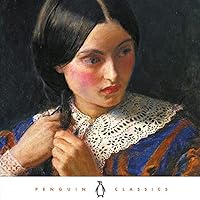
Hobomok, A Tale of Early Times is the provocative story of an upperclass white woman who marries an Indian chief, has a child, then leaves him--with the child--for another man. This novel, originally published in 1824, is a powerful first among antipatriarchal and antiracist novels in American literature. In addition, this collection contains seven remarkable short stories; an extract on Indian women from Child's groundbreaking History of the Condition of Women in Various Ages and Nations (1835); a selection from her best-selling volume of journalistic sketches, Letters from New-York (1843); and her eloquent Appeal for Indians (1868). This revised edition of "Hobomok" and Other Writings on Indians includes three new "The Church in the Wilderness," "Willie Wharton," and "The Indians"--as well as explanatory notes and an updated bibliography.
I finished this book two-and-a-half months ago but only just took notes on it for my exam -- bad planning on my part! Hobomok is a very interesting read if you're looking for a counterpoint to James Fenimore Cooper's vision of early America. Child still perpetuates the stereotype of the "vanishing savage" in the same way that Cooper does, but she puts a female protagonist at the center of this narrative and marries him to her "savage" before he "vanishes," so that seems to me like a small improvement. Moreover, rather than seeking to present a radically different vision of race in early America, Child seems much more motivated to offer a commentary on the patriarchal oppression of white women and is far more forward-thinking in her presentation of a female protagonist who *doesn't* go insane and die after exercising her sexual agency. What a concept!
hm yes what a great narrative. we love a good noble savage. not. not only do i not know wtf happenend in the first 50 pages, this whole book is just ??? in general for me. it's the fact that the Native gives up his (white) wife so that said white wife can marry her first love (who was believed to be dead for 3 years) at last for me.... eye miss child wtf. it's the fact that the mixed child's heritage was not talked about as he grew up for me. anywho my suffering is over (at least with that book).
I found this book really tough going. For the first half, it was so hard to keep track of the characters and their plot lines that I made a character map to help navigate who was who. It was really hard to distinguish the characters and so much of the plot and characterization was wrapped up in the religious politics of puritanism versus protestantism - not a debate that I'm particularly well verse in. The action picked up in the last third - just when the racial politics become very icky. I'm interested in Lydia Maria Child as an activist, so that's why I made myself get all the way through this, but I wouldn't recommend it to a casual reader. If you want a much better novel by an early American woman woman writer, I'd suggest Catharine Maria Sedgwick's Hope Leslie.
I don't know if it's unfair to judge a book like this based on modern day views, but this book was so racist it was hard to read, let ALONE how insanely boring it is. Never strays from the noble savage/disappearing Indian tropes and treats its titular character as an inhuman plot device. Wouldn't recommend.
Set in 1629, this is a story about young Mary who loses her loved ones and finds a true friend in the immensly kind-hearted and noble Indian Hobomok - who falls in love with her. And problems folllow...
The book is full of religious discussions which are not always easy to follow. It illustrates the conflict between the Christians and the Native Americans, but also shows quite unexpected relationships.
I am sure that Lydia Maria Child considered the ending to be a 'happy end'. I, however, think it is an incredibly sad one and I am very disappointed.
Had to read this for class and it was pretty brutal. It's an interesting story for it's historical elements, the romantic moments were entertaining, and I did feel for the characters in a lot of the scenes, but for the majority of the novel I was so bored.
This 19th-century novel portrays the often exciting an morally intriguing interactions that take place among a group first-wave Puritain pilgrims, among the native inhabitants of their settlement location, and between the two groups. The main plotline is romantic, but the work was also social-political, as it problematized and subverted some images of America's settlement (while, unfortuntely, acquiescing to other disturbing assumptions).
Interesting both as a novel and a historical document, this book is the writer-activist author's first attempt at full-length fiction. It characterizes the (religiously Universalist) author's supposed ancestors as dogmatic and cantankerous people in general. One of very few exceptions is a daughter, Mary Conant, who secretly holds the Catholic view of her forbidden beloved and experiments with magic games and mystic thoughts under the moonlight. She develops a platonic affection for an English-speaking Indian, the title character, and delights in sitting by the fireside with her mother to hear his stories. When her own lover dies, she is driven frantic and offers Hobomok her hand in marriage, and lives with him in a neary settlement for three years. At the reappearance of her first love, Hobomok leaves her and their son to him. The modern reader will be disturbed, among other things, by the closing cheerful note that the son was able to fully assimilate into English-American culture and leave even his Indian name behind him. However, the book would have been progressive in many ways, including allowing Mary to choose an interracial marriage after the supposed death of her beloved. Child also gave her a relatively happy ending, in contrast to other wandering heroines of contemporary literature.
Some quotes:
The scene around me owed nothing of its unadorned beauty to the power of man. He had rarely been upon these waves, and the records of his boasted art were not found in these deserts. I viewed myself as a drop in the vast ocean of existence, and shrunk from the contemplation of human nothingness. Thoughts like these flitted through my mind, till they were lost in dreaming indistinctness. - p. 8
That the various tribes did not rise in their savage majesty, and crush the daring few who had intruded upon their possessions, is indeed a wonderful exemplification of the superiority of intellect over mere brutal force. -37
Possessed of a mind more penetrating, and a temper even more implacable than most of his brethren, his prophetic eye foresaw the destruction of his countrymen, and from his inmost soul he hated the usurpers. -38
And say, are not the red men like the stars in the sky, or the pebbles in the ocean? But a few sleeps more, let Owanux such the blood of the Indian, where be the red man then? Look for yesterday's tide, for last year's blossoms, and the rainbow that has hid itself in the clouds! Look for the flame that has died away, for the ice that's melted, and for the snow that lights on the waterfall! Among them you will find the children of the Great Spirit. Yes, they will soon be as an arrow that is lost in its flight, and as the song of a bird flown by.” -39
The mother and daughter, as we have already observed, possessed that indefinable outline of elegance, which is seldom entirely effaced from those of high birth and delicate education. -49
lastly the manly beauty of Hobomok, as he sat before the fire, the flickering and uncertain light of a few decaying embers falling full upon his face. This Indian was indeed cast in nature's noblest mould. He was one of the finest specimens of elastic, vigorous elegance of proportion, to be found among his tribe. His long residence with the white inhabitants of Plymouth had changed his natural fierceness of manner into haughty, dignified reserve; and even that seemed softened as his dark, expressive eye rested on Conant's daughter. -49
The evening star was sailing along its peaceful course, and seemed, amid the stainless sanctity of the heavens, like a bright diadem on the brow of some celestial spirit. “Fair planet,” thought Mary, “how various are the scenes thou passest over in thy shining course. The solitary nun, in the recesses of her cloister, looks on thee as I do now; mayhap too, the courtly circle of king Charles are watching the motion of thy silver chariot. The standard of war is fluttering in thy beams, and the busy merchantman breaks thy radiance on the ocean. Thou hast kissed the cross-crowned turrets of the Catholic, and the proud spires of the Episcopalian. Thou hast smiled on distant mosques and temples, and now thou art shedding the same light on the sacrifice heap of the Indian, and the rude dwellings of the Calvinist. And can it be, as my father says, that of all the multitude of people who view thy cheering rays, so small a remnant only are pleasing in the sight of God? Oh, no. It cannot be thus. Would that my vision, like thine, could extend through the universe, that I might look down unmoved on the birth and decay of human passions, hopes, and prejudices.”-60
We must be zealous. But look unto thine heart, set a watch over thy tongue, beware of wildfire in thy zeal. There is much need of this caution in these days, when tongue is sharpened against tongue, and pen poisoned against pen, and pamphlets come out with more teeth to bite, than arguments to convince. This is but to betray the truth, and do the devil's service under God's colors. -81
Spiritual light, like that of the natural sun, shines from one source, and shines alike upon all; but it is reflected and absorbed in almost infinite variety; and in the moral, as well as the natural world, the diversity of the rays is occasioned by the nature of the recipient. -86
“I cannot think with you and Mary,” observed Mrs. Conant, “about forms and ceremonies. But it appears to me that an error in judgment is nothing, if the life be right with God. I have lately thought that a humble heart was more than a strong mind, in perceiving the things appertaining to divine truth. Matters of dispute appear more and more like a vapor which passeth away. I have seldom joined in them; for it appears to me there is little good in being convinced, if we are not humbled; to know every thing about religion, and yet to feel little of its power— yea, even to feel burdened with a sense of sin and misery, and yet be content to remain in it.” -94/5
“Ah, Mr. Brown, the Bible is an inspired book; but I sometimes think the Almighty suffers it to be a flaming cherubim, turning every way, and guarding the tree of life from the touch of man. But in creation, one may read to their fill. It is God's library— the first Bible he ever wrote.”-95
In minds of a light and thoughtless cast, love spreads its thin, fibrous roots upon the surface, and withers when laid open to the scorching trials of life; but in souls of sterner mould, it takes a slower and deeper root. -94
This book could have been done right but it wasn’t and I did not enjoy it. I think the story was interesting but nothing was developed in a meaningful way. The first fifty pages were brutal and did not make sense. I wish the entire book was the last 100 pages because that was actually interesting and should have been developed. There could have been so much here but there was nothing that really latched onto me. Very sad about that but what can you do.
A fanciful novel about the female writer’s Puritan ancestors. It is about as good a book by a progressive Massachusetts female (who not only hates her ancestors but also her non-existent descendants) can be. Read J. Fenimore Cooper or N. Hawthorne instead. Their fears about the future came to pass, as opposed to this author’s, whose wishes did.
Set in Puritan Salem, Massachusetts, Child’s romance draws comparisons between England, New England, and Native American cultures. With feminist overtones and noteworthy sympathy for Native Americans, Child raises questions about the nature of religion, personal liberty, marriage, and race relations. Child has a very romantic and liberal view of religion, which is somewhat pre-Transcendentalist. Although Hobomok is a likable and honorable character, and Child goes as far as to allow the Puritan Mary Conant to marry and have a child with him, there are limitations to Child’s liberality.
Certainly a hard one to get through in the beginning. A number of layers of secrecy in this narration, up to a certain point. However, after clarifying it all in class, I started from the beginning and it's a much easier read. Not exactly one for the ages, but still a conversation starter and pretty enjoyable.
I only read Hobomok. A ficticious story of early Colonial New England. Presents a very interesting picture of conflict between early Christianity denominations in the colonies; and the obvious conflicts with the local native peoples.
Hobomok is a fascinating novel, mostly because it isn't quite sure what to do with itself. As a study of the ways in which Native Americans were both idealized and marginalized, it is really interesting.
Hobomok was written in the 1800s but based in Colonial America, a time when the would-be country was still struggling to find itself. The story is about a Native American named Hobomok, his love for a colonial girl named Mary, the event that brings them together, and the threat that could tear them apart. Seen as progressive for the day, it features (tolerant!) interracial love, religious fanatics, pre-feminism that's still feminism, and a narrator who knows how to skip over the useless boring parts and get to the good stuff. I enjoyed the story, but as "progressive" as it was I could still (unfortunately) find lots of evidence of the racism and intolerance that were very prominent in America during the 1800s.
Relies on plot points which are ‘miraculous’ but nonsensical. Lengthy unnecessary digressions such as Oldham and Mr. Conant discussing Augustine. Large portions of this novel are wholly irrelevant to the story.
This entire review has been hidden because of spoilers.