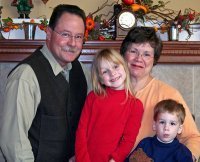
Paul Tournier was a Swiss physician and author who had acquired a worldwide audience for his work in pastoral counselling. His ideas had a significant impact on the spiritual and psychosocial aspects of routine patient care, and he had been called the twentieth century's most famous Christian physician.
I had never read a Paul Tournier (sounds like Turnyare), even though I can't tell you how many times I've seen his name mentioned over the years. So, when his name came up yet again (in the context of Trinitarian theology), I decided it was time to grab one of his books off the shelf. My only regret is that I didn't read it earlier.
I enjoyed Sarte and Camus as a teen. But the philosophy behind their fiction was always locked to me. I just couldn't get into it. "Being precedes essence" and existentialism as explained by high school and college teachers never really made sense to me. My feeble attempts at understanding in recent years yielded nothing worth mentioning. Then I read this book. I don't think he was trying to present existentialist thought (only toward the end of the book does he begin to mention existentialist thinkers). He's simply trying to unravel the mystery of the human person. In so doing he just happened to help me see where the existentialists were coming from.
His exploration of the relationship between our roles (personage) and our essence (person) is fascinating. It turns out that our roles and our persons cannot be so easily separated as some might suppose.
He challenges idea that self-knowledge should be sought through introspection, showing that we only find ourselves through personal relationships.
This book challenged me to be a more open and authentic person. It opened my eyes to the ways we avoid the communion we're designed for. Paul Tournier has challenged me to do the hard work it takes to connect with people on a truly personal level. Thanks, Paul.
O carte geniala, folositoare pentru a descoperi persoana dinăuntrul tău si a celorlalți, dezbrăcată de personaje si roluri, dintr-un punct de vedere psihologic si spiritual!
“ viata noastra este o partitura a carei compozitor este Dumnezeu. Persoana este dirijorul de orchestra care-i asigura executarea, dirijand orchestra, trupul si psihicul nostru. Or, compozitorul nu este absent. El este aici in timpul executarii, El se apleaca spre dirijorul de orchestra si il incurajeaza; ii vorbeste la ureche, il face sa inteleaga ce intentii are, il ajuta sa le realizeze”
“ persoana este o samanta care se dezvolta”
“ intotdeauna va exista un mister al persoanei, care tine tocmai de faptul ca ea este vie. Nu stim ce irupere de viata o va putea transfigura maine.”
O lectura excelenta, desi nu usoara si nu comoda. Am toata admiratia pentru Paul Tournier si pentru modul in care si-a integrat credinta personala in profesie. M-a captat nu doar continutul, ci si tonul scriitorului, care, desi nu isi pierde caracterul stiintific, este cald si personal.
Am fost surprinsa sa constat ca in 75 de ani de cand a fost scrisa cartea, omenirea nu pare sa se fi schimbat foarte mult…
“ ii punem deseori [lui Dumnezeu] intrebari mari, la care nu ne raspunde imediat sau niciodata. Dar ne spune ce avem nevoie zi de zi, ce ne hraneste persoana si ce o conduce. Harul se imparte picatura cu picatura.”
I stumbled upon this book while scrolling through my Wordpress reader. On a blog I am following called 'On Being', there was an article by Eugene Peterson titled "On Congruence: The Beauty of Uniting Who We are and How We Act." In it, the author recalled attending a lecture by the author, Paul Tournier. He recounts the experience:
But there was something else: Paul Tournier himself. During the lecture I had the growing feeling that who he was and what he was saying were completely congruent. He had been living for a long time in Switzerland. Precisely the way he lived and what he was now saying in Baltimore came across as an accurate and mature expression of all he had been living and writing.
This concept of congruence and the example of it in the life of Paul Tournier assured me that this author would probably be worth getting to know. So I began looking up some of his books. I found that most of his books were originally published in French, and that most are no longer in print nor available at the library-- and maybe not even on Amazon. However, I was able to find one at my university library titled "The Meaning of Persons." I wasn't disappointed.
Tournier is a doctor, a psychologist, and a Christian. He fully embraces the legitimacy of psychology, but is able to also fully embrace the tenets of Christianity. He does this through the development of two concepts: the person and a personage. A personage is probably the easiest to define. A personage is everything automatic-- a role or a routine. A personage could be being a husband, a father, a Democrat, a dentist, a Christian. A person on the other hand goes beyond the sum of all our personages. It is something beyond that is difficult to define, but is what is our task to uncover. He contrasts the two: "The person is the original creation, the personage is the automatic routine."
Science, psychology, and sociology can only study the personage, and can never reach the person. In this case, when science says that free will is an illusion, it is absolutely correct. Our personages are determined, and if we only live according to our personages, we will be acted upon and not free to act. But Tournier believes that when we uncover our person, we achieve liberty:
To be truly personal is to acquire liberty of conduct, to be, to some extent at least, able to govern oneself instead of being governed by automatisms. It is to be able to be generous or sparing as the changing circumstances require and in accordance with a conviction freely arrived at. It is to be able to be an idealist without losing sight of reality, to be a realist without betraying one's ideals. It is to be orderly without making such a fetish of order that the least disorder is a torture.
This is what he believes is central to Christianity, rather than fossilized moral tenets:
In adolescence a child brought up in this sort of formalist environment may very well revolt against his parents and regard all their religious and moral traditions as a hollow farce or a strait-jacket. His indictment will have something in it of the accents of Christ himself when he inveighed against the Pharisees, those great religious personages of his day. They too were imprisoned within rigid principles whose distant source was in the revelation of the living God, though now there lingered only the automatisms it had left behind. Jesus Christ took his stand against them saying, 'I am... the life.'
This is absolutely beautiful. I was surprised that Tournier has been described as a Calvinist existentialist. Existential makes sense (philosophical thinking that begins with the human subject), but Calvinism's core tenet is predetermination, no? He does have a certain pessimistic viewpoint that he admits-- we can't be completely free from our automatisms, our personages-- but he does uncover how true life and liberty are attained as we attempt to strip ourselves of such automatisms.
This viewpoint is so relevant, and he uncovers so many of the superficial philosophies that are entirely reactionary in our day. Rebelling against parents or against a religion at the start are just replacing one personage for another, and isn't an expression of true liberty. True liberty is making decisions for oneself, and making decisions involve a value system.
Tournier's discussion involves going beyond mere psychoanalysis, although he uses the terminology quite frequently. I don't know if you would find a therapist like Tournier in our day. He doesn't seek to impose his belief system on others though; there is no proselyting going on. Rather, he tries to help others to choose:
We are not called upon to impose our own scale of values on our patients. But if we help them to recover this fundamental function of life, namely choice, sooner or later they will raise the question of values-- the dialogue will become spiritual. I cannot at this point break off the dialogue on the grounds that I am neither a philosopher nor a theologian, but merely a doctor. What I must do then is to know what my own convictions are, and take responsibility for them, without attempting to impose them on others.
I also appreciated his emphasis on persons, not abstract principles, a theme I have been learning more about recently, and I find a central tenet of my beliefs. Believing in a person and a person requires seeing them as inherently good and giving them the freedom to act for themselves without imposing your own values on them. His idea of tolerance was so refreshing:
This, in my view, is not only a matter of tolerance, in the sense in which that word is usually understood, implying a certain claim to possession of truth while condescending to live with those who are in error without persecuting them. IT is a much more profound conception, arising from what we have said about the dialogue with God. That dialogue is essentially personal-- and that implies that we seek in it guidance for ourselves, and not for others.
I think I have found a new favorite author. If I have to, I will learn French so I can read the rest of his works.
Some of the ideas he discussed felt familiar. His method of uncovering a problem and then proposing a solution based on relationships seemed very familiar to "Bonds of Love", another favorite book of mine. His own take on Socratic dialogue, and the inability to find complete communion with others sounded like "Speaking into the Air." He also quoted a few individuals I am partial to, including Saint de Exupery, Chesterton, and Francis of Assisi.
Read this one a while ago. It is by a Calvinist Swiss Psychoanalyst. Basic point: There is the Person (core) and everything they wrap themselves with (personage.) Most of our interactions with other people are just personages rubbing against one another. Rarely our persons (real selves) touch. Whenever that happens God is there. He calls it true "dialogue." I loved it when i read it. It is translated so it doesn't flow super great, but i think there is wisdom in the pages!!
Una dintre cele mai bune cărți pe care le-am citit anul acesta. Paul Turnier are un limbaj așa de accesibil, încât cartea poate fi înțeleasă de oricine interesat de domeniul psihologiei fără să aibe studii în domeniu. Am aflat așa de multe despre mine, despre alții și despre cum arătăm de cele mai multe ori doar personajul nostru (automatismele și mecanismele de apărare) iar persoana (esența) e mereu ascunsă și irupe doar în anumite momente, când ne dezbrăcăm de formalism. Mi-au plăcut foare multe citate. Redau doar câteva: ,,În orice moment, trebuie să ne întrebăm dacă acționăm cu adevărat sau dacă doar reacționăm, în funcție de obișnuințele ființei noastre; dacă suntem locomotivă sau vagon, forță autonomă sau antrenați pasiv de forțe străine; dacă suntem persoană sau personaj''
,,A depinde de Dumnezeu înseamnă a fi liber de oameni, de lucruri, de tine însuți. Înseamnă a putea să te bucuri de tot ceea ce El îți dă, fără a fi sclavul nimănui. Înseamnă a putea rând pe rând, să cheltuiești, și să economisești, so vorbești și să taci, să acționezi și să te odihnești, să fii serios și să glumești, să te aperi și să cedezi. ''
,,jucăm cu necesitate un anumit rol, un anumit personaj, iar persoana ni se afirmă tocmai în alegerea acestui personaj''
,,A alege înseamnă a renunța! Înseamnă să-ți definești persoana abandonând hotărât ceea ce alegerea nu include''
,,Negarea vieții, acțiunea împotriva inimii, din slăbiciune, au loc pentru că nu îndrăznim să ne asumăm răspunderea pentru deciziile noastre. Nehotărârea prelungită este otravă pentru persoană. Ea ține tot timpul de un conflict interior pe care n-am avut curajul să-l rezolvăm sau pe care n-am avut curajul să-l conștientizăm''
A very good book that really speaks to the idea of how truly unique counseling can be! I really appreciated Tourniers approach to discussing such a subjective field. He does not make his opinions feel as if they are fact, and in doing so further highlights the importance of individualism that the book discusses. Really enjoyed the parts around the connection that can be created in the counseling relationship, and his love for God. It was interesting to see how faith-whether important to you or not-plays a role in not only a counselors life but a clients as well. His idea that the key to living a fulfilled life is becoming more than the personage you put on and truly aspiring to become the person you not only want to be, but are, is something that deeply resonated with me. Extremely good stuff here!
أحد إبداعات بول تورنيه العظيمة جدا جدا... كتاب اكتر من رائع بجد. هو بس ليس من كتب السهلة و لكن هذة طبيعة كتابات بول تورنييه. لم أجد صعوبة في ترجمته العربية و لكن لا انكر صعوبته علي وجه العام. الكتاب متكون من أربع أجزاء و كل جزء في كذا فصل. الجزء الثاني تحت عنوان الحياة بالنسبة لي كان صعب و لا انكر إن تحصيله منه لا يتعدي 10% .. لكن جمال بقية كتاب بالذات الجزء الاول بيتكلن عن من أنا و إزاي الانسان متناقض و الجزء الأخير بتاع ذات الحقيقة و تواصل معها و مع الله و الاخرين. كم انت عظيم يا بول تورنيه ...شكرا علي هذا الكنز
The best book I've read dealing with psychology from the perspective of Christian faith. Dr. Tournier's assessments are as fresh today, more than fifty years after they first appeared in print, as they were at the time of publication.
Christianity Today editors' description: Swiss physician Paul Tournier awakened us to the deep interconnectedness of the physical, the emotional, and the spiritual.
Dr. Tournier fully accepts the important contributions of Freud, Jung, and the other psychiatrists and integrates them in his work as well as in theory, but he significantly and wisely illustrates through actual counseling situations that this alone is not enough to understand and to help, for "only through living dialogue between man and man, and man and God' can the authentic person be relieved, reached, and helped."
All Tournier books are little gems of integration of faith and psychology. He unveils the practical workings of a developing mind and helps us mentalize from the inside out. -- Rod
It took me several months to finish, but I absolutely loved this. Definitely worth re-reading multiple times. Dr. Tournier's keen psychological insight combined with genuine Christian love for people provide a very compelling treatise on what it means to be an image-bearer.
This book and others by Dr Tournier (The Strong and the Weak; The Adventure of Living) was helpful to me decades ago when crawling out of deep valleys.
This is really a fantastic book on so many levels. First, he's a must-read for Christian doctors and therapists and pastors etc. Second, he has incredible insight into the intersection between the spiritual and the 'soulical' (mind, body, etc) aspects of life. I'll need to re-read this one many times!
هناك طريقتين لمعرفة الانسان .. الاول موضوعى و الثانى عملى و ذاتى و يدرك بالحدس .. واحد يتم من خلال التحليل المنطقى و التقييم الدقيق و الثانى يحتاج الى فهم كامل .. واحد يحتاج الى تقدم متوالى ولا نهائى و الثانى هو اكتشاف مفاجى و كامل
I'm not sure what expectations I had of this book, so the rating is perhaps somewhat unfair, unmotivated. At any rate, it turns out the content is a kind of existentialistic Calvinism. Interesting enough in its own right.