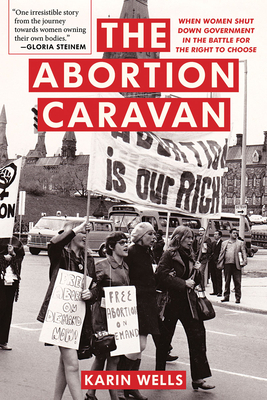
In January of 1970 a 'Dear sisters' letter goes to women's liberation groups across the country enlisting support in the fight for greater access to abortion. In the spring of 1970, seventeen (mostly) young women set out from Vancouver in a big yellow convertible, a Volkswagen bus, and a pickup truck. It was called the Abortion Caravan. Five thousand kilometres later, they led a rally of 500 women on Parliament Hill in Ottawa, "occupied" the Prime Minister's front lawn, chained themselves to their chairs in the visitors' galleries and shut down parliament--the first and only time this was accomplished. The seventeen were a motley crew. They argued, they were loud, and they took no prisoners. In an era when there was no social media and no one could afford long-distance phone calls, they pulled off a national campaign. It changed their lives. And at a time when thousands of women in Canada were dying from back-street abortions, it pulled women together across the country.
For many citizens of the United States, the cross-Canada trek made by a group of Canadian women in 1971 to protest women's lack of access to legal, safe abortions sadly is a little known event, as most of us learn little about the history of Canada in school. This book offers a fascinating and detailed account of Canadian women's struggles to draw attention to the plight of women forced to seek back-alley abortions. This account draws the reader in by bringing to life the women who took part in this journey, showing the divergent reasons why they joined the caravan and the differences in political ideology that created tensions within this group. These vignettes ensure that this well-researched monograph never becomes a dry academic tome.
Because the author takes the time to situate these women's actions in the broader historical context of events in Canada and the United States, such as the protests taking place in the United States and Canada against the Vietnam War, the growing dissatisfaction of young women with the roles male protesters allocated them in groups such as the SDS, and efforts to coordinate feminist protest actions in Canada and the United States, US readers need not fear that they will be unable to follow this narrative. In fact, I think that US readers will be fascinated by the similarities and differences between the abortion debate in the two countries and in women's struggle to bring about changes in misogynistic governmental policies and societal norms.
Given recent and ongoing attacks on women's legal right to choose in the United States and efforts at the provincial level in Canada to restrict access to abortion, this book is an important read for any woman interested in preserving women's right to control their bodies.
I would like to thank NetGalley, the publisher, and the author for an advance copy of this book in exchange for a fair and honest review.
In excellent history of one of the events at the birth of the pro choice movement in Canada. Unfortunately, free abortion on demand continues to be out if reach for many Canadians 50 years later.
Even for those not interested in abortion rights specifically, I think it would be worth reading as a case study of national grass roots organization in the 1970s. Wells provides an inside look at the logistical and ideological challenges the group faced bringing diverse women's groups together across the country pre-internet. The divisions (political, racial, class, and age) among the group reflect the cracks that deepened across 2nd wave feminism. It was a nice glimpse of this time in Canada's feminist movement
Such a jaw dropping look at such an important part of Canadian feminist history. A microcosm of the first to second wave feminism that is the giant's shoulders we stand on today.
My bookshelf contains a number of books written by friends and/or colleagues, and one of the best is this one, by Karin Wells, a former CBC radio producer and three-time recipient of the Canadian Association of Journalists documentary award.
The subtitle is When Women Shut Down Government in the Battle for the Right to Choose. It chronicles the time when 17 women set out in a convoy to travel from Vancouver to Ottawa. They were not protesting mask mandates. They were not against vaccines. They were not funded by wealthy Trump supporters or Christian fundamentalists. They did not shut down borders. And they definitely did not blast horns and harrass the populace of our capital city day and night for three whole weeks.
The women who organized the Caravan were fighting for free abortion on demand. This was three years before Roe v Wade and 18 years before it became legal here in Canada. (Yes, abortion was still considered a crime in this country until the Supreme Court struck down the law against it in 1988.)
The Abortion Caravan took place in the spring of 1970 and I remember it well, because I was there. But I want to say, right off the bat, that I was NOT one if the leading lights of this campaign. I wish I had been; I'd love to say I'd been an organizer, one of the fearless young women who made the trek to Ottawa that year and invaded the House of Commons and shut down the proceedings - the first and only time this has ever happened. Even the truckers didn't get that far.
I will say that I was - and remain - a feminist, and that I supported the struggle for legalized abortion. I was part of the Thunder Bay group that greeted the Caravaners, and I did play a small, ignominious part in that event. Because of that, Karin Wells interviewed me for this book and included a photo taken at the time. (Oh, to be 20 again and enjoy photos of yourself.) But I'm not going to go into futher details about that. If you're interested, buy the book. (Actually, even if you're not, buy the book: it's a part of our history and should be required reading in schools.)
What's really surprising is that, aside from an academic thesis written 26 years after the fact, it took half a century for this book to appear in print. Back in 2010, Wells, a producer with CBC Radio's The Sunday Edition, was looking for a story. The mother of a colleague suggested she do something on the Abortion Caravan which Wells, like the majority of Canadians, had never heard of. Intrigued, she did her research and the result was a half hour documentary, "The Women Are Coming". It was a huge success - as Wells writes, "It fell together easily, a story waiting to be told."
Having told the story on radio, Wells felt she knew it, but when she set out to write it, almost a decade later, she found it "raised more questions, had more nuance, and felt more interesting." The result is a narrative told with a journalist's love of plain speaking and colourful immediacy. What could have been yet another academic treatise is shaped in such a way that, once begun, the book is extremely hard to put down.
The story begins on Monday, April 27, 1970 - the day Betsy Meadley got into her pale yellow Pontiac Parisienne convertible, pulled out of her driveway in West Vancouver, and headed down the mountain and across the bridge to Vancouver. She had spelled out "On to Ottawa" in black tape on the hood of her car; it was one of three vehicles that would carry the women across the country to Ottawa, stopping in major cities along the way. Besides Betsy's convertible, the convoy consisted of a pick-up truck, borrowed from a friend, and Cathy Walker's yellow and white Volkswagon van. The roof rack of the van sported a huge black coffin, meant to symbolize the thousands of women who were dying as a result of illegal abortions. The coffin was an inspired attention-getter; its photo made the pages of newspapers all across the country.
The blurb on the back of the book refers to the Caravanners as a motley crew and it's not wrong. They were united in their demand for free, unfettered access to abortion, but, as Wells tells us, they were not a homogenous group. Meadley, who'd come up with the idea for the trek, was divorced, with a daughter about the same age as some of the women in the Caravan. Charlotte Bedard was a shy stay-at-home mom who knew she was only part of the group because she could provide the truck. Which was fine with her. Cathy Walker was one of the youngest but she was also the most politically savvy: she'd been working for the Canadian Union of Students in the Maritimes while the Caravan was being planned and had come back to Vancouver to be part of it.
I admit that my first move, when I got my hands on the book, was to skip ahead to Chaper 7, which is when the Caravan pulls into Thunder Bay, and the women meet up for the first time with some hard core anti-abortion sentiment. The meeting is planned to take place at Knox Church in Fort William but it's obvious early on there's not going to be enough seating for what's shaping up to be a capacity crowd. Laura Atkinson, Joan Baril, and the other members of the Thunder Bay Women's Liberation Group have been publicizing the event for weeks. They have "postered the town, sent out press releases, appeared on the local radio phone-show and . . . sent a letter to the Thunder Bay Council of Clergy asking them to include the Caravan in their Mother's Day services and church bulletins". The Caravanners have never faced such a diverse crowd, many of whom are there to heckle. Things quickly go south.
I won't dwell on what happens next, but I will say that the women do get to Ottawa, and, as was said earlier, they succeed in invading the House of Commons and bringing the business of the day to a temporary halt. They don't get their meeting with the Prime Minister and abortion isn't legalized for another 18 years. But they made a difference. Wells says the Caravan was the first national grassroots women's action:
"It was loud and proud and audacious. . . it signalled the stirrings of a nascent feminist movement at a time when feminists and women's libbers were perceived as hairy-legged, no makeup, Birkenstock-wearing women who were simply in need of a good . . . etc. You had to be brave to wear that label back then."
Here's to all the brave women, and to Wells, also brave, for writing their story.
Wells, Karin. The Abortion Caravan: When Women Shut Down Government in the Battle for the Right to Choose (Second Story Press, 2020)
I had never heard of this event, so when I came across this book I was intrigued to learn more. It did not disappoint. I really enjoyed learning more about these amazing women in Canada. It was fascinating to hear about all the different reasons each of these women joined the campaign and also drawing parallels with other things that were occurring at the same time, such as the growing outcry against the Vietnam War in the USA. I also thought it was interesting reading about this little known event so soon after the Canadian truckers made their recent epic voyage across Canada to their parliament in protest against Covid restrictions. I thought the book seemed well researched, but there seem to be some questions surrounding some of the figures provided. I'm in the UK where there's no problem with our current abortion laws and access to the procedure, but it was really interesting to read this book considering the current status with access to abortion in some US states. Overall, an enjoyable read and definitely an interesting learning curve with some incredible insights into the history of abortion, women's rights and misogyny in general. My sincere thanks to Netgalley and the publisher for the advance copy in exchange for an honest unbiased review.
A fascinating walk through the history that until recent roe v wade controversy and abortion being legalised in Ireland I believe (in my own circles) was an a basic human right. A female right. It’s something I feel strongly about, and believe that these amazing woman that came before us, and formed the abortion caravan paved the way for all of us. (Until recent events) these are woman who left me in complete awe of their courage, tenacity, determination and commitment to their cause. I was left filled with pride for people who I’ve never met, yet stood up and fought for all of our rights. This was a brilliant book, the narration was great, the only thing for me personally that let it down a little was I didn’t feel the whole book translated perfectly to audio purely because I didn’t have the capacity to reference all the footnotes. However that said, I was thoroughly transfixed and it’s the only reason I marked it down a little.
My message to woman of now would be to read this, find out for yourself how hard won the right for female healthcare as a whole was, let alone abortion rights.
Thank you to NetGalley and the publishers for the opportunity to listen to this audiobook in return for an honest review.
When it comes to feminist history, the world tends to be quite focused on the United States. Even a lot of Canadians will know the name of Roe v Wade without knowing the Morgentaler Decision. This book details a very important event in Canadian feminist history, and I think it's very much worth reading, not just for Canadians, but anyone who feels they're well versed in feminist history. The book itself is a little slow at the beginning. It's slightly repetitive in early chapters explaining the same thing more than once and going ahead and back in the timeline in a way that makes the chapters feel a little disconnected from each other, but once the women are on the road and the caravan is in full swing, the writing picks up along with it and is quite informative while remaining accessible and engaging. The book also touches on other relevant issues of the time aside from only the fight for abortion rights, including the protesting happening at the same time in opposition of the US war in Vietnam, and the political makeup of the women's liberation groups (I also really appreciated the description of the ways that feminist groups and women's liberation groups differed at the time.) Over all, a strong 8/10
This book is exceptionally well-researched and detailed. I learned a great deal about the reproductive rights movement in Canada and the progress across North America this grassroots effort caused. The author did a great job incorporating global context into the chapters, adding a lot of valuable insights about healthcare and society around the 1970s.
I found the narrator to be personable and passionate. It was almost like listening to a professor tell you about one of their favorite topics, or their account of a famous point in history they lived through.
My only issue with the audio version was that there were a great deal of photographs included in the print and while the audio describes them well, I would have liked to be able to see them.
Favorite quote: "...when we asked 'when can we stop making the coffee?' They would say 'After the revolution!'"
Thank you to Net Galley for an audio version of this book.
This was really insightful about a cause I feel deeply passionate about and absolutely loved learning about the abortion caravan in Canada and what women did to help women’s rights to their own bodies.
My only complaint with this audiobook is that some of it didn’t transition well to audio form - there is no need to include all of the links when there is a section at the beginning covering off where you could access the references. To then also have an in-depth section with all the references didn’t translate well to audio form either.
However, this was an incredible listen, about some astounding strong-willed women and I loved the appendices section being included.
If you want to learn more about this cause and what women before us have done, give it a listen.
**Thank you to NetGalley, Second Story Press and Karin Wells for the ALC in exchange for an honest review**
I didn’t know anything about the abortion caravan until picking up this book, and I love learning about little known history. I found it fascinating to learn about the different women and the reasons they joined the campaign, as well as how this was effected by other social movements happening at the same time (such as the Vietnam War protests in the US). There was a lot of information presented, but still quite readable.
Giving it four stars for the important history and the good research, but the pro-choice author greatly exaggerates the number of women dying of illegal abortions.
I haven't read this book yet but in the meantime I wanted to suggest another really good book too that I just finished reading. With the most recent events in regards to "Roe v. Wade" in the United States, if you have opportunity to read, "What Happened to Tom" by Peg Tittle, I highly recommend. Peg Tittle's book is a feminist allegory about women's reproductive rights.
The history of the abortion caravan highlighted the overall feminism aspect to equality in Canada. I’m glad I read about the caravan because I didn’t know about it before I read Carole Off’s book, At a Loss for Words
Excellent. A vital piece of Canadian history that I knew nothing about. I owe so much to these women. The publisher is Second Story Press and they have some amazing nonfiction focusing on women in Canada. https://secondstorypress.ca/collectio...
Fascinating glimpse into a chapter of Canadian history I knew nothing about. In addition, an interesting example of grassroots organizing, its strengths and weaknesses, and the ways in which activism around a common, unified cause by diverse groups can be both effective and fractious.
I accessed a digital review copy of this book from the publisher. This book covers the fight led by women in Canada for the right to accessible abortions. The women in this book came together and traveled across Canada raising awareness, holding rallies, and giving speeches. They worked with the local women's groups at each stop. At their final stop, they held a large march and peacefully disrupted the government to bring awareness to their issues. All of this occurred in the background of the Vietnam war and violent protests in the United States. This is a topic that I had not heard about before. It is an educational read and timely with the issues that are coming up about abortions now. This book is perfect for anyone interested in women's rights or the history of protests in the 70s.